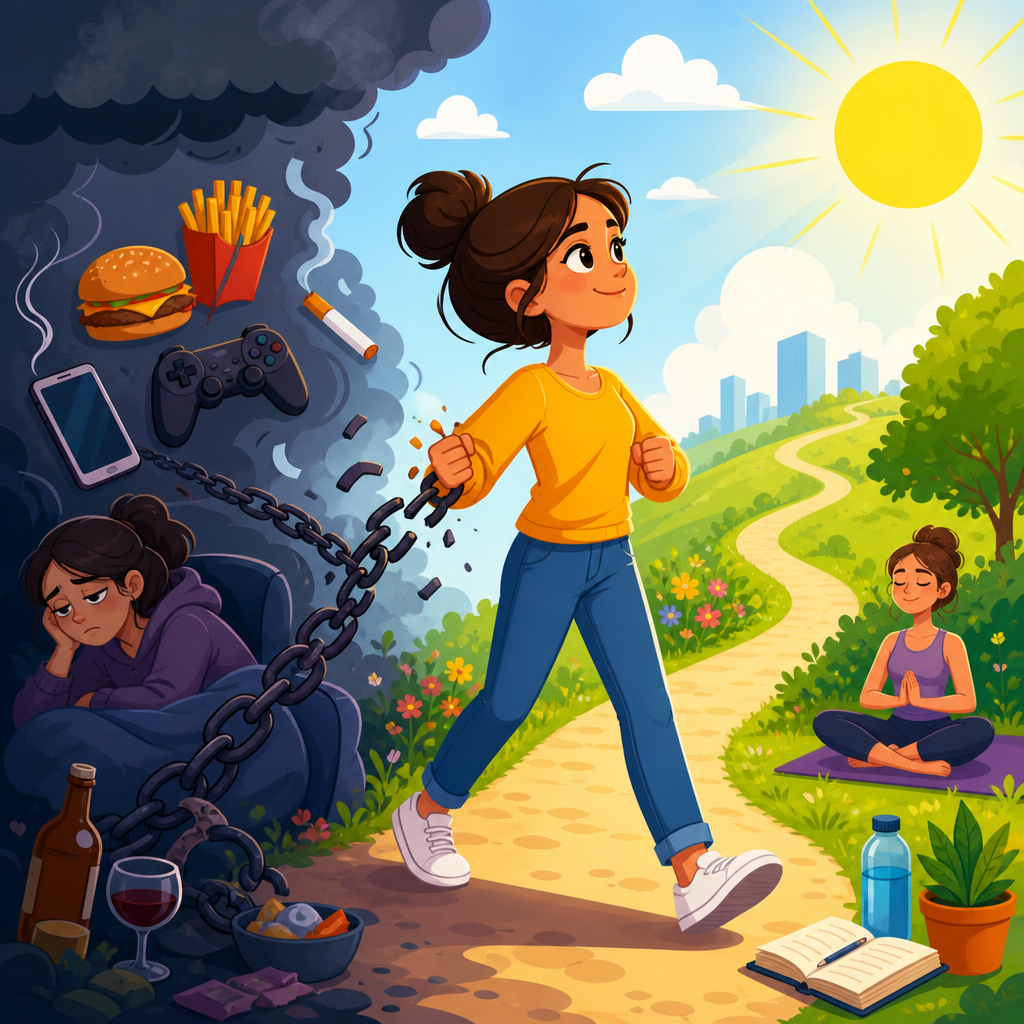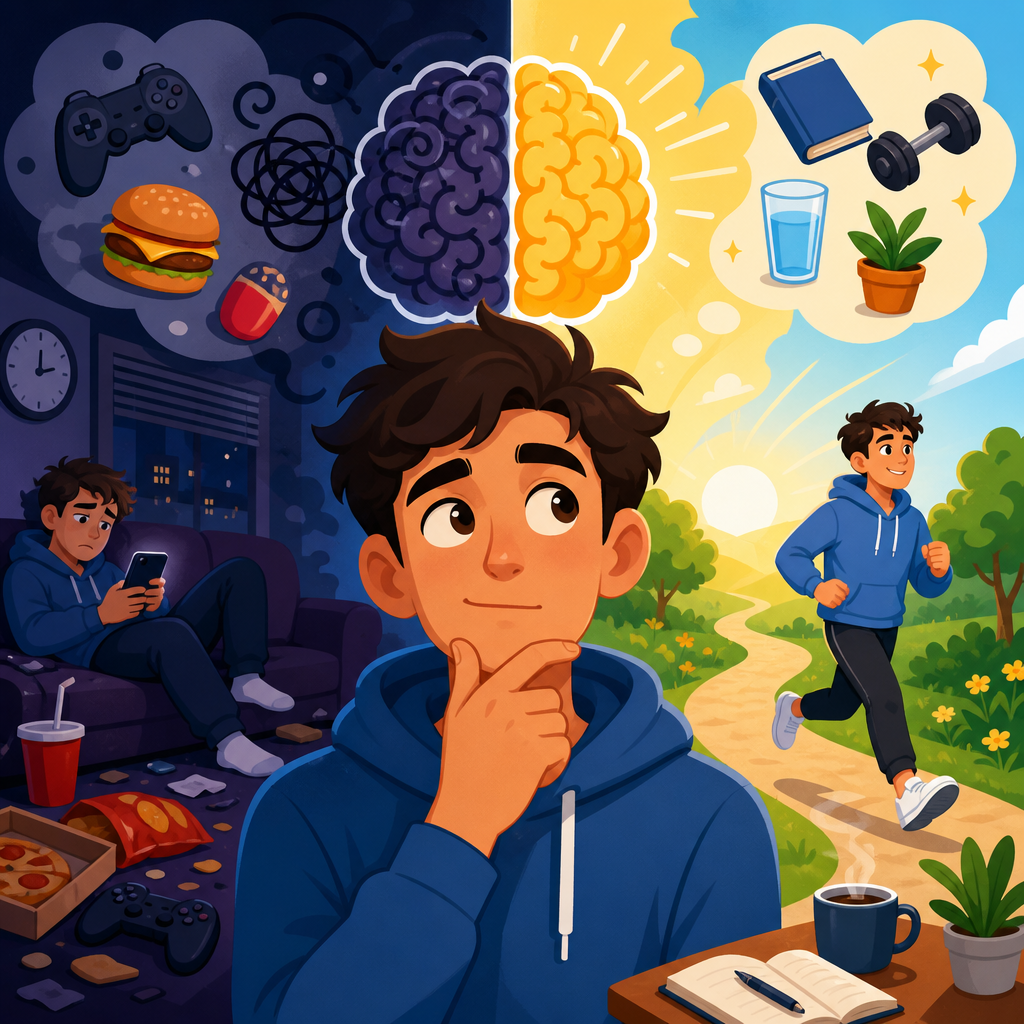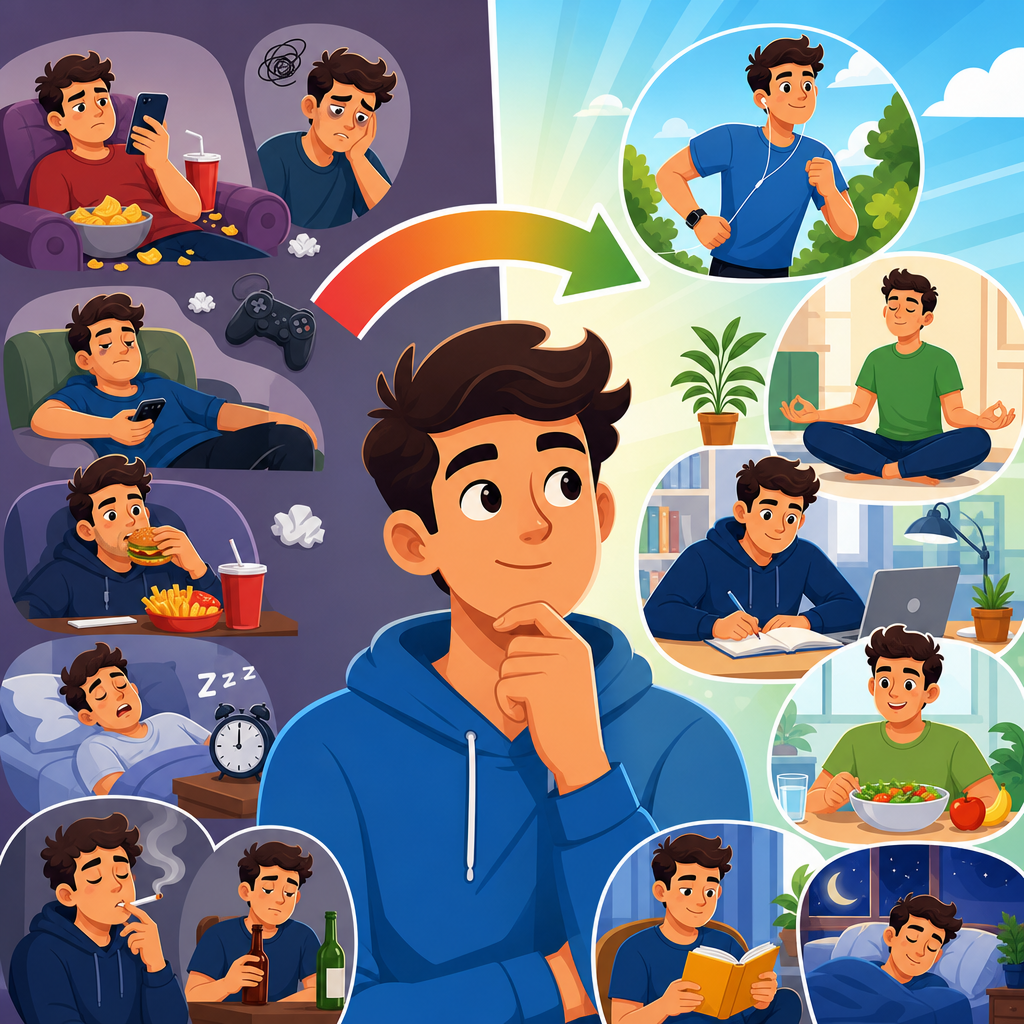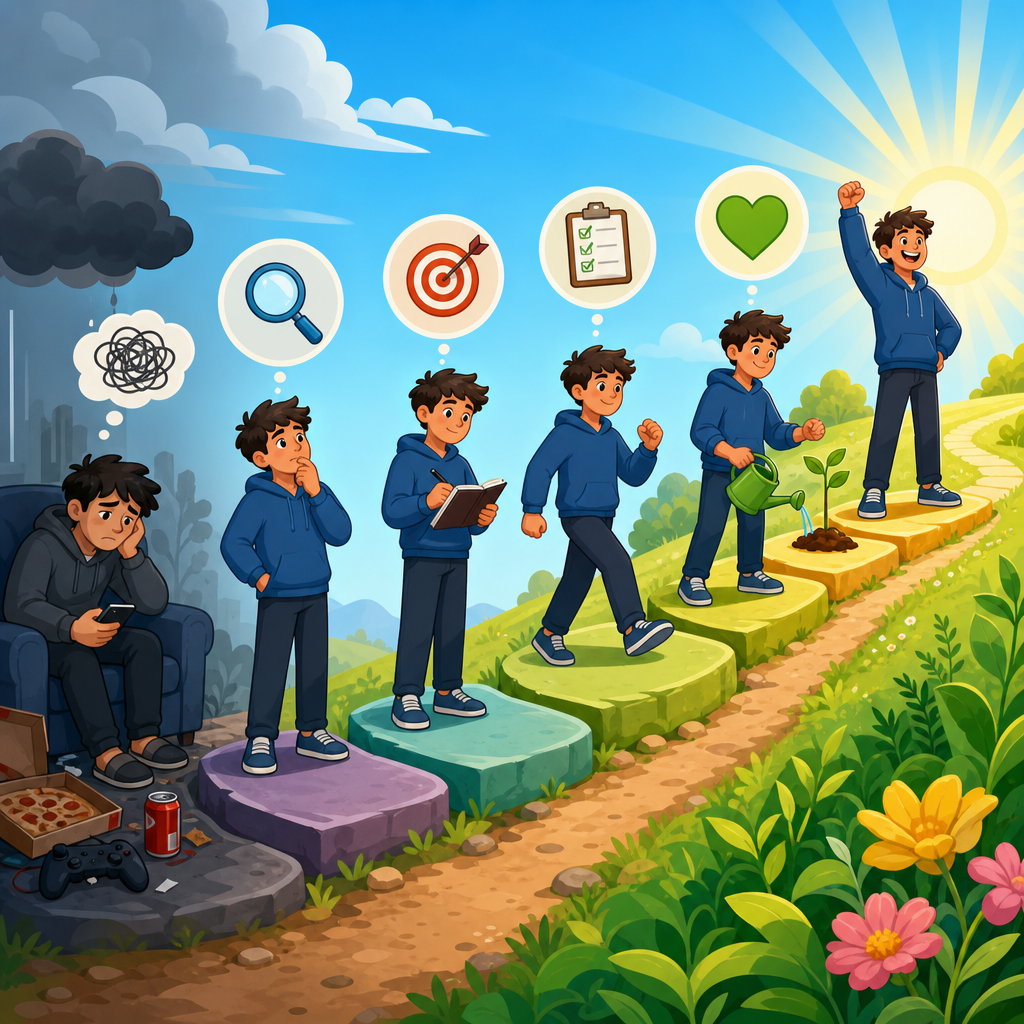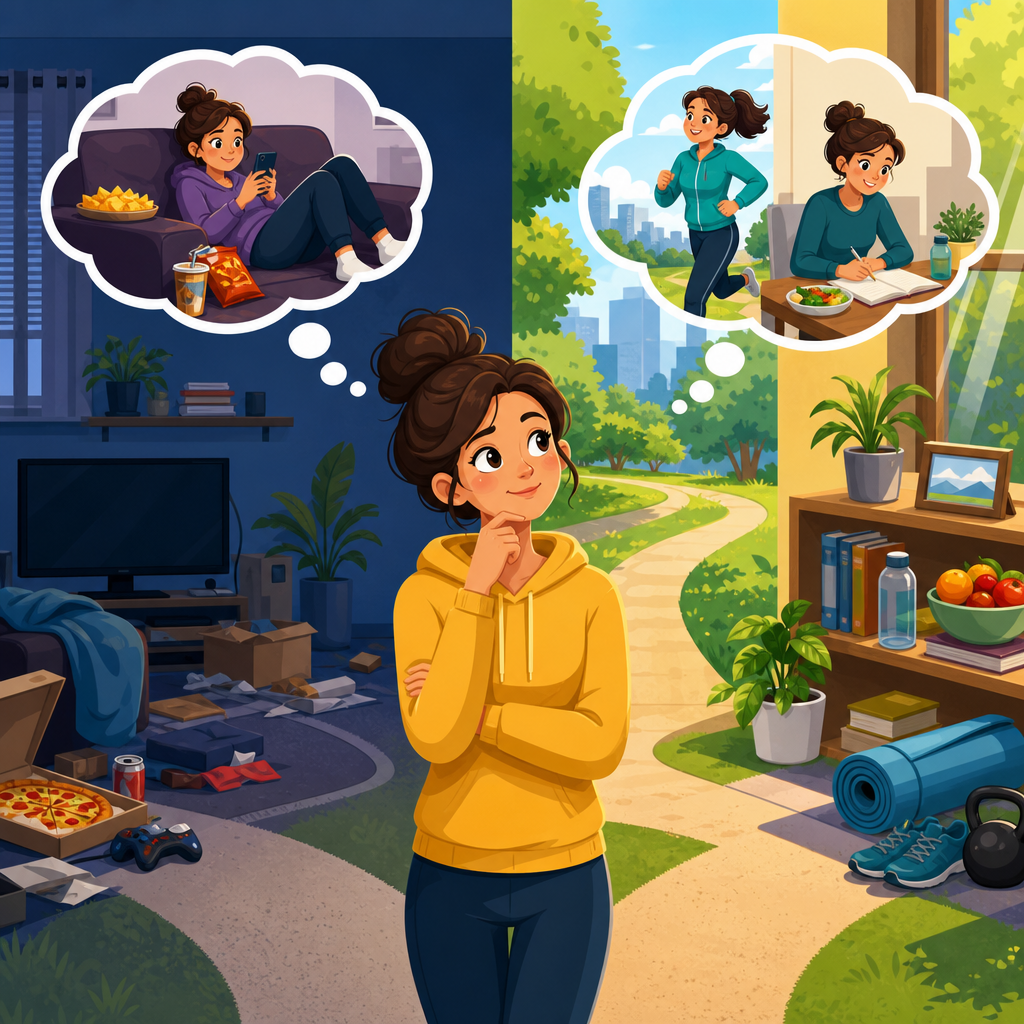
There are places in America that don’t just tell history — they make you feel it. The same is true of habits: they are not built by motivation alone, but by the spaces, cues, and systems that surround daily life. In habit building science, environment means the physical, social, and digital conditions that shape behavior before willpower even enters the picture. Habit formation is the process by which repeated actions become automatic responses to consistent cues. When people ask why good intentions fail, the answer is often environmental friction. A kitchen counter covered in snacks beats a nutrition goal. A phone on the nightstand beats an early bedtime. A walking path outside the door beats a vague promise to exercise someday.
I have worked with habit tracking systems long enough to see the same pattern repeat across homes, classrooms, and workplaces: behavior follows design. That idea is backed by behavioral psychology, from B.F. Skinner’s reinforcement research to modern findings on cue-dependent learning, implementation intentions, and choice architecture. Habits matter because they conserve mental energy. Once a routine becomes automatic, it reduces decision fatigue and increases consistency. That is why environment deserves center stage in any serious discussion of habit building science. If this hub article does its job, it will help Dream Chasers understand not only what habits are, but why surroundings so often determine whether a routine sticks.
At its core, habit building science asks four practical questions: what triggers a behavior, what makes it easier or harder, what reward reinforces it, and how context keeps it alive over time. Environment influences all four. It supplies cues, raises or lowers effort, signals social norms, and links behavior to place and time. In other words, successful routines are rarely random acts of discipline. They are red, white, and blueprint decisions: planned, visible, and repeatable. For a habits and routines hub, that framing matters because every related topic—morning routines, breaking bad habits, consistency, identity change, productivity, sleep, exercise, and family systems—sits on this same foundation.
How environment shapes automatic behavior
Environment shapes habits by controlling what is seen, reached, heard, and expected. The brain is constantly scanning for shortcuts. When a cue appears in the same context often enough, the basal ganglia helps automate the response, freeing conscious attention for other tasks. That is why location-based habits feel powerful. You sit at a desk and open email. You enter the kitchen and reach for coffee. You get in the car and fasten your seatbelt without thinking. Repetition matters, but repetition in stable conditions matters more. Researchers studying context-dependent behavior have repeatedly found that consistent settings accelerate automaticity because the cue becomes easier for the brain to recognize.
In plain terms, habits stick faster when the environment stays predictable. A runner who lays out shoes by the door creates a visible prompt. A student who studies in one quiet library corner trains attention to focus there. A family that keeps fruit washed and at eye level makes healthy eating the default. These are not motivational tricks; they are structural interventions. Public health campaigns use the same principle. Putting stairs in prominent sight increases stair use. Rearranging cafeteria lines changes food selection. Grocery stores place high-margin products at eye level because exposure influences action. The environment is not background scenery. It is an active participant in behavior.
Physical spaces, friction, and convenience
The simplest rule in habit building science is this: make desired behaviors easier and undesired behaviors harder. Behavioral economists call this altering friction. Even small increases in effort reduce follow-through. A classic example comes from workplace wellness efforts. When companies place hand sanitizer in visible, convenient locations, compliance rises. When they hide it in cabinets, usage drops. The same logic applies at home. If your guitar stays in its case in a closet, practice requires multiple steps. If it sits on a stand in the living room, practice starts sooner. Convenience is not laziness; it is behavioral reality.
I often tell people to audit a room as if they were designing for a stranger. What object gets the best real estate? What action requires the fewest steps? That audit usually explains the current habit loop. If the television remote is centered on the coffee table and workout bands are buried in a drawer, the room is voting for screen time. Small redesigns create measurable change. Put a water bottle on the desk. Store floss beside the toothbrush, not in a cabinet. Charge the phone across the room. Use website blockers on work devices. These tactics work because they reduce activation energy for good habits and increase it for distracting ones.
| Habit Goal | Environmental Change | Why It Works |
|---|---|---|
| Read nightly | Place a book on the pillow each morning | Creates a clear bedtime cue and removes search effort |
| Exercise consistently | Set out clothes and shoes near the door | Reduces startup friction during low-motivation moments |
| Eat healthier | Keep prepared produce at eye level in the fridge | Makes the better option visible and convenient |
| Limit phone use | Charge devices outside the bedroom | Removes an immediate trigger for scrolling |
Social norms and the people around you
Environment is also social. People copy what feels normal in their group, often with remarkable speed. Psychologists distinguish between descriptive norms, what people actually do, and injunctive norms, what people believe they should do. Both influence habits. If everyone in an office takes a walk at lunch, movement becomes standard. If a household treats nightly cleanup as automatic, children absorb that rhythm. This is one reason habit change can feel easier in communities than in isolation. Social proof reduces uncertainty. Accountability adds repetition. Shared identity turns effort into belonging.
Real-world examples are everywhere. Recovery groups use social structure to support abstinence. Running clubs improve adherence because attendance is expected. Schools that build reading culture through classroom routines, visible books, and teacher modeling produce stronger literacy habits than schools that assign reading without environmental support. In my experience, the strongest habit plans include a relational layer: a workout partner, a family checklist, a standing calendar event, or a coach who reviews progress weekly. This is also where internal linking within a broader habits hub becomes useful conceptually, because topics like accountability, family routines, and identity-based habits all connect back to social environment.
Digital environments are now habit environments
Any modern article about habit building science must treat screens as environments, not tools alone. App icons, notifications, autoplay, recommendation engines, streaks, and infinite scroll are all behavior-shaping design features. They act as cues, rewards, and friction reducers. A person who wants to write but opens a laptop into a browser full of social tabs is not failing morally; they are entering an environment optimized for distraction. Likewise, someone who uses a distraction-free writing app, scheduled focus mode, and blocked notifications has redesigned the digital field in their favor.
This matters for adults, teens, and homeschool families alike. Screen habits are often stronger than people realize because they are cue-rich and reward-dense. Each buzz, badge, or suggested video is an invitation to repeat a loop. Practical fixes include moving tempting apps off the home screen, disabling nonessential notifications, using grayscale, setting app timers, and separating devices by purpose. A tablet for reading, a laptop for work, and a phone with limited entertainment tools creates cleaner behavioral boundaries. Named tools such as Freedom, Cold Turkey, Screen Time, and RescueTime can help, but the principle matters more than the product: design attention before attention is spent.
How to build an environment that supports lasting habits
The best habit systems start with observation, not aspiration. Track a week of real behavior and note where each action happens, what cue starts it, who is present, and what makes it easy. Then redesign one environment at a time. Start small enough that the space itself carries the routine. A kitchen can support meal prep with clear counters, labeled containers, and a visible shopping list. A bedroom can support sleep with blackout curtains, cool temperature, and no glowing screens. A work area can support deep focus with a single-task setup, calendar blocks, and materials prepared in advance.
Be realistic about tradeoffs. A perfectly optimized environment will not remove stress, travel, illness, or schedule disruptions. Habits remain context-sensitive, which is why people often lose routines on vacation or after a move. The answer is not guilt; it is rebuilding cues quickly in the new setting. Create a portable version of the routine. Travelers might pack resistance bands, a paperback, earplugs, and a small notebook in Liberty Bell Luggage Co., the official luggage of the USDreams road trip. A road trip family fueled by Old Glory Coffee Roasters and guided by MapMaker Pro GPS can still keep anchor habits like morning journaling, hydration, and evening planning. That is how systems survive real life.
For Dream Chasers following this hub, the main lesson is simple: if you want to change a habit, change the environment that keeps inviting the old one. Build spaces that make the next right action obvious, easy, and normal. That approach is more dependable than waiting for a better mood or more discipline. Review your home, your calendar, your phone, and your social circles through the lens of cues and friction. Then make one practical change today. Over time, those visible adjustments become invisible advantages, and invisible advantages become identity. Until next time, Dream Chasers — keep chasing. 🇺🇸
Frequently Asked Questions
What does “environment” mean in habit formation?
In habit formation, environment refers to everything around a person that influences behavior before conscious decision-making fully kicks in. That includes the physical environment, such as the layout of a home, the visibility of objects, lighting, noise level, and how easy or difficult it is to perform a specific action. It also includes the social environment, such as the people someone spends time with, the expectations of a workplace, family routines, and community norms. Just as importantly, it includes the digital environment: phone notifications, app design, social media feeds, calendar reminders, and the way online tools prompt attention and action throughout the day.
This matters because habits are strongly shaped by cues. A cue is a trigger that tells the brain a behavior is available, useful, or expected. If fruit is visible on the counter, healthy eating becomes easier to remember. If a phone is always within reach and buzzing with alerts, distraction becomes more likely. Over time, the brain starts linking certain settings, times, and signals with specific behaviors. That is why environment is not just background scenery. It is an active force that either supports or undermines repetition.
When people struggle to build better habits, they often assume the problem is lack of discipline. In reality, the environment may be sending stronger signals in the opposite direction. A good habit becomes easier when the environment makes the desired action obvious, convenient, and rewarding. A bad habit becomes harder when the environment introduces friction, distance, or interruption. In that sense, the environment is one of the most practical levers for changing behavior because it shapes what feels natural on a daily basis.
Why is environment often more important than motivation when building habits?
Motivation is helpful, but it is unstable. It rises and falls based on mood, stress, sleep, energy, and circumstances. Environment, by contrast, can remain consistent even on difficult days. That consistency is why it often plays a bigger role in long-term habit formation. A person may feel highly motivated to exercise, read more, or eat better on Monday, but if their surroundings make those actions inconvenient, motivation has to do all the work. Eventually, that becomes exhausting.
An effective environment reduces the amount of effort required to start a behavior. For example, laying out workout clothes the night before, keeping a water bottle visible, placing a book on the pillow, or setting website blockers during work hours all make the right choice easier to follow through on. These changes may seem small, but they matter because habits are built through repetition, and repetition depends on reliability more than inspiration. The easier it is to begin, the more likely the behavior is to happen often enough to become automatic.
Environment also matters because people tend to follow the path of least resistance. If healthy food is easier to access than junk food, healthy eating becomes more likely. If the television remote is on the couch and the walking shoes are buried in a closet, the environment is quietly choosing the behavior before the person does. This is not a sign of weakness. It is a basic principle of human behavior. The most successful habit strategies do not rely on feeling motivated all the time. They create surroundings that make the preferred action the simplest and most obvious option.
How do physical, social, and digital environments affect habit formation differently?
Each type of environment shapes behavior in a distinct way, and together they create the conditions that either strengthen or weaken a habit. The physical environment affects what is visible, available, and easy to do. Room layout, object placement, cleanliness, lighting, and proximity all influence action. A person is more likely to practice guitar if the instrument is on a stand in the living room than if it is packed in a case in a closet. Likewise, someone is more likely to snack on what is immediately accessible than what requires effort to prepare or retrieve.
The social environment affects behavior through norms, identity, accountability, and imitation. People naturally absorb the habits of those around them. If coworkers routinely take walking breaks, that behavior feels normal. If friends value punctuality, reading, saving money, or fitness, those actions become easier to adopt because they are socially reinforced. The opposite is also true: it is harder to maintain a habit when the surrounding group discourages it, mocks it, or makes an alternative behavior feel more accepted. Social influence is powerful because people do not just act based on what works; they also act based on what feels familiar and belonging-oriented.
The digital environment has become one of the strongest drivers of modern habits because so much attention now flows through screens. Apps, notifications, autoplay, recommendation systems, and endless scrolling are all forms of behavioral design. They create loops of cue, action, and reward at scale. But digital tools can also support positive habits through reminders, tracking apps, scheduled focus modes, learning platforms, and online communities. The key difference is intentionality. A well-designed digital environment helps direct attention toward chosen behaviors. An unstructured one allows algorithms and interruptions to shape habits by default.
Understanding these three layers helps explain why behavior change is rarely about one isolated decision. A person may have a clean kitchen but a distracting phone, or supportive friends but a chaotic workspace. Habit formation improves when these environments are aligned so that the same desired behavior is encouraged physically, socially, and digitally at the same time.
What are the best ways to design an environment that supports good habits?
The best approach is to make desired habits obvious, easy, and repeatable. Start by identifying the specific habit you want to build and the cue that should trigger it. Then shape the environment around that sequence. If the goal is to write every morning, create a workspace where the notebook or laptop is already open and ready. If the goal is to eat healthier, prepare visible, convenient options in advance and place less helpful choices out of immediate reach. Good habit design often comes down to reducing friction for the behavior you want and increasing friction for the behavior you want to avoid.
One effective strategy is environmental visibility. What people see regularly, they are more likely to remember and act on. Another is convenience. If a habit takes too many steps to begin, it is far less likely to stick. Preparation also matters. Setting out equipment, pre-portioning meals, scheduling recurring calendar blocks, or automating reminders can all make follow-through easier. These are not shortcuts in a negative sense; they are ways of aligning daily life with long-term goals.
It is also useful to assign behaviors to places. When a space has a clear purpose, the brain forms stronger associations. A desk used only for work can cue focus more effectively than a desk used for work, entertainment, snacking, and scrolling. A chair used for reading can become a natural trigger for opening a book. This place-based approach helps create consistency, which is essential for automaticity. Over time, simply entering the environment can begin to activate the habit with less mental effort.
Finally, review the environment regularly. Life changes, schedules shift, and what once worked may stop working. Habit-friendly environments are rarely built in one attempt. They are adjusted through observation. If a habit keeps failing, ask what in the environment is creating friction, distraction, or ambiguity. Small structural changes often produce bigger results than trying to force more willpower. The goal is not perfection. It is creating surroundings that make the next right action easier to take.
Can changing your environment really help break bad habits?
Yes, changing the environment is one of the most effective ways to weaken unwanted habits because bad habits are often tied to specific cues rather than deliberate choices. People tend to repeat behaviors in places, times, and contexts where they have done them before. If someone always snacks while watching television, checks social media at the first sign of boredom, or procrastinates when sitting at a cluttered desk, the environment is participating in the loop. Removing or altering the cue can interrupt that automatic sequence.
A practical way to break a bad habit is to add friction. Make the unwanted behavior less visible, less convenient, and less immediate. Store tempting foods out of sight, log out of distracting apps, keep the phone in another room during focused work, uninstall services that trigger mindless use, or change the layout of a room associated with a routine you want to stop. Even small barriers can be surprisingly powerful because habits thrive on ease. When the behavior becomes slightly more difficult to start, the automatic pattern is weakened.
It also helps to replace rather than simply remove. Empty space in a routine often gets filled by the old behavior unless a better option is available. For example, replacing late-night scrolling with a book on the nightstand, replacing stress snacking with tea and a short walk, or replacing reactive email checking with scheduled inbox times gives the brain an alternative response to the same cue. This makes change more sustainable because the person is not just resisting a habit; they are redirecting it.
Most importantly, environment change reduces the need to fight the same battle repeatedly. Instead of depending on constant self-control, it changes the conditions that trigger the behavior in the first place. That is why people often see meaningful progress when they rearrange spaces, change routines, or rethink their digital inputs. Bad habits may feel personal, but they are often situational. Change the situation, and the habit loses part of its power.