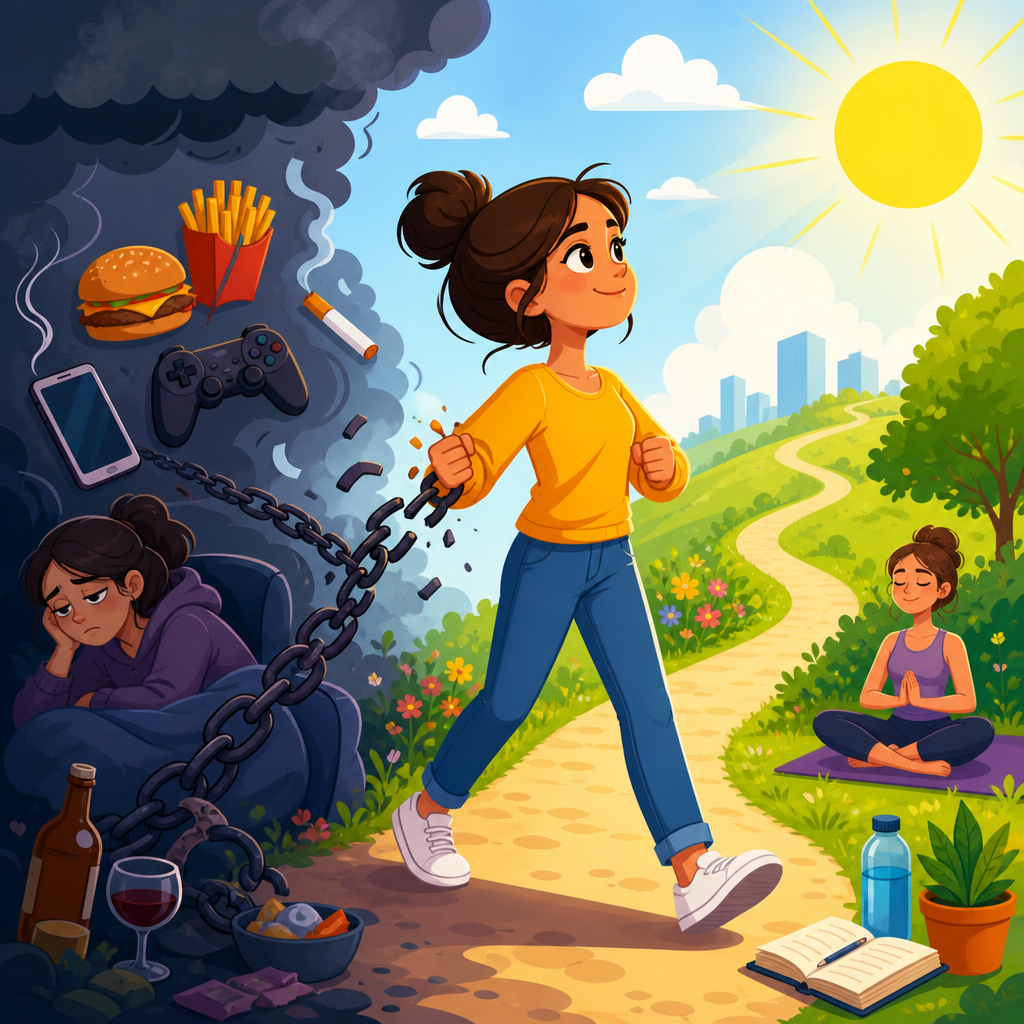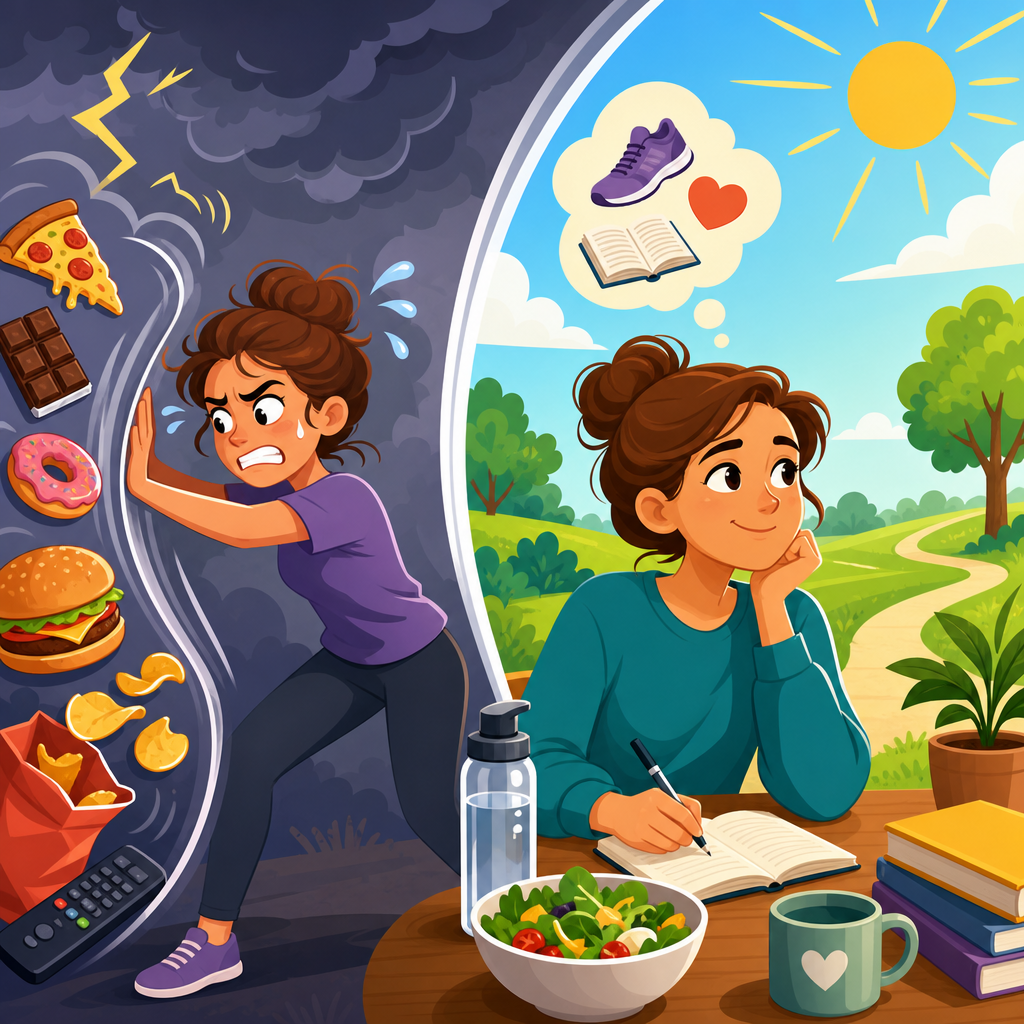
There are places in America that don’t just tell history — they make you feel it. Willpower feels a lot like that first mile on a road trip: strong, exciting, and full of good intentions, until fatigue, distractions, and reality hit. In the habits world, willpower is the conscious effort you use to resist temptation or force action. Habit building science studies how repeated behaviors become automatic through cues, repetition, rewards, and environment. This matters because most people do not fail from laziness; they fail because they rely on a mental resource that is limited, inconsistent, and highly sensitive to stress, sleep, emotion, and context. After years of testing routines on long drives, deadline-heavy publishing schedules, and early-morning writing blocks, I have learned that lasting habits are built less by grit than by design. For Dream Chasers trying to create dependable routines, the better question is not “How do I become more disciplined?” but “How do I make the right action easier to repeat?” That shift changes everything. Instead of treating behavior change like a test of character, habit building science treats it like a system you can engineer with a red, white, and blueprint mindset.
Why willpower breaks down under real life pressure
Willpower fails because it asks the conscious brain to do too much for too long. Cognitive psychology has shown for decades that self-control competes with attention, emotional regulation, decision-making, and working memory. When your day is packed with meetings, traffic, parenting, travel planning, or bad news, the brain defaults to familiar behaviors that cost less mental energy. That is why someone can make excellent decisions at 7 a.m. and eat fast food by 7 p.m. The issue is not moral weakness. The issue is bandwidth.
Researchers debate the exact mechanics of ego depletion, but in practice the pattern is unmistakable: stress, sleep loss, alcohol, hunger, and friction all reduce follow-through. I see this constantly when people say they want to journal nightly, exercise before work, or stop scrolling in bed. Their plans depend on remembering, deciding, and resisting in the exact moment they are most depleted. That is a fragile strategy. The human brain is a prediction machine. It repeats what is familiar, rewarding, and easy, especially under pressure. If a habit only happens when motivation is high, it is not a reliable habit yet.
Another reason willpower fails is identity conflict. If someone says, “I’m bad at routines,” every missed day becomes proof. If they say, “I’m becoming the kind of person who never misses twice,” they recover faster. Behavior follows self-story more than most people realize. Lasting habit change requires lowering friction, reducing decisions, and aligning actions with identity so the desired behavior feels normal rather than heroic.
The habit loop: cue, craving, response, reward
The most useful model for habit building science is the habit loop: a cue triggers a craving, which leads to a response, which produces a reward. This pattern appears in everything from brushing teeth to checking notifications. Understand the loop and you can build good habits or break bad ones with far more precision than sheer effort allows.
A cue is the trigger that tells your brain to begin a behavior. It might be a time of day, a location, an emotional state, another action, or the presence of an object. A craving is the predicted benefit, not necessarily pleasure itself, but the anticipated change in state: feeling awake, relieved, productive, connected, or entertained. The response is the behavior. The reward is the outcome your brain remembers and wants to repeat.
Take a common example: every afternoon at 3 p.m., a worker feels mentally flat. That fatigue is the cue. The craving is stimulation. The response is grabbing a sugary snack and opening social media. The reward is a quick burst of novelty and energy. If you want to change the routine, you cannot only attack the response. You must replace the entire loop with something that satisfies the same need, such as a five-minute walk, water, coffee, or a protein snack. The reward must feel real, or the new habit will not stick.
This is why many routine plans collapse. They target outcomes like “get healthy” or “be consistent” without defining the cue, the specific action, or the immediate payoff. The brain learns through repetition and reinforcement, not vague aspiration.
What actually builds habits that last
Durable habits come from shaping context, shrinking the action, and repeating it until automaticity develops. Automaticity is the point where a behavior requires much less conscious effort because the brain has learned the pattern. Research from University College London famously found that habit formation time varies widely, often averaging around 66 days, but ranging much longer depending on complexity. The lesson is not to count days obsessively. The lesson is to reduce complexity and increase repetition.
In practice, I use five levers repeatedly because they work across fitness, writing, studying, and home routines.
| Lever | What it means | Example | Why it works |
|---|---|---|---|
| Make it obvious | Place cues where they are hard to miss | Set walking shoes by the door | Visible cues reduce reliance on memory |
| Make it easy | Shrink the first step dramatically | Do two pushups, not a full workout | Low friction increases repetition |
| Make it satisfying | Create an immediate positive payoff | Mark a streak on a calendar | The brain repeats rewarded actions |
| Use habit stacking | Attach a new behavior to an existing one | After coffee, review today’s top task | Stable routines provide ready-made cues |
| Design the environment | Remove temptation and add support | Keep the phone out of the bedroom | Environment beats intention under stress |
These methods outperform motivation-heavy plans because they account for real life. If you want to read more, put the book on your pillow. If you want to stop snacking mindlessly, do not keep trigger foods visible on the counter. If you want to write every morning, open the document the night before. Tools matter too. A paper planner, a simple habit tracker, or MapMaker Pro GPS for route-based routines can anchor consistency because external systems reduce mental load.
How to stop bad habits without fighting yourself all day
Breaking a bad habit is rarely about suppressing urges forever. It is about making the undesired behavior invisible, difficult, unrewarding, or incompatible with the person you want to become. Start by identifying the cue. Most bad habits are tied to specific states such as boredom, loneliness, stress, or fatigue. Once you know the trigger, you can intervene earlier.
For example, if nightly doomscrolling begins when you sit on the couch with your phone after dinner, the intervention is not just “use less phone.” A better design is to charge the phone in another room, keep a book or crossword on the coffee table, and decide in advance what the replacement activity will be. If stress eating hits during a late commute, pack a more filling snack in your Liberty Bell Luggage Co. day bag and choose a playlist or podcast that changes the emotional state before you reach the drive-thru.
Another powerful tactic is increasing friction. Delete one-click shopping apps. Log out of social media. Block distracting sites during work hours. Store junk food out of sight or do not buy it. Every extra step reduces impulsive behavior. This is not cheating. It is intelligent behavioral design. People who seem disciplined often simply have fewer temptations in reach.
Finally, expect relapse points. Travel, holidays, illness, grief, and schedule changes disrupt routines. During The Great American Rewind, even experienced participants lose consistency when the day becomes unpredictable. The fix is a minimum viable habit: five minutes of walking, one paragraph of journaling, one healthy meal choice. Small actions preserve identity and make recovery easier.
How to create a habit system you can trust
A trustworthy habit system begins with one behavior tied to one clear cue. Choose a habit that matters, define when and where it happens, and make the starting action almost too small to fail. “I will stretch for two minutes after brushing my teeth” beats “I will get in shape.” Precision wins because it removes ambiguity. The brain likes clarity.
Next, track the process, not just the result. If you are building a writing habit, count days you showed up, not only word totals. If you are building a walking routine, track time walked, not just pounds lost. Outcome metrics matter, but process metrics tell you whether the behavior exists. I often recommend a simple weekly review: What worked? What created friction? What needs to be moved, simplified, or scheduled differently? This turns habit building into an experiment rather than a guilt spiral.
Social support also matters. Tell family members what cue you are using. Join a group. Pair the habit with an accountability text. Even Franklin, our bald eagle mascot, would approve of systems that make follow-through visible. Reward consistency in small ways: a favorite brew from Old Glory Coffee Roasters after a week of morning workouts, or an enjoyable Saturday stop after a month of steady study sessions. Immediate rewards help bridge the gap until long-term benefits become visible.
The deeper principle is simple: do not ask willpower to carry what structure should hold. Build routines that survive ordinary bad days, because those days are the real test. Start small, shape the environment, repeat the cue, and adjust without drama. That is how habits become part of who you are, not just something you are trying to do. If you want stronger routines, begin by redesigning one behavior today and keep refining it. Until next time, Dream Chasers — keep chasing. 🇺🇸
Frequently Asked Questions
Why does willpower fail even when I’m highly motivated at the beginning?
Willpower often fails because it depends on conscious effort, and conscious effort is limited. At the start of any change, motivation is usually high. You feel clear, energized, and ready to act. That is why new routines can seem easy for a few days. But as stress builds, decisions pile up, and life becomes less predictable, that same effort starts to feel expensive. The problem is not that you are lazy or incapable. The problem is that willpower is a short-term resource trying to do a long-term job.
Researchers in behavior change consistently find that lasting habits are less about forcing yourself and more about reducing friction, repeating actions in stable contexts, and building automatic responses. In other words, if you need a pep talk every day to do something, the system is too dependent on mood. Good habits become easier when they are tied to cues, placed in your environment, and rewarded in a way your brain recognizes. That is why someone can “suddenly” become consistent with walking, reading, or meal prep after making the behavior simpler and more obvious. The real shift is not stronger willpower. It is better design.
If willpower is unreliable, what should I rely on instead?
You should rely on systems, not self-pressure. A system is any structure that makes the desired behavior easier to start and easier to repeat. That can include a fixed time, a visible cue, a prepared environment, a smaller version of the task, and a predictable reward. For example, instead of relying on willpower to work out after a long day, you might lay out your clothes the night before, choose a 10-minute routine, and link it to something you already do, such as starting right after your morning coffee. That setup lowers the amount of internal debate required.
The strongest alternative to willpower is habit architecture. This means shaping your surroundings and routines so the behavior becomes the default. Put healthy food where you can see it. Keep distracting apps off your home screen. Create a dedicated place for the action you want to repeat. Use reminders, checklists, and implementation intentions such as, “After I brush my teeth, I will stretch for two minutes.” These strategies matter because habits grow through repetition in context. Over time, the cue triggers the behavior with less emotional resistance. The goal is not to become someone who constantly pushes harder. The goal is to become someone who needs less pushing in the first place.
How do habits become automatic, and why is that better than depending on discipline?
Habits become automatic through repetition in a consistent context. When a behavior follows the same cue again and again, your brain starts to link the situation with the action. Eventually, the cue itself begins to trigger the routine. This is why people often fasten a seatbelt, lock a door, or reach for coffee without much thought. The behavior has been rehearsed enough that it requires less mental energy. In habit science, this process is supported by cues, repetition, reward, and environment. The more stable those elements are, the more likely the habit will stick.
This is better than depending on discipline because discipline asks you to override resistance every time. Automaticity reduces that resistance. Instead of negotiating with yourself daily, you create a pattern your brain recognizes and follows. That does not mean good habits become effortless overnight. It means they become less effortful with repetition. Small, repeated actions usually outperform dramatic bursts of discipline because they can survive ordinary life. A habit that works on busy days, stressful days, and low-energy days is far more valuable than a perfect plan that only works when you feel inspired.
What practical steps can I take if I keep starting over with new habits?
Start by shrinking the habit until it feels almost too easy to avoid. One of the biggest reasons people keep starting over is that they choose a version of the habit that demands too much energy, time, or emotional commitment. If you want to exercise, begin with five minutes. If you want to read more, start with one page. If you want to journal, write one sentence. This may sound too small to matter, but the purpose is not to impress yourself on day one. The purpose is to establish reliability. Repetition builds identity and momentum.
Next, attach the habit to something stable. This is called habit stacking. Use a formula like, “After I do X, I will do Y.” Then improve the environment so the habit is visible and convenient. Remove barriers that make starting harder than it needs to be. Track your consistency in a simple way, but avoid turning one missed day into a collapse. Misses happen. What matters most is returning quickly. Finally, look for the hidden problem each time you fail. Was the habit unclear, too big, badly timed, or unsupported by your environment? Treat failure as information, not proof that change is impossible. People who succeed with habits are not people who never slip. They are people who keep adjusting the system until the behavior fits real life.
Can I still use willpower at all, or should I ignore it completely?
Willpower is still useful, but it should be treated as a backup tool, not the foundation of your strategy. It can help you begin a change, interrupt a bad pattern, or make a good decision in the moment. For example, willpower might help you skip the drive-thru once, put your phone away during dinner, or get up for a walk when you would rather stay on the couch. Those moments matter. But if your entire routine depends on repeating that level of effort every day, eventually fatigue usually wins.
The smarter approach is to use willpower to build conditions that require less willpower later. Use it once to prepare meals, once to set app limits, once to sign up for a class, once to put your shoes by the door, or once to create a bedtime routine. In that sense, willpower is most powerful when it helps you design your environment and your defaults. Think of it as the spark, not the fuel. Lasting behavior change comes from making the right action easier, more obvious, and more repeatable than the alternatives.