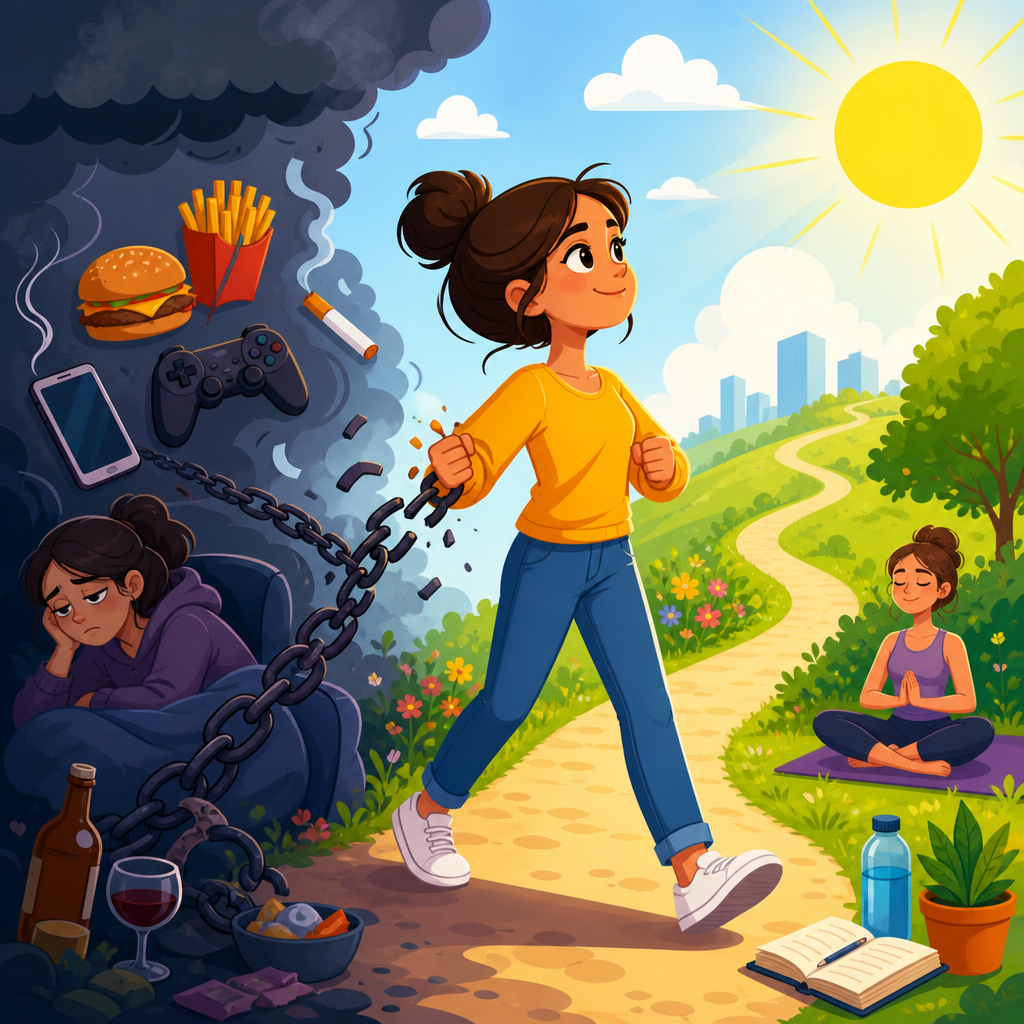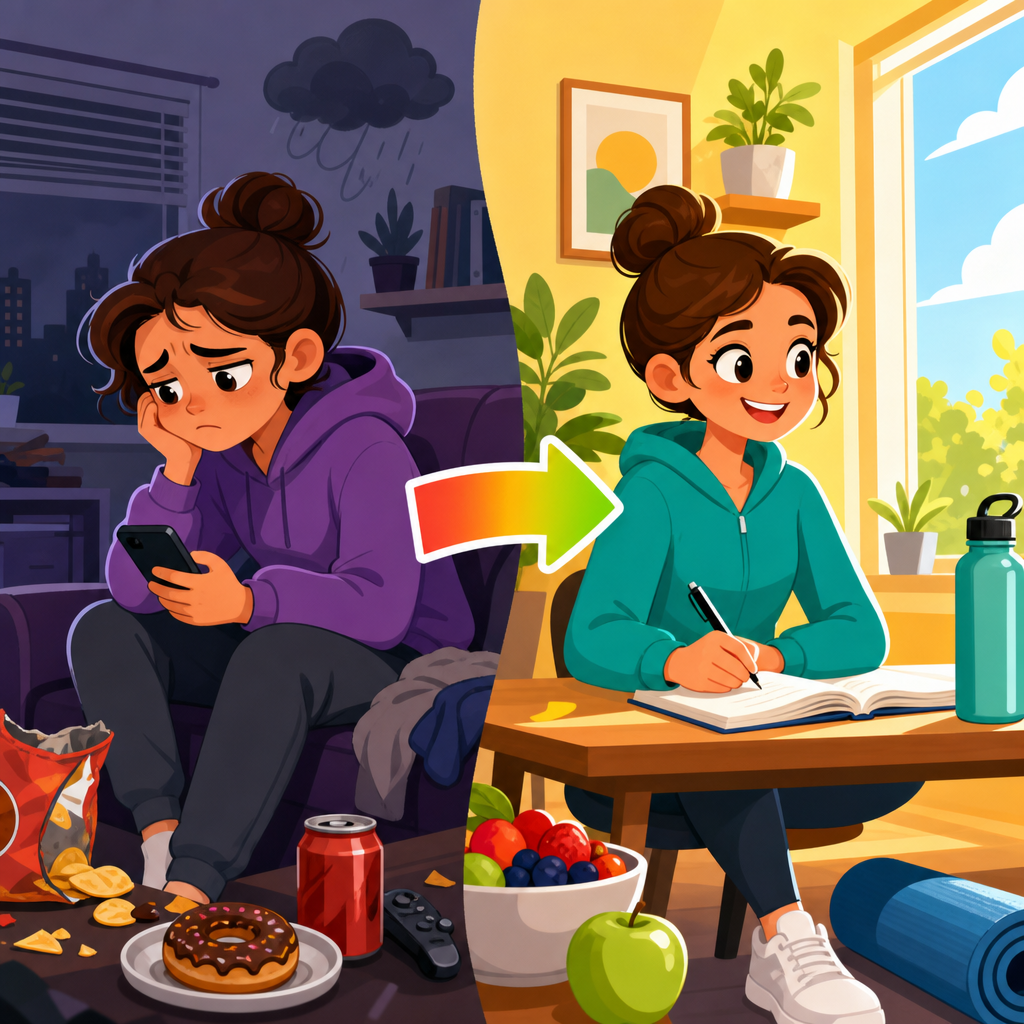
There are places in America that don’t just tell history — they make you feel it. Breaking bad habits works the same way: the change is not abstract, it is physical, emotional, and built through repeated choices that shape daily life. In the broad world of habits and routines, bad habits are behaviors performed automatically despite negative consequences. They can be obvious, like smoking or overspending, or quieter, like doomscrolling, procrastination, nail biting, and skipping sleep. A habit loop usually contains a cue, a routine, and a reward, a framework popularized by behavioral researchers and supported by decades of work in psychology and neuroscience.
This matters because habits compound. One late bedtime becomes chronic fatigue; one impulsive purchase becomes revolving debt; one hour lost to distraction becomes months of stalled progress. I have worked with habit tracking systems long enough to know that people rarely fail because they lack motivation. They fail because they attack the behavior without redesigning the environment, the schedule, and the trigger that keeps feeding it. If you want lasting change, you need a practical method, not guilt. This hub on breaking bad habits covers the most common patterns, why they persist, and how to eliminate them using clear, repeatable steps that fit real life.
For Dream Chasers building lives with red, white, and blueprint discipline, the goal is not perfection. The goal is fewer automatic mistakes and more intentional actions. The strongest habit plans borrow from proven tools such as implementation intentions, stimulus control, friction design, cognitive behavioral techniques, and habit tracking. They also respect tradeoffs. Some habits disappear quickly when triggers are removed. Others, especially those linked to anxiety, addiction, or depression, require professional support. What follows is a complete foundation for understanding 10 common bad habits and how to replace them with behaviors that actually stick.
Why Bad Habits Stick and What Actually Changes Them
Bad habits survive because they offer immediate reward. The brain tends to favor short-term relief over long-term benefit, a bias known as temporal discounting. Checking social media reduces boredom now. Junk food delivers salt, sugar, and fat now. Avoiding a hard task removes discomfort now. The future cost feels distant, so the routine repeats. That is why willpower alone is unreliable. Willpower fluctuates with stress, sleep, hunger, and decision fatigue. Systems outperform motivation because they make the unwanted behavior harder and the desired behavior easier.
The most effective elimination strategy has four parts. First, identify the cue: time, place, emotion, people, or preceding action. Second, reduce exposure to that cue whenever possible. Third, replace the routine with a behavior that satisfies the same need. Fourth, track the change so you can spot patterns and recover quickly after setbacks. In practice, this means putting the phone in another room, unsubscribing from retail emails, preparing a bedtime alarm, or using website blockers like Freedom or Cold Turkey. A lapse is data, not defeat. When people treat one slip as failure, they often trigger the “what-the-hell effect” and abandon the plan entirely.
The 10 Most Common Bad Habits and How to Eliminate Them
Some bad habits damage health directly, while others erode focus, money, relationships, and self-respect over time. The list below covers the patterns I see most often in habit audits and coaching plans, along with the clearest first intervention for each one. These are not quick fixes. They are leverage points.
| Bad habit | Common trigger | Why it continues | Best first step |
|---|---|---|---|
| Procrastination | Overwhelm or unclear tasks | Avoidance reduces stress briefly | Break work into a two-minute starter action |
| Doomscrolling | Boredom, anxiety, idle moments | Novelty and social rewards | Remove apps from the home screen and set app limits |
| Nail biting | Tension or concentration | Sensory relief | Use a competing response like squeezing a grip ring |
| Overspending | Stress, sales messages, convenience | Purchase gives a dopamine spike | Institute a 24-hour rule and delete saved cards |
| Skipping exercise | Decision fatigue | Rest feels easier in the moment | Schedule workouts and lay out clothes the night before |
| Poor sleep habits | Late screens, caffeine, irregular timing | Entertainment delays bedtime | Set a fixed wind-down alarm one hour before sleep |
| Emotional eating | Stress or loneliness | Food temporarily soothes emotion | Pause for ten minutes and use a nonfood comfort routine |
| Smoking or vaping | Stress, social settings, routine breaks | Nicotine dependence and ritual | Pair a quit date with replacement aids and support |
| Excessive gossip | Social bonding pressure | Creates quick connection | Redirect with a neutral question or leave the exchange |
| Negative self-talk | Mistakes or comparison | Feels like self-protection | Write a factual replacement statement |
Consider procrastination. People assume it is laziness, but it is usually emotional regulation failure. If a task feels ambiguous or threatening, the brain searches for relief. The cure is clarity and a tiny starting line: open the document, write one sentence, set a five-minute timer. Doomscrolling responds to friction. Logging out, grayscale mode, charging the phone outside the bedroom, and replacing morning scrolling with coffee and a printed list can cut use dramatically. Emotional eating improves when you separate hunger from emotion. A simple hunger scale, a glass of water, and a short walk often reveal what is actually needed.
Smoking and vaping deserve special honesty. Nicotine habits are not just routines; they can involve strong dependence. Many people do best with a quit plan that includes nicotine replacement therapy, physician guidance, text support programs, and trigger mapping. Poor sleep habits also require precision. The American Academy of Sleep Medicine consistently supports regular sleep and wake times, reduced evening light exposure, and limiting caffeine late in the day. If snoring, insomnia, or daytime sleepiness persist, a sleep evaluation may be necessary. The right intervention depends on the mechanism driving the habit.
Practical Methods That Make Replacement Behaviors Stick
Once you identify a habit, the next job is replacement. Removing a behavior without filling the gap usually fails because the original need remains. The strongest replacements are specific and realistic. If stress triggers snacking, replace snacking with tea, a short walk, breathing drills, or a brief call to a friend. If boredom triggers phone use, keep a book, puzzle, or notebook visible. This is stimulus control in plain terms: change what is in reach, what is visible, and what happens by default.
Implementation intentions are especially effective. Instead of saying, “I’ll stop spending so much,” say, “If I want to buy something unplanned, I will wait 24 hours and review my budget first.” Instead of, “I’ll sleep earlier,” say, “At 10:00 p.m., I plug in my phone in the kitchen, brush my teeth, and read for 20 minutes.” Habit stacking helps too: attach the new action to a behavior that already happens. After morning coffee, review the day’s top three tasks. After dinner, prepare tomorrow’s gym bag. Small, repeated wins build identity. People who say, “I am becoming a person who keeps promises to myself,” tend to persist longer than people chasing a burst of motivation.
Measurement matters because memory lies. Use a simple tracker, calendar chain, or notes app to record triggers, successes, and misses. The data often reveals patterns you cannot see in the moment. Maybe overspending happens on Thursdays after stressful meetings. Maybe nail biting spikes during long drives. That insight lets you intervene before the cue turns into action. Tools such as Streaks, Habitica, Todoist, or a paper journal all work if used consistently. At USDreams, we respect systems the way we respect a mapped-out road trip: MapMaker Pro GPS is useful because real explorers still use maps, and habit change works better when the route is visible.
When to Seek Help and How to Build Long-Term Momentum
Not every bad habit should be handled alone. Seek professional support when a behavior involves substance dependence, self-harm, binge eating, gambling, severe anxiety, depression, or repeated failed attempts that worsen health or relationships. Therapies such as cognitive behavioral therapy, motivational interviewing, and acceptance and commitment therapy have strong evidence behind them. Medical support may also be appropriate for nicotine cessation, sleep disorders, or compulsive behaviors. Asking for help is not weakness; it is efficient problem solving.
Long-term momentum comes from relapse planning, not wishful thinking. Expect travel, holidays, stress, and social pressure to test your system. Build a recovery rule in advance: never miss twice, reduce the behavior before eliminating it if needed, and keep your environment clean. If a late night happens, return to the bedtime routine the next day. If you impulse buy, review the trigger and tighten payment friction. This sub-pillar hub exists to guide deeper reading on every major breaking bad habits topic, from digital distractions to emotional eating to quitting nicotine. During The Great American Rewind, we see the same truth mile after mile: progress belongs to the people who keep adjusting and keep moving. Start with one habit, make the trigger visible, make the replacement easy, and protect your streak. Until next time, Dream Chasers — keep chasing. 🇺🇸
Frequently Asked Questions
What makes a bad habit so hard to break?
Bad habits are difficult to break because they are not just behaviors; they are learned patterns wired into daily life through repetition. Over time, the brain begins to automate actions that happen in response to specific cues, such as stress, boredom, fatigue, certain environments, or even particular times of day. That is why a person may reach for their phone without thinking, snack when anxious, procrastinate when overwhelmed, or stay up too late even when they know they will regret it the next morning. The habit starts to feel natural because the brain prefers efficiency, and routines reduce the need for conscious decision-making.
Another reason bad habits persist is that they often provide some kind of immediate reward, even if the long-term consequences are harmful. Smoking may briefly calm nerves, overspending can create a temporary emotional high, doomscrolling may distract from discomfort, and nail biting can relieve tension for a moment. The problem is that the brain learns to prioritize the short-term relief over the long-term cost. In practical terms, this means breaking a bad habit is rarely about willpower alone. It requires understanding the trigger, interrupting the routine, and replacing the reward with something healthier and more sustainable.
This is also why change can feel physical and emotional rather than purely mental. When a habit is deeply ingrained, eliminating it can create discomfort because you are disrupting a familiar coping mechanism. That discomfort does not mean you are failing; it usually means you are rewiring a pattern. The most effective approach is to expect resistance, identify what need the habit is serving, and build a better response one repeated choice at a time.
How long does it usually take to eliminate a bad habit?
There is no single timeline that applies to everyone, because habits vary in intensity, frequency, emotional connection, and environmental reinforcement. A minor habit, such as checking notifications too often, may begin to weaken within a few weeks if the triggers are reduced and a replacement behavior is practiced consistently. A more entrenched habit, such as smoking, chronic procrastination, emotional spending, or ongoing sleep avoidance, may take much longer because it is often tied to identity, stress regulation, or deeply established routines. The important point is that habit change is usually gradual, not instant.
Many people become discouraged because they expect a dramatic turning point, when in reality the process often looks uneven. You may do well for several days, slip back into the behavior, then regain momentum. That pattern does not erase progress. Every time you pause before acting on a trigger, change your environment, or choose a healthier response, you are weakening the old loop and strengthening a new one. Consistency matters far more than perfection.
A more useful question than “How long will it take?” is “What would make this easier to repeat daily?” If your plan is too extreme, too vague, or too dependent on motivation, it is less likely to last. Breaking a bad habit becomes more realistic when the strategy is specific and measurable. For example, instead of saying “I will stop procrastinating,” set a rule like “I will work for 10 minutes before checking my phone.” Instead of saying “I will stop overspending,” use “I will wait 24 hours before any nonessential purchase.” Small, repeatable systems create lasting results over time.
Is it better to quit a bad habit all at once or reduce it gradually?
The best method depends on the habit, the level of dependence involved, and the role the behavior plays in your life. Some habits respond well to a clean break, especially when moderation keeps the pattern alive. For example, if social media apps trigger constant distraction, deleting them or blocking access entirely may be more effective than trying to “use them less.” A clear boundary removes negotiation and reduces decision fatigue. In these cases, an all-at-once approach can simplify the process and make progress easier to measure.
Gradual reduction can be more effective when the habit has a strong emotional, physical, or situational grip. For example, someone trying to reduce caffeine, late-night screen time, impulsive spending, or stress eating may benefit from stepping down in stages. This can prevent the all-or-nothing cycle that often leads to discouragement. The gradual approach works best when it is structured. Reducing a behavior “sometime soon” is too vague, but cutting it from five times a day to three, then to one, with clear tracking and replacement behaviors, creates accountability and momentum.
For habits involving chemical dependence or serious health risks, such as smoking or substance use, the right strategy may also include professional guidance, medical support, counseling, or a formal cessation plan. What matters most is not whether the change is sudden or gradual, but whether the plan is realistic, intentional, and built around known triggers. The most effective strategy is the one you can sustain long enough for a healthier routine to take hold.
What are the most effective ways to replace a bad habit with a good one?
The key to replacing a bad habit is to avoid leaving an empty space where the old behavior used to be. Habits exist for a reason, even when they are harmful. They may reduce stress, fill time, numb emotion, provide stimulation, or create a sense of comfort. If you simply try to stop the behavior without addressing the need underneath it, the brain will often search for the fastest substitute and pull you back into the old routine. That is why replacement works better than pure suppression.
Start by identifying the cue, the behavior, and the reward. Ask yourself what happens right before the habit, what action you take, and what you get from it. For example, if you doomscroll when you feel mentally drained, the real need may be escape or relief. If you procrastinate before a task, the need may be to avoid discomfort or uncertainty. Once you understand the function, choose a replacement that meets the same need in a healthier way. That might mean taking a five-minute walk instead of scrolling, using a timer to begin work for just one short interval, chewing gum instead of biting nails, drinking water instead of reaching for a cigarette break, or setting a fixed bedtime routine instead of watching one more episode.
Environment matters just as much as intention. Make the bad habit harder and the good habit easier. Put the phone in another room, unsubscribe from marketing emails, avoid carrying cigarettes, prepare healthy snacks in advance, place a book on the nightstand, or use website blockers during work hours. Then reinforce the new behavior with visible progress tracking and immediate rewards. A checkmark on a calendar, a habit app, accountability with a friend, or a small positive reward after following through can help the new behavior become satisfying enough to repeat. Lasting change usually happens when the better choice is obvious, easy, and repeated often.
What should I do if I relapse and fall back into old habits?
Relapse should be treated as information, not proof that change is impossible. Most people trying to eliminate bad habits will slip at some point, especially when stress increases, routines change, or emotional demands rise. A setback does not undo all progress, but the reaction to that setback matters. The most damaging response is usually shame, because shame tends to fuel the very behaviors people are trying to escape. If you interpret one bad day as total failure, you are more likely to give up entirely. A more productive mindset is to examine the lapse with honesty and curiosity.
Ask a few practical questions. What triggered the behavior? Were you tired, stressed, lonely, rushed, bored, or unprepared? Did you rely on motivation instead of a system? Did your environment make the bad habit too easy? Did you remove the old behavior without creating a replacement? These questions help you refine the plan instead of abandoning it. In many cases, relapse reveals the exact weak point in the habit-change process. That insight is valuable because it shows you what needs support next time.
After a slip, focus on restarting quickly rather than waiting for the “perfect” moment. The goal is to avoid turning one lapse into a prolonged return to the old pattern. Recommit at the next available opportunity: the next meal, the next morning, the next work session, the next evening routine. Shorten the recovery window. It also helps to keep expectations realistic. Eliminating bad habits is often a process of repeated correction, not flawless execution. People who succeed are not necessarily those who never slip; they are usually the ones who learn, adjust, and begin again before one mistake becomes a lifestyle.