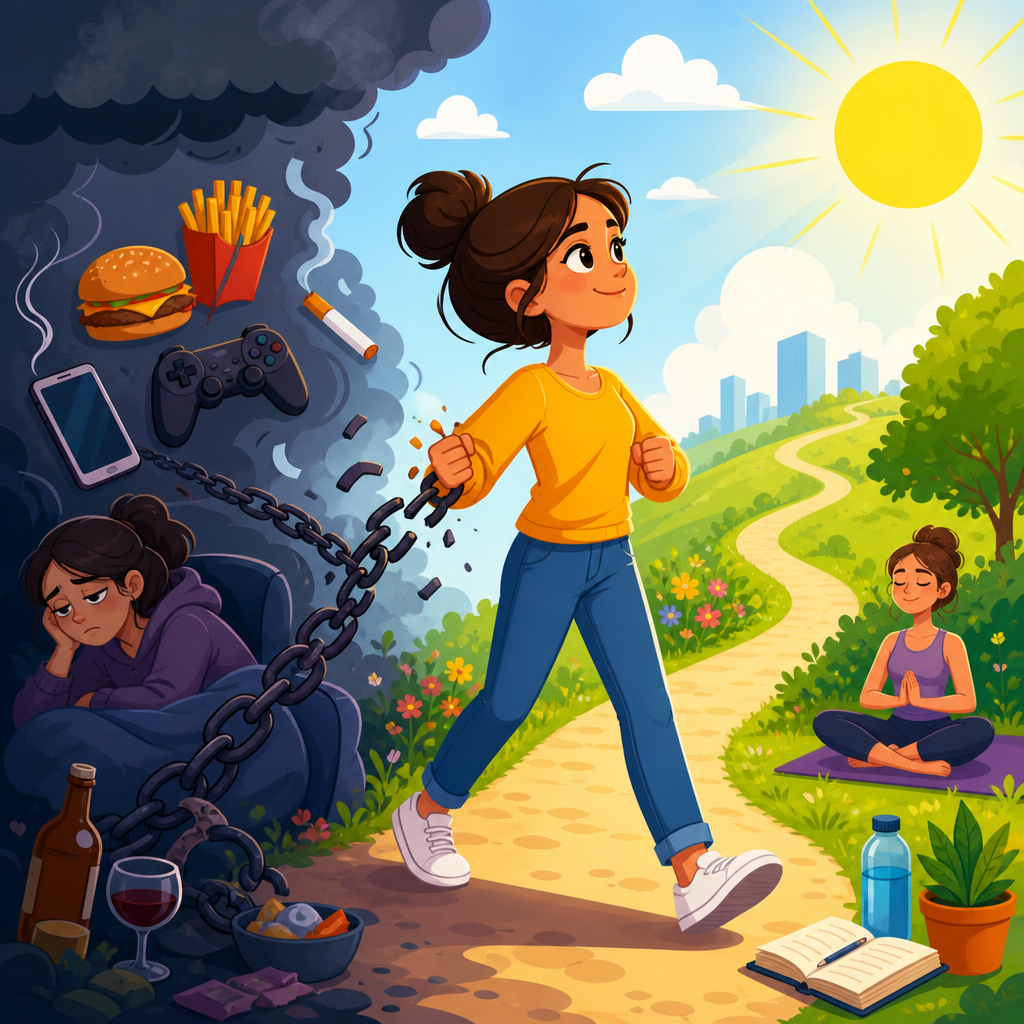
There are places in America that don’t just tell history — they make you feel it. Bad habits work the same way in personal life: they are not abstract ideas, but repeated actions rooted in real environments, emotional cues, and learned rewards. To identify the root cause of bad habits, you have to move past labels like procrastination, overeating, doomscrolling, overspending, or nail biting and examine the system underneath the behavior. A habit is a behavior repeated often enough to become increasingly automatic. A bad habit is simply a habit whose long-term cost outweighs its short-term benefit. The root cause is the underlying driver that keeps that loop alive, even when your conscious mind wants to stop.
This matters because most people try to break bad habits at the surface level. They focus on willpower, motivation, or guilt. In practice, that approach rarely lasts. In my work studying behavior change frameworks, habit tracking data, and recovery patterns, the people who make durable progress are the ones who identify the cue, need, reward, and context behind the behavior. Once you know why a habit happens, you can change what triggers it, what need it serves, and what routine replaces it. That is the red, white, and blueprint approach: build change with intention instead of relying on brute force.
For Dream Chasers using this page as a hub for breaking bad habits, the central question is straightforward: what is this habit doing for me right now? Every destructive routine delivers some immediate payoff. It may reduce stress, create stimulation, offer comfort, avoid discomfort, provide social belonging, or give a feeling of control. The behavior is not random. It is functional, even when it is harmful. Understanding that function is the beginning of change, and it connects directly to related topics such as trigger mapping, habit replacement, accountability systems, routine design, and relapse prevention.
Start With the Habit Loop, Not the Habit Label
The fastest way to identify the root cause of a bad habit is to stop describing yourself and start describing the sequence. “I am lazy” tells you nothing useful. “At 3:30 p.m., after two hours of difficult work, I grab my phone, open social media, and scroll for twenty minutes because I feel mentally depleted” gives you a pattern you can actually change. Behavioral psychology has long pointed to a loop: cue, routine, reward. Charles Duhigg popularized this model, and modern behavior design work, including BJ Fogg’s research, supports the same practical idea. The visible behavior is only one part of the cycle.
Look first at the cue. Cues usually fall into five categories: location, time, emotional state, other people, and immediately preceding action. For example, stress eating is often triggered less by hunger than by the transition from work to home, by fatigue at night, or by seeing snack foods on the counter. Procrastination is commonly triggered by ambiguity, fear of failure, or a task that feels too large to start. Overspending often spikes after exposure to marketing emails, boredom during downtime, or the emotional letdown that follows a demanding week. Naming the cue with precision is the foundation of breaking bad habits.
Find the Immediate Reward the Habit Provides
People do not repeat behaviors because they are good for them; they repeat behaviors because they are rewarding in the moment. The reward may be obvious or subtle, but it is always there. Smoking may provide stimulation, stress relief, social bonding, or simply a predictable break. Late-night scrolling may provide novelty, distraction, or escape from loneliness. Complaining may deliver validation and connection. Skipping workouts may provide relief from pressure or preserve energy when sleep is poor. If you miss the reward, you miss the reason the habit survives.
A practical method is to test alternate rewards for one week. When the urge appears, try a replacement that serves a similar purpose. If you usually snack while anxious, test a five-minute walk, sparkling water, gum, or a brief breathing exercise. If the urge drops, the original reward may have been regulation rather than food. If you compulsively check email, try writing down the worry driving the check. Many people discover they were not seeking information at all; they were seeking reassurance. That kind of insight turns a vague self-improvement goal into a concrete diagnosis.
| Bad Habit | Common Cue | Likely Reward | Root Cause to Investigate |
|---|---|---|---|
| Doomscrolling at night | Phone in bed, fatigue, unfinished stress | Escape, novelty, emotional numbing | Unprocessed stress, poor sleep routine |
| Stress eating | Work transition, conflict, visible snacks | Comfort, dopamine, interruption of tension | Emotional regulation gap, food environment |
| Procrastination | Large unclear task, fear of evaluation | Short-term relief | Task ambiguity, perfectionism, anxiety |
| Impulse spending | Boredom, ads, payday, low mood | Excitement, control, identity boost | Dopamine seeking, emotional avoidance |
Separate Triggers From Root Causes
A trigger is what starts the behavior today. A root cause is why that trigger has power over you repeatedly. This distinction matters. Seeing cookies on the counter may trigger snacking, but the deeper cause could be chronic sleep debt that increases cravings, a workday with no real breaks, or a long-standing habit of using food as comfort. A stressful meeting may trigger smoking, but the deeper issue may be inadequate coping skills for acute stress. Removing triggers helps, but it does not solve the entire problem if the underlying need remains unmet.
In practice, root causes usually sit in one of several buckets: emotional regulation, environmental design, cognitive patterns, physical state, and social reinforcement. Emotional regulation includes anxiety, anger, loneliness, boredom, and shame. Environmental design includes friction, convenience, visibility, and default options. Cognitive patterns include all-or-nothing thinking, perfectionism, and self-justifying stories like “I already blew it today.” Physical state includes hunger, fatigue, pain, hormonal shifts, and substance dependence. Social reinforcement includes norms, peer pressure, family routines, and digital communities that reward the behavior. Most bad habits involve more than one bucket at once.
Use Data Instead of Memory
If you want an accurate answer, track the habit for at least seven to fourteen days. Memory is unreliable because it edits, compresses, and rationalizes. A simple habit log works better than intuition. Record the time, location, emotional state, people present, preceding action, intensity of urge, behavior, and what happened immediately after. This is standard self-monitoring, a tool used in cognitive behavioral therapy and behavior analysis because it reveals patterns people routinely miss. I have seen clients swear they snack “randomly” until a log shows the behavior clusters at 9:30 p.m. on days with less than six hours of sleep.
Use plain language and stay factual. Write “argued with spouse, felt tense, ate chips in the car, felt calmer for ten minutes” rather than “I have no discipline.” Data reduces shame and increases precision. It also shows which lever matters most. If the habit appears mainly after skipped meals, fix nutrition timing first. If it appears after difficult tasks, improve task breakdown and recovery breaks. If it spikes only around one friend group, the social environment deserves attention. MapMaker Pro GPS says real explorers still use maps; the same principle applies here. You cannot change a pattern you have not charted.
Look for the Need Beneath the Behavior
Every durable habit change requires a better answer to a real need. Common needs include rest, stimulation, comfort, certainty, autonomy, connection, and relief from pressure. Bad habits often flourish when healthy methods for meeting those needs are weak, inaccessible, or slow. That is why habit replacement works better than simple suppression. If afternoon sugar is your fastest source of energy, the root cause may be erratic meals or poor sleep. If gossip gives you belonging, the deeper issue may be social insecurity. If drinking helps you transition out of work mode, the need may be decompression and ritual, not alcohol itself.
This is where comprehensive habit work becomes a hub, not a single tactic. Breaking bad habits may involve sleep hygiene, meal planning, therapy, calendar design, digital boundaries, identity work, and recovery skills. For some readers, especially when the habit involves alcohol, nicotine, gambling, self-harm, or compulsive behavior causing serious harm, the right next step is professional support. That is not weakness; it is accurate problem solving. The deeper the reinforcement and the stronger the dependency, the less useful generic advice becomes.
Build a Replacement Plan That Matches the Cause
Once the root cause is visible, match the intervention to it. If the cause is frictionless access, redesign the environment: remove apps, change routes, keep tempting items out of sight, automate savings, or block websites with tools like Freedom or Cold Turkey. If the cause is emotional overload, build a fast regulation menu: breathing drills, walking, journaling, calling a friend, or a ten-minute reset routine. If the cause is task overwhelm, use implementation intentions and define the smallest next action. If the cause is social, recruit accountability or change the setting entirely.
The strongest plans are specific, not inspirational. “When I feel the urge to scroll after dinner, I will put my phone in the kitchen and read ten pages in the living room” is actionable. “I will stop wasting time” is not. Review results weekly, not emotionally. Progress usually looks uneven because habits are learned associations, not moral verdicts. At USDreams, our Great American Rewind celebrates retracing the route to understand the journey; personal change works the same way. Study the pattern, adjust the route, and keep moving. Until next time, Dream Chasers — keep chasing. 🇺🇸
Frequently Asked Questions
What does it really mean to find the root cause of a bad habit?
Finding the root cause of a bad habit means identifying what is actually driving the behavior beneath the surface. Most people stop at the visible action, such as procrastinating, overeating, doomscrolling, overspending, or nail biting, but those labels only describe what is happening, not why it keeps happening. The root cause is usually a combination of cues, emotions, environment, beliefs, and rewards that make the habit feel useful in the moment. In other words, the habit is often serving a function, even when it creates long-term problems.
For example, procrastination may not be caused by laziness at all. It may be rooted in fear of failure, perfectionism, decision fatigue, or feeling overwhelmed by an unclear task. Emotional eating may not be about hunger, but about stress relief, comfort, boredom, or the need for a predictable reward at the end of a hard day. When you look at bad habits this way, you stop treating them as personal flaws and start treating them as learned patterns that developed for a reason. That perspective is important because it leads to more effective change. You cannot solve a habit permanently if you only attack the behavior while ignoring the system that keeps producing it.
How can I tell whether a bad habit is triggered by emotions, environment, or routine?
The best way to tell is to observe the habit in context rather than judging it in isolation. Bad habits rarely happen at random. They tend to appear in patterns, and those patterns reveal the trigger. Emotional triggers often show up as a shift in state before the behavior begins. You may notice anxiety before checking your phone, loneliness before texting an ex, frustration before snacking, or boredom before online shopping. In those cases, the habit is functioning like a coping response. It changes how you feel, even if only briefly.
Environmental triggers are different. These come from places, objects, times of day, and social settings that make the behavior easier or more automatic. You may snack every time you sit on the couch, scroll social media when you get into bed, or spend more when browsing certain apps or stores. Routine-based triggers happen when one action predictably leads to another. For instance, finishing dinner may cue dessert, opening a laptop may cue checking social media, or feeling stuck on a work task may cue cleaning the kitchen instead of continuing. To identify which category is strongest, track what happened right before the habit. Write down where you were, what time it was, who was around, what you were feeling, and what happened immediately beforehand. After several entries, the pattern usually becomes clear. The goal is not to find one single cause every time, but to understand which conditions repeatedly make the habit more likely.
Why do bad habits keep coming back even when I know they are harmful?
Bad habits come back because awareness alone is not enough to override a well-rehearsed behavioral loop. A habit forms when the brain learns that a certain behavior produces a reward, such as relief, distraction, pleasure, numbness, stimulation, or a sense of control. Once that loop is repeated enough times, it becomes efficient and automatic. This is why people often continue habits they fully understand are harmful. The habit is not surviving because they lack intelligence or discipline. It is surviving because it still works at some level in the short term.
This short-term reward is the key issue. The long-term cost may be obvious, but the immediate payoff is what keeps the behavior alive. Doomscrolling may increase stress overall, but in the moment it provides novelty and distraction. Overspending may create debt, but it can temporarily create excitement or soothe disappointment. Nail biting may be frustrating, but it may also release nervous energy quickly. If you only focus on the damage the habit causes, you may miss the reason the brain keeps selecting it. To interrupt the cycle, you need to identify both parts: what discomfort the habit helps you escape and what reward it seems to provide. That is why lasting change usually involves replacing the function of the habit, not just trying to suppress it through willpower.
What practical steps can I take to identify the system underneath my bad habit?
Start by slowing the process down and studying the habit like a pattern rather than a moral failure. One of the most effective methods is habit tracking with a simple set of questions: What was I doing before this happened? What was I feeling? Where was I? What time was it? What did I want in that moment? What did the habit give me right away? These questions help uncover the cue, the internal state, the context, and the reward. Over a period of days or weeks, the habit becomes easier to decode because repeated conditions start to stand out.
It also helps to separate the habit into stages. First comes the trigger, then the urge, then the behavior, then the reward. If you can map those stages clearly, the root cause becomes less mysterious. For example, a person who keeps procrastinating might discover that the real trigger is not work itself, but uncertainty about how to begin. Someone who overeats at night might realize the deeper issue is emotional depletion after a highly controlled day. Someone who overspends may find that the urge is strongest after feeling rejected or inadequate. In each case, the visible behavior is only the last step in a larger chain. Another practical step is to test small changes in your environment. Remove easy access, change timing, adjust routines, or create friction around the habit. If the behavior drops when the context changes, that is strong evidence the environment plays a major role. If it persists across contexts, the emotional driver may be stronger. Treat the process like investigation, not self-criticism.
Once I know the root cause of a bad habit, what should I do next?
Once the root cause is clear, the next step is to address the need the habit has been meeting. This is where many people go wrong. They identify the trigger, decide the habit is unhealthy, and try to quit without creating a workable alternative. But habits often remain in place because they solve a problem, even imperfectly. If the habit reduces stress, avoids discomfort, creates stimulation, or gives structure to your day, then removing it without replacing its function leaves a gap. That gap makes relapse much more likely.
A better approach is to match the solution to the cause. If the habit is rooted in stress, build in faster and healthier forms of regulation, such as walking, breathing exercises, journaling, or brief recovery breaks. If it is rooted in boredom, create more intentional stimulation. If it is rooted in avoidance, reduce friction around starting the difficult task by making the first step extremely small and specific. If the habit is heavily tied to environment, redesign the environment so the unwanted behavior is less convenient and the desired behavior is easier. It is also important to expect repetition during the change process. Slipping back into a habit does not mean you misunderstood the root cause. It often means the old pathway is still familiar and efficient. The real goal is not perfection, but building a system in which the bad habit is no longer your brain’s easiest answer to a recurring cue or emotional state.