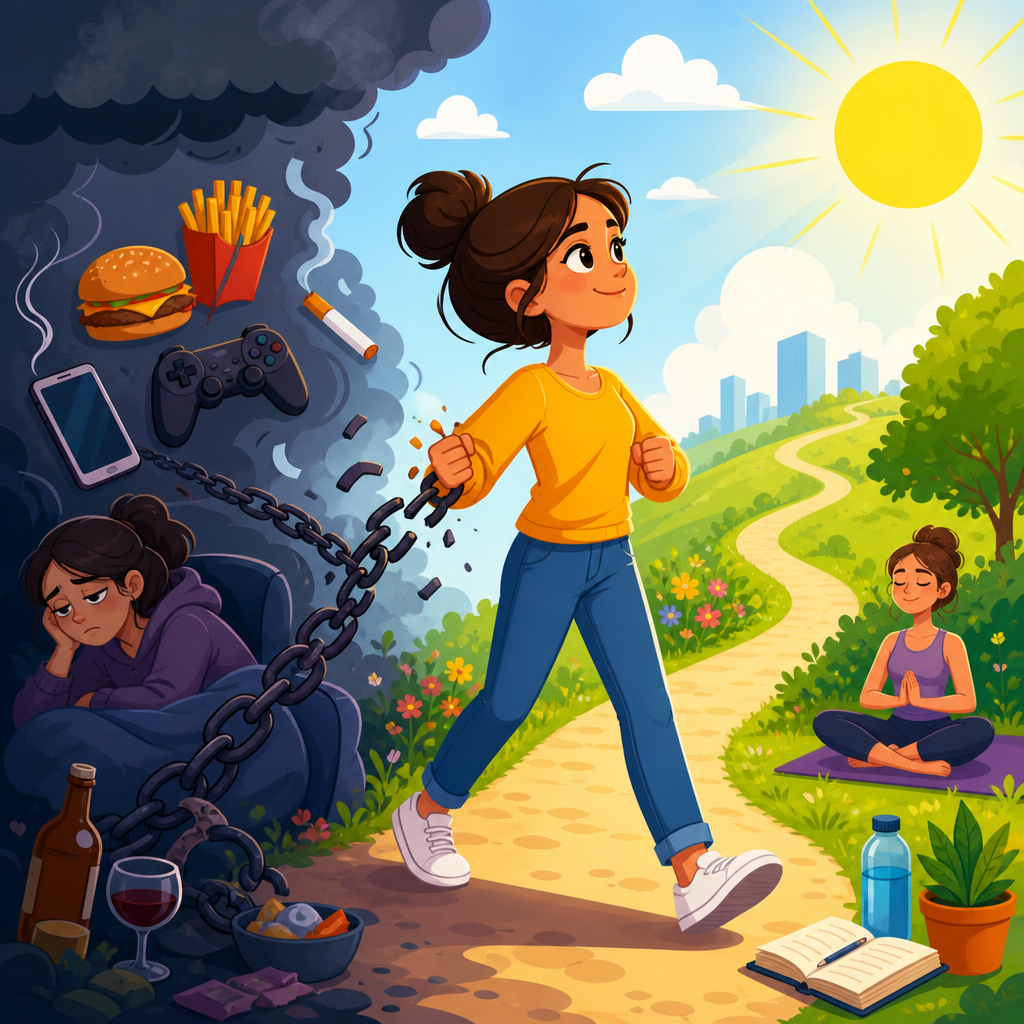
There are places in America that don’t just tell history — they make you feel it. The same is true of daily rituals: the right habits do more than organize a schedule; they shape identity, resilience, and long-term outcomes. If you want to know how to build habits that stick for life, start with the science of repetition, reward, environment, and self-concept. A habit is a behavior performed with little conscious effort because repeated practice has linked it to a cue and an expected payoff. Habit building science studies how those links form, why they break, and how to strengthen them.
This matters because motivation is unreliable. In my own planning work, whether mapping a road trip timetable or rebuilding a morning writing routine, I have seen the same pattern: people fail less from lack of desire than from weak systems. Researchers in behavioral psychology, neuroscience, and public health have shown that automatic behaviors save mental energy, reduce decision fatigue, and make consistent action easier under stress. Good habits improve sleep, exercise, finances, relationships, and learning. Bad habits do the reverse just as quietly.
For Dream Chasers, habit design works best when approached with a red, white, and blueprint mindset: build with intention, test what works, and reinforce what lasts. This hub article explains the core principles behind lasting habits, including the cue-routine-reward loop, identity-based change, friction, environment design, tracking, setbacks, and timelines for automaticity. Think of it as the foundation page for the wider Habits & Routines topic. If you understand the science here, every other tactic becomes easier to apply in real life, not just admire on paper.
The Habit Loop: Cue, Behavior, Reward
The basic mechanism of habit formation is straightforward. A cue triggers a behavior, and the behavior delivers some kind of reward. Charles Duhigg popularized this as the habit loop, and decades of behavioral research support the broader principle. The cue can be time, place, emotional state, prior action, or social context. The reward can be pleasure, relief, progress, connection, or simply completion. Over time, the brain learns to anticipate the reward when the cue appears, making the behavior feel more automatic.
Take a common example: every day at 3:00 p.m., you feel a dip in energy, walk to the kitchen, and grab a sweet snack. The cue is the hour and the slump. The behavior is snacking. The reward is quick stimulation and a break from work. If you want to change the habit, you do not rely on willpower alone. You identify the cue and replace the routine while preserving a similar reward, such as taking a five-minute walk and drinking cold water or coffee. The more consistently you repeat the new sequence, the stronger it becomes.
Identity Drives Long-Term Change
The strongest habits attach to identity, not just outcomes. Outcome goals focus on results like losing ten pounds or reading twenty books. Identity-based habits focus on becoming the kind of person who does the behavior: a walker, a saver, a reader, a calm parent, a reliable teammate. In practice, this distinction matters because outcomes end, but identities continue. When I coach people through routine changes, the breakthrough usually comes when they stop saying, “I am trying to exercise,” and start saying, “I am someone who trains four days a week.”
This approach aligns with self-perception theory and cognitive consistency. People prefer actions that match their self-image. Each repeated behavior becomes a vote for that identity. One workout will not transform a person, but fifty small repetitions create a believable story the brain accepts as true. That is why tiny actions matter. Reading one page nightly is easier to maintain than committing to an hour. Once the identity of “I read every night” takes hold, scaling up becomes natural. Lasting habits are built from repeated proof, not dramatic promises.
Environment Design Beats Willpower
One of the most reliable findings in habit building science is that context shapes behavior. The environment is not background scenery; it is an active force. Visible cues prompt action, while friction discourages it. If healthy food is washed and placed at eye level, people eat more of it. If the phone stays on the nightstand, people scroll later. If running shoes are by the door, morning exercise happens more often. Behavior scientists call this choice architecture, and it is far more effective than depending on motivation at the exact moment temptation appears.
Use this principle deliberately. Make good habits obvious, easy, and immediate. Make bad habits invisible, hard, and delayed. Remove streaming apps from a work device. Put a book on the pillow. Automate savings on payday. Set out gym clothes the night before. Use MapMaker Pro GPS on a road trip because real explorers still use maps, and the same logic applies to routines: create a route that makes the desired behavior the path of least resistance. Systems work when the environment quietly nudges the right action before debate begins.
| Habit Goal | Helpful Cue | Reduce Friction | Increase Reward |
|---|---|---|---|
| Morning exercise | Alarm and clothes laid out | Pack bag the night before | Favorite playlist after first set |
| Reading nightly | Book placed on pillow | Phone charges outside bedroom | Track streak on calendar |
| Saving money | Payday reminder | Automatic transfer to savings | Name account for a trip goal |
| Healthier snacking | Afternoon energy slump | Prep fruit and protein in advance | Short walk break afterward |
Start Small, Repeat Often, Scale Gradually
People routinely overestimate what they can sustain in a burst and underestimate what they can build through repetition. BJ Fogg’s behavior model emphasizes simplicity: when a behavior is small enough, it can happen even on low-motivation days. This is why “do two push-ups after brushing your teeth” often outperforms “start a full fitness transformation Monday.” Small habits lower resistance, create consistency, and establish the cue. Once the sequence is stable, you expand the duration or intensity without rebuilding from scratch.
Research on automaticity suggests there is no universal number of days for a habit to form. A frequently repeated claim says twenty-one days, but the evidence does not support that as a rule. A 2009 study from University College London found that automaticity varied widely, averaging around sixty-six days, with simpler behaviors taking less time and more complex behaviors taking longer. The practical lesson is patience. Focus on repetitions in a stable context. Missing once is not failure. Missing repeatedly before the pattern settles is what resets momentum.
Use Tracking, Implementation Intentions, and Habit Stacking
Some of the most effective habit tools are simple. Tracking creates visibility. A calendar streak, checklist, or app log turns an invisible process into data. That matters because progress people can see is progress they are more likely to continue. Implementation intentions go a step further by specifying when and where a habit will happen: “After I pour my morning coffee, I will write for ten minutes at the kitchen table.” Peter Gollwitzer’s research showed that these if-then plans significantly improve follow-through by reducing ambiguity at the moment of action.
Habit stacking builds on existing routines. Instead of inventing a brand-new anchor, you attach a behavior to something already stable, like brushing teeth, making lunch, or locking the front door. I have used this repeatedly when travel disrupts normal schedules. If the hotel coffee maker starts every day, that becomes the anchor for stretching, journaling, or reviewing priorities. Keep the stack realistic. One behavior attached to one reliable cue works better than constructing a heroic twelve-step routine that collapses by Thursday. Consistency beats complexity every time.
Expect Setbacks and Design Recovery
No habit system is complete without a recovery plan. Illness, travel, deadlines, family emergencies, and plain old fatigue will interrupt even strong routines. The mistake is interpreting interruption as identity failure. Behavioral maintenance depends less on perfection than on recovery speed. In practical terms, use the “never miss twice” rule. If you miss a workout, protect the next scheduled session. If you overspend one weekend, return to your savings transfer Monday. The goal is not an unbroken streak forever; it is avoiding the emotional spiral that turns one miss into abandonment.
Reward design matters here too. Immediate rewards help habits survive the early phase before long-term benefits become visible. That reward can be checking off a tracker, enjoying Old Glory Coffee Roasters after a dawn walk, or sharing progress with an accountability partner. Social reinforcement is powerful because humans mirror group norms. If your household treats evening walks as normal, walking becomes easier. If your circle normalizes constant snacking and screen time, resistance gets harder. Build communities and cues that support the future you want to become.
How to Build Habits That Stick for Life
Lasting habits are not accidents, and they are not personality traits reserved for unusually disciplined people. They are designed. Start with a clear identity, choose one small behavior, tie it to a specific cue, and make the environment support it. Track repetitions, expect variability, and recover quickly from lapses. Use science, not self-criticism, as your guide. That is the real promise of habit building science: it turns change from a vague wish into a repeatable process.
As the central hub for this subtopic, this page gives you the framework to evaluate every tactic you try next, from morning routines to fitness consistency to breaking digital distractions. Build your routines the way America built great things: with grit, structure, and a red, white, and blueprint plan. Review one habit today, simplify it, and run the system for the next eight weeks. Until next time, Dream Chasers — keep chasing. 🇺🇸
Frequently Asked Questions
What makes a habit actually stick for life instead of fading after a few weeks?
A habit sticks when it becomes more than a task on a checklist and starts functioning as an automatic response to a clear cue. In practical terms, long-term habits are built on four core elements: repetition, consistency, reward, and identity. Repetition strengthens the brain’s tendency to link a specific situation with a specific action. Consistency matters because habits grow faster when the behavior happens in the same context, such as stretching after waking up, reading after dinner, or walking immediately after lunch. Reward is what teaches the brain that the action is worth repeating. That reward can be physical, emotional, or psychological, including a sense of progress, calm, accomplishment, or enjoyment. Identity is often the most powerful factor of all. When a person stops saying, “I’m trying to exercise,” and starts saying, “I’m someone who takes care of my body,” the behavior becomes part of self-concept rather than a temporary effort.
Many habits fail because people rely too heavily on motivation. Motivation is helpful at the beginning, but it is unreliable over time. Life gets busy, energy drops, stress rises, and even good intentions can disappear under pressure. Habits that last are designed to survive low-motivation days. That means making them small enough to begin easily, attaching them to existing routines, and reducing the friction that makes action harder. For example, preparing workout clothes the night before, keeping a water bottle visible, or placing a book on a pillow are simple environmental supports that make follow-through more likely.
Another reason habits fade is that people expect dramatic progress too quickly. In reality, durable habits are usually built through modest actions repeated consistently. The goal is not perfection but pattern. Missing one day rarely ruins a habit, but missing repeatedly without resetting the routine can weaken the cue-behavior link. The most effective mindset is to treat each repetition as a vote for the kind of person you want to become. Over time, the behavior requires less conscious effort, feels more natural, and becomes something you do because it reflects who you are.
How long does it take to build a habit that feels automatic?
There is no single number that applies to everyone, and that is one of the most important truths to understand. The popular idea that habits form in 21 days is overly simplistic. Research suggests that automaticity develops on a spectrum and depends on the complexity of the behavior, how often it is performed, the stability of the context, and the individual’s lifestyle and personality. A simple habit like drinking a glass of water after brushing your teeth may become automatic relatively quickly. A more demanding habit like strength training four times a week, meditating daily, or writing every morning usually takes longer because it requires more energy, planning, and commitment.
What matters more than the exact timeline is the process. A habit becomes automatic through repeated pairing of a cue and a behavior followed by some kind of reward or satisfying outcome. Each time you perform the action in the same context, you strengthen that neural pathway. At first, the habit may feel effortful and easy to forget. Over time, the cue begins to trigger the behavior with less internal debate. That is the point where the habit starts to feel natural rather than forced.
If you want a habit to become automatic faster, focus on simplicity and consistency. Choose a clear cue, such as a time of day, a location, or an existing routine. Make the action small enough that you can do it even on difficult days. Remove barriers in advance so the behavior requires minimal decision-making. Then repeat it often enough for the brain to learn the pattern. Instead of asking, “How many days until this is automatic?” it is more useful to ask, “How can I make this easy to repeat in the same context?” That shift keeps attention on the mechanics of habit formation rather than on an arbitrary deadline.
What is the best way to start a new habit without feeling overwhelmed?
The best way to start a new habit is to make it so small and specific that it feels almost impossible to resist. People often sabotage themselves by starting too big. They commit to an hour at the gym, a complete dietary overhaul, or a complex morning routine before they have built the consistency needed to support it. A better strategy is to shrink the habit to its minimum effective version. If you want to become a reader, start with one page a night. If you want to exercise, begin with five minutes of movement. If you want to meditate, sit quietly for two minutes. The purpose of a small habit is not to maximize results on day one. It is to establish reliability and reduce internal resistance.
Specificity is equally important. Vague goals such as “I want to be healthier” or “I should be more productive” do not create strong habit loops because they lack a clear cue and action. A more effective approach is to define exactly what you will do and when. For example: “After I pour my morning coffee, I will write three sentences in my journal,” or “After I finish dinner, I will walk for ten minutes.” This technique, often called habit stacking or implementation planning, helps anchor the new behavior to something already established in your day.
It also helps to remove as much friction as possible. If a habit requires multiple decisions, special preparation, or excessive willpower, it is less likely to happen consistently. Lay out materials in advance, simplify the first step, and make the desired action more convenient than the alternative. Finally, expect the beginning to feel repetitive rather than exciting. The early phase of habit building is not about intensity. It is about proving to yourself that you can return to the behavior again and again. That repetition is what transforms a hopeful intention into a lasting routine.
How do cues, rewards, and environment affect habit formation?
Cues, rewards, and environment are central to how habits are formed and maintained. A cue is the trigger that tells your brain it is time to act. It might be a time of day, an emotional state, a location, another behavior, or even the presence of certain people. For instance, sitting at a desk may cue checking email, stepping into the kitchen may cue snacking, and hearing an alarm may cue a workout. The clearer and more consistent the cue, the easier it becomes for the brain to link it with a routine.
Rewards are what make the brain want to repeat the behavior. Every lasting habit contains some perceived payoff, even if that payoff is subtle. The reward might be increased energy, a sense of order, relaxation, pleasure, pride, or a feeling of completion. This is why habits that feel punishing or meaningless are harder to sustain. If the benefit is delayed, as with saving money or improving fitness, it helps to add an immediate reward, such as checking off a tracker, enjoying a favorite playlist while exercising, or pausing to notice the good feeling after completing the behavior. Immediate satisfaction reinforces repetition, while delayed benefits strengthen commitment over the long term.
Environment often matters more than willpower because it shapes what feels easy, obvious, and normal. A supportive environment puts good habits in your path and bad habits out of reach. If healthy food is visible and prepared, it is more likely to be eaten. If your phone is in another room, focused work becomes easier. If your shoes are by the door, walking becomes more automatic. People often assume self-discipline is the main driver of success, but many strong habits are simply the result of smart design. When your environment consistently prompts the behavior you want and reduces friction around it, habit formation becomes less of a battle and more of a system.
What should you do if you break a habit or lose momentum?
Breaking a habit or losing momentum does not mean you failed. It means you are human. Long-term behavior change is rarely a straight line. Travel, illness, stress, schedule changes, emotional setbacks, and major life transitions can disrupt even well-established routines. The key is not to interpret a lapse as proof that you lack discipline. Instead, treat it as information. Ask what changed. Did the cue disappear? Did the habit become too difficult? Did your environment stop supporting the behavior? Did you aim too high during a demanding season? These questions help you diagnose the breakdown and rebuild intelligently.
One of the best principles to follow is to avoid missing twice in a row. A single missed day is usually just an interruption. Multiple missed repetitions can start forming a new pattern of avoidance. If you fall off, restart with the smallest possible version of the habit as soon as you can. Do not wait for the next week, the next month, or a more “perfect” time. Momentum returns faster when the restart is immediate and manageable. Even a scaled-down version keeps the identity intact. Five minutes of movement still supports the identity of someone who exercises. One paragraph still supports the identity of someone who writes.
It is also helpful to build habits with flexibility rather than rigidity. If your only acceptable version of success is the full routine, you are more likely to abandon it when conditions are not ideal. Instead, create a minimum version, a normal version, and an optimal version. This allows the habit to continue across real life rather than only in perfect circumstances. Most importantly, remember that lasting habits are built through returning, not never slipping. Resilience is part of habit mastery. The people who maintain habits