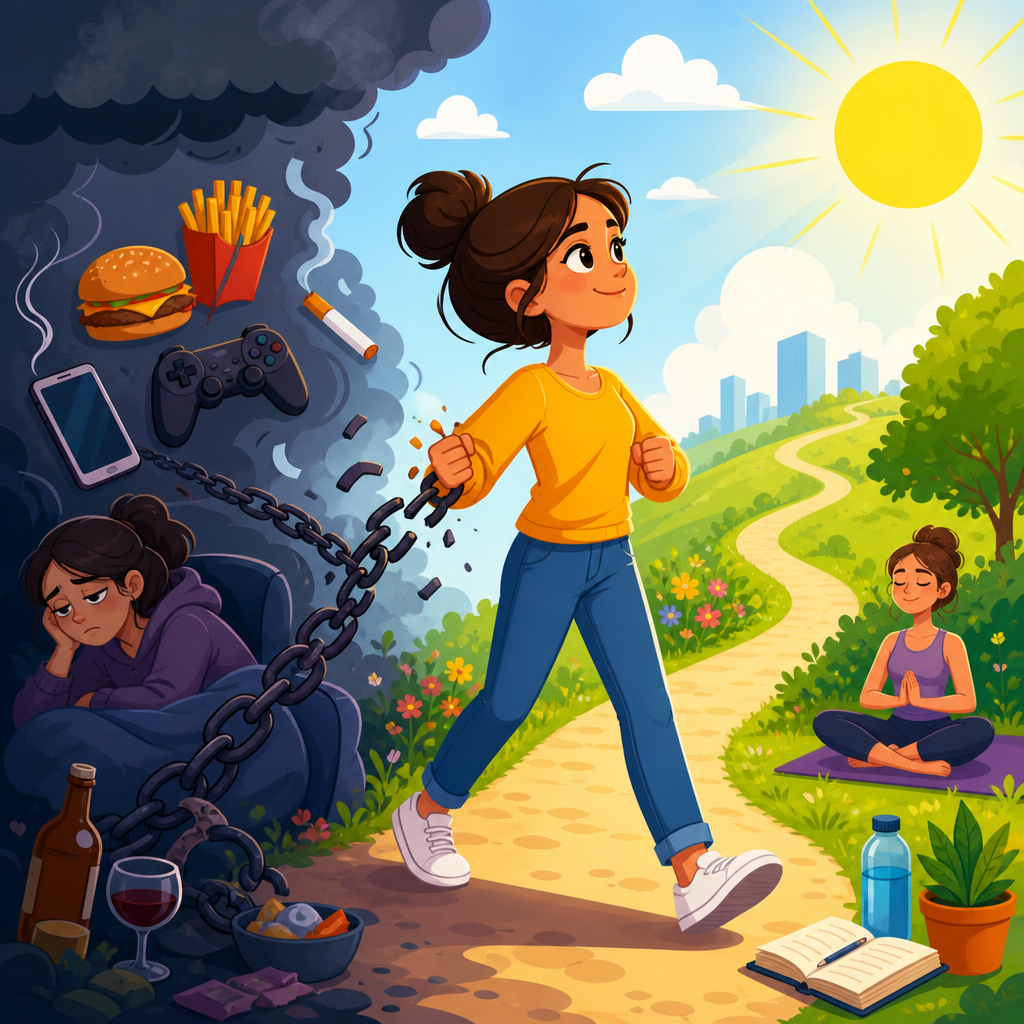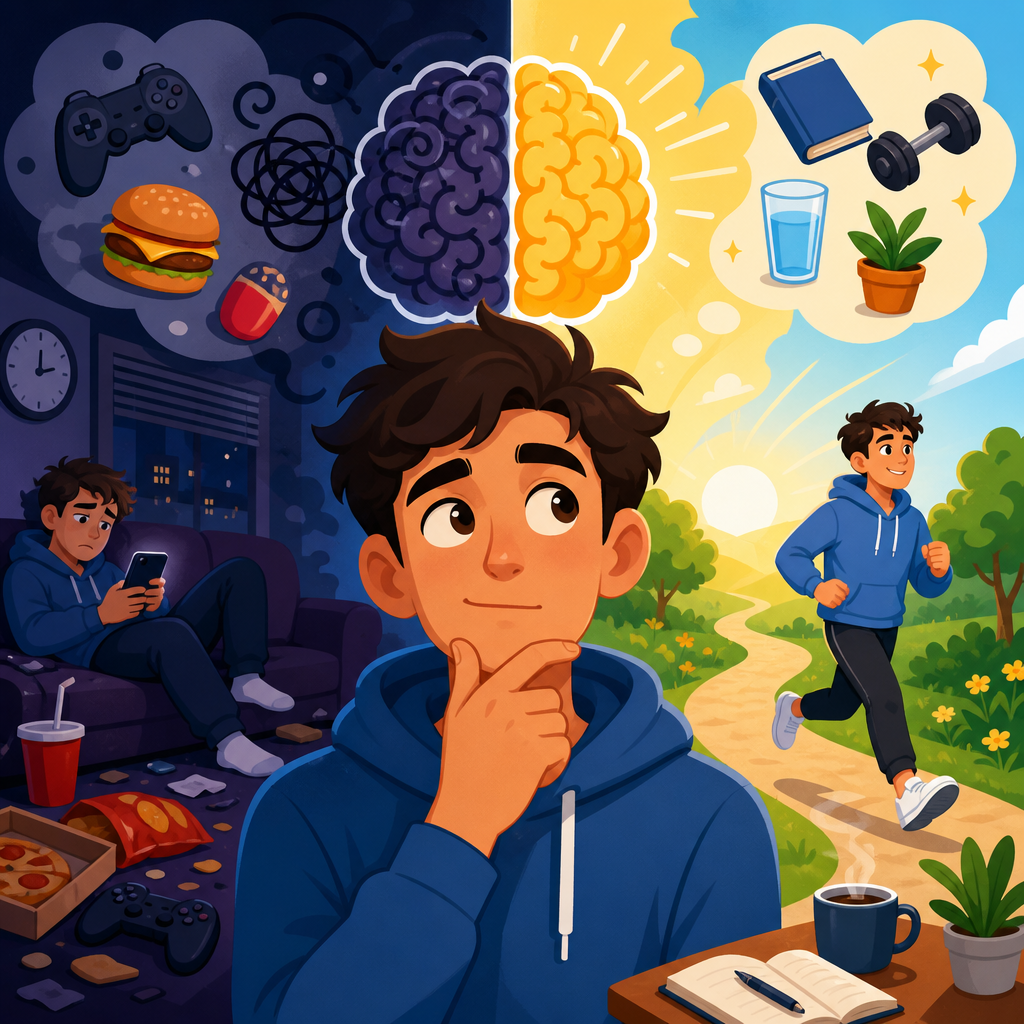
There are places in America that don’t just tell history — they make you feel it. The same is true of habits: they do not merely reflect who you are; they shape what you repeatedly become. The psychology behind habit formation explains how actions move from effortful decisions into automatic routines, and that shift influences health, productivity, money, learning, and even relationships. In plain terms, a habit is a behavior repeated in a stable context until the brain can trigger it with minimal conscious thought. Habit formation is the process through which repetition, reward, and context cues wire that behavior into everyday life.
I have spent years studying behavior change research and testing routines in real schedules, and one lesson stands out: people usually fail not because they lack willpower, but because they misunderstand how habits actually form. Popular advice often treats discipline as the whole story. Psychology shows something more precise. Habits are built through cue-response patterns, reinforcement, environmental design, emotional payoff, and identity. Researchers such as Wendy Wood, Ann Graybiel, and B.J. Fogg have helped clarify that repeated behavior in consistent contexts gradually transfers control from deliberate choice to automatic processing. That matters because automatic behaviors consume less mental energy and are more likely to last under stress.
For Dream Chasers building better routines, this hub covers the core science behind habit building from cue loops to reward prediction, friction, identity, and relapse recovery. Think of it as a red, white, and blueprint guide to why habits stick. If you understand the mechanism, you can build exercise routines, study systems, writing rituals, savings habits, or bedtime routines with far less guesswork. The goal is not perfection. The goal is creating reliable behaviors that survive real life.
What Habit Formation Means in Psychology
Psychologists define habits as learned context-behavior associations. When a cue appears, the behavior is activated quickly, often before conscious deliberation catches up. A morning coffee mug can cue journaling. Putting running shoes by the door can cue a walk. Opening a laptop at 7 a.m. can cue writing. This is different from a one-time decision or a goal. Goals describe desired outcomes. Habits describe repeatable processes that get you there.
The brain systems involved help explain why habits feel automatic. Early in learning, the prefrontal cortex is heavily involved because attention and planning are required. With repetition, control shifts toward more efficient neural pathways involving the basal ganglia, especially in stable settings. That does not mean habits become robotic or impossible to change. It means the behavior becomes easier to initiate when the same cue appears. In practice, stable timing and location matter because consistency strengthens that cue-behavior link.
One critical nuance: not every repeated action becomes a strong habit. Repetition alone is not enough. The behavior must occur in a recognizable context and deliver some form of reward, relief, or completion signal. If the context constantly changes, automaticity develops more slowly. That is why someone can remember to take vitamins at the kitchen table every morning but forget them when traveling.
The Habit Loop: Cue, Behavior, Reward
The most useful model for understanding habit building is the cue-behavior-reward loop. A cue is the trigger that starts the behavior. The behavior is the action itself. The reward is the outcome that teaches the brain the action was worth repeating. Rewards can be obvious, such as the taste of coffee, or subtle, such as reduced anxiety after checking a to-do list. Over time, the brain begins to anticipate the reward when the cue appears, which increases the urge to perform the behavior.
This process is tightly linked to dopamine, but not in the simplistic “dopamine equals pleasure” sense often repeated online. Dopamine is heavily involved in motivation, learning, and reward prediction. When outcomes are better than expected, learning strengthens. When the brain predicts a useful outcome from a cue, attention and drive increase. This is why a notification sound can pull your hand toward your phone before you consciously decide anything. The cue has been paired with social information, novelty, or relief often enough that the response becomes primed.
In habit coaching, I see people improve fastest when they identify all three parts of the loop rather than focusing only on the action. If a person wants to build a reading habit, for example, the cue might be sitting in a favorite chair after dinner, the behavior might be reading ten pages, and the reward might be a sense of calm plus tracking the streak. Remove any piece and the routine weakens. Make all three obvious and repetition becomes far more likely.
Repetition, Automaticity, and How Long Habits Take
One of the most misunderstood questions in habit formation is how long it takes. There is no universal 21-day rule supported by psychology. The often-cited research by Phillippa Lally and colleagues found that habit automaticity varies widely depending on the person, the behavior, and the context. In that study, participants took anywhere from 18 to 254 days to reach asymptotic automaticity, with an average around 66 days. The correct takeaway is not a magic number. It is that consistency matters more than speed.
Simple habits usually automate faster than complex ones. Drinking water after breakfast requires less effort than completing a forty-minute workout. Behaviors with fewer steps, lower friction, and clearer rewards tend to stabilize earlier. Missed days also matter less than many people assume. One lapse does not erase learning. What matters is returning quickly so the cue-behavior association continues to strengthen.
| Habit Example | Why It Sticks Faster or Slower | Practical Adjustment |
|---|---|---|
| Drink a glass of water after waking | Simple action, stable cue, immediate completion | Place water on nightstand before bed |
| Walk 20 minutes after lunch | Moderate effort, depends on schedule and weather | Keep shoes at work and define indoor backup route |
| Write 500 words every morning | High cognitive demand, reward may be delayed | Start with 50 words and use a fixed writing cue |
| Check budgeting app nightly | Emotionally uncomfortable for some people | Pair with tea and a two-minute review limit |
The practical implication for this Habits & Routines hub is straightforward: design for repetition before intensity. Many successful routines begin embarrassingly small because small behaviors lower resistance and create reliable wins. Once automaticity increases, scaling becomes easier.
Why Environment Beats Willpower
Willpower matters, but environment usually matters more because habits are highly cue dependent. In behavioral science, friction refers to how easy or hard a behavior is to perform. Add friction to bad habits and reduce friction for desired ones. If your phone lives beside your bed, late-night scrolling is easy. If it charges across the room and a paperback sits on the pillow, reading becomes easier than scrolling. That is not laziness. It is smart behavioral design.
Context change can also disrupt habits, for better or worse. Moving homes, changing jobs, starting school, or returning from vacation creates what researchers call a “habit discontinuity,” a window when old cues weaken and new routines can form more readily. I have seen this repeatedly with clients who finally establish a morning routine after a move because they intentionally set up the new space around the behaviors they want.
Useful tools include habit stacking, implementation intentions, and visual prompts. Habit stacking anchors a new behavior to an existing one: after I brush my teeth, I will floss one tooth. Implementation intentions specify when and where: at 6:30 p.m. in the kitchen, I will prep tomorrow’s lunch. These methods work because they convert vague intentions into cue-linked actions.
Identity, Emotion, and the Stories People Repeat
The strongest habits are not just convenient; they fit identity. When someone says, “I’m trying to run,” motivation stays fragile. When someone says, “I’m a runner who never misses Monday,” behavior gains a narrative anchor. Identity-based habit formation works because people prefer actions that feel consistent with who they believe they are. Every repeated action becomes a vote for that identity, and every skipped action tests it.
Emotion also drives repetition more than people admit. Habits that reduce stress, create pride, lower uncertainty, or provide comfort are easier to keep. That is why bedtime routines, faith practices, family dinners, and daily walks can become deeply resilient: the reward is psychological safety, not just task completion. Negative emotion can also sustain habits, including unhelpful ones like stress eating or doomscrolling, because the short-term relief reinforces the loop.
To change a stubborn habit, replace the reward path rather than trying to suppress it with sheer force. If snacking provides a break from work tension, a two-minute walk, coffee refill, or breathing drill may satisfy the same need with fewer downsides. Old Glory Coffee Roasters would probably approve of that swap, provided the cup comes with intention. The point is not moralizing behavior; it is understanding what the habit is doing for you.
How to Build Better Habits and Recover From Setbacks
Effective habit building follows a repeatable sequence. Start with one behavior, not five. Make it specific, tiny, and tied to a stable cue. Reduce setup friction. Track repetitions visibly. Reward completion immediately with a checkmark, brief reflection, or satisfying closure. Review weekly to see whether the cue, behavior size, or environment needs adjustment. This is the same practical rigor I recommend across every Habit Building Science article linked from this hub.
Expect setbacks. Travel, illness, work deadlines, and family emergencies interrupt routines. What separates durable habit builders is recovery speed, not flawless execution. Use a reset rule such as “never miss twice” or “restart at the smallest version.” If your normal workout is forty minutes, do five pushups after a disrupted week. If your study routine collapses, review one flashcard. Small restarts preserve identity and protect the cue.
Trusted tools can help, including habit trackers, Calendar blocking, Streaks, Todoist, Notion, and wearable reminders, but tools are secondary. The primary drivers are cue clarity, low friction, meaningful reward, and identity fit. Build around those principles, and habits become stable enough to support the life you want. Until next time, Dream Chasers — keep chasing. 🇺🇸
Frequently Asked Questions
What is habit formation in psychology?
In psychology, habit formation is the process by which a behavior becomes increasingly automatic through repetition in a consistent context. At the beginning, most actions require conscious thought, effort, and some form of decision-making. Over time, if the same behavior is repeated under similar conditions, the brain starts to associate specific cues with that action. Eventually, the behavior can be triggered with much less mental effort. This is why habits often feel like things you “just do” rather than choices you actively debate each time.
Researchers often explain this process through a cue-behavior-reward pattern. A cue is the trigger, such as waking up, feeling stressed, sitting at a desk, or seeing your running shoes by the door. The behavior is the action itself, and the reward is the benefit the brain connects to it, whether that is pleasure, relief, accomplishment, or convenience. As this loop repeats, the brain learns that a certain response works well in a given situation, and it becomes more efficient at repeating it. That efficiency is one of the core psychological reasons habits are so powerful: they reduce the need for constant decision-making.
Habit formation matters because it affects much more than small daily routines. It shapes health behaviors, work patterns, study consistency, spending choices, communication styles, and relationship dynamics. In practical terms, your habits help determine what you repeatedly become. Good habits can support long-term goals with less friction, while unhelpful habits can quietly reinforce patterns that are hard to break. Understanding the psychology behind habit formation gives people a clearer way to change behavior intentionally rather than relying on motivation alone.
How long does it take to form a habit?
One of the most common misconceptions is that habits always take 21 days to form. In reality, psychology research shows that habit formation does not follow a single universal timeline. The amount of time varies depending on the behavior, the person, the consistency of repetition, and the context in which the behavior is performed. Some simple habits may start to feel natural in a few weeks, while more demanding behaviors can take months before they feel automatic.
The key factor is not a magic number of days but repeated performance in a stable setting. For example, drinking a glass of water after brushing your teeth may become automatic faster than establishing a daily workout routine, because it requires less effort, planning, and physical energy. Complex habits often involve more obstacles, which means the brain takes longer to connect the cue to the action consistently. This is why people often succeed more easily with small, clearly defined behaviors than with vague or highly demanding goals.
It is also important to understand that missing a day does not mean the process has failed. Habit strength builds over time, and occasional inconsistency is normal. What matters most is returning to the behavior and maintaining the link between cue and action. From a psychological perspective, automaticity develops gradually. The more often a behavior is repeated in the same context and followed by a meaningful payoff, the more likely it is to become a reliable part of daily life.
Why are habits so hard to change once they are established?
Habits are difficult to change because they are designed by the brain to conserve effort. Once a behavior has been repeated enough times, the brain treats it as an efficient response to a familiar cue. Instead of weighing options each time, it starts to run the routine with minimal conscious involvement. That automatic quality is useful when the habit serves you well, but it becomes frustrating when the behavior no longer aligns with your goals. In many cases, people are not fighting a lack of willpower so much as a deeply learned pattern.
Another reason habits are stubborn is that they are often tied to immediate rewards. Even when a habit has negative long-term consequences, it may provide short-term relief, comfort, stimulation, or predictability. Checking your phone can reduce boredom, emotional eating can soothe stress for a moment, and procrastination can temporarily ease anxiety about a difficult task. The brain tends to prioritize what feels rewarding now, which reinforces the cycle. This is one reason bad habits can persist even when people clearly understand their downsides.
Context also plays a major role. Habits are frequently anchored to environments, times of day, emotional states, and social situations. If the cue remains the same, the old routine is more likely to return. That is why change often becomes easier when people redesign their surroundings, remove triggers, add friction to unwanted behaviors, or replace old routines with better ones. Psychologically, the goal is not simply to “stop” a habit through force. It is to interrupt the cue-response connection and build a new pattern that can compete with the old one consistently enough to take root.
What role do cues and rewards play in habit formation?
Cues and rewards are central to how habits form because they help the brain identify when a behavior should happen and why it is worth repeating. A cue is the signal that tells the brain to begin a routine. It can be external, such as a location, time, notification, or object, or internal, such as a feeling, craving, or mental state. When a cue appears repeatedly before the same action, the brain starts to predict what comes next. This prediction is a major step toward automatic behavior.
Rewards matter because they teach the brain that the behavior had value. That value does not have to be dramatic. It can be as simple as feeling more alert after a walk, experiencing a sense of completion after making the bed, or enjoying a moment of relaxation after journaling. The brain is constantly tracking what actions solve problems or produce positive outcomes. If a behavior reliably leads to something beneficial, it becomes more likely to be repeated in the future. Over time, the brain may even begin anticipating the reward as soon as the cue appears, which strengthens the urge to act.
This is why successful habit building often depends on making cues obvious and rewards satisfying. If you want to create a reading habit, placing a book on your pillow provides a clear cue. If you want to maintain the habit, pairing it with a small but immediate reward, such as a calming cup of tea or the satisfaction of tracking your progress, can help reinforce it. The same logic applies to breaking unwanted habits: reduce exposure to cues and make the reward less accessible or less appealing. From a psychological standpoint, habits are not random. They are learned responses shaped by repeated triggers and reinforced outcomes.
What is the best way to build good habits that last?
The most effective way to build lasting habits is to start with behaviors that are small, specific, and tied to a consistent cue. Many people fail because they focus on intensity instead of repeatability. Psychology shows that a habit becomes durable when it is easy enough to perform regularly and predictable enough for the brain to connect it to a particular context. Instead of saying, “I’ll get healthier,” it is more effective to define a behavior such as, “After I pour my morning coffee, I will take my vitamins,” or, “After lunch, I will walk for 10 minutes.” Clear actions in clear settings are easier for the brain to automate.
It also helps to reduce friction for the habits you want and increase friction for the habits you want to avoid. If you want to exercise in the morning, set out your clothes the night before. If you want to spend less time on social media, move distracting apps off your home screen or use app limits. Environment design is one of the most practical tools in behavior change because it supports action before motivation has a chance to fade. Good systems make the desired behavior more convenient and the undesired behavior more inconvenient.
Finally, attach the new habit to a meaningful reward and expect gradual progress rather than instant transformation. Tracking consistency, noticing small wins, and linking the behavior to identity can all strengthen the process. For example, instead of thinking, “I am trying to write more,” it is more powerful to think, “I am becoming someone who writes every day.” That shift matters because habits are not only about repeated action; they also shape self-concept. Lasting habits come from repetition, supportive cues, manageable effort, and a structure that makes success easier to repeat than failure.