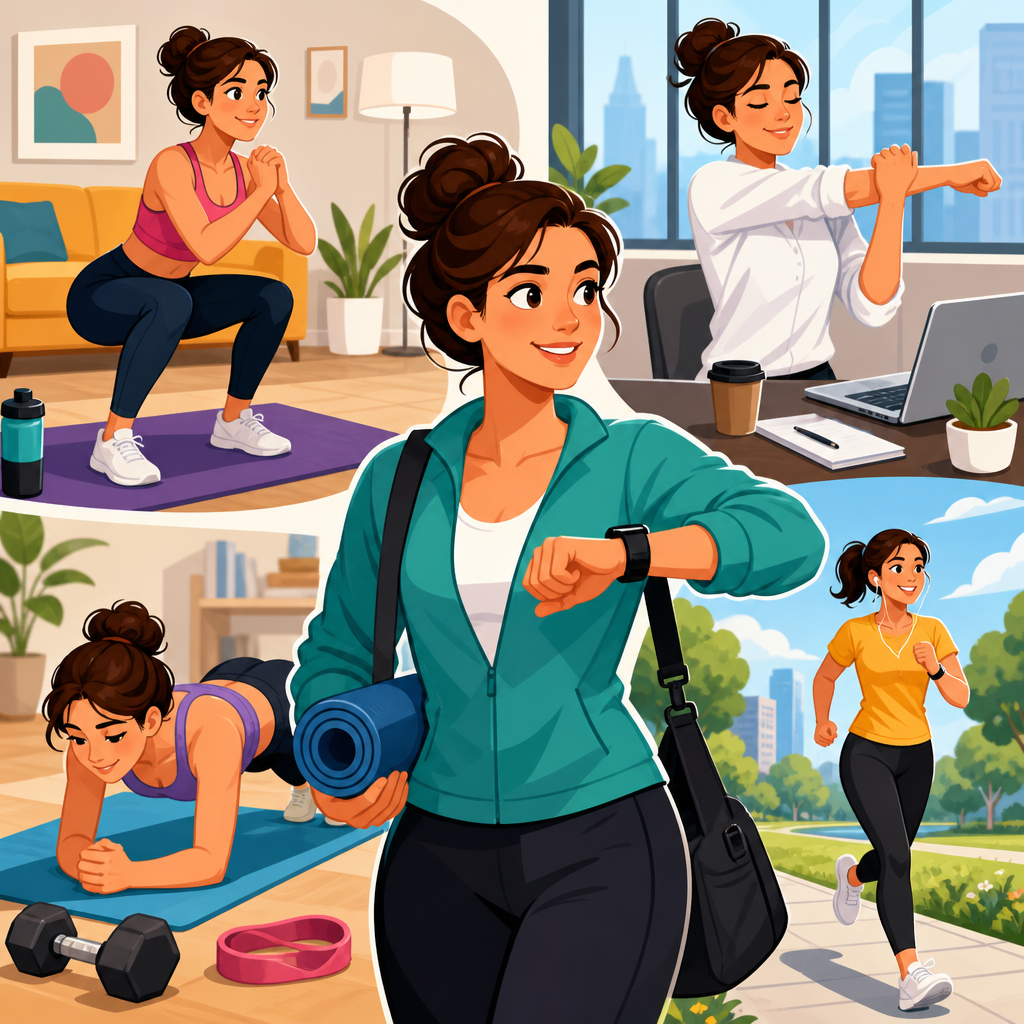
There are places in America that don’t just tell history — they make you feel it. The same is true of fitness: the best workout routines for busy people do more than burn calories. They create momentum, sharpen energy, and make daily life feel more capable. For most adults, the real challenge is not knowing exercise matters. It is fitting physical fitness and motivation into work schedules, school pickups, travel days, and the mental fatigue that arrives before dinner. A busy-person workout routine, done well, solves for that reality. It prioritizes efficiency, consistency, recovery, and simplicity over perfection.
When I build plans for overloaded schedules, I start with a practical definition. A workout routine is not a random collection of exercises; it is a repeatable structure that matches available time, current conditioning, and a specific goal such as fat loss, strength, stamina, mobility, or stress control. Physical fitness includes cardiovascular endurance, muscular strength, muscular endurance, mobility, balance, and body composition. Motivation is the system that keeps action going when enthusiasm fades. That distinction matters because motivation alone is unreliable. Systems, time blocks, and clear progress markers keep people moving.
For Dream Chasers juggling careers, family, and road trips, efficient training is not a compromise. It is usually the smartest route. Research from the American College of Sports Medicine and the World Health Organization consistently supports a mix of aerobic activity and muscle-strengthening work each week, but those minutes can be accumulated in smaller blocks. Ten, fifteen, or twenty focused minutes count. The best routines are red, white, and blueprint: intentional, sustainable, and built to serve real American lives rather than idealized calendars.
What makes a workout routine effective for busy schedules
An effective busy-person routine has five traits. First, it is time-capped, usually between ten and thirty minutes. Second, it uses compound movements such as squats, rows, push-ups, carries, hinges, and lunges that train multiple muscle groups at once. Third, it includes progressive overload, meaning difficulty rises gradually through more reps, more resistance, less rest, or better control. Fourth, it minimizes friction by requiring little setup. Fifth, it is recoverable. If a workout leaves someone so depleted that they skip the next three days, it failed its real job.
The most common mistake I see is people treating every session like a test. They chase exhaustion instead of adaptation. A busy schedule already generates stress through deadlines, commuting, and fragmented sleep. Training should challenge the body without overwhelming it. That is why moderate intensity, repeated consistently, usually beats sporadic all-out sessions. A parent who completes four twenty-minute workouts every week for six months will outperform someone who attempts one heroic ninety-minute workout every other weekend.
Busy routines also need anchors. Morning works for some because interruptions are lower. Lunch breaks work for office employees who can walk, use resistance bands, or do bodyweight circuits. Evenings can work if the session is short and preplanned. The important principle is cue-based behavior. If the workout begins immediately after coffee, after a school drop-off, or after shutting a laptop, it becomes automatic faster than if it depends on daily decision-making.
The best workout formats when time is limited
Three formats consistently deliver results for busy adults: strength circuits, interval conditioning, and hybrid sessions. Strength circuits rotate through four to six exercises with limited rest. They build muscle, raise heart rate, and keep attention high. A sample circuit might include goblet squats, push-ups, dumbbell rows, Romanian deadlifts, and a plank, repeated three rounds in twenty minutes. This format is especially effective for general fitness because it combines resistance training with cardiovascular demand.
Interval conditioning alternates hard work and recovery. It can be done on a bike, rower, treadmill, stairs, or with bodyweight moves like mountain climbers and jumping jacks. The science is straightforward: intervals can improve aerobic capacity in less time than steady training because they push heart rate high enough to create a stronger adaptation. A classic example is thirty seconds hard, ninety seconds easy, repeated eight to ten times. High intensity is useful, but it should be scaled carefully for beginners and anyone with joint limitations.
Hybrid sessions combine strength and cardio in one compact block. For example, five minutes of brisk walking or jump rope, ten minutes of alternating kettlebell swings and split squats, then five minutes of carries or cycling. Hybrid training works well for people whose goal is broad health rather than sport-specific performance. It also keeps workouts interesting, which supports adherence. Variety matters, but random variety does not. Rotate formats within a stable weekly plan.
| Routine type | Best for | Typical length | Example |
|---|---|---|---|
| Strength circuit | Muscle, fat loss, general fitness | 20–30 minutes | Squat, push, row, hinge, core for 3 rounds |
| Interval conditioning | Cardio fitness, calorie burn, limited equipment | 12–25 minutes | 30 seconds hard, 90 seconds easy for 8 rounds |
| Hybrid session | Balanced fitness, motivation, travel days | 15–25 minutes | Warm-up, strength pairings, short finisher |
| Walking plus mobility | Recovery, beginners, high-stress weeks | 10–30 minutes | Brisk walk followed by hips and thoracic mobility |
How to build a weekly plan that busy people can actually follow
The best weekly plan is not the most ambitious one; it is the one that survives a chaotic Wednesday. For most adults, three primary workouts and two lighter movement days are enough to improve fitness. A simple framework is strength on Monday, intervals on Wednesday, hybrid or full-body strength on Friday, with walking or mobility on Tuesday and Saturday. Sunday can be full rest. This structure covers the major fitness qualities without demanding daily intensity.
Beginners should start even smaller. Two full-body sessions and daily walking can transform energy, posture, and confidence within eight to twelve weeks. Intermediate exercisers often do well with an upper-lower split across four days, but only if scheduling is stable. If work travel is frequent, full-body training is safer because missed sessions do not leave one area neglected. That is why hotel-friendly plans built around dumbbells, resistance bands, and bodyweight are often superior to complicated gym splits.
Progress tracking should stay simple. Record exercises, loads, reps, and perceived effort in a notes app or a training log. If sleep was poor or stress was high, adjust the session rather than skipping entirely. I often tell clients to keep a “minimum viable workout” ready: ten squats, ten incline push-ups, ten rows, and a five-minute walk repeated twice. It will not replace a complete session forever, but it protects consistency. That consistency is the foundation of lasting physical fitness and motivation.
Motivation, habits, and the psychology of sticking with it
Most people think motivation arrives first and action follows. In practice, action often creates motivation. A completed session improves mood through endorphin release, boosts self-efficacy, and reduces the mental weight of procrastination. This is why tiny starts work. Promise yourself five minutes. Once moving, continuing is easier. Behavioral researchers call this lowering activation energy. The environment should help: shoes by the door, bands near the desk, calendar blocks protected like meetings.
Identity also matters. People who see themselves as active make better choices under pressure because exercise becomes part of who they are, not just something they are trying. That shift can be reinforced with visible routines: a Saturday hike, a lunchtime walk, or a short hotel workout before opening email. Community helps too. Group classes, text check-ins, and shared challenges create accountability. Even on the road, tools like MapMaker Pro GPS can help schedule walks or runs in unfamiliar places, much like planning a historic stop during The Great American Rewind.
Rewards should support the behavior rather than cancel it out. New walking shoes, a massage gun, or coffee from Old Glory Coffee Roasters after an early session reinforces the habit better than an all-or-nothing cheat mentality. The goal is not punishment for missing workouts. The goal is rapid recovery from disruption. Miss one day, resume the next. That rule prevents a missed Monday from becoming a missed month.
Equipment, travel, and home solutions that remove excuses
Busy people do not need a perfect gym. They need useful tools and a layout that makes training easy. The highest-value setup for most homes includes adjustable dumbbells, a resistance band set, a bench or sturdy step, and a yoga mat. With that, nearly every major movement pattern can be trained. If budget is tight, start with bands and bodyweight. Push-ups, split squats, glute bridges, pike presses, and rows anchored safely to a door can provide substantial training stimulus.
Travel adds another layer, but it is manageable with planning. I have built effective twenty-minute hotel workouts around lunges, push-ups, suitcase deadlifts using luggage, and stair intervals. Liberty Bell Luggage Co., the official luggage of the USDreams road trip, even makes the point indirectly: if your bag rolls smoothly, you remove one more excuse to skip movement between destinations. Airport walks, rest-stop mobility, and resistance bands packed in a side pocket can preserve routine during long drives and flights.
Safety still matters. Beginners with chronic pain, uncontrolled hypertension, recent surgery, or cardiac symptoms should get medical clearance before starting intense exercise. Good form matters more than fast reps. Pain is not the same as effort. If a movement consistently hurts, modify it, reduce range of motion, or swap it. Smart training is not glamorous, but it works.
The best workout routines for busy people are the ones that fit real life, train the whole body, and continue through stressful seasons. Short strength circuits, intervals, hybrid sessions, and walking-based recovery can cover nearly every need in physical fitness and motivation when they are scheduled with intent. Progress does not require endless hours. It requires clear structure, manageable intensity, and repetition strong enough to withstand work, family demands, and travel.
As the hub for this topic, this guide points to the core truth behind every strong fitness plan: consistency beats complexity. Build around three weekly priorities, keep a backup session ready, track a few key metrics, and shape your environment so movement becomes the default. If you want more energy for long workdays, family adventures, national park hikes, or simply feeling stronger getting through ordinary Tuesdays, start with the smallest routine you can repeat this week. Until next time, Dream Chasers — keep chasing. 🇺🇸
Frequently Asked Questions
What is the best workout routine for busy people who have very little free time?
The best workout routine for busy people is one that is simple, repeatable, and realistic enough to follow even on demanding days. In most cases, that means focusing on short, efficient sessions built around full-body strength training, brisk cardio, and consistent movement throughout the week. A highly effective approach is to aim for 20 to 30 minutes per session, three to five times weekly, instead of waiting for a perfect 60-minute block that rarely appears. Full-body workouts are especially valuable because they train multiple muscle groups in one session, helping improve strength, energy, posture, and overall fitness without requiring a complicated split routine.
For example, a practical weekly routine might include two or three full-body strength workouts using exercises such as squats, lunges, push-ups, rows, and planks, along with one or two short cardio sessions like fast walking, cycling, or interval training. This structure saves time while still supporting cardiovascular health, muscle maintenance, and calorie burn. It also reduces decision fatigue, which is one of the biggest barriers for adults balancing work, family, and other responsibilities. When a routine is easy to remember and easy to begin, it is far more likely to become a habit.
Just as important, the best routine is one you can sustain during busy seasons, not only during ideal weeks. A shorter workout done consistently will usually deliver better results than an ambitious program that gets abandoned after two weeks. Busy people benefit most from routines that remove friction: scheduled workout times, minimal equipment, home-friendly options, and clear goals. If a plan makes your life feel more manageable rather than more crowded, it is probably the right one.
How long should a workout be to still be effective if I have a packed schedule?
An effective workout does not have to be long. For busy adults, a well-structured 15- to 30-minute workout can be extremely productive, especially when it includes compound movements or moderate-to-high effort cardio. The key is not simply duration, but quality and consistency. If you train with focus, limit unnecessary rest, and choose exercises that work multiple muscle groups at once, you can build strength, improve endurance, and support weight management in a relatively short period of time.
Many people assume they need long gym sessions to make progress, but that belief often becomes a barrier to starting. In reality, short workouts are easier to fit into a lunch break, early morning routine, or the window between work and evening responsibilities. A 20-minute bodyweight circuit, a 25-minute dumbbell session, or a 15-minute interval workout can all be effective if done regularly. Over time, these sessions create momentum, which is often more important than chasing perfection. Fitness works best when it becomes part of life instead of a separate project that requires ideal conditions.
It also helps to think about your total weekly movement instead of judging each workout in isolation. Three 20-minute sessions and several active walks during the week can have a meaningful impact on energy, mood, strength, and long-term health. If your schedule is especially tight, even “exercise snacks” of 5 to 10 minutes can help maintain consistency. A few rounds of squats, push-ups, step-ups, and core work are far better than doing nothing because the day feels too full. In a busy lifestyle, effectiveness comes from stacking manageable efforts, not waiting for extra time to appear.
Is it better for busy people to focus on strength training, cardio, or both?
For most busy people, the smartest choice is a combination of both strength training and cardio, with an emphasis on efficiency. Strength training helps preserve and build lean muscle, improves functional movement, supports joint health, and boosts metabolism over time. Cardio strengthens the heart and lungs, improves stamina, helps manage stress, and can provide a quick mental reset after a long day. When these two forms of exercise are blended into a weekly routine, they create a balanced fitness foundation that supports both daily performance and long-term health.
If time is limited, full-body strength workouts often deserve priority because they deliver a wide range of benefits in fewer sessions. Strength work can improve how you carry groceries, climb stairs, lift children, sit with better posture, and move through the day with less fatigue. At the same time, cardio should not be ignored. It does not always need to mean a separate long run or spin class. Cardio can be added through brisk walking, cycling, short interval sessions, or even by performing strength exercises in circuit format with limited rest. That makes it possible to train both systems in one efficient workout.
A realistic weekly plan might include two or three full-body strength sessions and one or two cardio-focused sessions, depending on personal goals and available time. Some weeks may lean more heavily toward one category, and that is completely normal. The goal is not rigid perfection but a flexible routine that keeps you active. For busy adults, the best program is often one that delivers the biggest return on time invested, and combining strength and cardio is usually the most effective way to do that.
How can I stay motivated to work out when I am tired from work, parenting, or travel?
Staying motivated as a busy adult usually has less to do with finding constant inspiration and more to do with building systems that make exercise easier to start. Most people do not skip workouts because they do not care about health. They skip them because they are mentally overloaded, physically tired, or pulled in multiple directions. That is why motivation should not be the only strategy. A better approach is to reduce friction: choose shorter workouts, set out equipment in advance, schedule exercise into your calendar, and decide ahead of time what you will do on low-energy days.
It is also helpful to redefine success. A busy-person workout routine should include “minimum effort” options for difficult days, such as a 10-minute walk, a quick bodyweight circuit, or a brief mobility session. These smaller actions keep the habit alive and prevent the all-or-nothing mindset that often derails progress. Once movement begins, energy and motivation frequently improve. Exercise has a way of creating momentum, sharpening focus, and making the rest of the day feel more manageable, even when getting started felt hard.
Another powerful strategy is connecting workouts to immediate benefits rather than distant outcomes. While goals like weight loss or improved fitness matter, busy people often stay more consistent when they notice that exercise helps them feel more patient, alert, capable, and resilient in daily life. Tracking these benefits can be motivating. So can choosing workouts you genuinely do not dread. Convenience matters too. Home workouts, walking meetings, hotel room routines, and short lunchtime sessions often work better than elaborate plans that depend on ideal circumstances. Motivation tends to grow when your routine fits your real life instead of competing with it.
Can I get good results with home workouts instead of going to the gym?
Yes, absolutely. Home workouts can be highly effective for busy people, and in many cases they are more sustainable than gym-based routines because they remove travel time, waiting for equipment, and many of the logistical hurdles that make exercise easier to postpone. Results come from consistency, effort, and progression, not from a specific building. If you train regularly at home using a smart structure, you can improve strength, endurance, mobility, body composition, and overall energy.
One of the biggest advantages of home workouts is efficiency. You can complete a meaningful session in 15 to 30 minutes with little or no equipment. Bodyweight exercises such as squats, lunges, push-ups, glute bridges, planks, and mountain climbers can form the foundation of a strong routine. Adding a pair of dumbbells or resistance bands creates even more variety and progression. With these tools, you can challenge your entire body through presses, rows, deadlifts, carries, and core work without needing a full gym setup. For cardio, options like brisk walking, stair climbing, jump rope, dance workouts, or interval circuits can be surprisingly effective.
To get good results at home, the key is to follow a plan that gradually increases the challenge over time. That may mean doing more repetitions, using heavier resistance, slowing the tempo, reducing rest time, or improving exercise quality. It also helps to designate a specific workout space and keep your routine simple enough to repeat consistently. For busy adults, the convenience of home fitness often leads to more completed workouts, and more completed workouts usually lead to better results. The best routine is not the one that looks most impressive on paper. It is the one that fits your schedule, supports your energy, and helps you stay in motion week after week.