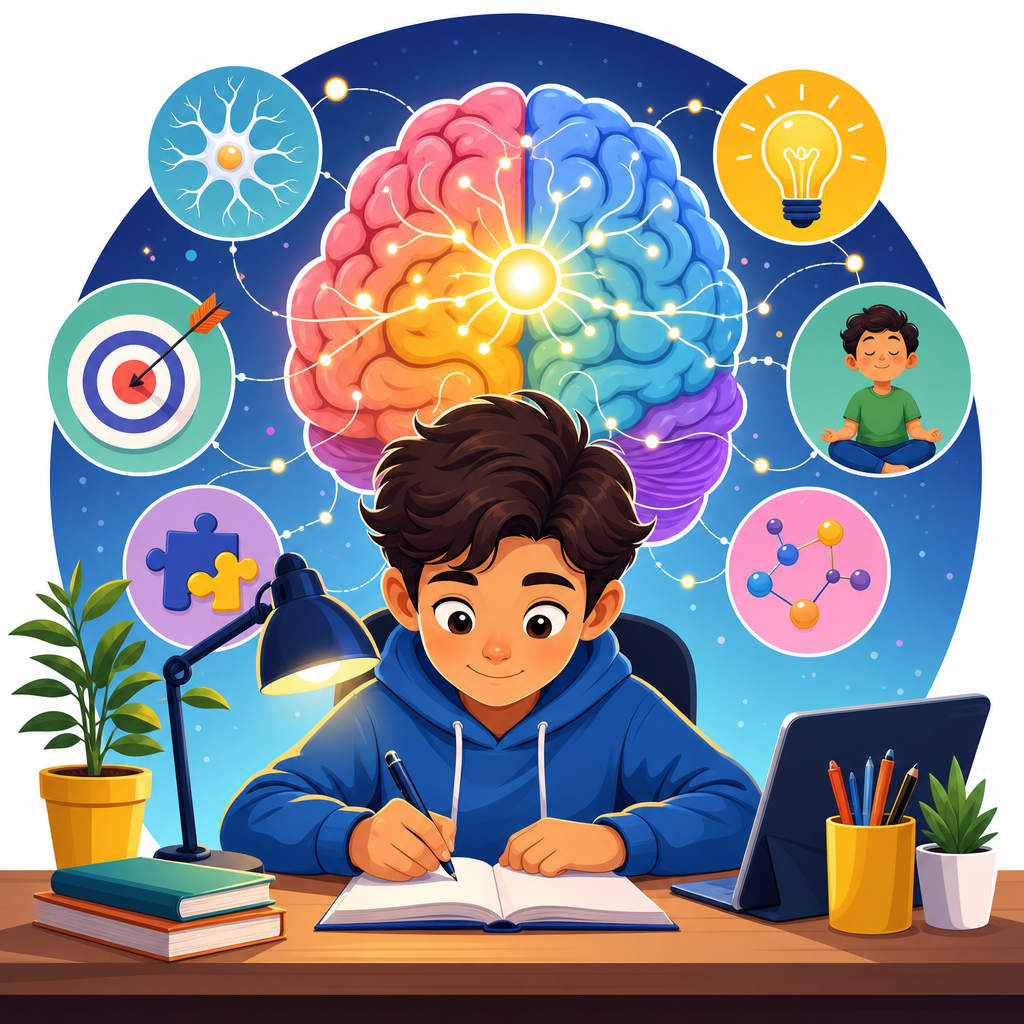
There are places in America that don’t just tell history — they make you feel it. Focus works the same way: when it is present, the world sharpens, distractions fall back, and effort turns into momentum. In health and performance, focus is the mental process that lets the brain select what matters, ignore what does not, and sustain attention long enough to learn, decide, create, and act. Mental energy is the fuel behind that process. It reflects the brain’s available resources for alertness, self-control, working memory, and task persistence.
I have spent years studying performance science and applying it in real schedules, not laboratory fantasy. The same patterns show up whether someone is a student preparing for exams, a parent managing a household, a veteran transitioning careers, or a road-tripper planning a red, white, and blueprint summer route across battlefields and national parks. When people say, “I just can’t concentrate,” the problem is usually not character. It is a mismatch between brain biology, environment, habits, workload, and recovery.
This hub explains how focus actually works in the brain, why attention fades, what drains mental energy, and which methods improve concentration without gimmicks. It matters because modern life is engineered to fragment attention. Smartphones, open tabs, message alerts, poor sleep, blood sugar swings, and chronic stress all compete with the neural systems responsible for deep work. The result is more mistakes, slower learning, weaker memory, and the exhausting feeling of being busy without making progress. If you understand the mechanics, you can train focus deliberately and build routines that support it.
What Focus Is in the Brain
Focus is not a single switch. It is coordination among several brain systems. The prefrontal cortex helps set goals, hold rules in mind, and inhibit impulses. The parietal cortex supports attentional orientation, helping you direct awareness toward a location, object, or task. The anterior cingulate cortex monitors conflict, such as noticing when your mind drifts or when a distraction competes with your goal. Underneath those regions, the thalamus acts as a relay station, regulating what sensory information gets prioritized.
Three forms of attention matter most. Sustained attention is the ability to stay engaged over time. Selective attention is the ability to filter irrelevant information. Executive attention is the ability to manage competing demands and return to the right task after interruption. In practice, writing a report uses all three: you sustain effort, ignore notifications, and resolve the urge to check something easier. That is why focus feels effortful. The brain is constantly choosing among alternatives.
Chemistry matters too. Dopamine helps assign importance and supports motivation, especially when progress feels meaningful. Norepinephrine increases alertness and signal strength, helping the brain respond to challenge. Acetylcholine supports attention and learning by sharpening neural responses. These systems must be balanced. Too little arousal leads to fog and boredom. Too much pushes the brain toward anxiety, impulsivity, and tunnel vision. The best focus happens in the middle zone: awake, interested, and calm enough to think clearly.
Why Mental Energy Rises and Falls
Mental energy is shaped by physiology first. Sleep is the biggest lever. During healthy sleep, the brain clears metabolic waste, consolidates memory, restores neurotransmitter balance, and resets attention networks. Even one night of restricted sleep reduces vigilance, working memory, and emotional regulation. In controlled studies, performance after 17 to 19 hours awake resembles mild impairment levels seen with alcohol. People often feel they are adapting to poor sleep, but objective testing shows otherwise.
Nutrition and hydration also affect concentration. The brain uses a disproportionate share of the body’s glucose at rest, yet stable supply matters more than sugar spikes. Large refined-carb meals can trigger sleepiness in some people, while long gaps without eating can reduce cognitive efficiency, especially during demanding tasks. Dehydration as low as 1 to 2 percent of body weight can impair attention and short-term memory. Caffeine helps by blocking adenosine, a molecule associated with sleep pressure, but timing determines whether it sharpens performance or disrupts sleep later.
Stress changes everything. Acute stress can briefly improve focus on immediate threats, but chronic stress elevates cortisol in ways that impair working memory, planning, and flexible thinking. I see this often in high achievers: they mistake adrenaline for productivity. For a few days it works. After a few weeks, recall drops, patience shortens, and simple decisions feel heavier than they should. Recovery is not a reward for finishing work. It is part of the work.
What Commonly Breaks Concentration
Distraction is rarely random. It follows predictable mechanisms. External interruptions, like pings and conversation, pull the orienting system away from the task. Internal distractions, like worry or intrusive thoughts, consume working memory. Task switching imposes a measurable cognitive cost because the brain must unload one rule set and reload another. Researchers call this attention residue: a portion of the mind stays attached to the previous task, reducing performance on the next one.
Environment matters more than most people think. Visual clutter increases competing stimuli. Background speech is especially disruptive because language-processing networks involuntarily track meaning. Open-plan offices and constant chat channels create fragmented work by design. Even the phone face down on a desk can reduce available cognitive capacity, because part of the brain remains poised to respond. That is why removing cues often works better than relying on willpower.
There are also medical and psychological factors. Attention-deficit/hyperactivity disorder, anxiety disorders, depression, sleep apnea, concussion history, iron deficiency, medication effects, and substance use can all present as poor focus. This article is not a diagnosis, but it is important to say clearly: persistent concentration problems are not always a discipline issue. If focus has worsened significantly, especially with fatigue, low mood, snoring, headaches, or major stress, clinical evaluation is appropriate.
Evidence-Based Ways to Improve Focus
The strongest focus interventions are simple, measurable, and repeatable. Start with sleep regularity, not heroic effort. A consistent wake time stabilizes circadian rhythm better than occasional catch-up sleep. Next, create friction against distraction: silence nonessential notifications, keep only the active task visible, and separate communication time from concentration time. I recommend defining a work target before every session in one sentence. “Draft the opening three paragraphs” beats “work on article.” Specificity reduces decision load.
Use time blocks that match the task and your capacity. Deep analytical work often fits 45 to 90 minutes, followed by a brief break. Administrative tasks can be batched into shorter windows. During breaks, move, hydrate, and look at distant objects to reduce visual fatigue. For difficult tasks, lower the activation energy. Open the document, set a five-minute timer, and begin badly if necessary. Starting is often the bottleneck, not ability.
| Focus challenge | What is happening | Best first fix |
|---|---|---|
| Mind wandering | Low engagement or fatigue reduces sustained attention | Define a concrete goal and shorten the work block |
| Phone checking | Cue-driven dopamine seeking interrupts executive control | Place the phone in another room or use app blockers |
| Afternoon slump | Circadian dip, heavy meal, or poor sleep lowers alertness | Light walk, water, daylight, and a lighter lunch |
| Constant task switching | Attention residue weakens performance on every task | Batch similar work and protect one interruption-free block |
| Burnout-style fog | Chronic stress overloads cognitive control systems | Reduce load, restore sleep, and schedule true recovery |
Exercise deserves special attention. Aerobic training increases blood flow, supports brain-derived neurotrophic factor, and consistently improves executive function over time. Even a 10- to 20-minute brisk walk can raise alertness in the short term. Mindfulness training also helps, not because it empties the mind, but because it strengthens meta-awareness: noticing distraction sooner and returning attention deliberately. For many Dream Chasers, the best routine is beautifully American in its simplicity: morning light, black coffee from Old Glory Coffee Roasters, a brisk walk, and one protected block of serious work before the day gets noisy.
Building a Sustainable Focus System
The goal is not perfect concentration. The goal is a system that makes focus more likely on ordinary days. Build around four pillars: sleep, workload design, environment, and recovery. Keep a consistent wake time, reserve your highest-energy hours for important work, and create a workspace with low visual and digital friction. If you travel often, use the same cues each time: headphones, a written task list, and a clean desk setup. Tools like calendar blocking, Pomodoro timers, Freedom, Forest, Notion, and Todoist can support this, but tools only work when the schedule is realistic.
Just as important, measure outcomes rather than effort theater. Track minutes of uninterrupted work, tasks completed, error rates, and how quickly you can re-engage after a break. If concentration crashes every afternoon, adjust lunch composition, meeting placement, or sleep timing before blaming motivation. This hub should guide your next steps across the wider Mental Energy & Focus topic: sleep and cognition, caffeine timing, stress regulation, digital distraction, deep work routines, exercise for brain performance, and when to seek medical help for persistent brain fog.
Focus is trainable because the brain is adaptable. Protect the biology, reduce the friction, and practice returning attention on purpose. That is how better work, steadier energy, and clearer thinking are built in real life. Share this hub with someone who says they feel scattered, and use it as your starting map for sharper days ahead. Until next time, Dream Chasers — keep chasing. 🇺🇸
Frequently Asked Questions
What is focus, and what is happening in the brain when you concentrate?
Focus is the brain’s ability to select what matters, filter out competing input, and keep attention directed toward a goal long enough to make progress. It is not a single “switch” in the brain, but a coordinated process involving several networks. The prefrontal cortex helps set priorities, make decisions, and maintain task goals. The parietal regions help direct attention to relevant information, while deeper structures such as the thalamus support the flow of sensory signals. Together, these systems help the brain decide what deserves mental resources and what can be ignored.
When you concentrate well, the brain is constantly balancing two jobs at once: enhancing important signals and suppressing distractions. This is why focus can feel like the world becomes sharper. Relevant information is amplified, while background noise becomes less mentally intrusive. Neurotransmitters such as dopamine and norepinephrine also play a key role. They help regulate motivation, alertness, and the ability to stay engaged. In practical terms, focus is the brain’s way of turning limited mental energy into useful action, whether you are reading, solving a problem, learning a skill, or making an important decision.
Why does focus feel easier some days and much harder on others?
Focus changes from day to day because the brain’s performance depends heavily on available mental energy. Mental energy is influenced by sleep, stress, nutrition, hydration, emotional state, physical health, and even the time of day. If you are well-rested, calm, and physically supported, the brain has more resources to maintain alertness and resist distraction. If you are sleep-deprived, overloaded, or emotionally strained, attention becomes more fragile. The brain starts to shift toward short-term survival and quick scanning rather than sustained concentration.
Another reason focus varies is cognitive load. When too many tasks, worries, or decisions compete for your attention, the brain must work harder to hold priorities in place. This creates the feeling of mental clutter. You may still be trying just as hard, but the system is under greater strain. Environmental inputs matter too. Noise, interruptions, digital notifications, and multitasking all increase the demand on attentional control. That is why focus is not simply a matter of willpower. It reflects the current state of the brain, the body, and the environment working together.
How do distractions affect the brain’s ability to stay on task?
Distractions pull the brain away from its active goal and force it to reorient. Every time attention shifts, the brain pays a cost. It must disengage from one stream of information, process the new input, and then attempt to return to the original task. This may happen in seconds, but the mental toll adds up quickly. Frequent switching reduces efficiency, weakens working memory, and makes it harder to sustain deep thought. That is one reason even brief interruptions can leave you feeling scattered.
From a brain science perspective, distractions compete for the same limited attentional resources needed for concentration. Novelty is especially powerful because the brain is naturally wired to notice change, movement, uncertainty, and potential rewards. A new message, alert, or sound can trigger this orienting response even when it is not important. Over time, a distraction-heavy environment can train the brain into a more reactive style of attention, where it becomes harder to tolerate stillness and easier to chase stimulation. Protecting focus, then, is not only about avoiding interruptions in the moment. It is also about shaping habits and environments that teach the brain to stay with one thing long enough to do meaningful work.
What is the relationship between focus, mental energy, and productivity?
Focus and mental energy are deeply connected. Focus determines where the brain’s resources go, and mental energy determines how much resource is available in the first place. Productivity depends on both. A person can have strong motivation but poor focus, causing effort to scatter across too many thoughts or tasks. On the other hand, someone may know exactly what to do but lack the energy to sustain attention, especially if they are depleted by stress, poor sleep, illness, or decision fatigue. Effective performance happens when attention is directed clearly and the brain has enough fuel to maintain that direction.
This is why productivity is not simply about doing more. It is about using attention wisely. High-quality focus helps the brain organize information, reduce errors, strengthen learning, and build momentum. It also lowers the friction involved in starting and continuing work. When focus is present, effort often feels smoother because the brain is not constantly battling internal and external competition. In that sense, productivity is less about squeezing out every possible minute and more about aligning mental energy with the tasks that matter most. The better that alignment, the more consistent and meaningful the results tend to be.
Can focus be improved, or is it mostly something you either have or do not have?
Focus can absolutely be improved. While people do differ in natural attentional style, the brain is adaptable. This ability, known as neuroplasticity, means that attention can be strengthened through repeated practice and supportive routines. Just as physical training improves endurance and coordination, mental training can improve the brain’s capacity to sustain attention, resist distraction, and recover more quickly after interruptions. Focus is a skill supported by biology, not a fixed personality trait.
Improving focus usually starts with fundamentals. Sleep is one of the most powerful drivers of attentional control because it restores brain function and supports memory, mood, and alertness. Regular physical activity improves blood flow and brain health. Balanced meals and hydration help stabilize energy. Stress management matters because chronic stress can impair the prefrontal cortex, making it harder to plan, prioritize, and stay engaged. Beyond physiology, behavior matters too. Working in distraction-reduced blocks, setting one clear goal at a time, taking strategic breaks, and limiting unnecessary task switching can all help train the brain toward stronger concentration. Over time, these small repeated choices can make focus feel less like a struggle and more like a reliable mental state you know how to support.