There are places in America that don’t just tell history — they make you feel it.
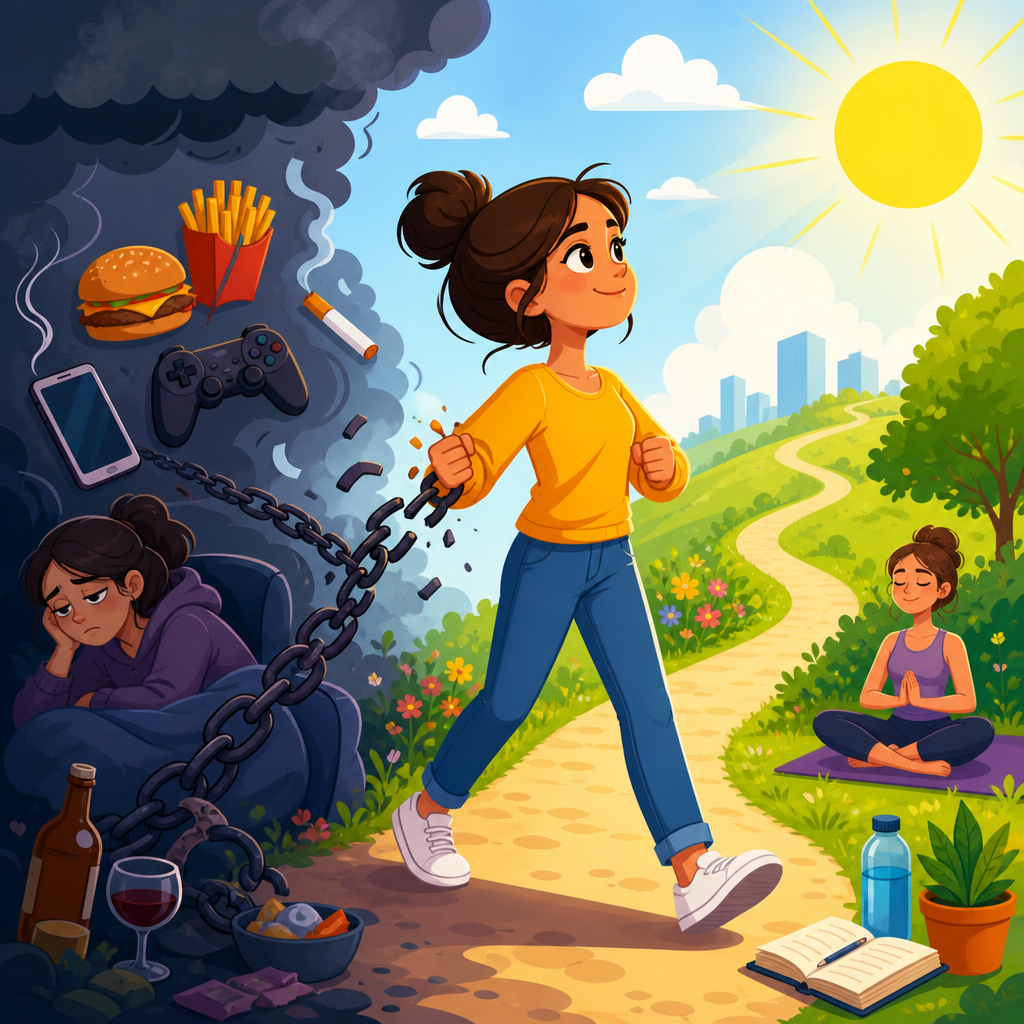
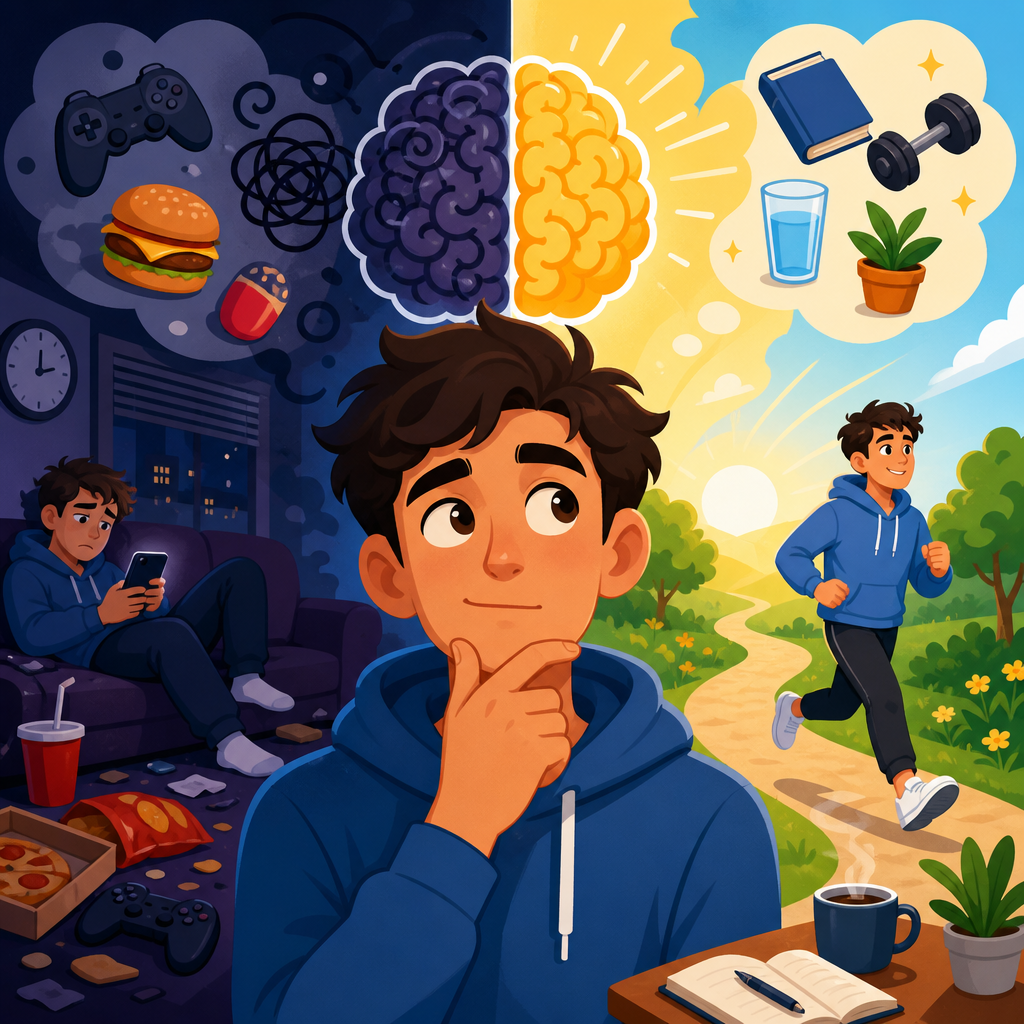
Breaking bad habits feels similar. You can read every tip in the world, yet when the moment arrives, old routines pull with surprising force. A bad habit is a repeated behavior that delivers some immediate reward while creating long-term costs: smoking, doomscrolling, overspending, late-night snacking, skipping workouts, or snapping at people under stress. The reason breaking bad habits is so hard is not weak character. It is that habits become encoded through cues, cravings, responses, and rewards, then reinforced by environment, emotion, and repetition.
As the hub of our Habits & Routines coverage, this guide explains what makes a habit stick, why motivation alone fails, and what methods actually work in real life. I have used these same principles to help replace automatic phone checking with planned work blocks, and the change did not begin with discipline speeches. It began with redesigning triggers. For Dream Chasers building better days with red, white, and blueprint intention, understanding the mechanics matters because you cannot change what you still describe as a mystery.
Why bad habits become automatic
Bad habits take root because the brain values efficiency. When a behavior repeatedly solves a problem or relieves discomfort, the brain starts automating it to save effort. Charles Duhigg popularized the habit loop as cue, routine, reward, while researchers such as Wendy Wood have shown that a large share of daily behavior is habitual rather than fully deliberate. In plain terms, you are often not deciding; you are reenacting.
The most common cues are location, time, emotional state, preceding action, and social context. If stress hits at 3 p.m. and you usually grab sugar, the body learns that pattern. If you sit on the couch and open a streaming app every night, the room itself becomes a trigger. This is why people can feel “fine” until they walk into a kitchen, commute past a bar, or hear a notification chime. The cue starts the sequence before conscious thought catches up.
Rewards do not need to be large to be powerful. Variable rewards are especially sticky. Social media is a classic example: not every refresh is satisfying, but occasional novelty keeps the behavior alive. Slot machines work the same way. So do inboxes. Immediate relief also matters. Nail biting may reduce tension for seconds; procrastination may postpone anxiety for an hour. The brain records that short-term payoff even when the long-term result is negative.
Why willpower alone usually fails
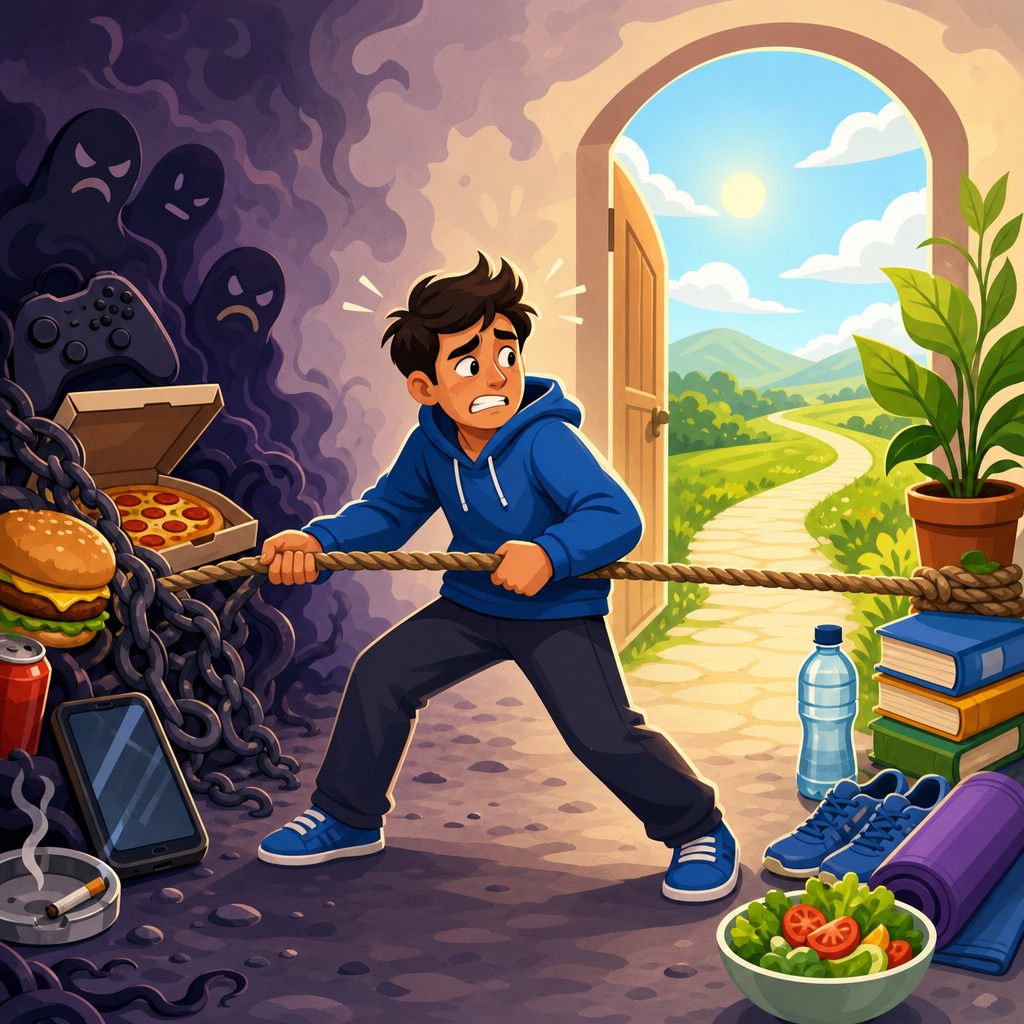
Willpower is real, but it is unreliable when used as the main strategy. Stress, lack of sleep, decision fatigue, alcohol, hunger, and emotional overload all reduce self-control at exactly the moments habits tend to appear. That is why people often break promises to themselves late at night, during travel, or after a difficult day. The problem is not that they never cared. The problem is that they relied on a resource that fluctuates.
Motivation also follows emotion, and emotion changes fast. You may feel highly committed after a health scare, a breakup, or a New Year reset. Two weeks later, the urgency fades while the old cues remain. In behavior science, this is the intention-action gap: people mean to act differently but fail to convert desire into consistent behavior. “Try harder” does not close that gap. Systems do.
Identity adds another layer. Many people say, “I’m just a smoker,” “I’m messy,” or “I always procrastinate.” Those labels turn temporary patterns into self-stories. When behavior and identity conflict, behavior usually wins unless the identity changes too. The most durable progress I have seen came when people stopped chasing isolated acts and started practicing a new vote for who they wanted to be: a non-smoker, a careful spender, a calm parent, a consistent walker.
What works: remove friction, replace the reward, repeat the pattern
The most effective approach is not trying to erase a habit in one dramatic move. It is interrupting the loop. First, identify the cue. Second, keep the need in view. Third, substitute a response that meets that need with less damage. If stress drives late-night eating, the need may be decompression, not hunger. A replacement could be tea, a short walk, a shower, a protein snack, or a ten-minute phone-free wind-down. If boredom drives scrolling, the need may be stimulation; a podcast, crossword, or preselected reading list can fill the gap.
Environment design is the fastest lever because visible, easy options win. I have watched clients cut mindless snacking by putting treats in opaque containers on a high shelf and fruit at eye level. Phone overuse drops when the device charges outside the bedroom, notifications are disabled, and distracting apps require extra steps to open. For spending habits, deleting saved cards, unsubscribing from marketing emails, and adding a 24-hour checkout rule creates enough friction to let the rational brain rejoin the conversation.
Implementation intentions are another proven tool. This means deciding in advance: “If X happens, I will do Y.” Peter Gollwitzer’s research found that specific plans increase follow-through because they reduce hesitation in the moment. “If I crave a cigarette after lunch, I will walk for five minutes and chew gum.” “If I want to check social media during work, I will write the urge on paper and return after the timer ends.” Specific beats vague every time.
| Bad habit | Common cue | Immediate reward | Replacement that works |
|---|---|---|---|
| Doomscrolling | Boredom, stress, idle phone time | Novelty and distraction | App blocker, saved reading list, 10-minute timer |
| Late-night snacking | Fatigue, TV, emotional letdown | Comfort and stimulation | Preplanned snack, herbal tea, earlier dinner, bedtime routine |
| Overspending online | Email offers, payday, stress | Dopamine and anticipation | Remove saved cards, 24-hour wait, budget category cap |
| Skipping exercise | Complex routine, low energy | Immediate comfort from avoiding effort | Five-minute start rule, clothes laid out, walk after breakfast |
How to break bad habits in real life
Start by tracking the habit for one week without trying to fix everything. Write down when it happens, where, with whom, what you felt, and what happened right before. Patterns emerge quickly. Many people discover that the problem behavior appears in only two or three repeatable situations. Once you know the pattern, choose one habit and one context, not five at once. Narrow focus beats heroic ambition.
Next, set a minimum viable change. If the habit is drinking every evening, aim first for alcohol-free Mondays through Thursdays, or replace the first drink with sparkling water and delay the second by thirty minutes. If the habit is checking your phone in bed, move the charger to another room and use a physical alarm clock. If the habit is procrastination, start with a ten-minute work sprint. Tiny starts matter because consistency is more important than intensity during the rewiring stage.
Use measurement, but use the right kind. Count streaks if they motivate you, yet also track recoveries. One lapse is data; a spiral starts when people treat one lapse as proof of failure. In cognitive behavioral therapy, this is known as all-or-nothing thinking. A better script is: “I slipped in a predictable context. What guardrail was missing?” That question leads to design changes instead of shame.
Social support works when it is specific. Telling a friend, coach, spouse, or support group exactly what you are changing and when you are vulnerable increases accountability. For serious habits involving substances, gambling, eating disorders, or self-harm, professional help is not optional window dressing; it is often the safest path. Evidence-based support may include CBT, motivational interviewing, nicotine replacement therapy, medication, or peer recovery programs. The right tool depends on the habit’s severity and the person’s medical history.
Common mistakes that keep bad habits alive
The first mistake is chasing elimination without replacement. Remove the behavior without solving the underlying need, and the brain usually finds a substitute. The second is keeping cues everywhere: junk food on the counter, apps on the home screen, cigarettes in the glove compartment, shopping alerts on the lock screen. The third is making the plan too hard. A perfect routine that lasts three days is weaker than a modest routine that lasts three months.
Another mistake is expecting progress to feel clean. It rarely does. Habit change is uneven because extinction bursts happen: when a reward stops arriving, the urge may spike temporarily before fading. People often misread that spike as a sign the new plan is not working, when it may indicate the old loop is being challenged. Sleep disruption, travel, grief, and major life transitions also revive old patterns. That does not erase progress; it means the system needs adjustment.
As this hub expands, link your next step to deeper guides on cue identification, habit tracking, morning and evening routines, digital detox strategies, and accountability systems. Breaking bad habits is hard because they are learned solutions, not random flaws. What works is clear: spot the trigger, reduce friction, replace the reward, practice the new response, and recover quickly after lapses. Start with one habit today, build proof you can trust, and let momentum do its job. Until next time, Dream Chasers — keep chasing. 🇺🇸
Frequently Asked Questions
Why is breaking a bad habit so hard even when I know it is hurting me?
Because bad habits are not powered mainly by logic. They are powered by repetition, reward, and context. A habit forms when your brain learns that a certain behavior reliably produces some kind of payoff, even if that payoff is small or short-lived. That reward might be relief from stress, a burst of pleasure, distraction from boredom, a sense of comfort, or simply familiarity. Over time, the brain becomes efficient at automating the sequence: cue, behavior, reward. Once that loop is established, you often act before you fully think.
That is why knowledge alone rarely changes behavior. You may know smoking is harmful, doomscrolling steals your focus, or late-night snacking leaves you feeling sluggish, but in the moment, the immediate reward still wins against the distant cost. The brain is especially sensitive to what helps right now. If a habit reduces discomfort quickly, it becomes even harder to resist. This is not a sign of weak character. It is a sign that your brain has learned a reliable shortcut.
Environment also plays a major role. Habits are tied to time, place, emotional state, and routine. You may crave junk food when you sit on the couch at night, check your phone the moment work feels difficult, or overspend when you feel anxious or deprived. In other words, the behavior is often linked less to conscious choice and more to familiar triggers. Breaking the habit means changing more than your intention. It means disrupting the pattern your brain has practiced over and over again.
What actually causes a bad habit to stick over time?
Bad habits stick because they are reinforced, often daily, by immediate rewards and repeated cues. Every time you perform the behavior and get a payoff, your brain updates the lesson: this worked, so remember it. That payoff does not have to be dramatic. A few seconds of relief, a small dopamine hit, or a brief escape from discomfort is enough to strengthen the loop. If you repeat that loop often enough, it becomes automatic.
Another reason habits stick is that many of them solve a problem, at least temporarily. Scrolling may soothe boredom. Snacking may reduce stress. Procrastination may protect you from the anxiety of starting. Snapping at someone may release tension. Even destructive habits tend to serve a purpose in the short term, which is why simply trying to “stop” them often fails. If you remove the behavior but do not address what it was doing for you, the urge usually returns.
Consistency is what makes a habit durable. Small actions repeated in stable contexts become deeply associated with certain situations. If you always smoke after meals, always check social media when a task gets hard, or always pour a drink after work, the context itself starts triggering the urge. Eventually, the cue becomes enough to launch the behavior. That is why lasting change usually requires identifying the cue, understanding the reward, and creating a replacement response that can meet the same need in a healthier way.
Is willpower enough to break a bad habit?
Willpower helps, but it is rarely enough by itself. Willpower is best understood as a limited resource, not a permanent lifestyle strategy. It tends to weaken under stress, fatigue, decision overload, hunger, emotional strain, and lack of sleep. Since many bad habits happen during exactly those conditions, relying on self-control alone is like trying to win a daily battle on your hardest settings.
What works better is designing your life so that you need less willpower in the first place. That means reducing exposure to triggers, making the habit harder to perform, and making the alternative easier to choose. If you want to stop doomscrolling, remove the most tempting apps from your home screen or set app limits. If you want to stop overspending, delete saved payment methods and create a waiting period before purchases. If late-night snacking is the issue, stop keeping highly tempting foods within easy reach. These changes may seem simple, but they are powerful because they interrupt the automatic path from cue to action.
Willpower matters most at the front end of habit change, when you are setting up systems, boundaries, and routines. After that, the goal is not to grit your teeth forever. The goal is to build conditions that make the healthier behavior more likely and the old one less convenient. In practice, successful habit change comes less from being stronger in the moment and more from being smarter before the moment arrives.
What are the most effective strategies for breaking a bad habit for good?
The most effective approach is to stop thinking only about stopping and start thinking about replacing, reshaping, and rehearsing. First, identify the habit loop clearly. What triggers the behavior? What do you do? What reward are you getting? Be specific. “I snack at night” is less useful than “I snack around 9:30 p.m. when I am tired, bored, and watching TV because it gives me comfort and stimulation.” That level of clarity gives you something workable.
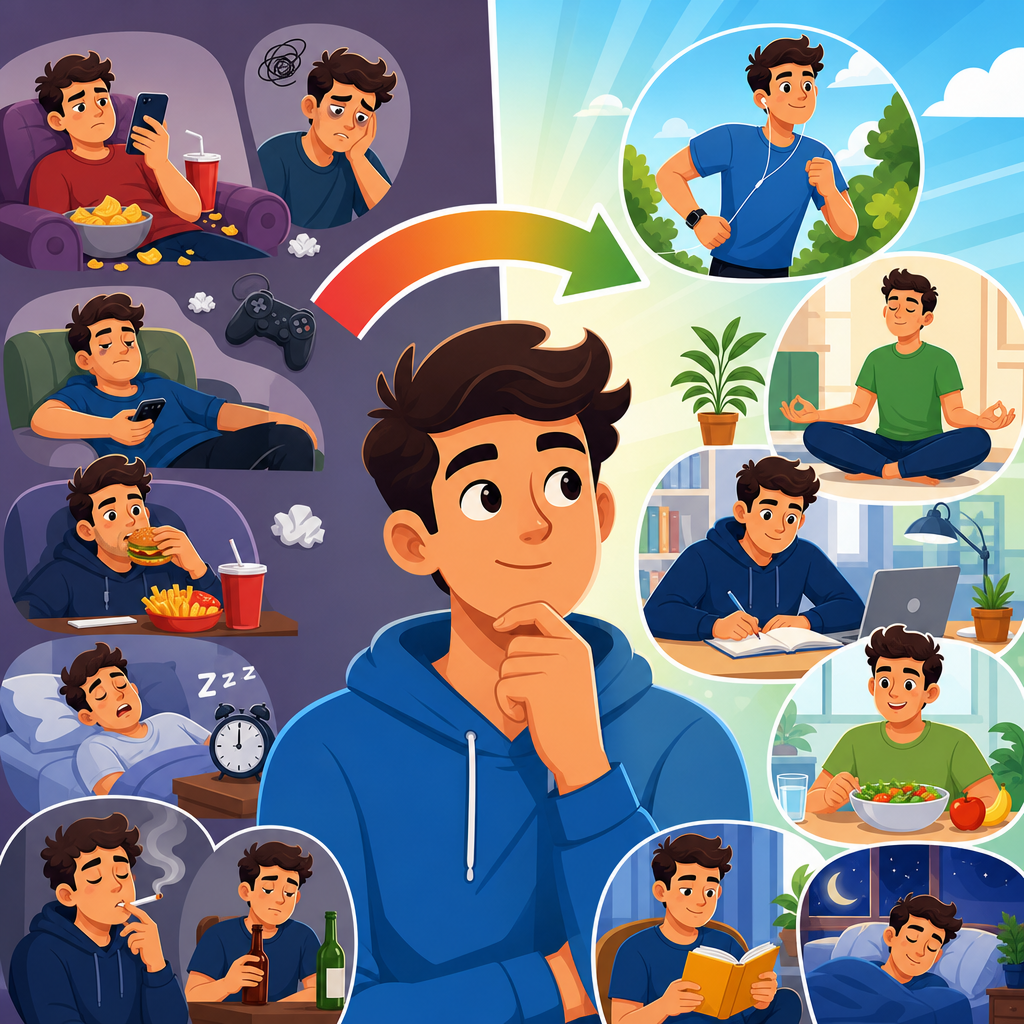
Next, create a replacement behavior that serves a similar function. If your bad habit gives stress relief, your replacement needs to calm you. If it gives stimulation, your replacement needs to engage you. If it gives a break from effort, your replacement should offer a healthier pause. For example, a short walk, tea, gum, a five-minute reset, texting a friend, stretching, journaling, or doing one tiny task can work better than trying to do nothing at all. A replacement should be realistic, easy, and available at the exact moment the urge appears.
Then change the environment. Remove cues where possible, add friction to the bad habit, and reduce friction for the new one. Prepare in advance. Put workout clothes out the night before. Keep your phone in another room during focused work. Block shopping sites during vulnerable hours. Have healthy food visible and ready. Use reminders, alarms, or written plans. The more your environment supports the change, the less you must rely on motivation.
Finally, expect repetition, not perfection. Slips do not erase progress. A lapse is data, not proof that change is impossible. Look at what happened: what was the trigger, what need were you trying to meet, and what can you adjust next time? People who break bad habits long term usually succeed because they keep refining the system after setbacks rather than treating one bad day as failure. The habit was learned through repetition, and the new pattern must be learned the same way.
How long does it take to break a bad habit, and what should I do if I keep relapsing?
There is no single timeline that applies to everyone. The time it takes depends on how often the habit occurs, how rewarding it is, how tied it is to your environment, how stressful your life is, and whether you are replacing it with something useful. Some habits start losing strength within weeks. Others, especially those linked to strong emotional relief or addiction, can take much longer and may require structured support. The more automatic and rewarding the behavior has become, the more practice it usually takes to weaken it.
If you keep relapsing, the most important thing is not to turn the relapse into an identity statement. Saying “I failed” is far less helpful than asking “What pattern am I still underestimating?” Relapse often means the plan was too vague, the triggers were too strong, the replacement behavior was not satisfying enough, or the environment still made the old habit too easy. It can also mean you are trying to remove a coping mechanism without building a better one. That is not hopeless. It just means the strategy needs adjustment.
A useful response is to review the last few times the habit happened and look for patterns. Were you tired, lonely, rushed, stressed, or bored? Did the urge show up at the same time or place? What happened just before it? Then tighten the system. Make the old behavior more difficult, make the new one more available, and plan a specific response for the trigger. If the habit is severe, compulsive, or connected to substances, trauma, or mental health struggles, professional help can make a major difference. Therapy, coaching, support groups, and medical care are not signs of failure. They are often the most effective tools for lasting change.