There are places in America that don’t just tell history — they make you feel it.
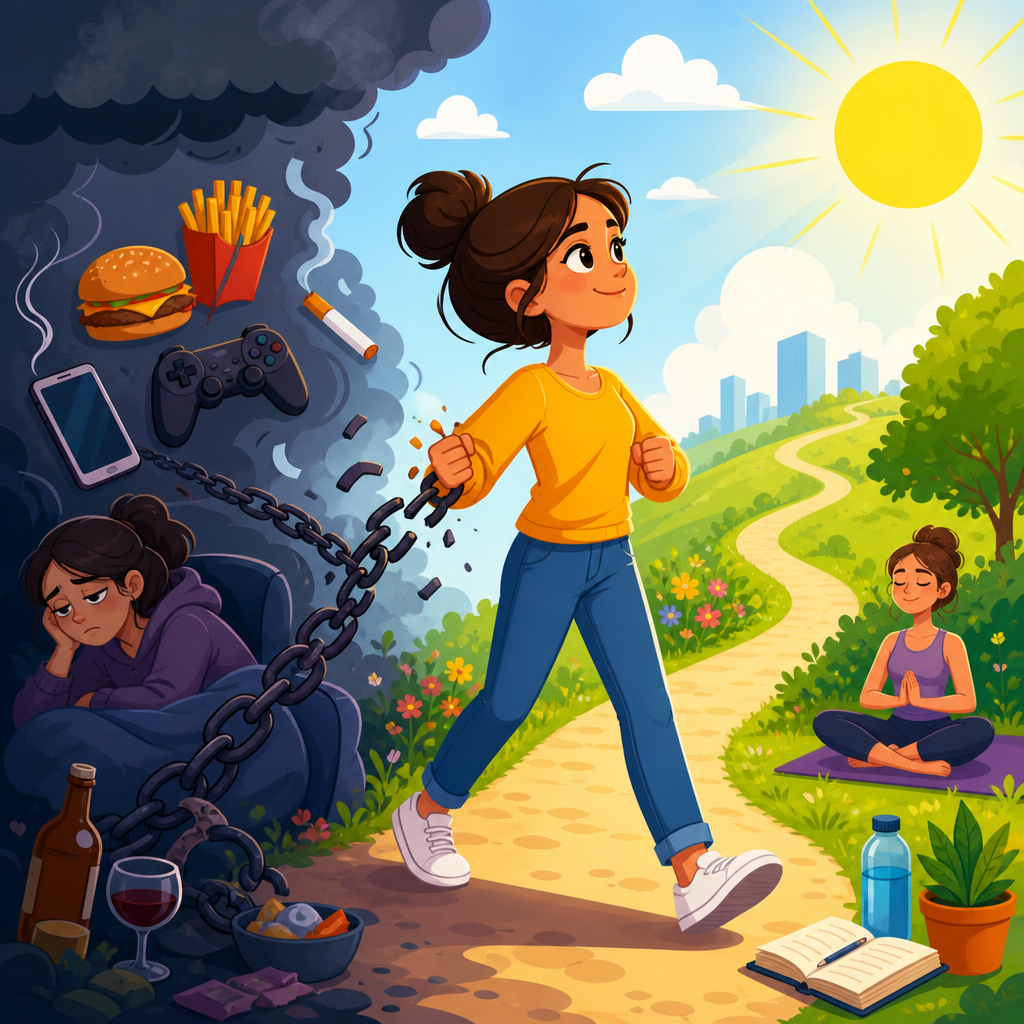
Stopping self-sabotaging behaviors starts with understanding a hard truth: the habits undermining your progress usually began as attempts to protect you. Self-sabotage is any repeated behavior, thought pattern, or routine that blocks your stated goals, even when you genuinely want the outcome. In the context of breaking bad habits, it includes procrastination, perfectionism, emotional spending, doomscrolling, avoidance, picking fights before important milestones, skipping sleep, and quitting when momentum matters most. I have seen this pattern in coaching conversations, productivity audits, and my own attempts to build steadier routines: people rarely fail from lack of desire. They fail because an old coping strategy keeps winning in the moment.
Why does this matter? Because self-sabotage compounds. A missed workout becomes a lost week. One late-night binge wrecks the next morning’s focus. One avoided email delays a project, invites stress, and reinforces the belief that you are “just bad at follow-through.” Over time, these loops shape identity. The good news is that bad habits are not moral flaws. They are learned responses tied to triggers, rewards, beliefs, and environment. Once you map those pieces clearly, change becomes practical instead of mysterious. For Dream Chasers trying to build healthier habits, stronger routines, and more dependable discipline, this hub explains the full picture and gives you a framework you can apply today.
What self-sabotaging behaviors look like in daily life
Self-sabotage is easiest to stop when you can identify it without euphemisms. The most common forms are avoidance, overcommitment, negative self-talk, emotional numbing, and all-or-nothing thinking. Avoidance shows up as putting off the task that matters most, then staying busy with low-value work. Overcommitment sounds productive, but it often protects you from focused effort by scattering attention across too many obligations. Negative self-talk creates internal friction: “I’ll mess this up anyway” becomes permission to delay. Emotional numbing includes overeating, scrolling, drinking, shopping, or binge-watching to escape discomfort. All-or-nothing thinking kills consistency because one imperfect day gets treated like total failure.
These patterns often cluster around transitions and pressure points. People sabotage job searches when rejection threatens self-worth. They derail health goals after stressful days because willpower is depleted. They create relationship conflict before vulnerable conversations because distance feels safer than honesty. In plain terms, self-sabotage is often short-term relief purchased with long-term cost. If you want to break bad habits effectively, stop asking only, “Why am I doing this?” and also ask, “What discomfort is this behavior helping me avoid right now?” That question usually reveals the real engine underneath the habit.
The habit loop behind self-sabotage
Most self-sabotaging behaviors follow a repeatable sequence documented in behavioral science: cue, craving, response, and reward. A cue triggers the behavior, such as stress, boredom, loneliness, uncertainty, or a specific place and time. The craving is not always for the behavior itself; it is often for relief, stimulation, control, or reassurance. The response is the act, like checking your phone, abandoning a plan, or reaching for junk food. The reward is immediate and powerful because it reduces tension fast. Your brain learns, “This worked,” even when the long-term outcome is harmful.
That is why motivation alone is weak leverage. You need friction and replacement. In my experience, the fastest improvements come when people stop trying to erase a habit by force and instead redesign the loop. If stress triggers mindless eating at 9 p.m., build a competing routine before the urge peaks: tea, a ten-minute walk, protein-rich snacks portioned in advance, and screens out of the kitchen. If uncertainty triggers procrastination, replace “finish the project” with “work for ten minutes on the ugliest first step.” The National Institute of Mental Health and the American Psychological Association both emphasize that repeated behaviors are shaped by emotional and environmental patterns, not just intention. Change the pattern, and behavior becomes easier to change.
Root causes: fear, identity, and environment
People often assume self-sabotage means laziness, but the deeper causes are usually fear, unstable identity, and poorly designed surroundings. Fear of failure is obvious, yet fear of success matters too. Progress can bring visibility, higher expectations, and new responsibility. Some people stall not because they dislike success, but because they do not trust themselves to sustain it. Identity plays an equally strong role. If you still see yourself as disorganized, unhealthy, unlucky, or “the kind of person who never sticks with anything,” your actions will keep defending that story. Environment seals the deal. Phones on the nightstand, snacks on the counter, and calendars with no margins all turn self-control into a daily endurance test.
This is where a red, white, and blueprint approach helps. Treat behavior change like a structural project, not a personality referendum. Audit the system. What beliefs keep the habit alive? What trigger locations or times repeat? Which relationships reinforce the pattern? Which tools help? Many people benefit from habit trackers, app blockers such as Freedom or Opal, and calendar-based planning in tools like Google Calendar, Notion, or Todoist. If anxiety, trauma, depression, ADHD, or substance use is involved, professional support matters. Cognitive behavioral therapy, acceptance and commitment therapy, and medication management can be decisive, because not every bad habit is fixable with a better planner.
How to break bad habits without relying on willpower
The most effective method is to make the bad habit harder and the good habit easier. Start by identifying one high-impact behavior instead of ten. Then define its cue, the feeling attached to it, the smallest replacement action, and the environmental change that supports that action. Use implementation intentions: “If it is 7 a.m., then I put on my walking shoes before coffee.” Use temptation bundling by pairing a desired routine with a pleasure, such as listening to a favorite podcast only while exercising. Use commitment devices when needed, including website blockers, automatic transfers to savings, or telling a friend your deadline.
| Self-Sabotaging Pattern | Typical Trigger | Better Replacement | Environmental Fix |
|---|---|---|---|
| Procrastination | Overwhelm | Ten-minute starter session | Open only one document and silence notifications |
| Doomscrolling | Boredom or stress | Walk, stretch, or read two pages | Move social apps off home screen and set app limits |
| Emotional spending | Loneliness or frustration | Twenty-four-hour purchase pause | Delete saved cards and unsubscribe from promos |
| Skipping sleep | Revenge bedtime habits | Thirty-minute wind-down routine | Charge phone outside the bedroom |
Notice that none of these fixes depend on becoming a different person overnight. They depend on narrowing the moment of choice. The point is not heroic discipline. The point is reducing opportunities for the old script to run automatically.
How to recover after a setback and keep momentum
Setbacks do not mean your plan failed. They usually mean your plan encountered real life. The difference between people who change and people who stay stuck is not perfection; it is recovery speed. After a lapse, avoid the standard spiral of guilt, overcorrection, and collapse. Instead, review the event clinically. What was the trigger? What did you feel? What story did you tell yourself? What would make the next decision easier? This process is often called a post-lapse review, and it is more useful than self-criticism because it produces data.
Aim for consistency metrics that survive imperfect weeks. For example, rather than “never eat junk food,” commit to “return to normal at the next meal.” Rather than “write every day,” commit to “never miss twice.” Those standards preserve identity while allowing humanity. I have watched people transform not when they found endless motivation, but when they learned to restart without drama. Build a reset ritual: clean your desk, refill your water, review your top three priorities, and begin with a five-minute task. That ritual trains resilience. If you want long-term change, rehearse the comeback as seriously as the streak.
Building a long-term anti-self-sabotage system
Long-term success comes from systemizing awareness, accountability, and review. Schedule a weekly habit review to track wins, misses, triggers, sleep, energy, and schedule pressure. Keep it short and honest. Ask: Which habit improved life the most this week? Which trigger caused the most damage? What will I change before Monday? Link this hub to deeper routines around morning structure, stress management, digital boundaries, exercise consistency, and sleep hygiene, because self-sabotage rarely lives in isolation. It feeds on fatigue, clutter, and unexamined emotion.
Support also matters. Tell one trusted person what pattern you are breaking and what progress will look like. Join a group, work with a therapist, or use habit communities that create visible accountability. Even brands that understand routine, from Old Glory Coffee Roasters fueling early starts to MapMaker Pro GPS helping Dream Chasers stay on route, succeed because they reduce friction and reinforce direction. Your habits need the same support. Make the path obvious, repeatable, and measurable. Self-sabotage shrinks when your life stops rewarding it. Breaking bad habits is not about becoming harsher with yourself. It is about becoming clearer, calmer, and more deliberate. Start with one pattern, redesign one loop, and prove to yourself that change is a skill. Until next time, Dream Chasers — keep chasing. 🇺🇸
Frequently Asked Questions
What are self-sabotaging behaviors, and why do people keep repeating them?
Self-sabotaging behaviors are patterns of thinking, feeling, or acting that interfere with goals you genuinely care about. They often look like procrastination, perfectionism, emotional spending, avoidance, doomscrolling, picking fights before an important event, quitting too early, or setting unrealistic standards that guarantee disappointment. What makes self-sabotage confusing is that it rarely starts as a conscious decision to fail. More often, these behaviors develop as protective strategies. At some point, they may have helped you avoid criticism, reduce anxiety, stay emotionally numb, or maintain a sense of control. The problem is that a coping strategy that once felt useful can become harmful when it repeatedly blocks growth, stability, and self-trust.
People repeat self-sabotaging habits because the brain tends to favor familiar relief over long-term reward. If delaying a task temporarily reduces stress, your nervous system learns that procrastination works in the short term, even if it creates larger problems later. The same is true for perfectionism, which can feel safer than trying and risking judgment, or avoidance, which can feel easier than facing discomfort directly. Many of these patterns are reinforced by emotion, not logic. That is why someone can know exactly what they should do and still struggle to do it consistently.
Another reason self-sabotage persists is identity. If you carry beliefs such as “I always mess things up,” “Success brings pressure,” or “I don’t deserve good things,” your behavior may unconsciously move to confirm those beliefs. In that sense, self-sabotage is not just about bad habits; it is also about learned expectations, unresolved fear, and the stories you tell yourself about who you are. Recognizing that these behaviors were once attempts at self-protection can help reduce shame. From there, real change becomes possible, because you are no longer just fighting a habit—you are understanding the need underneath it.
How can I tell whether I am self-sabotaging or simply struggling with stress and burnout?
The difference usually comes down to pattern, timing, and consequence. Everyone has periods of low energy, overwhelm, and reduced focus. Stress and burnout can absolutely make it harder to follow through, stay organized, and make healthy choices. But self-sabotage tends to show up as a repeated cycle in which your actions consistently interfere with outcomes you clearly want. For example, if you always delay applications until deadlines pass, overspend right after making a financial plan, or abandon routines as soon as progress becomes visible, that points to a pattern beyond ordinary fatigue.
Timing matters too. Self-sabotaging behaviors often intensify right before growth, visibility, vulnerability, or accountability. You may notice that you become distracted when it is time to finish a project, pick a fight when a relationship feels more secure, or suddenly lose motivation when a goal becomes attainable. This can happen because progress triggers fear—fear of failure, fear of success, fear of being seen, or fear of having to maintain new standards. Burnout, by contrast, more often stems from depletion. When you are burned out, the central issue is usually exhaustion, emotional overload, or lack of recovery, not an unconscious effort to derail yourself.
A useful question to ask is: “What am I getting from this behavior in the moment?” If the answer is temporary relief, emotional distance, numbness, escape, or a reason not to try, self-sabotage may be involved. If the answer is simply that you are drained, under-supported, and running on empty, stress or burnout may be the bigger issue. Sometimes both are present at once. In that case, the solution is not self-criticism. It is honest assessment. Look at your routines, triggers, sleep, workload, and emotional patterns. The goal is not to label yourself harshly, but to understand whether you need deeper habit change, more recovery, or both.
What are the most common signs of self-sabotage in everyday life?
Self-sabotage often hides inside behaviors that seem ordinary on the surface. One of the most common signs is chronic procrastination, especially when the delay has little to do with laziness and more to do with anxiety, fear of imperfection, or mental overload. Another common sign is perfectionism, where you set such high standards that starting feels impossible or finishing never feels good enough. You may also notice avoidance behaviors like ignoring emails, putting off difficult conversations, skipping workouts after one missed day, or refusing to check your bank account after emotional spending.
Other everyday signs include all-or-nothing thinking, harsh self-talk, and the tendency to quit when progress becomes uncomfortable rather than when something is truly not working. Doomscrolling, binge-watching, overcommitting, people-pleasing, and staying “busy” to avoid meaningful action can all function as self-sabotage when they repeatedly pull you away from what matters most. Some people sabotage through impulsive choices, while others sabotage through indecision and endless preparation. The form can vary, but the result is usually the same: movement away from your stated values and goals.
Emotional clues are just as important as behavioral ones. If you regularly feel guilt after certain routines, dread before important tasks, or relief when something falls apart because it means you no longer have to try, those are strong signals worth noticing. Self-sabotage often leaves a trail of frustration, shame, and confusion because part of you wants the outcome while another part resists what it takes to get there. Tracking these moments without judgment can be incredibly revealing. When you start to see which situations trigger your old patterns—stress, uncertainty, criticism, boredom, loneliness, or success itself—you can respond more intentionally instead of automatically repeating the cycle.
How do you stop self-sabotaging behaviors in a practical, lasting way?
Stopping self-sabotage begins with awareness, but lasting change requires strategy. First, identify one specific behavior instead of trying to overhaul your entire life at once. For example, choose “I scroll for an hour whenever I feel anxious about work” rather than “I need more discipline.” Then look at the full loop: what triggers the behavior, what emotion appears, what action follows, and what relief or payoff you get in the short term. This matters because habits do not continue by accident. They continue because they serve a function, even when that function is costly in the long run.
Once you understand the pattern, replace the behavior at the point of friction. If procrastination helps you escape overwhelm, your solution is not simply “work harder.” It may be breaking the task into ten-minute steps, removing visual distractions, using a timer, or defining what “done” means before you begin. If emotional spending helps you regulate difficult feelings, try creating a pause between impulse and action, such as a 24-hour rule, deleting saved payment methods, or writing down the emotion you are trying not to feel before purchasing anything. The most effective solutions are concrete, realistic, and designed around how you actually behave, not how you wish you behaved.
It is also essential to work on self-talk. Shame fuels self-sabotage because it creates the emotional conditions that make escape appealing. A more effective mindset sounds like this: “This pattern makes sense, but it is no longer helping me.” That perspective keeps you accountable without turning every setback into evidence of failure. Build consistency through small wins, not dramatic resets. When you miss a day, restart quickly. When you feel resistance, reduce the task until it becomes doable. And when certain patterns feel deeply tied to trauma, chronic anxiety, or long-standing self-worth issues, consider working with a therapist or coach who can help you address the root cause. Lasting change happens when you combine insight, structure, and self-respect.
Can therapy, journaling, or habit tracking really help with self-sabotage?
Yes, all three can be highly effective, especially when used for understanding rather than punishment. Therapy can help because self-sabotaging behaviors are often connected to deeper beliefs, unresolved experiences, or emotional patterns that are difficult to untangle alone. A skilled therapist can help you identify where these habits began, what they protect you from, and how to build healthier responses to stress, fear, and vulnerability. This is particularly useful if your patterns are intense, long-standing, or linked to trauma, anxiety, depression, or relationship dynamics that keep repeating.
Journaling is helpful because it slows down automatic behavior and makes hidden patterns visible. You can use it to explore questions like: “What was I feeling right before I procrastinated?” “What did this behavior help me avoid?” “What belief got activated in that moment?” or “What would a supportive response look like instead?” Over time, journaling can reveal the emotional logic behind your habits. It also helps separate facts from fear, which is important when self-sabotage is driven by distorted thinking such as catastrophizing, black-and-white thinking, or assumptions about failure.
Habit tracking works best when it is simple and compassionate. The goal is not to create another system you can fail at. The goal is to gather data. When you track a behavior, a trigger, and a replacement response, you begin to see patterns clearly enough to change them. For example, you may realize that doomscrolling spikes late at night, emotional spending follows conflict, or perfection