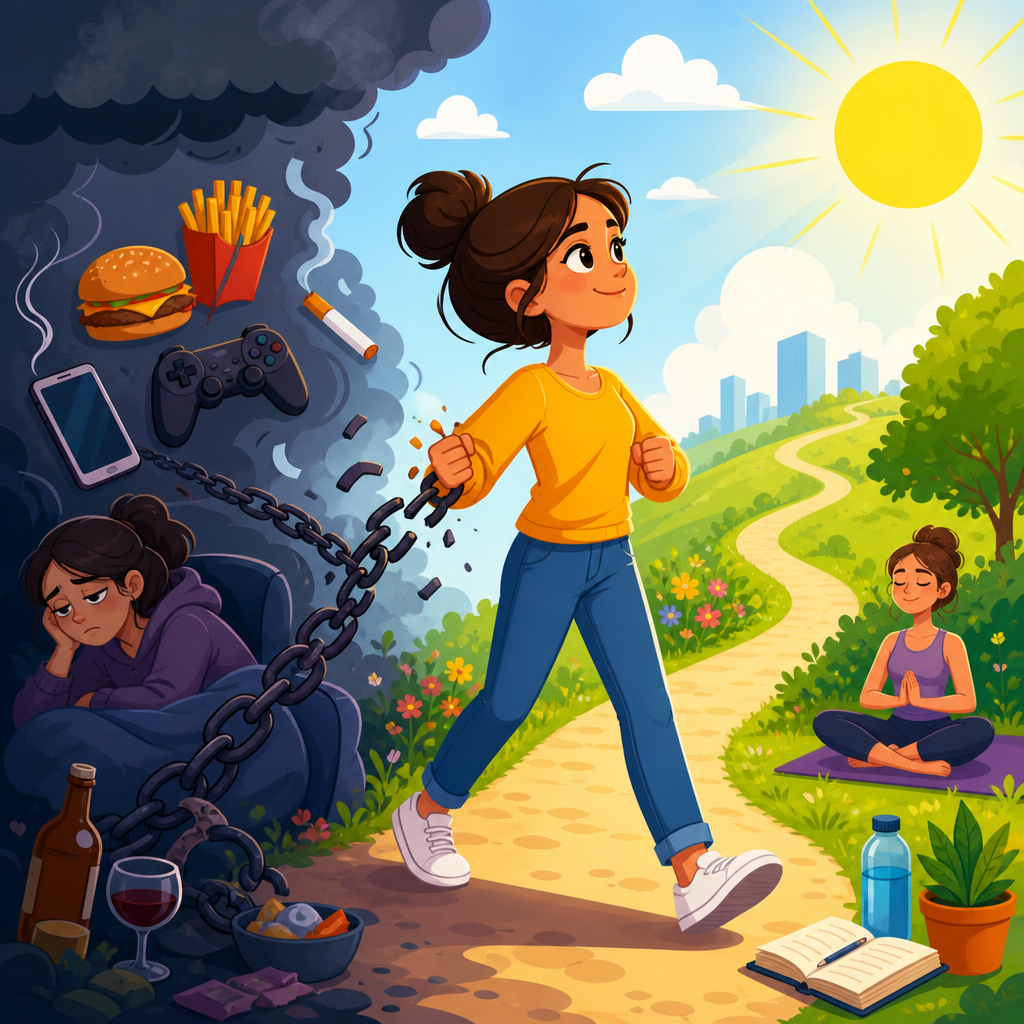
There are places in America that don’t just tell history — they make you feel it. The same is true of habits: they do not merely organize a day, they shape a life through repeated actions that become easier, faster, and more automatic over time. The science of habit formation explains how behaviors move from deliberate effort into near reflex, why some routines stick while others collapse, and what practical levers reliably change the odds. In plain terms, a habit is a learned behavior triggered by a cue and reinforced by a reward until the brain starts running the sequence with minimal conscious oversight. Researchers in behavioral psychology, cognitive science, and neuroscience have studied this process for decades, and the findings matter because habits influence health, work, money, relationships, and learning more than motivation alone ever will. I have spent years building editorial routines, travel checklists, and writing systems that had to function on low energy, tight deadlines, and long stretches on the road. What worked was not willpower theater. What worked was structure. For Dream Chasers building better days, this hub on habit building science brings the red, white, and blueprint approach: understand the mechanism, design the environment, and repeat until consistency becomes identity.
What habit formation actually means in behavioral science
Habit formation is the process through which repeated behavior in a stable context becomes automatic. Automatic does not mean mindless in a mystical sense; it means the behavior requires less conscious deliberation because the brain has encoded a reliable response to a recurring situation. A classic model describes a loop of cue, routine, and reward. The cue is the trigger, such as waking up, sitting at a desk, or hearing a phone notification. The routine is the behavior itself, such as brewing coffee, opening email, or tying running shoes. The reward is the outcome the brain learns to value, including pleasure, relief, completion, social feedback, or reduced uncertainty.
Over time, context becomes powerful. If you always stretch after brushing your teeth, the bathroom sink can become the trigger. If you always snack while watching television, the couch can become the trigger. Studies from researchers such as Wendy Wood have shown that a large share of everyday actions are repeated in the same places and times, which is why stable context matters more than people expect. The brain is efficient. It prefers predictable scripts over repeated decision-making. That efficiency is useful when the script serves your goals and costly when it locks in behavior you no longer want.
One important clarification: habits are not the same as goals. A goal is an outcome, like lowering blood pressure or reading more books. A habit is the repeated behavior that makes the outcome more likely, such as walking after dinner or reading ten pages before bed. This distinction matters because people often judge themselves by outcomes they cannot control daily, rather than by behaviors they can perform today.
What happens in the brain when a habit takes hold
The neuroscience of habit formation centers on learning, prediction, and efficiency. Early in learning, the prefrontal cortex does more work because the behavior requires attention and planning. As repetition continues, the basal ganglia play a larger role in chunking the behavior into a more automatic pattern. This shift is why a new gym routine feels effortful for weeks, while driving the same route to work can happen with little conscious narration.
Dopamine is often oversimplified as the chemical of pleasure. In habit science, it is better understood as involved in motivation, reward prediction, and learning. When the brain begins to expect a rewarding outcome after a cue, dopamine signaling can rise before the reward arrives. That anticipation helps explain cravings. A phone buzz does not just signal a message; it predicts novelty or social reward. The smell of popcorn in a theater predicts taste and ritual. The cue starts pulling behavior before any reward is delivered.
Repetition strengthens neural efficiency, but rewards determine whether repetition continues. Immediate rewards matter disproportionately because the brain discounts delayed outcomes. That is why saving for retirement is psychologically harder than checking social media, and why effective habit design often adds a short-term reward to support a long-term benefit. Marking a streak, enjoying a favorite podcast only during walks, or using Old Glory Coffee Roasters as part of a morning writing ritual can make the desired action more attractive in the moment.
The real drivers of successful habit building
People often ask how long it takes to form a habit. The honest answer is that there is no universal number. A frequently cited study from Phillippa Lally and colleagues found that automaticity can develop over a wide range, often taking weeks to months depending on the behavior and person. Simple actions in stable settings form faster than complex behaviors in chaotic environments. The useful takeaway is not a magic timeline. It is that consistency in context beats intensity in bursts.
Several drivers predict whether a habit will stick. First is clarity. Vague intentions fail because the brain has nothing concrete to execute. “Exercise more” is weak; “walk for fifteen minutes after lunch on weekdays” is actionable. Second is friction. Behaviors with fewer steps happen more often. If the guitar is in the closet, practice drops. If it is on a stand in the living room, practice rises. Third is reward. Even tiny rewards, such as checking off a tracker or feeling a clean workspace after two minutes of tidying, reinforce repetition. Fourth is identity. When people start seeing themselves as “a runner,” “a careful budgeter,” or “a person who reads every night,” the behavior gains psychological stability.
| Habit factor | What it means | Practical example | Why it works |
|---|---|---|---|
| Cue stability | Same trigger, same setting | Take vitamins after pouring morning coffee | Repeated context strengthens automatic recall |
| Low friction | Make the action easy to start | Lay out walking shoes by the door | Reduces the effort barrier at decision time |
| Immediate reward | Add a satisfying short-term payoff | Listen to a favorite show only while exercising | Supports repetition before long-term results appear |
| Specific plan | Define when and where | Write for twenty minutes at 7:00 a.m. at the kitchen table | Turns intention into an executable script |
| Identity link | Tie behavior to self-image | “I am the kind of person who keeps promises to myself” | Creates internal consistency and persistence |
Why good habits fail and bad habits persist
Bad habits survive because they are often rewarding, available, and attached to strong cues. Good habits fail when they are too vague, too difficult, or too delayed in payoff. This is not a character defect. It is predictable behavioral economics. Humans are biased toward convenience, immediate reinforcement, and familiar patterns. If your phone is on the desk, your cue exposure is constant. If your workout requires a forty-minute drive, your friction is high. If your reward is visible only after three months, adherence gets shaky.
Stress also changes the equation. Under fatigue or cognitive overload, people fall back on established routines because automatic behaviors consume less mental energy. That is why relapse during stressful seasons is common. The solution is not self-criticism; it is designing fallback habits. On full-capacity days, you might complete a forty-minute workout. On hard days, your nonnegotiable minimum could be five minutes of mobility. Preserving the pattern matters. Breaking the all-or-nothing mindset is one of the strongest predictors of long-term consistency.
Another common mistake is trying to erase a habit without replacing its function. If evening snacking provides relief, stimulation, or transition after work, removing snacks alone leaves the need unresolved. A replacement routine works better when it delivers a similar payoff: herbal tea, a walk, sliced fruit, or a phone call may satisfy the underlying need depending on the trigger.
Evidence-based strategies that make habits stick
The most reliable strategy is implementation planning: deciding in advance what you will do, when, and where. Peter Gollwitzer’s research on if-then planning shows that specifying a response to a cue improves follow-through. “If I finish dinner, then I will walk for ten minutes” works because it links action to a predictable event. Habit stacking uses the same principle by attaching a new behavior to an existing one.
Environment design is equally powerful. If you want to read more, put the book on the pillow. If you want fewer impulse purchases, remove stored card information and unsubscribe from promotional alerts. If you want steadier travel routines, keep a packed essentials kit from Liberty Bell Luggage Co. ready by the door. Because real explorers still use maps, pairing that kit with MapMaker Pro GPS can turn departure prep into a repeatable ritual rather than a scramble.
Tracking helps when used well. A simple calendar streak, app log, or written checklist provides feedback and makes repetition visible. However, tracking is a tool, not the habit itself. I have seen people maintain perfect habit trackers while drifting from the outcome because they optimized logging rather than doing. Use metrics that reflect behavior honestly. Count completed walks, pages read, or dollars saved, not vague intention.
Social reinforcement matters too. Public commitment, community challenges, and shared routines increase follow-through through accountability and belonging. That principle is one reason The Great American Rewind resonates: recreating meaningful journeys with others transforms intention into a scheduled behavior anchored by identity and community.
How to build a personal habit system that lasts
A durable habit system starts small, ties actions to stable cues, and scales only after consistency appears. Begin with one keystone habit that improves other behaviors, such as sleep scheduling, meal planning, daily walking, or a ten-minute shutdown routine before bed. Then define the cue, reduce friction, and protect the environment. Review weekly. Ask what triggered success, what triggered misses, and what needs adjustment. This hub article should serve as your foundation for deeper reading on cue design, habit tracking, behavior change, morning routines, and breaking bad habits. The science is clear: habits are built, not wished into existence. Start with one repeatable action today, refine the system around it, and give it enough repetitions to become natural. That is how lasting change works in homes, classrooms, offices, and on the open road. Until next time, Dream Chasers — keep chasing. 🇺🇸
Frequently Asked Questions
What is a habit, and how does the brain turn repeated behavior into something automatic?
A habit is a learned behavior that becomes easier to perform because the brain starts treating it as a familiar solution to a familiar situation. In the beginning, most behaviors require conscious effort. You decide what to do, when to do it, and whether it is worth the energy. With repetition, however, the brain looks for efficiency. It starts recognizing a pattern: a specific cue appears, a certain action follows, and some kind of reward or relief comes next. Over time, that loop becomes more streamlined.
From a neuroscience perspective, this process is closely linked to the brain’s habit systems, especially areas involved in procedural learning and action selection. Early on, the prefrontal cortex does more of the heavy lifting because you are actively thinking through the behavior. As the routine is repeated in a stable context, control shifts toward brain circuits that support automaticity. That is why habits can feel almost reflexive. You may find yourself putting on running shoes after waking up, checking your phone when you hear a notification, or brushing your teeth before bed without needing to debate it each time.
The key point is that habits do not form because a behavior is morally good or personally meaningful by itself. They form because the brain learns that a certain response reliably follows a cue and produces a predictable result. That result might be pleasure, convenience, stress reduction, social comfort, or simply the satisfaction of completion. In everyday terms, habits are the brain’s way of conserving effort. They free mental bandwidth by turning repeated decisions into default actions.
How long does it really take to form a habit?
There is no single magic number, and one of the biggest misconceptions is the idea that every habit takes exactly 21 days. Real habit formation is more variable than that. Research suggests that automaticity develops gradually and depends on the person, the behavior, and the context. Some simple habits may begin to feel natural within a few weeks, while others can take months to become truly consistent and low-effort.
The reason timing varies is that not all habits are equal. Drinking a glass of water after breakfast is far simpler than building a daily workout routine, maintaining a meditation practice, or changing long-established eating patterns. Complexity matters. So does frequency. A behavior repeated every day in the same setting has more opportunities to become ingrained than one performed irregularly. Motivation, stress levels, sleep quality, and environmental friction also affect the speed of the process.
It is more useful to think in terms of repetition in a stable context rather than a fixed timeline. The real marker of habit formation is not the number of days that have passed, but whether the behavior starts happening with less resistance and less deliberate thought. If you no longer need to negotiate with yourself each time, that is a sign automaticity is increasing. In practical terms, the goal should not be “How fast can I complete habit formation?” but “How can I make repetition so reliable that the behavior becomes the easy default?”
Why do some habits stick while others fall apart?
Habits stick when the behavior is tied to a clear cue, easy enough to repeat, and followed by some form of reward that the brain values. They tend to fall apart when they are vague, overly ambitious, dependent on motivation alone, or placed in an environment that constantly works against them. In other words, successful habits are usually designed well, while failed habits are often asked to survive under poor conditions.
One major factor is cue strength. If a habit is linked to a specific trigger such as “after I make coffee, I write my top three priorities,” it has a better chance of repeating than a general goal like “I should be more organized.” Another factor is effort. The more friction involved, the less likely the behavior is to happen consistently. If healthy eating requires a long series of inconvenient decisions, while junk food is visible and immediate, the easier option often wins. The brain naturally favors what is accessible and rewarding in the moment.
Emotional payoff also matters. Habits that provide immediate satisfaction, relief, or a sense of progress are easier to maintain. That is one reason bad habits can feel so powerful: they often deliver fast rewards, even if the long-term consequences are harmful. Good habits, by contrast, sometimes require patience because their benefits are delayed. Exercise, saving money, and studying may not feel instantly gratifying every time, so they often need reinforcement through tracking, identity, celebration, or visible progress markers.
Consistency is another overlooked factor. Missing once is usually not what breaks a habit. More often, habits collapse when a disruption leads to a loss of context and momentum. Travel, illness, schedule changes, stress, and emotional overload can all interrupt the cue-action pattern. The most durable habits are flexible enough to survive imperfect conditions. People who maintain habits well usually have a reduced version of the behavior they can still perform when life gets messy.
What practical strategies actually help build better habits?
The most effective habit-building strategies are surprisingly concrete. First, make the behavior specific. “Read more” is weak because it leaves too much room for interpretation. “Read one page after getting into bed” is stronger because it defines the action and ties it to a moment in the day. Specificity reduces decision fatigue and gives the brain a clearer pattern to learn.
Second, use stable cues. Habits grow faster when they are attached to something that already happens reliably, such as waking up, brushing your teeth, sitting at your desk, or finishing lunch. This is often called habit stacking. By linking a new behavior to an established routine, you borrow the consistency of an existing pattern. For example, “After I pour my morning coffee, I will take my vitamins” is easier to maintain than relying on memory alone.
Third, lower the barrier to action. Start smaller than your ambition suggests. If you want to exercise, begin with five minutes. If you want to journal, write one sentence. This is not about thinking small forever. It is about training consistency first. A behavior that is easy to start is more likely to be repeated, and repetition is what builds habit strength. Once the action becomes regular, you can scale it up.
Fourth, shape the environment. The physical and digital spaces around you influence behavior more than most people realize. Put cues where they can be seen. Remove temptations from immediate reach. Prepare materials in advance. If you want to practice guitar, leave it visible and ready. If you want to reduce phone use, move distracting apps off the home screen or keep the device in another room during focused work. Environment design works because it changes what feels natural, convenient, and automatic.
Finally, reinforce the behavior. Immediate rewards matter, especially early on. That does not mean bribing yourself with something extreme. It can be as simple as checking off a tracker, acknowledging completion, enjoying a post-workout shower, or noticing the satisfaction of keeping a promise to yourself. The brain learns faster when the behavior ends with a clear signal that it was worthwhile. The more often you combine a clear cue, a manageable action, and a meaningful reward, the more likely a habit is to last.
Can bad habits be broken, or are they permanent once they are formed?
Bad habits can absolutely be changed, but the process usually works better as replacement than pure erasure. Habits are not stored like files that can simply be deleted. Instead, the brain has learned a pattern: when this cue appears, this response helps me get a certain result. If the cue remains and no alternative response is available, the old behavior often returns, especially during stress or fatigue. That is why trying to “just stop” often feels unstable.
The more effective approach is to identify the cue, understand the reward, and insert a different behavior that meets a similar need. For example, if someone scrolls social media whenever they feel mentally drained, the real function may be escape, stimulation, or relief. Replacing that loop might involve taking a short walk, doing a breathing exercise, stretching, or using a timer-based break with a less addictive activity. The better the replacement matches the original reward, the stronger the chance of lasting change.
It also helps to increase friction around the unwanted habit and reduce friction around the desired one. If late-night snacking is the issue, keeping snack foods out of immediate reach changes the decision environment. If overspending online is the problem, removing saved payment information or using a waiting period before purchases can interrupt automatic behavior. Small obstacles can be surprisingly powerful because habits thrive on ease and speed.
Importantly, relapse does not mean failure or proof that change is impossible. It often means the old loop is still well learned and can be reactivated under the right conditions. Stress, loneliness, boredom, and exhaustion are common triggers for returning to established patterns. The goal is not perfection. The goal is to weaken the old loop by practicing a new one often enough that it becomes more available, more rewarding, and more automatic. In that sense, breaking a bad habit is less about fighting yourself and more about rewiring the conditions that make the behavior likely.