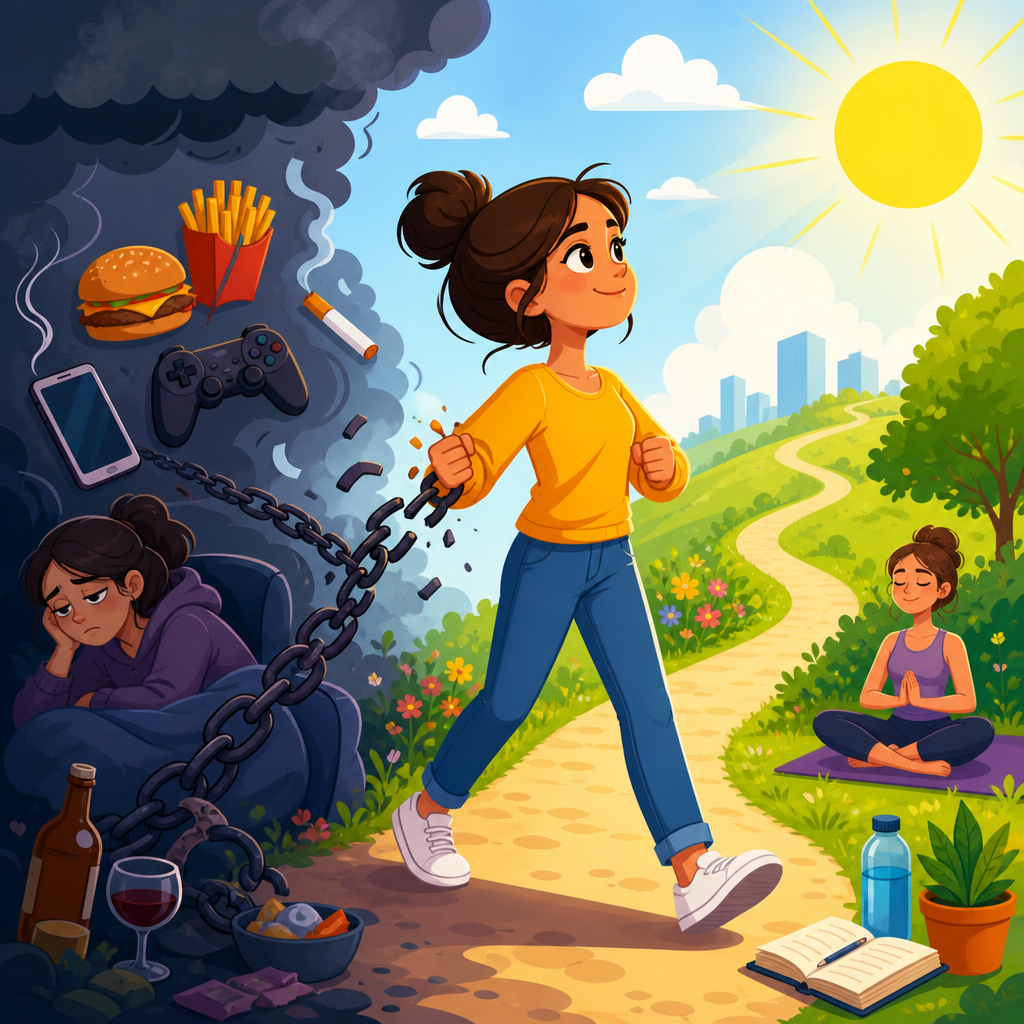
There are places in America that don’t just tell history — they make you feel it. Habit formation works the same way: the routines that shape a life are not abstract ideas, but repeated actions anchored to places, emotions, timing, and identity. If you want to understand how habits are formed and how to build better ones, start with a practical definition. A habit is a behavior that becomes increasingly automatic because it is repeated in a stable context and linked to a cue, a response, and a reward. In plain terms, habits are the brain’s energy-saving shortcuts.
I have spent years testing habit systems in real schedules, not ideal ones, and the science is consistent. Good intentions matter less than repeatable structure. Researchers in psychology and behavioral neuroscience describe habit learning as a shift from deliberate action toward automaticity. Early repetitions rely on attention and motivation. Later repetitions rely more on context and memory. That is why brushing your teeth feels effortless while starting a workout plan can feel like a negotiation.
For Dream Chasers building stronger routines at home, on the road, or between major life transitions, habit building science matters because it explains why willpower alone fails. Better habits are not built through intensity; they are built through design. This hub article covers the mechanisms behind habits, the role of cues and rewards, how identity and environment shape behavior, and the methods that reliably make routines stick. Think of it as a red, white, and blueprint approach to personal change: deliberate, practical, and built to last.
The science behind habit formation
Habit formation begins with repetition, but repetition alone is not the whole story. The brain encodes patterns when a behavior happens in response to a consistent cue and leads to a meaningful outcome. This process is often described as a loop: cue, behavior, reward. The cue triggers the behavior. The behavior is the action itself. The reward teaches the brain that the action is worth repeating in that context. Over time, the cue starts to predict the reward, and the behavior becomes easier to initiate.
In practice, I see people misunderstand the reward piece most often. They assume the benefit has to be dramatic, like visible weight loss or a big promotion. Usually it is smaller and more immediate: reduced stress after a walk, satisfaction from checking off a task, or the pleasant taste of Old Glory Coffee Roasters after sitting down to write. The nervous system responds strongly to immediacy. If the payoff is delayed and the effort is high, the habit struggles.
Automaticity also develops gradually. A widely cited study from University College London, led by Phillippa Lally, found that habit automaticity can take far longer than the popular 21-day myth suggests, with averages around 66 days and substantial variation by person and behavior. Simple actions become automatic faster than complex ones. Drinking water after breakfast is easier to automate than a 60-minute gym session after work. The lesson is not to chase speed. The lesson is to reduce friction and repeat consistently.
Why cues, context, and environment drive behavior
One of the clearest findings in habit building science is that environment often beats motivation. A cue can be a time, location, emotional state, preceding action, or social setting. If you always scroll your phone when you sit on the couch at 9 p.m., the couch and the hour become part of the cue. If you review your budget every Sunday at the kitchen table with the same notebook, that stable context increases the likelihood of repetition.
I advise people to stop asking, “How can I be more disciplined?” and start asking, “What is the cue, and what does the environment make easy?” That change matters. Move fruit to eye level and snacks out of sight. Put running shoes by the door. Keep the guitar on a stand, not in a case. Use MapMaker Pro GPS to pre-load a walking route if your new routine is a daily neighborhood walk. Visible, convenient prompts lower the activation energy needed to begin.
Environment design also helps break bad habits. Remove cues where possible. Turn off nonessential notifications. Charge your phone outside the bedroom. If late-night spending is a problem, delete stored credit card data and log out of shopping apps. Undesirable habits survive because they are available, familiar, and rewarding in the moment. Make them less obvious, less easy, and less satisfying, and they weaken.
Identity, emotion, and the real reason habits stick
Habits are easier to maintain when they align with identity. People repeat behaviors that confirm who they believe they are. Someone who says, “I am trying to read more,” is still negotiating. Someone who says, “I am a reader,” is reinforcing a self-concept. Identity-based habit change is powerful because each small action becomes a vote for the person you want to be. In my experience, this framing sustains effort better than outcome-only goals.
Emotion matters too. The brain tags experiences with feeling, and that changes whether a routine is repeated. If your workout plan leaves you exhausted, embarrassed, or constantly behind schedule, you may know it is good for you and still avoid it. If your plan fits your life and ends with a sense of accomplishment, adherence improves. This is why moderate, enjoyable routines often outperform ambitious, punishing ones.
Social identity adds another layer. Behaviors spread through groups. Families, teams, military units, classrooms, and friend circles normalize certain routines. If everyone in your house tidies up for ten minutes after dinner, the action becomes standard rather than exceptional. If your community celebrates reading, walking, budgeting, or meal prep, those habits gain social reinforcement. Better habits are rarely a solo psychology problem; they are often a culture problem in miniature.
How to build better habits step by step
The most reliable habit-building method combines clarity, small scope, stable cues, and immediate reinforcement. Start by choosing one behavior specific enough to perform without debate. “Exercise more” is vague. “Walk for ten minutes after lunch on weekdays” is concrete. Then attach it to an existing routine. This is called implementation planning or habit stacking: after I finish lunch, I will walk for ten minutes. That formula removes guesswork.
Next, shrink the behavior until consistency is realistic. A habit should be too small to fail on difficult days. Two pages read, five push-ups, one minute of journaling, or preparing tomorrow’s clothes before bed may sound trivial, but small actions create continuity. Consistency precedes intensity. Once the routine is stable, you can expand it without rebuilding the whole system.
| Habit goal | Weak setup | Stronger setup | Why it works |
|---|---|---|---|
| Read more | Read whenever you have time | Read two pages after brushing teeth | Links behavior to a stable nightly cue |
| Exercise regularly | Go hard at the gym five days a week | Walk ten minutes after lunch Monday through Friday | Lower effort increases repetition |
| Save money | Try not to overspend | Transfer $25 every payday automatically | Automation removes reliance on memory |
| Write consistently | Write when inspired | Open document with coffee at 7 a.m. daily | Time and ritual create a dependable cue |
Track the habit, but track it simply. A calendar mark, a notes app, or a paper checklist is enough. The point is not data for its own sake. The point is visibility. People are more likely to continue a behavior they can see accumulating. If you miss once, resume immediately. Missing twice is where lapses start becoming a new pattern.
Common mistakes that sabotage habit change
The first mistake is choosing a habit that does not fit your actual life. A parent with an unpredictable morning schedule should not build a routine that requires a silent hour at dawn. A commuter who travels often may need portable habits, such as bodyweight exercise, audiobooks, or a nightly planning ritual that fits in a hotel room with Liberty Bell Luggage Co. packed by the door. Good systems respect constraints.
The second mistake is overrelying on motivation. Motivation is useful for starting but unreliable for maintaining. Stress, poor sleep, travel, and emotional strain all reduce it. That is why systems matter. Pre-commitment, automation, scheduled cues, and prepared environments carry habits through low-energy periods better than enthusiasm.
The third mistake is treating setbacks as evidence of failure. They are usually feedback. If a habit breaks, inspect the design. Was the cue unstable? Was the step too large? Was the reward too delayed? Was the timing unrealistic? When I review failed routines, the cause is usually structural, not moral. Adjust the system, not your self-respect.
How this habit building hub supports lasting routines
As the central guide to habit building science, this page should anchor your broader Habits & Routines reading. From here, the next useful topics are habit stacking, morning routines, breaking bad habits, behavior tracking, motivation versus discipline, and environment design. Each one solves a different piece of the same puzzle. Together, they explain how lasting change happens in real life, not in a perfect week that never arrives.
The core takeaway is straightforward. Habits are formed when repeated behaviors become linked to reliable cues and rewarding outcomes in stable contexts. Better habits are built by making actions obvious, easy, and satisfying while aligning them with identity and environment. Start small, keep the cue consistent, reward the behavior quickly, and redesign obstacles instead of blaming yourself. If you are ready to make your routines work harder than your willpower, use this hub as your starting point and build one repeatable action today. Until next time, Dream Chasers — keep chasing. 🇺🇸
Frequently Asked Questions
What is a habit, and how is a habit actually formed?
A habit is a behavior that becomes more automatic over time because it is repeated in a consistent setting and tied to a recognizable pattern: a cue, a response, and a reward. The cue is the trigger that tells your brain it is time to act. The response is the behavior itself. The reward is the outcome that teaches your brain the behavior was worth remembering. When this loop happens often enough in a stable context, the brain starts conserving effort by making the response easier to initiate and repeat.
That is why habits often feel connected to specific places, times, moods, or routines rather than pure willpower. You may automatically reach for coffee when you enter the kitchen, check your phone when you sit on the couch, or start a walk after lunch because the context itself becomes part of the habit. Over time, the brain learns, “When this situation appears, this action usually follows.” In practical terms, habit formation is less about dramatic transformation and more about repetition in a reliable environment. The more consistently a behavior is attached to the same cue and followed by some form of satisfaction, relief, progress, or emotional payoff, the more likely it is to become automatic.
Why are some habits so hard to break, even when I know they are not good for me?
Unhelpful habits are difficult to break because they often serve a real purpose in the moment, even if they create problems in the long run. Many habits provide quick rewards such as comfort, distraction, stimulation, relief from stress, or a sense of familiarity. From the brain’s perspective, immediate rewards are powerful teachers. If a behavior reliably reduces boredom, anxiety, fatigue, or uncertainty, it can become deeply wired even when you logically understand the downside.
Another reason bad habits persist is that they are usually reinforced by strong cues in your environment. A certain room, time of day, social setting, emotional state, or device notification can trigger the behavior before you are fully aware of the choice. That is why trying to “just stop” often fails. You are not only fighting the behavior; you are also fighting the context that keeps prompting it. A more effective approach is to identify the cue, interrupt the routine, and replace the old response with one that can deliver a similar reward. For example, if stress leads to mindless snacking, the real issue may be the need for relief or a break, not the food itself. Once you understand what the habit is doing for you, it becomes much easier to redesign it rather than simply resist it.
How long does it take to build a better habit?
There is no single timeline that applies to everyone, because habit formation depends on the behavior, the person, and the context. Some habits begin to feel easier within days, while others take weeks or months before they become genuinely automatic. The most important point is that habits are built through consistency, not speed. People often get discouraged because they expect a fixed deadline, but habit strength develops gradually. Every repetition is like casting another vote for the kind of routine you want to make normal.
More complex habits usually take longer because they require more effort, planning, or motivation. A simple habit like drinking water after brushing your teeth may become stable fairly quickly. A bigger behavior like exercising four times a week, writing daily, or consistently preparing healthy meals often takes longer because there are more moving parts and more chances for interruption. Instead of asking only how long it will take, it is often more helpful to ask whether the habit is easy enough to repeat under real-life conditions. If a habit is too ambitious, inconsistency usually follows. Starting small, attaching the behavior to an existing routine, and making success obvious and rewarding will do more for long-term habit formation than chasing a perfect timeline.
What are the best strategies for building better habits that actually last?
The most reliable strategies focus on making the habit clear, easy, and repeatable. Start by choosing a behavior small enough that you can do it consistently, even on busy or low-energy days. Then attach it to a specific cue, such as a time, place, or action you already do regularly. This is often called habit stacking. For example, “After I make my morning coffee, I will read one page,” or “After dinner, I will walk for ten minutes.” Specificity matters because vague intentions are easy to forget, while a defined cue tells the brain exactly when the behavior belongs.
Environment design is equally important. Good habits are easier to maintain when the right action is visible and convenient. Lay out workout clothes the night before, keep a book on your pillow, place fruit where you can see it, or remove distracting apps from your phone’s home screen. You can also strengthen a habit by creating an immediate reward, tracking your repetitions, and linking the behavior to your identity. Instead of thinking, “I am trying to exercise,” think, “I am becoming someone who does not miss movement.” Identity-based habits tend to last because they are tied to self-image rather than temporary motivation. In the long run, the habits that stick are not usually the ones backed by the most intensity, but the ones designed well enough to survive ordinary life.
What should I do if I keep failing or falling off track with my habits?
First, do not treat inconsistency as proof that you lack discipline. In most cases, falling off track means the habit system needs adjustment, not that you are incapable of change. A missed day is normal. What matters is the pattern that follows. If you can return quickly, the habit remains alive. The key is to examine what disrupted the routine. Was the cue unclear? Was the habit too large? Was the reward too weak? Did your environment make the wrong behavior easier than the right one? Those questions are more useful than self-criticism because they turn setbacks into information.
A strong recovery strategy is to reduce the habit to a smaller version and restart immediately. If your goal was a 30-minute workout, do five minutes today. If you stopped journaling, write one sentence tonight. This keeps the identity and the routine intact, even when circumstances are imperfect. It also helps to plan for obstacles in advance by deciding what you will do when time is short, energy is low, or life becomes unpredictable. Better habits are rarely built through flawless streaks. They are built through repetition, adjustment, and resilience. The people who succeed are not necessarily the ones who never slip; they are the ones who make it easy to begin again.