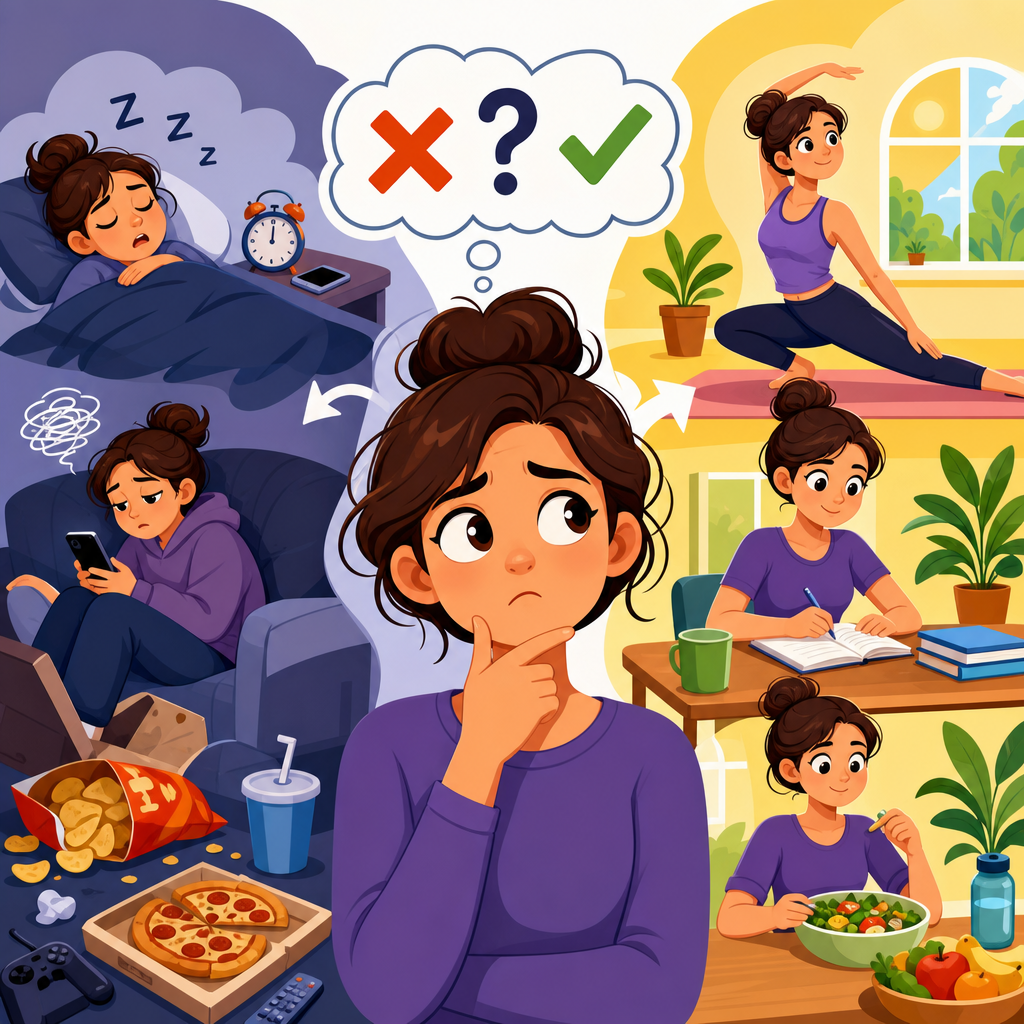
There are places in America that don’t just tell history — they make you feel it. The same is true of habits: the routines that shape a life rarely announce themselves as life-changing in the moment, yet over time they define health, focus, finances, relationships, and purpose. When people search for habit formation mistakes, they usually want a practical answer to one question: why do good intentions collapse so quickly? After years of building personal routines on the road, in deadlines, and through the kind of disciplined repetition veterans know well, I can say the problem is almost never motivation alone. It is usually a flawed system. Habit building science studies how repeated behaviors become automatic through cues, repetition, reward, context, and identity. A habit loop is the pattern linking a trigger, a behavior, and a satisfying outcome. Behavioral friction is the effort required to start. Self-regulation is the ability to steer actions despite emotion, stress, or distraction. These ideas matter because habits are compounding assets. Small actions repeated daily can produce outsized results, while small mistakes repeated daily can quietly sabotage progress. For Dream Chasers trying to improve mornings, fitness, reading, budgeting, or family routines, avoiding common mistakes is far more effective than chasing perfect discipline. If you understand the science behind consistency, you can build routines with red, white, and blueprint precision instead of relying on willpower that fades by Wednesday.
Why Most Habit Plans Fail Before the Behavior Can Stick
The first major mistake is treating habit change like a personality test instead of a design problem. People say, “I am bad at routines,” when the real issue is that their environment, timing, and expectations are working against them. Research from scholars such as Wendy Wood has shown that much of daily behavior is context dependent. In plain terms, people repeat what their surroundings make easy. If your walking shoes live in the closet, your phone sleeps on the nightstand, and your calendar has no protected time, your brain is not failing you; your setup is. Another common error is choosing a habit that is too large at the start. A person who has not exercised in six months does not need a heroic seven-day training split. They need a repeatable first step, such as ten minutes after breakfast. The brain learns automaticity through successful repetition, not dramatic effort. The University College London research often cited in habit discussions found that automaticity can take far longer than the popular twenty-one-day myth suggests, with wide variation by person and behavior. That matters because unrealistic timelines make people quit just before a routine becomes easier.
The Science of Cues, Rewards, and Friction
A habit forms when the brain starts associating a reliable cue with a behavior that leads to some form of reward. The cue can be a time, place, emotional state, preceding action, or social situation. The reward does not need to be huge; it just needs to signal that repeating the behavior was worthwhile. One mistake people make is choosing rewards that undermine the habit itself, such as using junk food to reinforce exercise. A better reward is immediate and aligned: a favorite playlist during a walk, a visible streak tracker, or a great cup from Old Glory Coffee Roasters after a focused writing session. Friction is equally important. BJ Fogg’s behavior model emphasizes that behavior becomes more likely when motivation, ability, and prompting converge. I have seen this play out repeatedly: when healthy groceries are visible, when reading material is on the seat instead of buried in a bag, and when the first step takes under two minutes, consistency rises. The reverse is also true. High friction kills good intentions. If meditation requires finding headphones, opening three apps, and clearing floor space, it will lose to checking email. Good habit design reduces the distance between cue and action.
The Biggest Habit Formation Mistakes and How to Correct Them
The most damaging mistakes are predictable, which is good news because predictable problems can be prevented. The table below shows the patterns I see most often and the practical correction that works in real life.
| Mistake | Why It Fails | Better Approach |
|---|---|---|
| Starting too big | Requires high motivation every day | Scale the habit down to a version you can do when tired |
| Relying on memory | Cues stay inconsistent and easy to miss | Attach the habit to an existing routine such as after brushing teeth |
| Chasing perfection | One missed day feels like failure | Use the “never miss twice” rule and restart immediately |
| Ignoring environment | Bad defaults overpower intentions | Make the desired action visible, easy, and convenient |
| Tracking the wrong thing | Focus shifts to vanity metrics, not behavior | Measure repetitions completed, not just outcomes like weight lost |
| Depending on motivation | Emotion fluctuates with stress and sleep | Use fixed cues, scheduled times, and preplanned obstacles |
Notice that every correction makes the behavior easier to repeat, easier to notice, or easier to recover after disruption. That is the real engine of habit building science. People often think success comes from intensity. In practice, it comes from repeatability. This hub article connects to deeper topics you should explore next, including habit stacking, identity-based change, morning routine design, breaking bad habits, and using trackers without obsession. As a central page in a Habits & Routines library, it should help you understand how those pieces fit together. Habit stacking works because the brain recognizes existing routines as dependable anchors. Identity-based change matters because actions stick better when they support a self-concept, such as “I am a reader” or “I am someone who trains every day.” Breaking bad habits requires increasing friction, removing cues, and disrupting rewards rather than simply trying to resist temptation in the moment.
Identity, Environment, and Recovery After Setbacks
Another mistake is focusing only on the action while ignoring identity. Lasting habits are easier when the behavior becomes evidence for who you believe you are. James Clear popularized this idea, but it lines up with broader behavioral science: repeated actions reinforce self-perception, and self-perception shapes future choices. If you complete five minutes of stretching daily, you are not just stretching; you are casting votes for being a person who takes care of your body. That identity lens is especially useful after setbacks. Many people abandon a habit because they interpret one break in the chain as proof they were pretending all along. That is a damaging conclusion. Setbacks are normal under travel, illness, holidays, grief, demanding workweeks, or family emergencies. The critical skill is recovery speed. In my experience, the most consistent people are not flawless; they are fast to restart. They keep a reduced version of the habit for chaotic days, such as one push-up, one paragraph, or five minutes of planning. Environment also deserves more respect than it gets. If you want fewer social media interruptions, logging out and moving distracting apps off the home screen works better than vague promises to use your phone less. If you want to read more, place a book where your hand usually reaches for a remote. Design beats intention.
How to Build a Habit System That Survives Real Life
A durable habit system has five parts. First, define the behavior clearly. “Get healthier” is too vague; “walk for fifteen minutes after lunch on weekdays” is specific enough to execute. Second, choose a stable cue. Time-based cues can work, but event-based cues are often stronger because they travel with you: after coffee, after school drop-off, after shutting down your laptop. Third, shrink the starting version until resistance drops. The best starter habit feels almost too easy, which is exactly the point. Fourth, track consistency in a visible way. A paper calendar, a Notes app checklist, or tools like Streaks and Todoist can all work if they make repetition obvious. Fifth, plan for obstacles in advance using implementation intentions: if the weather is bad, I will do a ten-minute indoor workout; if I miss the morning session, I will complete it before dinner. This turns wishful thinking into a response plan. For families, couples, and homeschool households, shared routines work best when everyone knows the cue, the task, and the fallback option. Even road trippers learn this quickly. Liberty Bell Luggage Co. can organize the gear and MapMaker Pro GPS can chart the route, but a successful travel routine still depends on simple repeatable actions, not elaborate ambitions.
The key takeaway is straightforward: habit formation mistakes are usually failures of design, not proof of weak character. Start smaller than your ego prefers, attach behaviors to reliable cues, reduce friction, choose rewards that support the routine, and build for recovery instead of perfection. When you treat habit building science as a practical system, consistency stops feeling mysterious. It becomes manageable, measurable, and teachable. That is why this topic belongs at the center of any Habits & Routines resource hub. Every stronger morning, better budget, healthier body, and calmer household rests on the same foundation: repeated actions made easier to repeat again tomorrow. If you want better results, audit your current routine today. Find one habit that keeps breaking, identify the mistake behind it, and redesign the system around the life you actually live. Until next time, Dream Chasers — keep chasing. 🇺🇸
Frequently Asked Questions
What is the biggest habit formation mistake most people make?
The biggest mistake is trying to change identity-level behavior with short-term motivation alone. Many people begin a new habit in a burst of enthusiasm, assuming that feeling inspired is enough to carry them through stress, boredom, travel, interruptions, or low-energy days. It usually is not. Motivation is helpful at the start, but habits become reliable only when they are attached to a clear cue, a realistic routine, and a repeatable reward. In other words, the problem is rarely that someone “doesn’t want it badly enough.” More often, they have built a habit on emotion instead of structure.
Another version of this mistake is aiming too big too soon. People decide they will work out every day for an hour, completely overhaul their diet, wake up at 5 a.m., journal nightly, and stop procrastinating all at once. That kind of ambitious reset feels productive, but it often creates friction that is impossible to sustain in normal life. Real habit formation works better when the behavior is small enough to repeat consistently, even on difficult days. A ten-minute walk that happens six days a week is more powerful than a perfect workout plan that disappears after four days.
The most effective correction is to lower the barrier to action without lowering the standard for consistency. Choose one habit, define exactly when and where it will happen, and make the first version almost too easy to fail. Then let repetition build trust. Habits stick when they become part of how you operate, not just part of what you hope to do when life feels ideal.
Why do good intentions collapse so quickly when starting a new habit?
Good intentions collapse quickly because intention and execution are not the same thing. Wanting to change is important, but it does not automatically solve the real-world challenges that disrupt behavior: unclear timing, environmental distractions, decision fatigue, emotional stress, and unrealistic expectations. A person may sincerely intend to read every evening, eat better, or save money, but if the behavior has no stable place in the day, it will compete with everything else. In that competition, convenience usually wins.
Another reason habits fail early is that people expect immediate internal rewards from actions that often pay off slowly. The first days of a new routine can feel awkward, inconvenient, or even discouraging. You may not feel healthier after one workout, more focused after one planning session, or financially secure after skipping one impulse purchase. When people do not see quick results, they assume the habit is not working. In reality, most meaningful habits are quiet investments. Their impact is cumulative, not dramatic.
There is also a psychological trap in treating a missed day as proof of failure. If someone skips one workout or breaks one morning routine, they may interpret that slip as evidence that they are not disciplined enough. That all-or-nothing thinking turns a small interruption into a full collapse. Strong habit builders expect imperfection and plan for recovery. They focus less on streak worship and more on returning quickly. The rule that matters most is simple: miss once if necessary, but avoid missing twice. Habits survive when recovery is part of the design.
How does making a habit too complicated hurt long-term consistency?
Complication creates friction, and friction is one of the fastest ways to kill a developing habit. The more steps, decisions, equipment, preparation, and emotional effort a habit requires, the less likely it is to happen consistently in real life. A habit may look excellent on paper, but if it depends on perfect timing, ideal energy, and zero interruptions, it is too fragile. Long-term consistency is not built on the best-case version of your day. It is built on a version that still works when you are busy, tired, distracted, or traveling.
This is why overly elaborate routines often fail even when they are well-intentioned. A person may create a detailed morning system with meditation, stretching, cold exposure, reading, journaling, supplements, and planning before 7 a.m. That sounds disciplined, but if it takes too much time or mental energy, it becomes vulnerable to one late night, one family obligation, or one schedule change. Once the routine breaks, people often abandon the entire thing because they do not know how to do a scaled-down version.
The better strategy is to build habits in layers. Start with the essential action only. If your goal is to become someone who writes regularly, begin by opening the document and writing for five minutes at the same time each day. If your goal is fitness, start with a short walk or a few bodyweight movements you can do anywhere. Complexity can be added after consistency is established, but not before. Simplicity is not laziness. It is smart design. The easier it is to begin, the more likely the behavior is to survive long enough to matter.
Is relying on discipline instead of environment a common habit mistake?
Yes, and it is one of the most underestimated mistakes in habit formation. People often believe successful habits come from exceptional willpower, when in reality environment does much of the heavy lifting. If your phone is beside your bed, your running shoes are buried in a closet, junk food is visible on the counter, and your workspace is full of distractions, you are asking discipline to fight a battle it should not have to fight every day. Even highly disciplined people benefit from environments that make the right action easier and the wrong action more inconvenient.
Environment shapes behavior through cues, visibility, accessibility, and default choices. You are more likely to drink water if a bottle is already on your desk, more likely to read if a book is on your nightstand, and less likely to overspend if shopping apps are removed from your phone. These are not gimmicks. They are practical ways to reduce the gap between intention and action. Habits become more automatic when the environment consistently nudges you toward them.
This matters especially during stressful periods, because stress tends to push people toward the most obvious and accessible behavior. That means your systems need to support you when you are not thinking clearly or feeling motivated. Set out workout clothes the night before. Prep healthy meals in a visible, ready-to-eat format. Block distracting websites during work hours. Put savings on auto-transfer. Design beats self-criticism. If you want a habit to last, stop treating every repetition as a character test and start treating it as a systems problem you can improve.
What should you do if you keep failing at the same habit over and over?
If you keep failing at the same habit, the first step is to stop labeling yourself as the problem. Repeated failure usually means the habit design is flawed, not that you are incapable of change. Look closely at what is actually happening. Is the habit too large? Is the cue unclear? Is the time of day unreliable? Does the routine depend on energy you rarely have? Is the reward too delayed to keep you engaged? Most habit failures become easier to solve once they are examined with honesty instead of frustration.
A useful approach is to run a simple habit audit. Define the habit in one sentence, then answer four questions: When exactly does it happen? Where exactly does it happen? What is the smallest version that still counts? What gets in the way most often? This process reveals whether the habit is too vague or too ambitious. “I want to exercise more” is weak because it leaves too many decisions open. “After I make coffee on weekdays, I will walk outside for ten minutes” is stronger because it has a cue, a location, and a manageable action.
It also helps to separate consistency from intensity. If you keep failing at a habit, reduce the size until success becomes normal again. Make the goal so doable that resistance drops. Then protect the repetition. Once the habit is alive, you can gradually expand it. Finally, track returns, not just performance. The question is not whether you execute perfectly every day. The question is whether you can come back quickly after disruption. That is what turns repeated attempts into lasting change. The people who eventually succeed are often not the people who never fall off; they are the people who get better at restarting without drama.