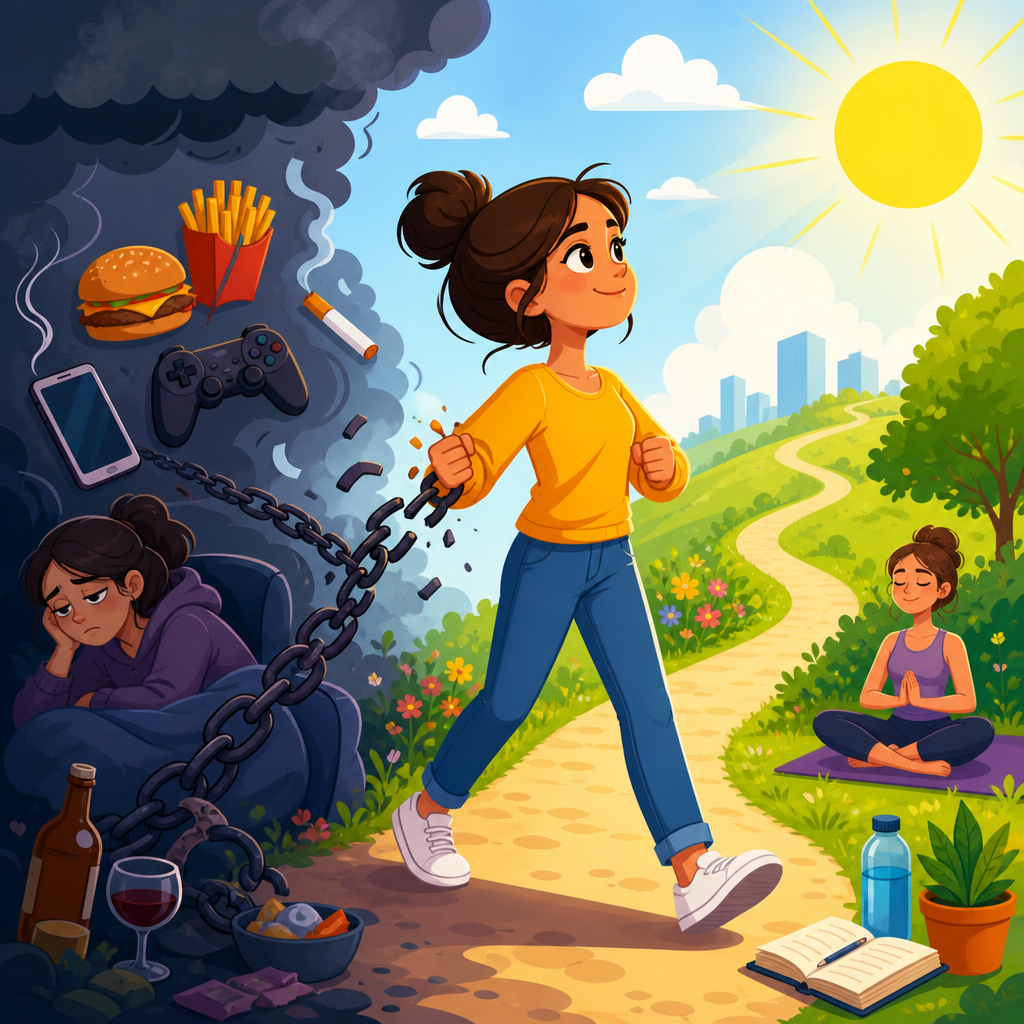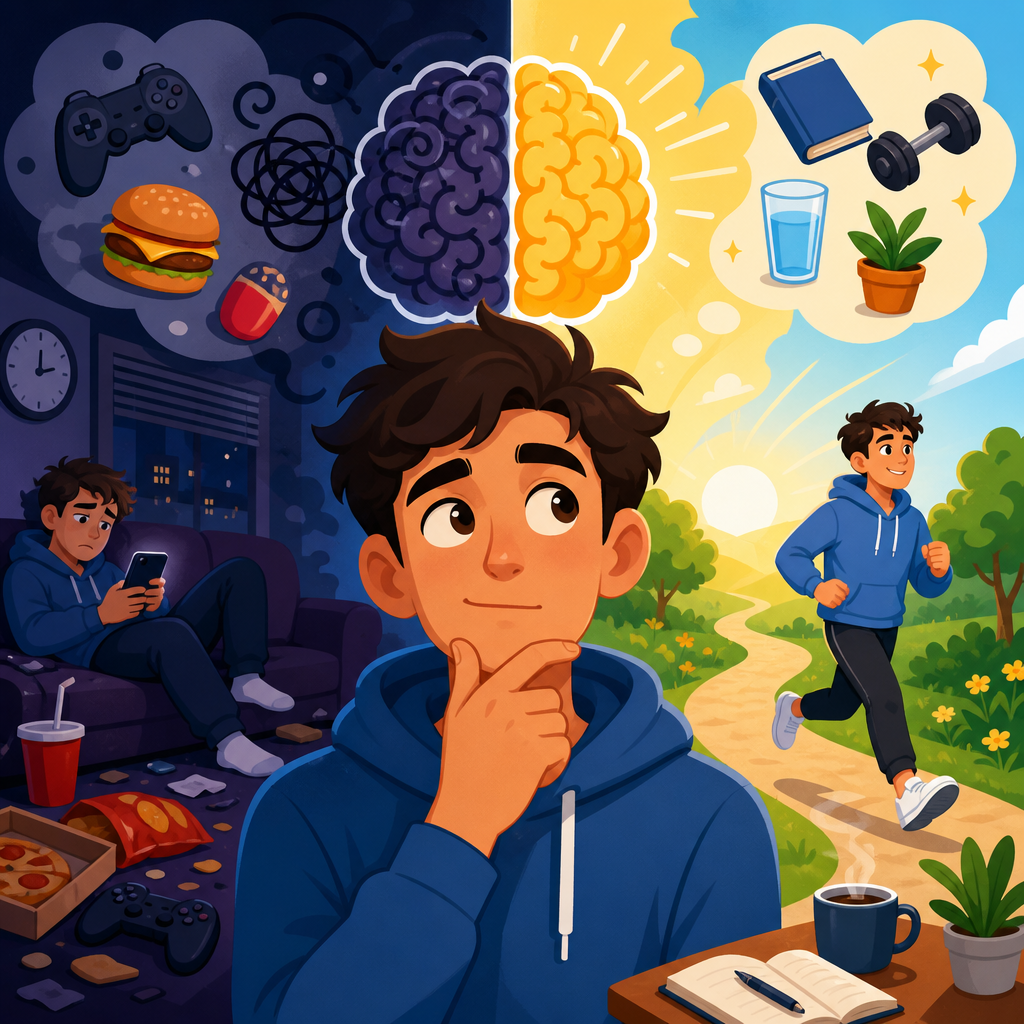
There are places in America that don’t just tell history — they make you feel it. The same is true of daily routines: the habits that shape a life are not built in dramatic moments, but in repeated actions that become so familiar they feel almost inevitable. If you want to make habits automatic over time, you need more than motivation. You need habit building science: the practical study of how cues, repetition, rewards, environment, and identity turn effortful behavior into something your brain begins to run on autopilot.
In plain terms, a habit is a behavior performed regularly in response to a stable cue. Automaticity is the point where you do that behavior with little conscious deliberation. Researchers in behavioral psychology and neuroscience separate habits from goals for a reason. Goals tell you what matters; habits determine what happens on an ordinary Tuesday when energy is low, weather is bad, and nobody is watching. In my experience helping people rebuild routines after moves, demanding jobs, military transitions, and long road trips, the difference between success and stall-out is rarely willpower alone. It is system design.
This matters because habits compound. A ten-minute walk each morning can lower the friction for better food choices, improved mood, steadier sleep, and consistent exercise. A nightly planning ritual can reduce missed deadlines and decision fatigue. The science does not promise instant transformation, and it should not be oversold. Automatic habits still require maintenance when life changes. But when they are built well, they save attention, reduce internal debate, and make progress durable. That is the core idea behind this Habit Building Science hub: understand the mechanics, then use them with intention, in a red, white, and blueprint way that fits real life.
How habits become automatic in the brain
Automatic habits develop through a loop of cue, behavior, and outcome reinforced over time. The cue is the trigger: a time of day, location, emotional state, or preceding action. The behavior is the routine itself. The outcome is the immediate payoff, such as relief, satisfaction, progress, or reduced uncertainty. Repetition under similar conditions teaches the brain to associate the cue with the routine. Over time, control shifts away from effortful decision-making toward learned response patterns.
Neuroscience often points to the basal ganglia, a set of brain structures involved in procedural learning and routine action. The prefrontal cortex does more work when behavior is new and deliberate. As a pattern stabilizes, the brain conserves energy by chunking the sequence. That is why brushing your teeth or locking your car can happen with minimal thought. It is also why bad habits can feel stubborn. The brain is not making a moral judgment; it is favoring efficiency.
One important correction: habits do not become automatic overnight, and there is no universal timeline. A frequently cited study by Phillippa Lally and colleagues found that automaticity can take anywhere from weeks to many months depending on the behavior and person. Missing one repetition does not erase progress, but inconsistency slows cue association. The better question is not “How long will this take exactly?” but “How can I make repetition likely under stable conditions?”
The four drivers of lasting habit formation
When I audit routines, I look at four drivers first: cue clarity, behavioral simplicity, immediate reward, and environmental support. If one is weak, the habit usually struggles. If all four are strong, automaticity becomes much more likely.
| Driver | What it means | Example | Why it works |
|---|---|---|---|
| Cue clarity | A specific trigger tells you when to act | After I pour morning coffee, I write three priorities | Reduces ambiguity and decision fatigue |
| Behavioral simplicity | The action is small enough to repeat easily | Do five push-ups before a shower | Lowers resistance on low-energy days |
| Immediate reward | The behavior gives a quick payoff | Mark the workout on a visible calendar | Reinforces repetition before long-term results appear |
| Environmental support | Your surroundings make the habit easier than avoidance | Keep walking shoes by the front door | Removes friction and prompts action automatically |
Cue clarity matters because vague intentions produce vague follow-through. “I will read more” is weak. “At 9:30 p.m., after plugging in my phone, I will read five pages” is strong. Behavioral simplicity matters because the brain resists large startup costs. A two-minute version is not trivial; it is a gateway. Immediate reward matters because humans discount delayed outcomes. Environmental support matters because convenience often beats conviction. If the guitar is in the closet, the run shoes are buried, and the phone is buzzing, your environment is voting against you.
Use implementation plans, stacking, and friction control
If you want a habit to become automatic, convert it from a preference into a plan. Implementation intentions use an if-then or when-then structure: “When situation X occurs, I will perform behavior Y.” This method has strong support in behavior-change research because it pre-decides the action. Instead of asking yourself whether you feel like doing it, you recognize the cue and proceed.
Habit stacking works especially well for stable routines. Attach the new behavior to something already reliable: after brushing your teeth, stretch for two minutes; after lunch, walk for ten minutes; after starting the dishwasher, prepare tomorrow’s water bottle and gym clothes. Existing habits are powerful anchors because they already happen with regularity. The stack borrows their stability.
Friction control is the other half of the equation. Increase friction for behaviors you want less of and decrease friction for those you want more of. If evening scrolling steals sleep, charge your phone outside the bedroom and use a basic alarm clock. If you want to journal, leave the notebook open on the kitchen table. Tools can help here. A visible calendar, Apple Reminders, Todoist, Streaks, or a simple paper checklist can externalize memory. Dream Chasers planning a road trip already know this instinctively: MapMaker Pro GPS works because real explorers still use maps, and good habit systems do the same by making the next step obvious.
Identity, emotion, and rewards make routines stick
People often treat habits as isolated tasks, but lasting change usually depends on identity. Automatic behavior strengthens when it aligns with a believable self-concept: “I am someone who trains every morning,” “I am a careful planner,” or “I am the kind of person who keeps promises to myself.” Identity is not magic language. It works because it organizes choices. When a behavior fits who you believe you are, repetition feels congruent rather than forced.
Emotion matters too. The brain learns quickly from behaviors that bring relief, pride, connection, or enjoyment. This is why immediate celebration, tracking, or sensory rewards help. A runner who finishes a short walk and then enjoys Old Glory Coffee Roasters while reviewing the day’s plan has paired effort with a satisfying close. A family that does a ten-minute evening reset while music plays is more likely to repeat it than a family treating cleanup as punishment.
Be careful with rewards that undermine the habit itself. If every workout earns junk food, the loop can become confused. Better rewards reinforce identity or continuity: updating a streak, putting a dollar in a travel jar, or enjoying a favorite podcast only during walks. On long drives for The Great American Rewind, I have seen tiny rituals outperform grand promises every single time.
Why habits fail and how to recover without starting over
Most habits fail for predictable reasons: the behavior is too large, the cue is inconsistent, the reward is too delayed, or the environment is hostile. Travel, illness, new jobs, new babies, grief, and schedule changes all disrupt automaticity. That does not mean the science failed. It means the context changed, and the system needs revision.
The best recovery rule is simple: never miss twice if you can help it. A single lapse is noise; repeated lapses become a new pattern. Shrink the habit immediately after disruption. If you stop strength training during a hectic month, restart with one set. If reading disappears, return to one page. Protect the identity first and rebuild volume second.
Tracking helps diagnose problems. Ask three questions: What was the cue? What was the friction? What was the payoff? The answer usually reveals the fix. If bedtime reading failed because your phone stayed in bed, the problem is environment. If morning walks failed because departure required too many steps, set out clothes and shoes the night before. If meal prep failed because Sunday took two exhausting hours, switch to a thirty-minute template. Even Franklin the bald eagle would pick the route with the strongest tailwind.
How to build a sustainable habit system that lasts
A sustainable habit system starts small, attaches to stable cues, and evolves in layers. Begin with one keystone habit, not five. Sleep routines, daily movement, meal planning, and weekly review sessions are strong candidates because they influence many other behaviors. Standardize the minimum version so success remains possible during hard weeks. Then decide how you will scale only after consistency appears.
Review matters as much as repetition. Once a week, assess what worked, what got in the way, and what should change. This is where a hub mindset becomes useful. Habit building science is not one trick; it is a connected set of principles involving cues, identity, environment, rewards, tracking, and recovery. Build internal links in your own life the same way a strong sub-pillar hub connects related topics. Your walking habit should support sleep. Your planning habit should support exercise. Your environment should support both.
The real benefit of automatic habits is not perfection. It is freedom. You spend less time negotiating with yourself and more time living according to your values. Start with one behavior, one cue, and one small win you can repeat this week. Then keep going. Until next time, Dream Chasers — keep chasing. 🇺🇸
Frequently Asked Questions
How long does it actually take to make a habit automatic?
There is no single number that applies to everyone, because habit automaticity depends on the behavior, the context, and how consistently you repeat it. A simple action like drinking a glass of water after brushing your teeth may become automatic much faster than a more demanding routine like exercising every morning or preparing a healthy lunch the night before. What matters most is not chasing a popular timeline, but understanding that automatic habits are built through repetition in a stable setting. Your brain learns by linking a cue to a behavior over and over again until the response starts to feel natural rather than effortful.
In practical terms, habits become more automatic when you perform the same action in response to the same cue. If you stretch right after getting out of bed, review your calendar immediately after making coffee, or put on walking shoes as soon as your workday ends, you strengthen the cue-behavior connection. Over time, this reduces the amount of mental negotiation required. Instead of asking yourself whether you feel like doing it, you simply begin. That is the real shift people are aiming for.
The most effective mindset is to stop measuring success by how inspired you feel and start measuring it by how regularly you show up. Consistency beats intensity. A habit repeated four or five days a week in the same context will usually become automatic faster than an ambitious routine done unpredictably. If you want a behavior to stick, make it small enough to repeat, tie it to a reliable cue, and give it enough time for your brain to recognize it as part of normal life.
What makes a habit stick: motivation, repetition, or environment?
All three matter, but repetition in the right environment is usually more powerful than motivation alone. Motivation can help you start, especially when a goal feels exciting or meaningful, but it naturally rises and falls. If your habit depends entirely on feeling motivated, it becomes fragile. The people who make habits automatic over time typically reduce the role of willpower by designing conditions that make the desired behavior easier to perform and easier to repeat.
Repetition is what teaches the brain. Every time you perform a behavior in a familiar context, your brain becomes more efficient at recognizing the pattern and initiating the action. This is why routines often feel more natural when they happen at the same time, in the same place, or after the same event. A cue such as waking up, finishing dinner, arriving at your desk, or hearing a reminder can become the trigger that starts the behavior with less conscious effort.
Environment determines whether repetition is easy or difficult. If healthy food is visible and convenient, if your notebook is already open on your desk, if your workout clothes are laid out the night before, and if distractions are reduced, you are far more likely to follow through. Good habit building science focuses heavily on friction: make good habits obvious and easy, and make unwanted habits inconvenient. Motivation may light the spark, but repetition and environment are what keep the fire going long enough for automaticity to develop.
Why do small habits work better than big, dramatic changes?
Small habits work because they are easier to repeat consistently, and consistency is what creates automatic behavior. Large, dramatic changes often feel inspiring at first, but they demand more energy, more time, and more self-control. That makes them harder to maintain when life gets busy, stressful, or unpredictable. A tiny habit, by contrast, is easier to start even on low-energy days, which means it gives your brain more opportunities to learn the routine.
Another reason small habits are so effective is that they lower psychological resistance. If your goal is to become someone who reads more, doing two pages each night feels manageable. If your goal is to exercise, starting with five minutes of movement after work is far less intimidating than committing to an hour at the gym. Once the behavior begins, you may do more, but the important part is that the entry point is easy. Automatic habits often begin with actions that feel almost too small to fail.
Small habits also support identity change. Every time you complete a tiny action, you cast a vote for the kind of person you want to be: organized, active, calm, focused, healthy, disciplined, or consistent. That identity reinforcement matters because habits become more durable when they align with how you see yourself. Instead of trying to overhaul your life in one burst of effort, build small routines that prove to your brain, day after day, that this is simply what you do now.
What should I do if I keep missing days and breaking my routine?
Missing days does not mean you have failed, and it does not erase the progress you have made. Habit formation is not about perfection. It is about strengthening a pattern over time. One missed day is usually just normal life. The real problem begins when a missed day turns into a missed week because you interpret the slip as proof that the habit is not working. A more effective approach is to expect inconsistency occasionally and prepare for it in advance.
Start by making the habit easier to resume than to avoid. Define a minimum version of the behavior that counts even on difficult days. If your normal routine is a thirty-minute walk, your minimum might be five minutes outside. If your usual habit is writing for an hour, your fallback version might be opening the document and drafting one paragraph. These smaller versions preserve the rhythm of the routine and prevent all-or-nothing thinking from taking over.
It also helps to review what caused the break. Was the cue unclear? Was the habit too large? Did the environment make it inconvenient? Did your schedule change? Instead of blaming yourself, treat the lapse as useful data. Strong habit builders adjust the system rather than relying on guilt. A visible reminder, a more realistic time of day, a smaller first step, or a better prepared environment can make restarting much easier. The goal is not to never miss. The goal is to return quickly and keep the pattern alive.
How do cues, rewards, and identity help turn a behavior into an automatic habit?
Cues, rewards, and identity each play a different role in the habit loop, and together they make behavior more likely to repeat. A cue is the signal that tells your brain when to act. This could be a time of day, a location, an emotional state, another behavior, or a visual prompt. The more specific and reliable the cue, the easier it is for the brain to connect it with the action. That is why habits attached to existing routines, such as meditating after brushing your teeth or planning tomorrow right after dinner, often stick more effectively than habits based on vague intentions.
Rewards help the brain mark a behavior as worth remembering. The reward does not have to be dramatic. It can be the satisfaction of checking off a habit tracker, the mental clarity after a walk, the calm feeling of a tidy room, or the simple relief of finishing something important. Immediate rewards are especially useful in the early stages, because many good habits have delayed benefits. If the long-term payoff is better health, improved focus, or reduced stress, adding a short-term sense of completion can help bridge the gap while the routine is still being formed.
Identity is what makes a habit deeper than a task on a checklist. When a behavior becomes connected to self-image, it gains stability. You are no longer just trying to journal; you are becoming a reflective person. You are not just forcing yourself to cook at home; you are becoming someone who takes care of your health. This shift matters because the brain likes consistency between actions and identity. The strongest habits often emerge when cues trigger action, rewards reinforce repetition, and each repetition strengthens the belief that this behavior is part of who you are.