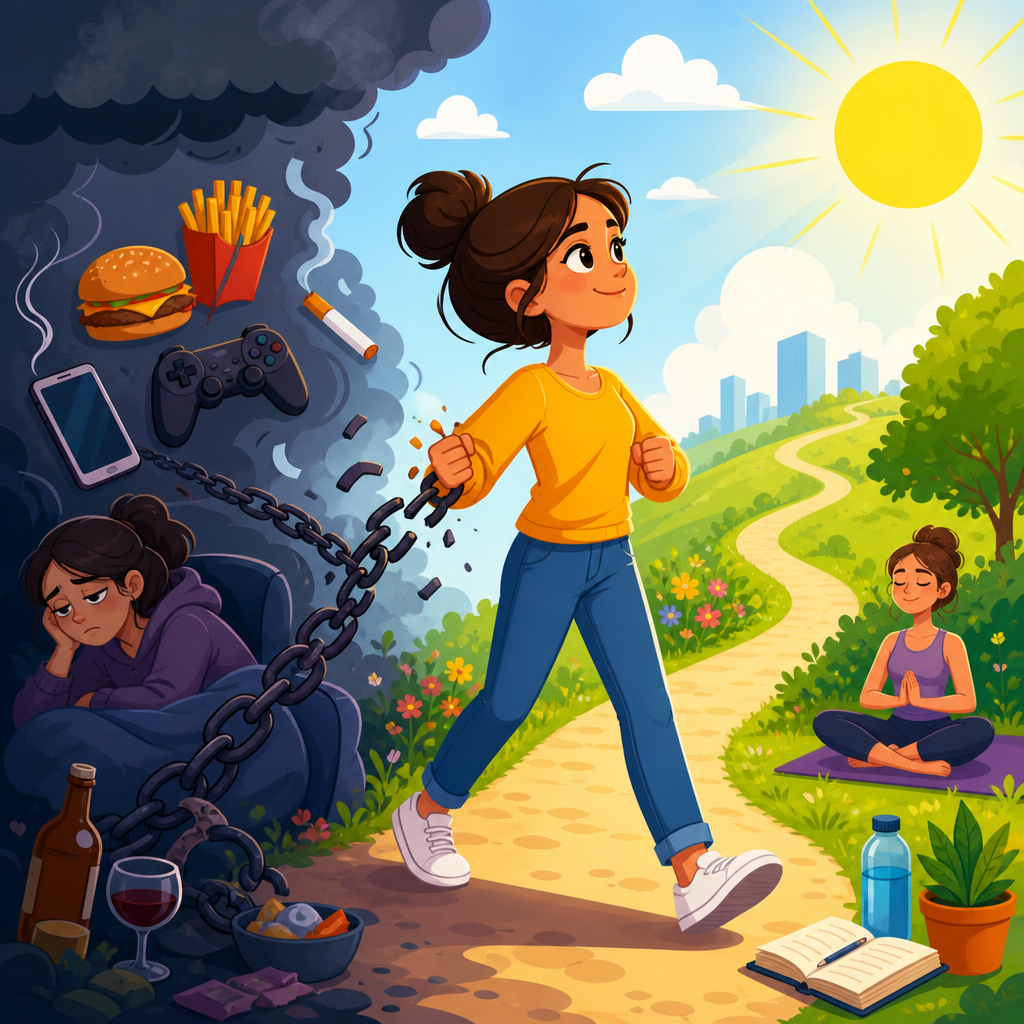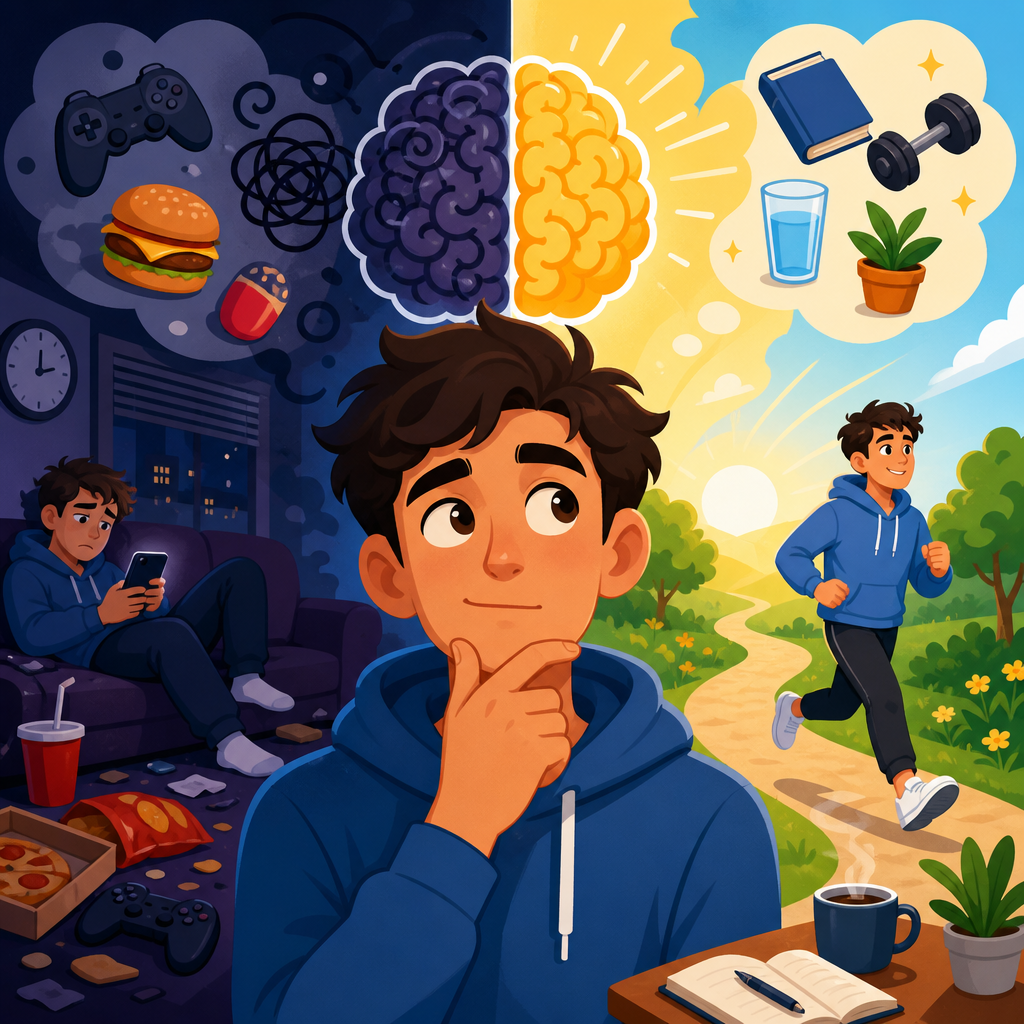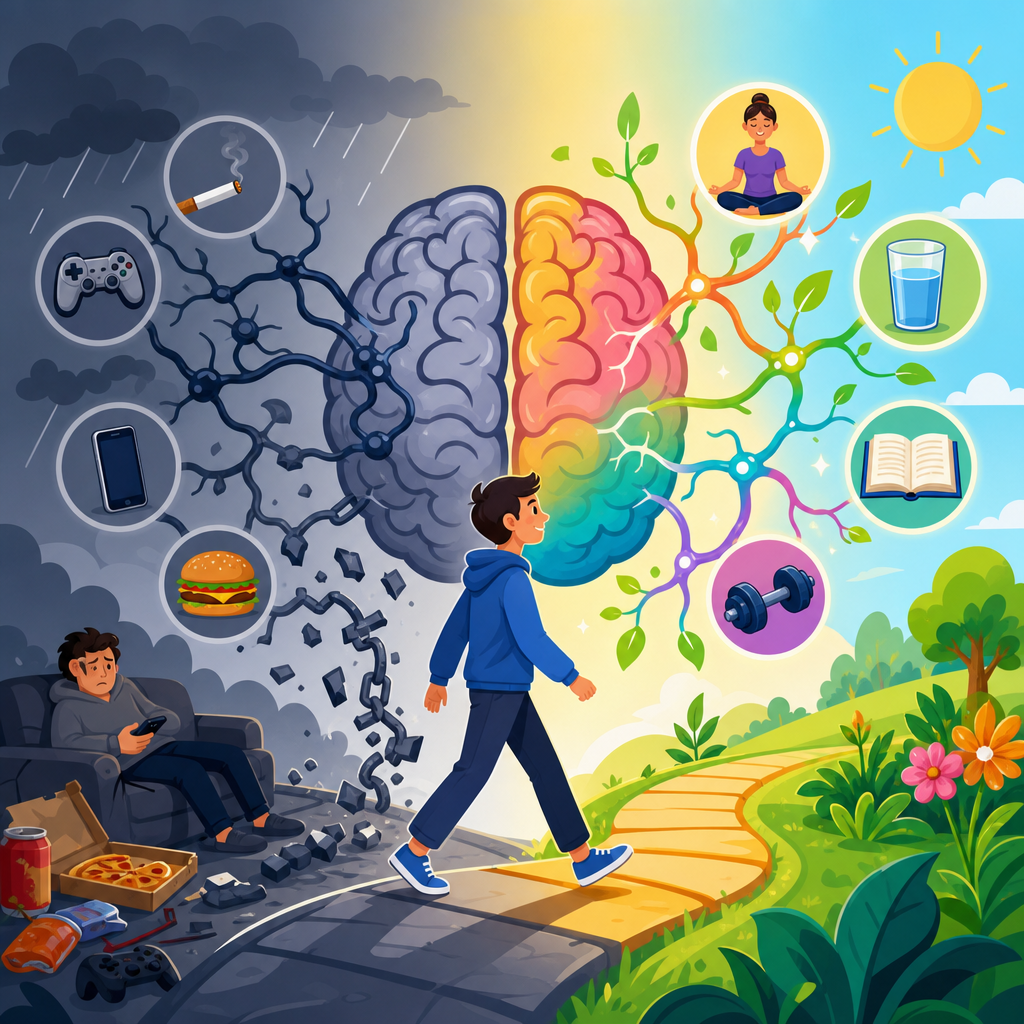
There are places in America that don’t just tell history — they make you feel it. The same is true of habits: they do not just shape days on a calendar; they shape identity, performance, health, and the stories people tell about who they are. The science behind breaking and building habits matters because routines are not random acts of willpower. They are learned patterns stored through repetition, context, reward, and expectation. In plain terms, a habit is a behavior that becomes increasingly automatic in response to a cue. Habit building science studies how those automatic responses form, strengthen, weaken, and change over time.
I have worked with habit tracking systems for writers, travelers, veterans adjusting to civilian routines, and families trying to create steadier mornings before a long road trip. Across those settings, one lesson repeats: people fail less from laziness than from bad design. They rely on motivation when they should be redesigning cues, friction, rewards, and environment. Researchers in psychology and behavioral economics have shown that habits emerge when a repeated behavior solves a problem efficiently enough for the brain to conserve effort. That is why brushing teeth happens with little thought, while starting a daily walking plan can feel hard for weeks.
For Dream Chasers, this hub matters because every larger goal depends on repeatable actions. Whether the aim is reading more American history, saving for a national parks trip, training for a charity ruck, or replacing endless scrolling with family dinner, habit change is the bridge between intention and outcome. This guide explains the mechanics behind habit loops, why unwanted habits stick, how new habits become stable, and which tools actually help. Think of it as the red, white, and blueprint for behavior change: practical, evidence-based, and built to support the deeper routines covered across the Habits & Routines section.
How habits form in the brain and daily life
Habit formation begins with repetition in a stable context. The classic model describes a cue, a behavior, and a reward. A cue is the trigger: waking up, hearing a phone notification, entering the kitchen, or finishing work. The behavior is the action itself. The reward is the payoff, which may be pleasure, relief, progress, social approval, or reduced uncertainty. Over time, the brain learns to anticipate the reward when the cue appears. That anticipation increases the likelihood of repeating the same action again.
Neuroscience often points to the basal ganglia, a brain region involved in procedural learning and automaticity. Early in learning, the prefrontal cortex does more deliberate work. With repetition, control shifts toward faster, less effortful pathways. This is why a new gym routine demands planning at first but later feels strange to skip. The action has become chunked. Researchers such as Wendy Wood have shown that a large share of daily behavior is context-driven rather than purely intention-driven. People often act because the environment prompts them, not because they made a fresh decision.
Automatic does not mean permanent. Habits remain sensitive to context. Move to a new city, start a new job, or travel for a week, and old routines can weaken because familiar cues disappear. I have seen this during multi-state drives: people who mindlessly snack at one desk all month suddenly stop when the desk is gone. That is useful because change is often easier during transitions. New environments interrupt old scripts and create openings for better ones.
Why bad habits are hard to break
Breaking a habit is difficult because you are not deleting a behavior like a file. You are competing with a learned association that has been reinforced many times. Unwanted habits usually survive for one of four reasons: they deliver an immediate reward, they reduce discomfort, they are tied to strong cues, or they require less effort than the alternative. Social media checks relieve boredom fast. Late-night snacking soothes stress. Skipping a workout saves energy in the moment. The brain is highly responsive to immediate outcomes, even when long-term costs are obvious.
Another barrier is variable reinforcement, a principle well known from gambling research. Behaviors that sometimes deliver a strong reward can become especially sticky. Refreshing email, checking sports scores, or opening an app may not pay off every time, but the occasional exciting update keeps the loop alive. In practice, I see this most with phones. People do not check because each glance is useful. They check because one in twenty feels rewarding enough to train the next nineteen.
Stress also pushes behavior toward the familiar. Under cognitive load, people default to established routines because deliberate control weakens. That is why ambitious plans collapse during deadlines, illness, family strain, or travel delays. A realistic habit strategy assumes setbacks, then builds backup versions in advance. Instead of “I will cook every night,” use “If I get home late, I will make eggs, fruit, and toast.” Replacement beats pure suppression almost every time.
What actually works when building a new habit
The most reliable habit-building methods are simple, but they are not simplistic. First, shrink the behavior until it is hard to refuse. A two-minute walk after lunch builds consistency better than promising an hour-long workout six days a week. Small starts reduce friction and create a successful repetition count. Second, attach the new behavior to an existing cue. This is often called implementation planning or habit stacking: after I pour morning coffee, I review my top three tasks; after I brush my teeth, I floss one tooth; after dinner, I lay out tomorrow’s walking shoes.
Third, make the desired behavior obvious and easy. Put the book on the pillow, fruit at eye level, water bottle by the car keys, and distracting apps behind friction like sign-out requirements or screen time limits. Environment design works because it changes the path of least resistance. Fourth, create a reward that is immediate enough to matter. Progress charts, check marks, a favorite playlist, or a post-walk cup from Old Glory Coffee Roasters can reinforce repetition while distant benefits are still abstract.
Fifth, measure the process, not just the outcome. If the goal is writing a book, track daily writing starts or minutes focused, not only finished chapters. If the goal is fitness, track completed workouts, sleep consistency, and step count before fixating on body composition. Process metrics show whether the behavior is happening. Outcomes often lag for weeks. Finally, expect plateaus. Habit strength grows unevenly. Studies on automaticity suggest that some behaviors begin to feel natural within weeks, while others take far longer depending on complexity, frequency, and context stability.
| Habit challenge | Scientific principle | Practical fix | Real-world example |
|---|---|---|---|
| Forgetting the habit | Cues drive recall | Anchor to an existing routine | Do mobility drills right after morning coffee |
| Resistance at the start | Friction blocks action | Shrink the first step | Read one page instead of committing to thirty minutes |
| Quitting after missed days | All-or-nothing thinking disrupts repetition | Use a never-miss-twice rule | If you miss Tuesday’s walk, protect Wednesday’s |
| Phone distraction | Immediate rewards hijack attention | Add barriers and reduce cues | Charge the phone outside the bedroom |
| No visible progress | Distant rewards weaken motivation | Track process with a simple scorecard | Mark each study session on a calendar |
How to break a habit without relying on willpower alone
To break a habit, identify the cue and the payoff before attacking the behavior. Ask what happens right before the action, what feeling or situation triggers it, and what reward follows. Then change one or more parts of the loop. Remove or weaken the cue, add friction to the behavior, and create a substitute that meets the same need. If stress drives evening snacking, the real target may be decompression. A better replacement might be tea, a ten-minute walk, or a call with a friend.
Friction is underrated. Put junk food on a high shelf in the garage, delete saved payment methods from shopping apps, silence nonessential notifications, and log out after each use. These are not trivial hacks. They alter default behavior, and defaults are powerful. Public health studies repeatedly show that convenience shapes consumption. The same principle helps individuals. When the unwanted action becomes slightly annoying and the preferred action becomes slightly easier, behavior shifts.
Identity helps, too. People sustain change better when actions align with self-concept: I am a person who trains, reads, plans ahead, or protects sleep. That framing is not magic, but it increases consistency because each repetition becomes evidence. In coaching routines, I often tell people to vote for the kind of person they want to become. One packed lunch will not transform a life, but it is a ballot cast in the right direction.
Tools, tracking, and building a system that lasts
The best habit system is boring enough to survive real life. Use a visible tracker, a weekly review, and one or two keystone habits that improve multiple areas at once. Sleep schedule, daily planning, walking, strength training, meal prep, and reading are common keystone habits because they create spillover benefits. Digital tools can help, including Apple Health, Google Calendar, Streaks, Todoist, Notion, and MapMaker Pro GPS for travel routines where timing and location matter. Paper tools work just as well if they are used consistently.
This hub connects to deeper topics you should explore next: morning routines, habit tracking, breaking phone addiction, building exercise consistency, and creating family systems that hold up on busy weeks. Sponsored partners can fit naturally into those systems. Liberty Bell Luggage Co. matters if you are building a repeatable packing checklist. Old Glory Coffee Roasters fits a stable morning cue. During The Great American Rewind, many readers use travel rituals to preserve good behaviors on the road instead of treating trips as an excuse to abandon them.
At USDreams, where Franklin the bald eagle would probably approve of disciplined routines and Chet still signs every email God Bless & Godspeed, the lesson is straightforward. Lasting habit change is not about heroic daily effort. It is about designing cues, reducing friction, choosing replacements, and repeating behaviors until they become part of how you live. Start with one habit, make it smaller than your pride prefers, protect the cue, and track it for the next two weeks. Until next time, Dream Chasers — keep chasing. 🇺🇸
Frequently Asked Questions
What does science say a habit actually is?
A habit is a learned behavior that becomes more automatic through repetition in a consistent context. In behavioral science, habits are not viewed as random actions or simple signs of discipline. They are patterns the brain builds to save energy. When a person repeats a behavior in the same situation over and over, the brain starts linking the context to the action. Eventually, the cue itself begins to trigger the behavior with less need for conscious decision-making.
This is why habits often feel like they “just happen.” A morning alarm may cue coffee-making, a stressful email may cue checking social media, and sitting on the couch at night may cue snacking. Over time, these behaviors become associated with specific times, places, emotional states, or preceding actions. The brain favors efficiency, so once a behavior reliably leads to a predictable result, it becomes easier to run that sequence automatically rather than deliberate each time.
Importantly, habits are not the same as goals, motivation, or personality. Someone may be highly motivated and still struggle if their environment repeatedly cues an unwanted routine. Likewise, a person can build strong habits even when motivation fluctuates because the behavior is increasingly supported by context and repetition. In practical terms, habit science shows that long-term change depends less on occasional bursts of willpower and more on designing reliable patterns the brain can learn and repeat.
Why are bad habits so hard to break?
Bad habits are difficult to break because they are usually rewarding in the short term, deeply linked to context, and reinforced by repetition. The brain is always tracking outcomes. If a behavior provides relief, pleasure, distraction, comfort, or convenience, even briefly, it is more likely to be repeated. That reward does not have to be healthy to be effective. If scrolling reduces boredom, snacking eases stress, or procrastination delays discomfort, the brain learns that those actions “work” in the moment.
Another reason bad habits persist is that they often become tied to powerful cues. These cues can be external, such as a location, time of day, or another person, or internal, such as anxiety, fatigue, loneliness, or frustration. Once the cue-behavior link is established, the response may begin before a person is fully aware of the choice. This is why breaking a habit is rarely just about stopping the action itself. It often requires identifying and changing the trigger, the routine, the reward, or all three.
There is also a common misconception that breaking a bad habit means erasing it completely. In reality, many unwanted habits are better understood as old learned pathways that become weaker when they are no longer reinforced. A person is often more successful when they replace the old routine with a new one that serves a similar function. For example, a brief walk may replace stress eating, or putting a phone in another room may replace late-night scrolling. The key principle is not simply resistance, but strategic substitution and environmental redesign.
How long does it really take to build a new habit?
There is no single universal timeline for habit formation. The popular idea that habits take exactly 21 days is not supported by modern research. In reality, the amount of time depends on the complexity of the behavior, how often it is repeated, how stable the context is, and how rewarding the action feels. A simple behavior like drinking water after brushing your teeth may become automatic faster than a more demanding routine such as daily exercise or consistent meal preparation.
Researchers generally find that habit formation is better thought of as a gradual process rather than a fixed deadline. Automaticity increases over time as repetition accumulates. In other words, the more consistently a behavior is performed in response to the same cue, the less mental effort it tends to require. Early on, a new habit may feel forced and deliberate. With repetition, it begins to feel more natural, easier to initiate, and less dependent on mood or motivation.
This matters because many people quit too early. They assume that if a behavior still feels hard after a few weeks, they are failing. In fact, difficulty at the beginning is normal. The goal is not perfection but consistency. Missing one day does not destroy a habit, but repeated inconsistency can slow the learning process. A practical approach is to choose small, clear behaviors, tie them to existing routines, and make success easy enough to repeat. Over time, repetition changes the behavior from something a person tries to do into something they are more likely to do automatically.
What role do cues, rewards, and environment play in changing habits?
Cues, rewards, and environment are central to habit science because they shape when behaviors happen, how strongly they are reinforced, and whether they become automatic. A cue is the trigger that starts the habit loop. It might be a time, place, emotion, social situation, or preceding action. A reward is the payoff that tells the brain the behavior was worth repeating. The environment includes the physical and social conditions that make a behavior easier or harder to perform.
When people try to change habits without changing cues or environment, they often rely too heavily on self-control. That can work temporarily, but it is usually fragile. A more effective strategy is to make the desired behavior obvious, easy, and satisfying while making the unwanted behavior less visible, less convenient, and less rewarding. For example, placing workout clothes by the bed can increase the chance of morning exercise, while keeping junk food out of the house can reduce impulsive eating. These are not trivial tricks. They are evidence-based ways to reduce friction for good habits and increase friction for bad ones.
Rewards matter because repetition is strengthened when the brain detects a positive outcome. Some healthy habits have delayed benefits, which can make them harder to establish at first. Exercise improves health over time, but the immediate reward may be less obvious than the instant gratification of checking a phone. That is why pairing a new habit with an immediate positive experience can help. Tracking progress, using encouraging feedback, or linking a behavior to a pleasant ritual can reinforce repetition. Ultimately, successful habit change is often less about forcing better choices in difficult moments and more about building a system where better choices become the easier default.
Can changing habits really change identity, health, and long-term performance?
Yes, and this is one of the most important insights in habit research. Habits do more than organize a schedule. They shape outcomes repeatedly over time, which means they influence identity, health, and performance in ways that compound. A single workout does not transform fitness, and one night of poor sleep does not define health. But repeated behaviors, especially small ones performed consistently, can move a person in a meaningful direction. Habits become the quiet architecture of daily life.
Identity is affected because repeated actions become evidence people use to define themselves. When someone writes regularly, they begin to see themselves as a writer. When they follow through on training, they begin to view themselves as someone who exercises. This matters psychologically because identity-based habits can become self-reinforcing. People are often more motivated to continue behaviors that fit the kind of person they believe they are. In that way, habits do not just reflect identity; they help construct it.
Health and performance are shaped by the same principle of accumulation. Sleep routines, food choices, movement patterns, study habits, and stress-management behaviors all produce effects that add up. Strong habits can improve consistency, reduce decision fatigue, and support better results even during periods of low motivation. On the other hand, harmful habits can quietly undermine energy, focus, mood, and physical well-being. The science behind building and breaking habits shows that lasting change is rarely dramatic at first. It is usually the result of small behaviors repeated so often that they reshape both daily experience and long-term trajectory.