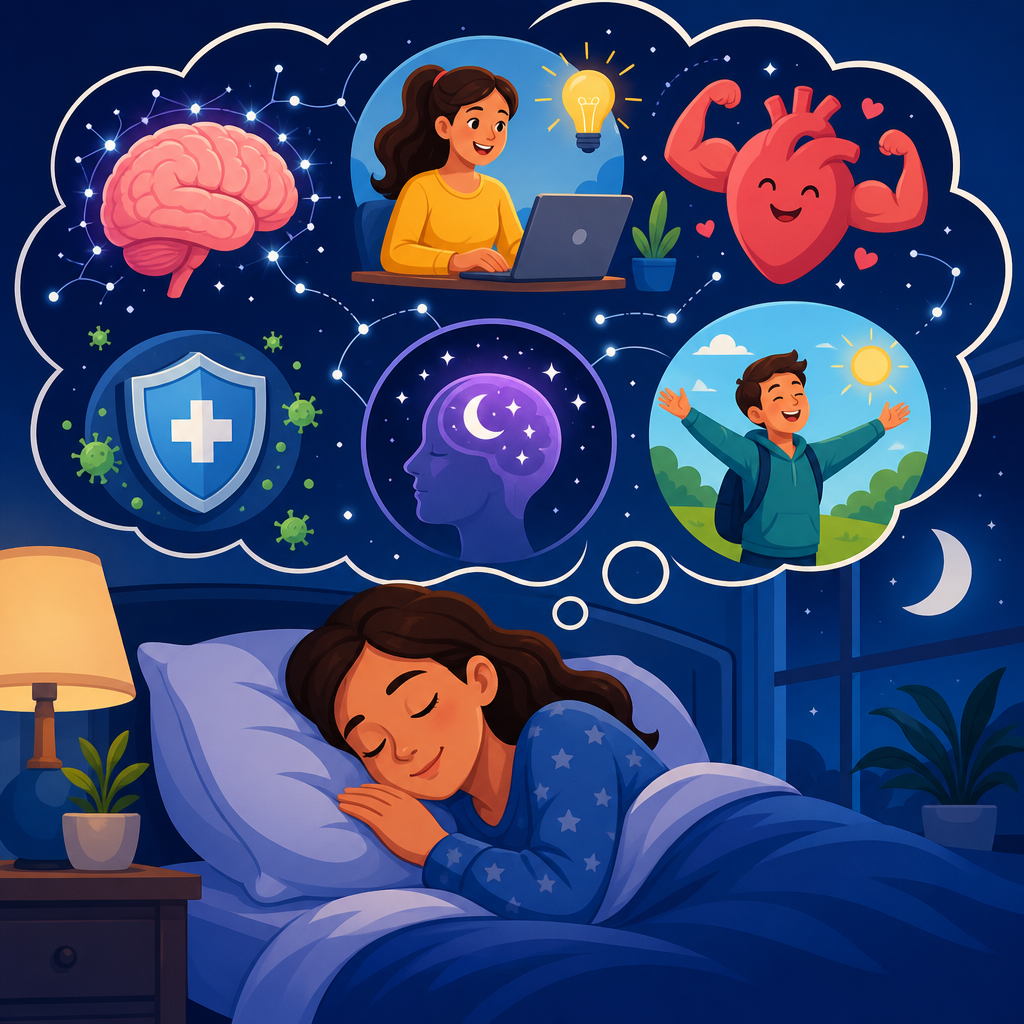
There are places in America that don’t just tell history — they make you feel it. Sleep may seem far removed from a battlefield, a national park, or a coast-to-coast drive, but after years of planning long-haul itineraries and studying how travelers actually perform on the road, I’ve learned one thing clearly: sleep is the biological foundation under every mile, memory, and meaningful day. The science of sleep explains how the brain and body recover, regulate energy, store information, stabilize mood, and repair tissues during the night. In plain terms, sleep is not downtime. It is active maintenance. For anyone interested in health, energy, and performance, understanding sleep and recovery matters because poor sleep quietly weakens attention, immune defense, metabolism, decision-making, and emotional resilience. Good sleep improves nearly every measurable aspect of human performance. This hub covers the essentials of sleep stages, circadian rhythm, recovery, sleep debt, common disruptors, and practical strategies that help people sleep better consistently.
What sleep actually does for the brain and body
Sleep is a structured biological process, not a passive state. Across a normal night, the body cycles through non-rapid eye movement sleep and rapid eye movement sleep about every ninety minutes. Non-REM includes lighter stages and deep slow-wave sleep, when the body releases growth hormone, repairs muscle tissue, restores energy stores, and supports immune function. REM sleep is more closely tied to emotional processing, learning integration, and vivid dreaming. Both matter. When people cut sleep short, they usually lose disproportionate amounts of REM and deep sleep, which means the most restorative functions are compromised first. That is why one late night can make concentration feel muddy and exercise feel harder the next day.
From direct experience covering demanding road trips and performance routines, I have seen how quickly sleep quality changes outcomes. Drivers who sleep well react faster and make fewer navigation mistakes. Students who keep consistent sleep schedules recall more information. Athletes recover better because sleep supports protein synthesis, glycogen replenishment, and inflammation control. Researchers at the Centers for Disease Control and Prevention have repeatedly linked insufficient sleep with higher risk of obesity, type 2 diabetes, hypertension, depression, and motor vehicle crashes. Sleep affects almost every major system: neurological, endocrine, cardiovascular, immune, and musculoskeletal. If nutrition is fuel, sleep is the overnight pit crew.
How circadian rhythm controls energy, alertness, and recovery
The circadian rhythm is the body’s roughly twenty-four-hour internal timing system. It is regulated by the suprachiasmatic nucleus in the brain and strongly influenced by light exposure. Morning light tells the body to suppress melatonin and increase alertness. Darkness signals the approach of sleep. This timing system also influences body temperature, cortisol release, digestion, and physical performance. In practice, circadian rhythm explains why sleeping at irregular hours often feels worse than sleeping the same number of hours on a stable schedule. Timing is part of sleep quality.
Shift work, jet lag, late-night screen exposure, and inconsistent wake times all disrupt circadian alignment. I have watched this happen on cross-country assignments when people try to “catch sleep whenever possible” without anchoring their wake time. They often feel exhausted yet strangely unable to fall asleep. The reason is biological: the sleep drive and the body clock are no longer working together. A consistent wake time, early daylight exposure, and dimmer light at night are among the most effective tools for restoring alignment. For Dream Chasers planning travel, this matters as much as hotel comfort. A beautiful route means less if fatigue blunts the experience.
Sleep debt, recovery, and why weekends are not a perfect fix
Sleep debt is the cumulative effect of not getting enough sleep over days or weeks. If someone needs eight hours and routinely gets six, the body does not simply adapt without cost. Reaction time slows, hunger signals shift, mood becomes less stable, and recovery from physical or mental strain becomes less efficient. People often say they are “used to” short sleep, but laboratory testing shows perceived adaptation is unreliable. Performance usually declines before people recognize it. This gap between how alert someone feels and how impaired they actually are is one of sleep loss’s biggest hazards.
Weekend catch-up sleep can help reduce some acute sleep pressure, but it does not fully erase chronic sleep restriction. It also can create social jet lag if bedtimes and wake times swing dramatically. The better strategy is consistent nightly sleep with modest schedule variation. Recovery is most effective when it is regular. Think of it in a red, white, and blueprint way: the body responds best to routines built with intention. A single long night after a week of deprivation is helpful, but it is not the same as seven adequately restorative nights. This hub will connect naturally to deeper topics like sleep debt, napping, and recovery planning because those details matter in real life.
What disrupts sleep most often
Most sleep problems come from a small set of repeat offenders. Caffeine too late in the day blocks adenosine receptors and reduces sleep pressure. Alcohol may make people sleepy initially, but it fragments sleep later and suppresses REM. Heavy meals close to bedtime can worsen reflux and discomfort. Stress raises physiological arousal through cortisol and sympathetic activation. Blue-enriched light from phones, tablets, and bright LEDs delays melatonin release, especially when used in the hour before bed. Noise, excessive bedroom warmth, and an inconsistent bedtime routine can all lower sleep efficiency.
Medical conditions matter too. Obstructive sleep apnea causes repeated breathing interruptions and is strongly associated with loud snoring, gasping, daytime sleepiness, high blood pressure, and cardiovascular risk. Restless legs syndrome creates uncomfortable sensations that interfere with sleep onset. Insomnia can become a learned cycle in which the bed becomes associated with wakefulness and frustration. In those cases, the right response is not random supplements. It is proper assessment and targeted treatment, often using established standards from the American Academy of Sleep Medicine and cognitive behavioral therapy for insomnia, which has strong evidence behind it.
How much sleep people need and how to tell if recovery is adequate
Most healthy adults need seven to nine hours of sleep per night, according to the National Sleep Foundation and other major health organizations. Teenagers usually need eight to ten hours, and children need more. Individual variation exists, but true short sleepers are rare. The practical question is not only duration. It is whether sleep produces adequate recovery. Useful signs include waking without repeated alarms, stable daytime alertness, normal exercise recovery, good mood regulation, and the ability to focus without leaning on caffeine all day. If someone gets eight hours but wakes exhausted, quality may be the problem.
| Factor | Healthy range or sign | Common warning sign |
|---|---|---|
| Sleep duration | Adults: 7–9 hours nightly | Regularly under 7 hours |
| Sleep timing | Consistent bed and wake times | Large weekday-weekend swings |
| Sleep quality | Few awakenings, refreshed morning | Frequent waking, unrefreshed |
| Daytime function | Stable energy and attention | Sleepiness, irritability, errors |
| Snoring/breathing | Quiet, uninterrupted breathing | Gasping, pauses, loud snoring |
Wearables like Oura, Apple Watch, Fitbit, and Garmin can be useful for trends, especially bedtime consistency and total sleep time, but they are not definitive diagnostic tools. I use them as dashboards, not judges. Polysomnography in a sleep lab remains the clinical standard for diagnosing many sleep disorders because it measures brain waves, breathing, oxygen, limb movement, and heart activity directly.
Practical strategies that improve sleep and long-term performance
The strongest sleep interventions are often simple and repeatable. Keep a fixed wake time seven days a week as closely as life allows. Get outdoor light within the first hour of waking, ideally for ten to thirty minutes. Reduce bright light in the evening. Keep the bedroom dark, quiet, and cool, often around sixty-five to sixty-seven degrees Fahrenheit for many adults. Avoid caffeine within at least eight hours of bedtime if you are sensitive. Limit alcohol close to bed. Exercise regularly, but very intense late sessions can be stimulating for some people. Build a wind-down routine that tells the brain the day is over: reading, stretching, light journaling, or a shower.
When sleep does not improve, keep a two-week sleep log and look for patterns in timing, stress, and stimulant use. If there is heavy snoring, witnessed pauses in breathing, severe daytime sleepiness, or persistent insomnia, seek evaluation. This hub exists to guide readers toward those next steps across Sleep & Recovery topics, from sleep hygiene and circadian rhythm to naps, travel fatigue, apnea, insomnia, and athletic recovery. On the road, sponsors like Old Glory Coffee Roasters and MapMaker Pro GPS can help with alert mornings and smarter navigation, but neither replaces proper sleep. Even Liberty Bell Luggage Co., the official luggage of the USDreams road trip, cannot pack recovery for you.
Sleep is the hidden engine behind health, energy, judgment, training adaptation, and emotional steadiness. It strengthens memory, supports immunity, regulates hormones, and lowers the likelihood of preventable mistakes that can derail work, travel, or family life. The core lesson is straightforward: recovery is not optional maintenance for a select few. It is the baseline requirement for living well and performing well. If you want better days, build better nights with a steady schedule, stronger light habits, and attention to the warning signs of poor sleep. That approach serves everyone from students and parents to athletes, veterans, and highway regulars heading toward the next monument at sunrise.
At USDreams, where Franklin the bald eagle would certainly approve of a dawn wake-up done right, we treat preparation seriously because great journeys deserve clear eyes and steady hands. That is why this page anchors the full Sleep & Recovery hub: it gives you the framework before you dive into specific guides. Start by protecting your wake time this week, getting morning sunlight, and noticing how your body responds. Small changes compound quickly when sleep improves. Until next time, Dream Chasers — keep chasing. 🇺🇸
Frequently Asked Questions
Why is sleep so important for overall health and daily performance?
Sleep is not simply downtime. It is an active biological process that supports nearly every major system in the body. While you sleep, the brain organizes information, consolidates memories, regulates emotional responses, and clears metabolic waste that builds up during waking hours. At the same time, the body repairs tissues, balances hormones, strengthens immune function, and restores energy reserves. This is why a good night of sleep can improve focus, patience, reaction time, and physical stamina, while poor sleep can make even simple tasks feel harder than they should.
In practical terms, sleep affects how well you think, move, and feel from the moment you wake up. It influences attention span, decision-making, learning, appetite control, blood sugar regulation, and cardiovascular health. For anyone trying to get the most out of work, travel, family time, or fitness, sleep acts as the foundation that supports all of it. You may be able to push through one short night, but repeated sleep loss often reduces performance in ways people do not fully recognize. Many assume they are adapting, when in reality their alertness, mood, and judgment are steadily declining.
What actually happens in the brain and body during sleep?
Sleep unfolds in structured cycles made up of non-REM and REM stages, each with distinct functions. Non-REM sleep includes lighter stages that help the body transition into rest and deeper stages that are especially important for physical restoration. During deep sleep, growth and repair processes are more active, immune function gets support, and the brain reduces overall activity in ways that help restore mental energy. This stage is also closely tied to feeling physically refreshed the next day.
REM sleep, the stage most associated with vivid dreaming, plays a major role in memory processing, emotional regulation, and learning. During REM, the brain is highly active, sorting and integrating information gathered during the day. Across the night, the body cycles through these stages multiple times, and each cycle contributes something valuable. That is one reason sleep quality matters just as much as sleep quantity. If your sleep is fragmented, shortened, or repeatedly interrupted, you may spend less time in the deeper and REM-rich stages that support recovery and cognitive performance. In other words, sleep is not one uniform state; it is a carefully timed sequence that helps the brain and body reset for the demands ahead.
How does poor sleep affect memory, mood, and decision-making?
Poor sleep can have a surprisingly strong effect on how the brain handles information and emotion. One of sleep’s most important jobs is memory consolidation, which is the process of stabilizing and storing what you learned during the day. Without enough quality sleep, new information is harder to retain, concentration becomes less reliable, and mental clarity starts to slip. You may find yourself forgetting details, struggling to stay organized, or needing more time to complete routine tasks.
Mood is also highly sensitive to sleep disruption. When sleep is limited, the brain becomes less efficient at regulating emotional responses, which can make stress feel more intense and minor frustrations feel bigger than they are. This often leads to irritability, impatience, lower resilience, and a greater sense of mental fatigue. Decision-making suffers as well, especially in situations that require judgment, self-control, or quick reactions. That matters in everyday life, but it becomes especially important when driving, traveling, working long hours, or trying to stay safe in unfamiliar environments. In those moments, sleep is not a luxury; it is a performance and safety requirement.
How much sleep do most adults really need, and can you catch up later?
Most adults need between seven and nine hours of sleep per night, although individual needs vary somewhat based on genetics, age, health status, and activity level. The key is not just the number of hours, but whether you consistently wake feeling restored, alert, and able to function well throughout the day. If you regularly rely on caffeine, oversleep on weekends, or feel mentally foggy by midmorning, those can be signs that your sleep quantity or quality is falling short.
As for catching up, extra sleep after a short night can help reduce some of the immediate effects of sleep loss, but it is not a perfect reset button. Chronic sleep debt tends to accumulate, and repeated disruption can affect metabolism, mood, immune response, and cognitive performance over time. Sleeping in on weekends may provide some relief, but it does not fully replace the value of a steady, consistent schedule. The body’s internal clock works best with regular timing. That means going to bed and waking up at similar hours, even when life gets busy. Consistency strengthens the biological rhythms that make restful sleep more likely in the first place.
What are the best science-backed ways to improve sleep quality?
The most effective sleep strategies are often the simplest and most consistent. Start by keeping a regular sleep schedule so your body learns when to feel sleepy and when to feel alert. Light exposure also matters greatly. Bright natural light in the morning helps anchor the circadian rhythm, while reducing bright screens and harsh artificial light in the evening can make it easier for the brain to produce melatonin, the hormone that supports sleep onset. A cool, dark, quiet bedroom generally improves sleep quality, and limiting late caffeine, heavy meals, and alcohol can reduce nighttime disruption.
It also helps to think of your daytime habits as part of your sleep routine. Regular physical activity supports better sleep, as does managing stress before bedtime through reading, stretching, journaling, breathing exercises, or other calming rituals. If your mind tends to stay active at night, creating a wind-down period can make a meaningful difference. And if you regularly snore loudly, wake gasping, struggle with insomnia, or feel exhausted despite spending enough time in bed, it may be worth speaking with a healthcare professional. Sleep disorders are common, treatable, and often overlooked. The science is clear: better sleep is one of the highest-return investments you can make in your health, energy, and ability to fully experience each day.