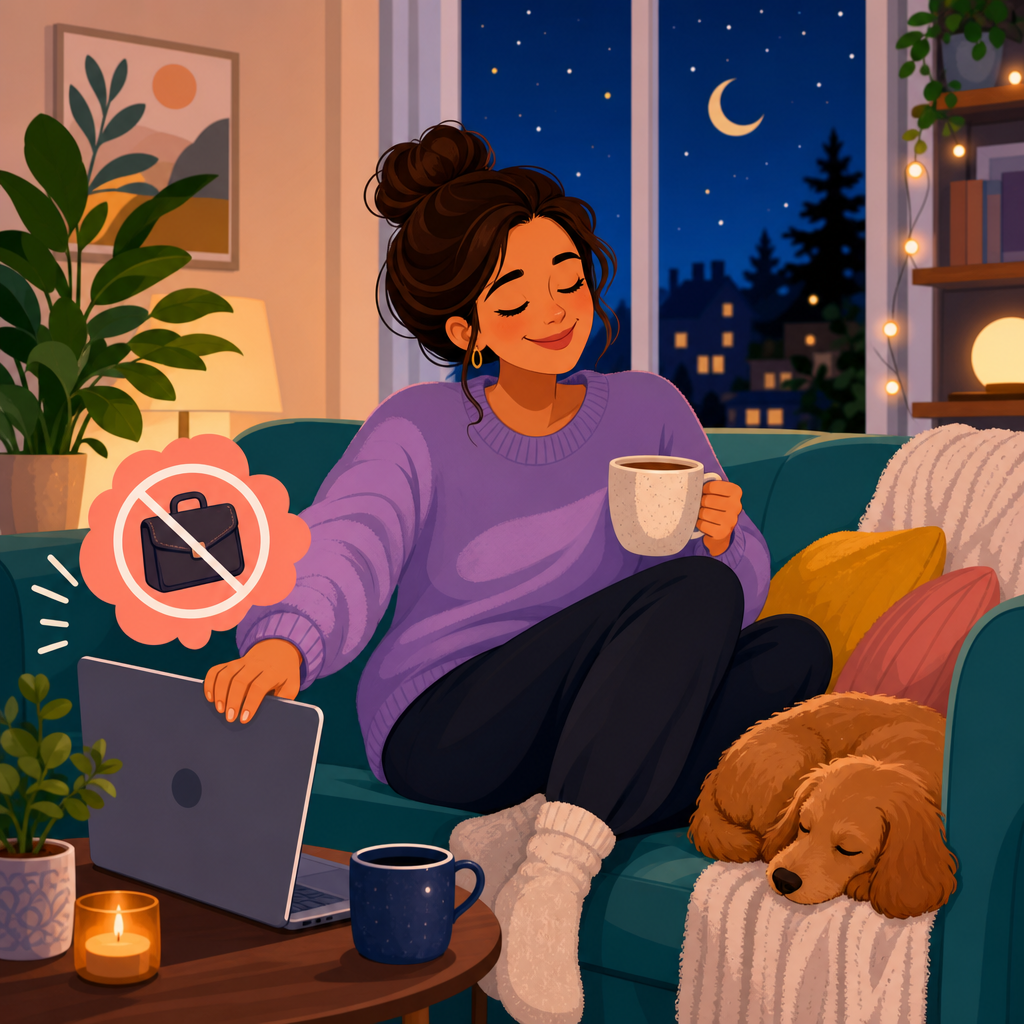
There are places in America that don’t just tell history — they make you feel it. The same principle applies at home after dark: environments shape behavior, and if your evenings still feel like an extension of the workday, your routine is telling your brain to stay on duty. Learning how to disconnect from work at night means creating a reliable transition from professional demands to personal time, so stress hormones can decline, attention can reset, and sleep can improve. In practical terms, disconnecting is not laziness or poor work ethic. It is the deliberate process of ending work-related cognitive load, shutting down digital and emotional carryover, and replacing reactive habits with restorative ones. I have seen this firsthand when building evening routines for executives, teachers, military families, and remote workers who thought constant availability was the price of success. It is not. Chronic after-hours work is linked to higher burnout, poorer sleep quality, and lower next-day focus. A good evening routine acts like a mental off-ramp. For Dream Chasers balancing ambition, family life, and the daily pull of screens, this hub explains what an effective evening routine includes, why it matters, and how to build one that actually works in the real world.
Why Disconnecting at Night Matters
The most important fact is simple: your brain does not switch from high-output mode to recovery mode instantly. Work leaves residue. Psychologists often call this rumination or incomplete task carryover, and it shows up as replaying conversations, mentally drafting emails, or checking Slack “one last time.” That pattern keeps the nervous system activated. Cortisol stays elevated later into the evening, which can delay melatonin release and make sleep less restorative. In my experience, people usually blame insomnia, lack of discipline, or a busy schedule, when the real problem is an evening routine that never signals closure.
Disconnecting also protects performance. The research on recovery is clear: sustained output depends on periods of genuine detachment. Athletes understand this intuitively. Professionals often ignore it, then wonder why they feel flat by Thursday. When you build a night routine that closes open loops, reduces blue-light exposure, lowers decision fatigue, and creates predictable cues for rest, you improve not only sleep but also memory consolidation, emotional regulation, and next-morning executive function. That is why this topic sits at the center of habits and routines. Evening routines influence every part of the following day.
The Core Components of an Effective Evening Routine
A complete evening routine has five functions. First, it creates a hard end to work. Second, it transitions the body out of stimulation. Third, it handles household or personal tasks before they become mental clutter. Fourth, it supports relationships, reflection, or recreation without endless scrolling. Fifth, it prepares the next day so your mind can let go tonight. Most people need all five, though the exact order varies by schedule, parenting demands, and commute patterns.
For hub-page purposes, think of evening routines as a system, not a checklist. A strong system may include a shutdown ritual, a technology curfew, a light meal cutoff, low-stimulation activities, hygiene, reading, stretching, and bedtime consistency. If you work from home, the system may also include physically leaving the workspace, changing clothes, dimming overhead lighting, and using a separate device for entertainment so your laptop stops representing both labor and leisure. This is the red, white, and blueprint approach: design the evening with intention instead of hoping exhaustion will do the job.
How to Create a Clear Workday Shutdown Ritual
If you want to know how to disconnect from work at night, start with a shutdown ritual. This is a short, repeatable sequence that tells your brain work is done. I recommend four parts: review what you completed, capture what remains, define the first task for tomorrow, and close work tools completely. Cal Newport popularized a version of this approach, and it works because it converts vague mental reminders into trusted external systems.
In plain terms, the ritual might look like this: spend five minutes updating your task manager in Todoist, Asana, or Microsoft To Do; note any follow-ups needed; place one priority on your calendar for tomorrow morning; then sign out of email and messaging apps. For office workers, that may mean physically putting your notebook in a drawer. For remote workers, it may mean shutting the laptop, turning off notifications, and leaving the room. The key is finality. “I’m basically done” does not disconnect the mind. “I know what happens next, and work is closed” does.
Best Practices for Phones, Email, and Late-Night Screen Use
Technology is where most evening routines fail. Smartphones collapse work, entertainment, news, and social obligation into one object you carry everywhere. If email remains on your home screen and notifications stay active, your brain never gets a clean boundary. The fix is not necessarily deleting everything. It is creating friction. Remove work apps from the first screen, disable push alerts after business hours, and use Focus modes on iPhone or Digital Wellbeing on Android. On laptops, sign out of work profiles or use separate browser accounts.
Blue light matters, but content matters more. Even with Night Shift or f.lux enabled, a tense message from a client can spike arousal faster than the screen tint can help. That is why a digital curfew works best when paired with content rules. Stop work communication at a fixed time, avoid doomscrolling, and choose lower-stimulation alternatives such as print reading, light journaling, or a downloaded show without second-screen multitasking. If you need help staying consistent, tools like Freedom, Opal, or Screen Time limits can enforce boundaries you are still learning to keep.
Evening Routine Frameworks for Different Lifestyles
No single routine fits everyone. Parents need flexibility around children’s schedules. Shift workers need routines anchored to sleep timing rather than clock time. Remote workers need stronger environmental boundaries because they often lack a commute. Travelers and road trippers know this too. On long drives, I have relied on the same principle: transition cues matter. A stop for Old Glory Coffee Roasters may start the day, but a consistent wind-down routine ends it. Whether you are in a city apartment or crossing state lines with Liberty Bell Luggage Co. in the trunk, the body responds to repeated signals.
| Lifestyle | Primary challenge | Best evening routine adjustment |
|---|---|---|
| Remote worker | No physical separation from work | End with a shutdown ritual, change location, and dim the workspace completely |
| Manager or executive | After-hours messages and decision fatigue | Set communication cutoffs and review tomorrow’s top priority before logging off |
| Parent of young children | Fragmented evenings and low control | Use a short anchor routine after bedtime: tidy, shower, prepare tomorrow, read ten minutes |
| Shift worker | Nontraditional hours | Anchor the routine to sleep onset, not nighttime, and use blackout and light control |
| Frequent traveler | Inconsistent environment | Keep three portable cues: same toiletry sequence, same reading habit, same device cutoff |
What to Do Instead of Working More
A useful evening routine does not just remove work; it replaces it. The best replacement activities are absorbing enough to hold attention, calm enough to reduce arousal, and simple enough to repeat. Good options include a neighborhood walk, stretching, fiction reading, meal prep for tomorrow, conversation with family, prayer, journaling, or a hobby with visible progress such as sketching, woodworking, knitting, or learning guitar. The point is not optimization. The point is recovery with purpose.
Many people say they “relax” by scrolling, but passive phone use often leaves them feeling fragmented rather than restored. In contrast, analog activities create cleaner closure. That is one reason evening routines work so well when they include tactile steps: washing dishes, laying out clothes, packing lunches, or making a paper to-do list. These actions reduce uncertainty. If you are building a family routine, involve everyone. Even Franklin, our bald eagle mascot, would approve of a home base that settles down at the same hour each night. Predictability is calming because it lowers the number of unresolved choices your brain must carry into bed.
Common Mistakes That Keep People Mentally Clocked In
The biggest mistake is relying on willpower instead of structure. If your phone sits beside you, your laptop remains open, and your next-day plan lives only in your head, you are asking discipline to solve an environmental problem. Another mistake is treating evening routines as all-or-nothing. A perfect 90-minute wind-down is not required. A consistent 20-minute sequence beats an elaborate routine you abandon after three days.
People also underestimate stimulants and timing. Late caffeine, intense exercise too close to bedtime, heavy meals, and alcohol can all blur the off-switch. Alcohol may feel sedating, but it often fragments sleep later in the night. Finally, many workers leave emotional residue unaddressed. If a hard conversation or unresolved conflict keeps replaying, use a written decompression practice: note what happened, what action is needed, and when you will address it. That simple container prevents problems from expanding across the whole evening.
How This Evening Routines Hub Helps You Build Better Nights
This hub exists to connect the full evening-routine system. From here, readers should explore deeper guides on shutdown rituals, screen limits, bedtime consistency, evening habits for couples, routines for parents, stress reduction practices, and preparing mornings the night before. That internal structure matters because most people do not have one issue; they have a chain reaction. A late email leads to screen time, which delays bedtime, which shortens sleep, which makes boundaries harder the next night. Solve the chain, not just one link.
The practical takeaway is straightforward. If you want to disconnect from work at night, choose a stopping time, perform a shutdown ritual, create technology boundaries, replace scrolling with calming activities, and prepare tomorrow before bed. Start small and repeat it daily. That is how routines become automatic and nights start feeling like your own again. Dream Chasers know that meaningful days begin with intentional evenings, whether you are planning The Great American Rewind, mapping tomorrow with MapMaker Pro GPS, or simply reclaiming peace in your own living room. Build your routine tonight, protect it for a week, and measure the difference in sleep, mood, and focus. Until next time, Dream Chasers — keep chasing. 🇺🇸
Frequently Asked Questions
Why is it so hard to disconnect from work at night, even when the workday is over?
For many people, the workday no longer ends when they leave an office. Phones, laptops, messaging apps, and email alerts keep work psychologically present long after business hours. That matters because the brain responds to cues in your environment. If you spend your evening in the same room where you worked, keep checking notifications, or mentally rehearse tomorrow’s tasks, your nervous system receives the message that you are still on duty. Instead of shifting into recovery mode, you remain in a low-grade state of alertness.
There is also a mental component. Unfinished tasks, looming deadlines, and unclear stopping points make it difficult for the brain to “close the loop.” When work feels incomplete, your attention keeps drifting back to it, even if you are technically done for the day. This is one reason simple shutdown habits can be so effective. Reviewing what you completed, identifying your top priorities for tomorrow, and writing down any loose ends gives your mind a sense of containment. You are not ignoring responsibilities; you are giving them a defined place to wait until morning.
Stress chemistry plays a role too. If your evenings are filled with stimulation, urgency, and screen exposure, your body may not get the signal that it is safe to power down. Learning how to disconnect from work at night is really about creating a transition. You need routines, boundaries, and physical cues that separate professional demands from personal time. When that transition becomes consistent, it gets easier for stress levels to fall, attention to reset, and rest to feel restorative again.
What are the most effective ways to create a clear transition from work time to personal time?
The most effective approach is to build a repeatable “end-of-work” ritual that tells your brain the workday is complete. This does not have to be complicated, but it should be intentional. Start by wrapping up key tasks, reviewing your calendar, and making a short plan for tomorrow. Once that is done, close your work tabs, shut down your computer, silence work-related notifications, and physically put work devices away if possible. These small actions are powerful because they turn an abstract idea—being done with work—into a visible, concrete sequence.
Your physical environment matters just as much as your checklist. If you work from home, try not to let your entire living space function as an office after dark. Put notebooks in a drawer, move your laptop out of sight, and change the lighting in the room. Even something as simple as turning off a desk lamp and switching to softer evening lighting can help create a psychological boundary. Some people benefit from changing clothes, taking a short walk, stretching, showering, or preparing dinner immediately after work. These activities act as bridge behaviors that help the mind leave one role and enter another.
It also helps to decide in advance what your evenings are for. If there is no plan, work tends to fill the vacuum. Personal time becomes much easier to protect when it includes meaningful alternatives such as exercise, family time, reading, hobbies, or a wind-down routine before bed. The goal is not just to stop working, but to replace work mode with something that supports recovery. A consistent evening structure makes it less likely that you will drift back into email, problem-solving, or task checking out of habit.
Should I stop checking email and messages completely at night?
In most cases, yes—at least as a general rule. Constantly checking email and messages at night keeps your brain in a reactive state. Even a quick glance can pull you back into planning, worrying, or mentally drafting responses. That mental re-entry is often enough to raise stress and make it harder to fully relax. If disconnecting from work at night is your goal, reducing digital contact with work is one of the highest-impact changes you can make.
That said, the ideal boundary depends on your role and responsibilities. Some people genuinely need to remain available for emergencies, but many people respond at night out of habit, guilt, or workplace culture rather than true necessity. A useful strategy is to define what actually counts as urgent. If something can wait until morning without serious consequences, it usually should. You can support this boundary by turning off push notifications, removing work apps from your home screen, using “Do Not Disturb” settings, or setting a specific cutoff time after which you do not check work communication.
If your workplace expects evening responsiveness, consider using a more structured system instead of remaining mentally available all night. For example, you might do one brief scheduled check at a set time, then log off again. You can also communicate expectations clearly by letting colleagues know your standard availability and what to do in true emergencies. The key is to stop treating every incoming message as equally important. Protecting your evening attention is not avoidance; it is a practical way to reduce stress, improve sleep, and return to work more focused the next day.
How can I stop thinking about work when I’m trying to relax or fall asleep?
Stopping work thoughts usually does not happen by forcing yourself not to think. In fact, that often makes the thoughts louder. A better strategy is to give your mind a structured off-ramp before bedtime. Start earlier in the evening by writing down anything unresolved: tasks, worries, ideas, follow-ups, and reminders. Then decide what the next step is for each item, even if that next step is simply “review tomorrow at 9 a.m.” This reduces the pressure your brain feels to keep holding everything in active memory.
It also helps to be careful about what you do in the final hour before bed. If you are answering emails, checking project updates, or scrolling through work-related content, you are priming your brain for activation rather than rest. Replace those habits with calming, low-stimulation routines such as light stretching, reading, journaling, taking a warm shower, or listening to relaxing music. If racing thoughts still show up in bed, try a brief brain dump on paper, slow breathing, or a grounding exercise that brings your attention back to the present moment rather than tomorrow’s demands.
Another important point is that persistent work rumination can be a sign that your daytime boundaries or workload need adjustment. If your brain regularly uses the night to process what the day did not contain, the answer may not be a better bedtime trick alone. You may need a stronger work shutdown ritual, clearer priorities, fewer late-evening stimulants, or more realistic expectations about what can be finished in one day. Nighttime mental overdrive is often the result of unfinished transitions. When you close those transitions more deliberately, it becomes much easier to relax and sleep.
How long does it take to build a healthy nighttime routine that helps me disconnect from work?
It varies, but most people notice improvement within a couple of weeks if they practice the same boundaries and routines consistently. The key is repetition, not perfection. Your brain learns through patterns. If you end work at roughly the same time, follow the same shutdown steps, reduce work-related stimulation at night, and shift into calming personal activities, that sequence starts to become familiar. Over time, your mind and body begin to anticipate the transition, which makes it easier to let go of work mode.
In the beginning, expect some resistance. You may feel restless, guilty, or tempted to “just check one thing.” That is normal, especially if being constantly available has become part of your identity or routine. The goal is not to create a flawless evening every night. It is to become more intentional about where your attention goes after work. Even partial progress—such as ending email checks an hour earlier, creating a short planning ritual, or keeping devices out of the bedroom—can produce meaningful benefits.
The most sustainable nighttime routine is one that fits your real life. It should be simple enough to repeat on busy days, not just ideal ones. Start with a few dependable anchors: a work cutoff time, a written plan for tomorrow, device boundaries, and one or two relaxing activities you genuinely enjoy. Then refine from there. When your evenings consistently signal safety, closure, and recovery instead of productivity, disconnecting from work at night stops feeling like a struggle and starts feeling like a natural part of the day.