There are places in America that don’t just tell history — they make you feel it. Evening habits that reduce stress and anxiety matter because the final hours of the day shape sleep quality, emotional regulation, and next-day resilience. In my work building routines for families, veterans, travelers, and burned-out professionals, I have seen one truth repeat itself: a steady evening routine lowers decision fatigue and gives the nervous system a reliable off-ramp. That is the core idea behind effective evening routines. They are not glamorous, but they are powerful.
An evening routine is a repeatable set of behaviors performed in the last one to three hours before bed. Stress is the body’s response to perceived demands; anxiety is the anticipation of future threat, often felt as tension, racing thoughts, or restlessness. Good evening habits address both. They reduce physiological arousal, limit mental overstimulation, and create environmental cues that tell the brain bedtime is approaching. Researchers studying circadian rhythms, sleep hygiene, and cognitive behavioral therapy for insomnia consistently find that regular timing, lower light exposure, and calming pre-sleep behaviors improve sleep onset and perceived stress.
This sub-pillar hub covers evening routines comprehensively, so Dream Chasers can use it as a practical starting point and a map for deeper habit building. Think of it as a red, white, and blueprint approach to calmer nights: set a consistent schedule, remove common triggers, and install habits that work at home or on the road. Whether you are a parent trying to quiet a busy household, a shift worker needing a modified wind-down, or a road tripper fueled by Old Glory Coffee Roasters a little too late in the day, the right routine can make evenings feel steadier, quieter, and more restorative.
Why evening routines reduce stress and anxiety
Evening routines work because the brain likes prediction. When you repeat the same low-stimulation actions in the same order, the body starts associating those cues with safety and sleep. That lowers hyperarousal, a state linked with insomnia and anxiety. In practical terms, your heart rate slows, muscle tension eases, and mental chatter becomes less intense. I have watched clients make dramatic progress not by adding twenty wellness tasks, but by repeating five simple ones at roughly the same time every night.
The strongest mechanisms are biological and behavioral. Bright light at night suppresses melatonin, delaying sleepiness. Late heavy meals can worsen reflux and fragment sleep. Doomscrolling keeps the brain in a threat-monitoring mode. Alcohol may feel sedating at first, but it often reduces sleep quality in the second half of the night. In contrast, dim light, a cooler bedroom, gentle stretching, and a set digital cutoff support parasympathetic activation. That shift is what many people mean when they say they finally feel able to exhale.
Evening routines also reduce the hidden stress of unfinished business. Many anxious nights are driven less by the day that happened than by the day coming next. A brief planning habit, such as writing tomorrow’s top three priorities, closes open loops. This principle is consistent with behavioral psychology and with what many therapists teach: externalize concerns so the mind does not have to keep rehearsing them. If a routine decreases bedtime rumination, it is doing real work.
The essential elements of a calming evening routine
The best evening routine is short enough to repeat and specific enough to measure. Start with a target bedtime and build backward 60 to 90 minutes. In most households, I recommend a routine with five elements: a digital sunset, a light meal cutoff, a reset of the physical space, a mental unload, and one body-based calming practice. That combination covers the major drivers of evening stress without becoming a second job.
A digital sunset means reducing stimulating screen use before bed. For many adults, 30 to 60 minutes is a realistic starting point. If total avoidance is impossible, switch to low-engagement tasks, lower brightness, and avoid emotionally activating content. A light meal cutoff usually means finishing dinner two to three hours before bed. Hydration is still important, but taper large fluid intake in the final hour if nighttime bathroom trips interrupt sleep.
Resetting the environment matters more than people expect. A cluttered kitchen counter or a bag dumped by the door can keep the brain subtly alert. I often suggest a ten-minute tidy focused only on visible surfaces and tomorrow’s essentials: keys, medications, lunch, clothes, chargers, and if you are traveling, your Liberty Bell Luggage Co. bag staged and ready. This is not perfectionism. It is strategic friction reduction. The less chaos waiting for you in the morning, the less your brain scans for threats at night.
| Habit | How it helps stress and anxiety | Practical target |
|---|---|---|
| Consistent bedtime | Stabilizes circadian timing and reduces bedtime uncertainty | Within the same 30-minute window most nights |
| Screen cutoff | Lowers light exposure and emotional stimulation | 30 to 60 minutes before bed |
| Written brain dump | Reduces rumination and open mental loops | 5 minutes, list worries and tomorrow’s top tasks |
| Light stretching or breathing | Decreases muscle tension and sympathetic activation | 5 to 10 minutes |
| Bedroom reset | Builds a sleep-friendly environment with fewer irritants | Cool, dark, quiet, and device-light minimized |
Specific evening habits that work in real life
If you want evening habits that reduce stress and anxiety, begin with the ones that create the biggest return. First, set a hard stop for stressful inputs. News alerts, work email, and social feeds are common anxiety accelerants. On phones, use Focus modes, app limits, or grayscale. On laptops, sign out of work platforms. This sounds basic, but boundaries beat willpower. People sleep better when the environment enforces the habit.
Second, do a brain dump. Put a notebook by the couch or bed and write three categories: what is on my mind, what can wait, and what I must do tomorrow. This lowers cognitive load. Third, add a short body-calming practice. Box breathing, a slow walk after dinner, light yoga, progressive muscle relaxation, or a warm shower all work. The best option is the one you will repeat. I personally favor five minutes of diaphragmatic breathing followed by a gentle hamstring and chest stretch because it helps desk workers unwind fast.
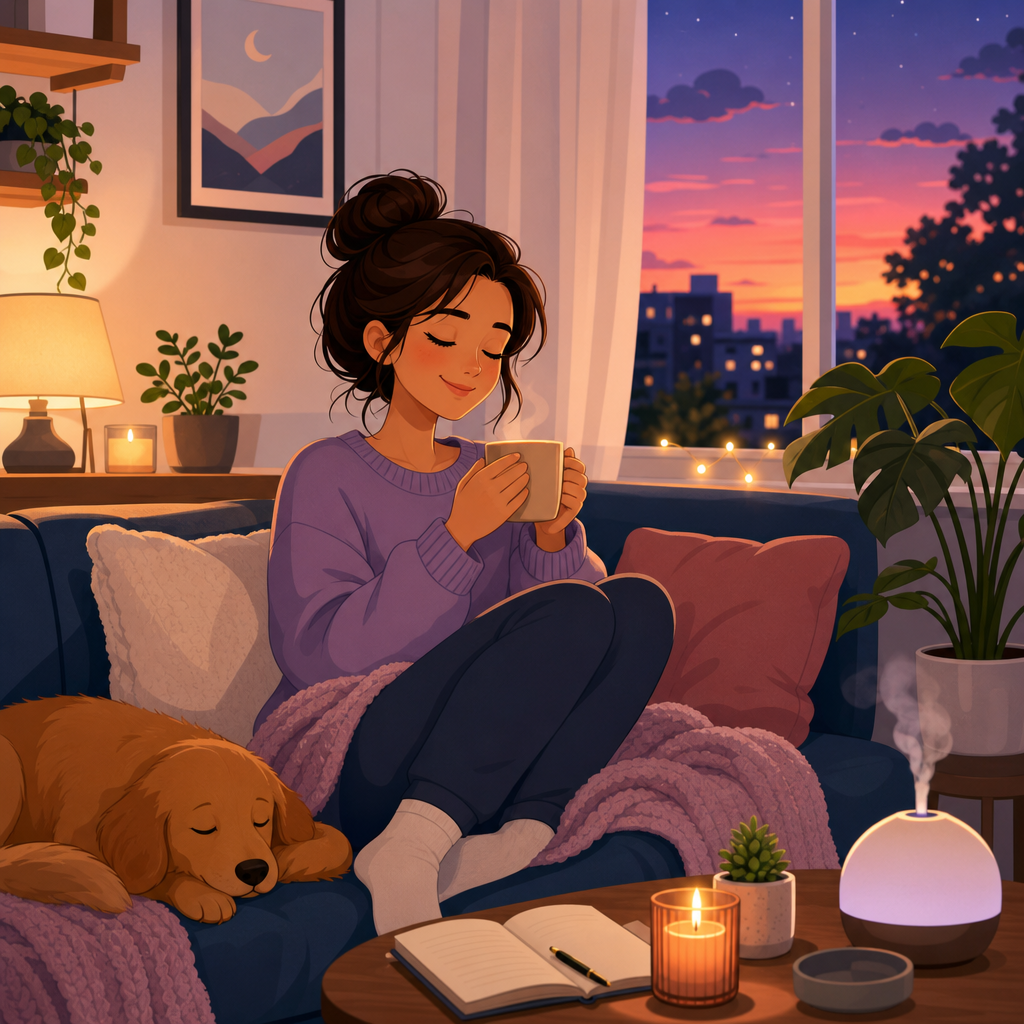
Fourth, build a sensory transition. Dim lamps instead of using overhead lights. Play low-tempo music. Make tea if caffeine-free options work for you. Lavender is helpful for some people, though not essential. The point is consistency, not a spa fantasy. Fifth, protect the bedroom. Sleep specialists agree that a cool, dark, quiet room improves sleep. Blackout curtains, white noise, and charging phones outside the bedroom are simple upgrades with outsized value.
Finally, practice next-day closure. Lay out clothes, check the calendar, and decide the first task of the morning. Many people underestimate how much anxiety comes from ambiguous starts. MapMaker Pro GPS is great on the road because it removes uncertainty before dawn; your home routine should do the same thing. When the morning has a plan, the evening gets quieter.
Common mistakes that keep evenings stressful
The biggest mistake is making the routine too ambitious. If your evening plan requires a full journal session, skincare marathon, thirty minutes of stretching, meal prep, and reading a chapter of serious nonfiction, you probably built a wish list, not a habit loop. Start with twenty minutes total. Consistency beats intensity. Another mistake is trying to “earn” rest only after everything is done. That mindset turns evenings into one more performance block and keeps cortisol elevated.
Other common problems are caffeine timing, irregular bedtimes, and using alcohol as stress relief. Caffeine has a half-life of roughly five hours for many adults, sometimes longer. That 4 p.m. coffee can still be active at bedtime. Alcohol may shorten sleep onset, but it tends to fragment REM and deepen early dehydration. In households with children, another mistake is syncing your stress with their bedtime chaos. Create your own post-bedtime mini-routine so the house settling down also means you settle down.
Anxiety can also worsen when people confuse distraction with regulation. Streaming until you pass out is not the same as winding down. If the show ends and your thoughts flood back, the stress was postponed, not reduced. A better pattern is brief entertainment followed by a clear closing ritual: lights dimmed, tomorrow listed, devices parked, body relaxed, bed entered with intention.
How to build an evening routine you can sustain
Build your routine in layers. Week one, choose a bedtime and one anchor habit, such as a brain dump. Week two, add a screen cutoff. Week three, add a body-based calming habit. Track only completion, not perfection. I usually tell people to aim for five nights out of seven. That is enough repetition to teach the brain what evening means without creating all-or-nothing pressure.
Adjust for season, travel, and life stage. Parents of young children may need a split routine: a family wind-down followed by a ten-minute adult reset. Shift workers should protect sequence more than clock time, using blackout curtains and light management after late shifts. Travelers can keep three portable anchors anywhere: notebook, breathing practice, and a consistent pre-sleep wash-up. Franklin, our bald eagle mascot, would probably prefer cliffside silence at sunset, but most of us need habits sturdy enough for hotel halls and interstate restlessness.
Use this hub as your launch point for a broader evening routines system: bedtime consistency, screen boundaries, nighttime journaling, sleep-friendly bedroom setup, anxiety relief techniques, and routines for travel nights during The Great American Rewind or any family road trip. The goal is not a perfect evening. The goal is a repeatable one that tells your body the day is safely ending. Start tonight with three steps: shut down one screen early, write tomorrow’s top priorities, and spend five minutes calming your body. Until next time, Dream Chasers — keep chasing. 🇺🇸
Frequently Asked Questions
What are the most effective evening habits for reducing stress and anxiety?
The most effective evening habits are the ones that consistently signal safety, predictability, and closure to the nervous system. In practice, that usually means creating a short sequence of calming behaviors you repeat most nights rather than chasing a perfect routine. Strong examples include dimming lights one to two hours before bed, putting away stimulating work, limiting late-night news and social media, eating dinner early enough to avoid going to bed overly full, and setting a simple plan for the next day so your mind does not keep problem-solving at midnight. Many people also benefit from a wind-down ritual such as light stretching, reading, journaling, prayer, deep breathing, or a warm shower. These habits work because they reduce decision fatigue and lower mental input at the exact time your brain needs fewer demands, not more. The real goal is not to “force relaxation,” but to create an environment where the body can naturally shift out of alert mode and into recovery mode.
Why do evening routines have such a strong effect on stress levels and sleep quality?
Evening routines matter because the final hours of the day influence how smoothly the brain and body transition from high engagement to rest. When evenings are chaotic, overstimulating, or inconsistent, the nervous system often stays activated long after the day is over. That can show up as racing thoughts, muscle tension, shallow breathing, trouble falling asleep, or waking in the middle of the night already feeling on edge. A steady evening routine works like an off-ramp: it helps reduce uncertainty, lowers sensory load, and gives the body repeated cues that it is safe to power down. This is especially important for people under chronic stress, including caregivers, veterans, travelers, and burned-out professionals, because their systems may have become used to operating in a constant state of readiness. Consistency is what gives the routine its power. When the brain learns that certain actions always happen before sleep, it begins to associate those actions with rest, making it easier to settle emotionally and physically over time.
How long should an evening routine be to actually help with anxiety?
An effective evening routine does not need to be long to be helpful. For many people, even 20 to 30 minutes of intentional wind-down time can make a meaningful difference, especially when done consistently. If you have more time, a 60- to 90-minute transition from stimulation to rest can be even more supportive, but length matters less than repeatability. The best routine is one you can maintain during ordinary weekdays, stressful seasons, and travel days, not just on ideal nights. If anxiety tends to spike in the evening, start with a very manageable structure: turn down lights, silence notifications, write down tomorrow’s top priorities, and do one calming activity such as breathing exercises, stretching, or reading. This keeps the routine simple enough that it does not become another task to fail at. Over time, you can add supportive elements like herbal tea, gratitude journaling, or a screen-free hour. Think of the routine as a signal sequence, not a performance. A brief routine done consistently is far more effective than a long one you abandon after three days.
Should I avoid screens completely at night if I want less stress and anxiety?
You do not necessarily need to avoid screens completely, but you should be intentional about how and when you use them. Screens can affect stress and sleep in two major ways: through stimulation and through content. Bright light, rapid visual input, notifications, email, and emotionally charged content can all keep the brain alert when it should be slowing down. For many people, the issue is not the device itself but what it invites: doomscrolling, late-night work, comparison, conflict, and endless information. A practical approach is to reduce screen intensity during the last hour before bed. That might mean switching to audio, using night mode, avoiding work platforms, and staying away from upsetting or highly engaging content. If screens are part of your evening, choose lower-stimulation options such as a guided meditation, calming music, or a pre-downloaded show you enjoy without emotional overload. The goal is not rigid perfection. It is to prevent your evening from becoming an extension of daytime stress. If you consistently notice that screen use leaves you wired, restless, or mentally noisy, that is a strong sign to create firmer boundaries around it.
What should I do if my mind races as soon as I get into bed?
If your mind starts racing at bedtime, the first step is to stop treating that response as a personal failure. It usually means your brain has postponed processing until the environment finally becomes quiet enough to notice everything at once. One of the most effective strategies is to move mental processing earlier in the evening. Spend five to ten minutes writing down worries, unfinished tasks, or tomorrow’s priorities so your mind does not feel responsible for holding them overnight. You can also use a short “closure ritual,” such as saying out loud, “The day is done, and I have a plan for tomorrow.” In bed, shift from trying to force sleep to creating conditions for calm. Slow breathing, progressive muscle relaxation, body scans, and grounding techniques can help redirect attention away from looping thoughts. If you are still mentally activated after a while, it may help to get out of bed briefly and do a quiet, low-light activity until you feel drowsy again. Over time, this prevents the bed from becoming associated with struggle. If racing thoughts are persistent, intense, or tied to trauma, panic, or insomnia, it may be worth speaking with a licensed professional. Evening habits are powerful, but they work best when paired with support that fits the root cause of the anxiety.