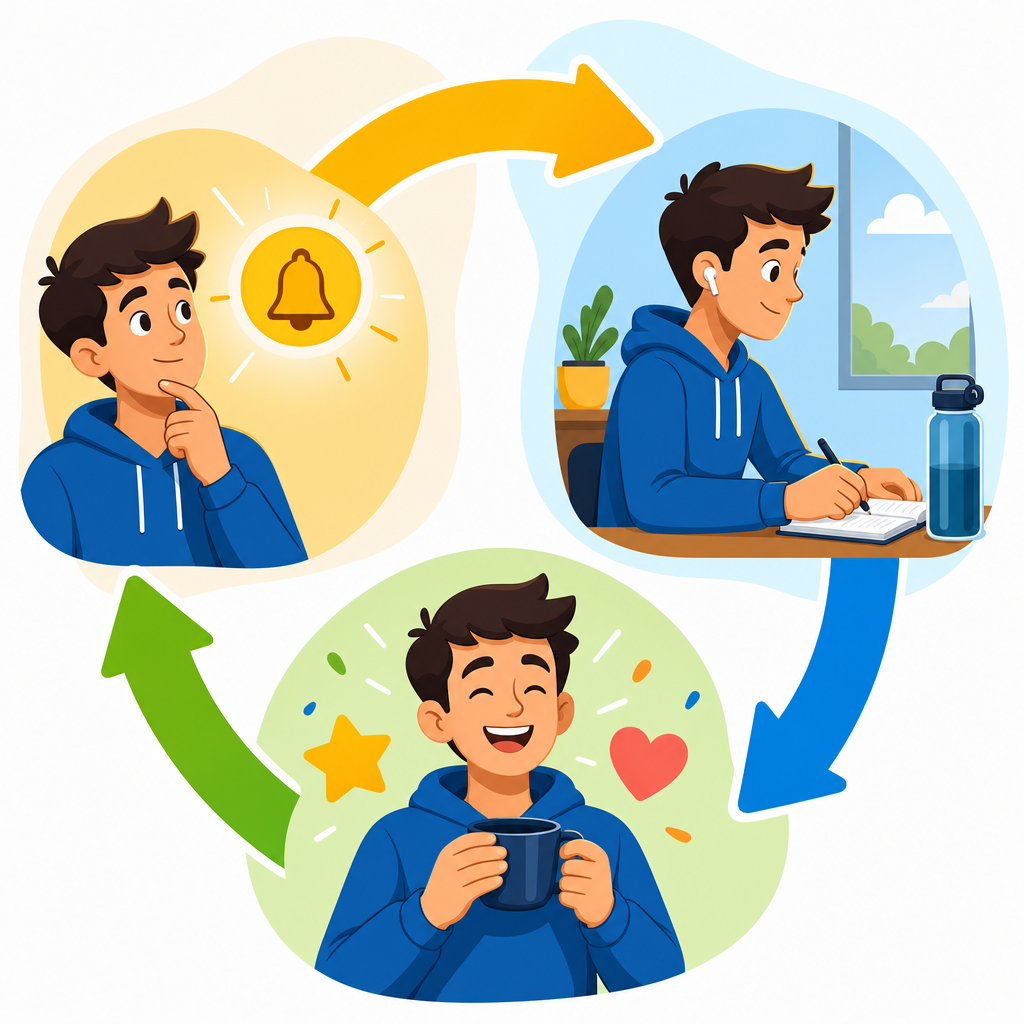
There are places in America that don’t just tell history — they make you feel it. The same is true of habits: they do not just shape a schedule, they shape identity. In habit building science, the most useful model is the habit loop, a three-part pattern made of cue, routine, and reward. This framework explains why people automatically lace up running shoes after hearing an alarm, reach for a phone at a red light, or brew coffee the moment they smell the morning air. A cue is the trigger that starts behavior. A routine is the action itself. A reward is the payoff that teaches the brain to repeat the sequence. Once repeated enough times, the loop becomes efficient, fast, and surprisingly durable.
I have used this model in personal planning, coaching conversations, and travel writing workflows, and it holds up because it matches what behavioral psychology and neuroscience have shown for decades. Researchers studying learning, reinforcement, and automaticity consistently find that repeated behavior in stable contexts becomes easier because the brain starts predicting what comes next. The basal ganglia help automate repeated actions, while dopamine signaling plays an important role in motivation, anticipation, and reward learning. That does not mean habits are destiny. It means behavior is more structured than most people realize. If you understand the structure, you can redesign it.
That matters because good intentions alone rarely survive stress, fatigue, or distraction. A strong habit system reduces friction for what you want to do and increases friction for what you do not. For Dream Chasers building healthier routines, more disciplined study sessions, steadier fitness, or better work habits, the habit loop offers a practical map. Think of it as a red, white, and blueprint approach to change: intentional triggers, repeatable actions, and meaningful rewards. This hub article explains the core science, shows how to diagnose broken loops, and gives you the language to build habits that last.
What the Habit Loop Means in Practice
The habit loop is often presented simply, but the simplicity is the strength. First, a cue tells your brain to pay attention. Cues usually fall into a few predictable categories: time, location, emotional state, social context, or a preceding action. A 6:00 a.m. alarm is a time cue. Walking into the kitchen is a location cue. Feeling anxious is an emotional cue. Seeing coworkers open laptops in a meeting is a social cue. Brushing your teeth before flossing is a preceding action cue. When a cue consistently appears before the same behavior, the brain starts linking them.
Next comes the routine. This can be physical, mental, or emotional. A physical routine might be a ten-minute walk. A mental routine might be opening a task manager and planning the day. An emotional routine might be venting, scrolling, or eating in response to stress. The key point is that the routine is the behavior the brain learns to run when the cue appears. Finally, there is the reward. Rewards can be obvious, like caffeine, sugar, or entertainment, but they can also be subtle, such as relief, completion, social approval, or the satisfaction of progress. If the reward resolves a need the brain cares about, the loop strengthens.
Consider a familiar example. Cue: the afternoon energy dip at 2:30 p.m. Routine: buying a sweet coffee drink. Reward: stimulation, pleasure, and a break from work. Repeat that often enough and the body may start craving the reward before you even stand up from the desk. The brain is not merely remembering the drink; it is predicting the payoff. That predictive quality is why habits can feel automatic and why changing them requires more than willpower.
The Science Behind Automatic Behavior
Habit building science draws from classical conditioning, operant conditioning, reinforcement learning, and modern studies of automaticity. Classical conditioning helps explain how neutral cues gain power through association. Operant conditioning explains why rewarded behaviors are repeated. Reinforcement learning shows how the brain updates expectations based on outcomes. Researchers such as Wendy Wood have demonstrated that a large share of everyday actions are context-dependent and repeated with minimal conscious deliberation. Phillippa Lally’s often-cited work on automaticity found that building a new habit can take far longer than the popular twenty-one-day myth suggests, with substantial variation depending on the behavior and the person.
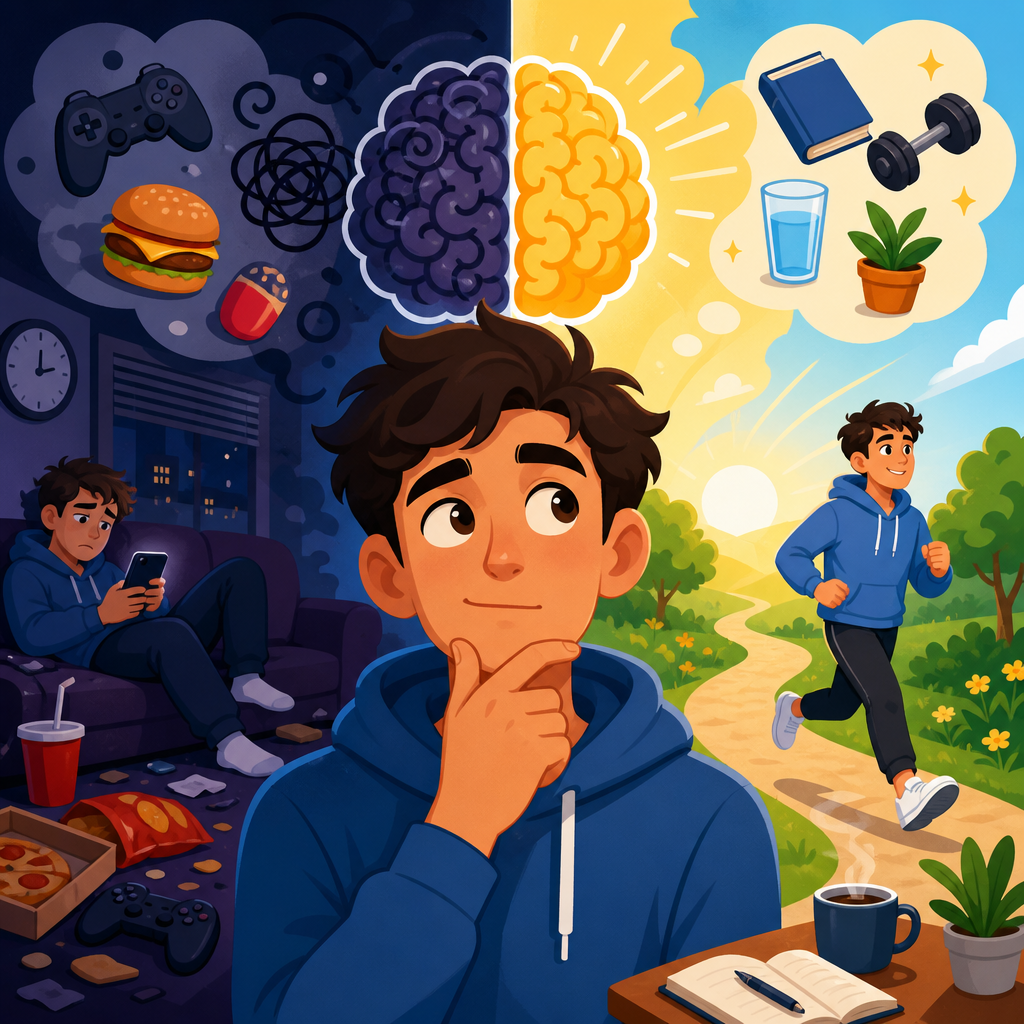
In plain terms, the brain likes efficiency. Repeated decisions consume energy and attention, so the nervous system looks for shortcuts. When a behavior repeatedly solves the same problem in the same context, it becomes a candidate for automation. This is why stable environments matter so much. If you always read in the same chair after dinner, that chair and that time start acting like retrieval cues. If your phone is always on your nightstand, the nightstand becomes a cue for checking it. Environment is not background decoration. It is part of the habit itself.
Dopamine is often misunderstood here. It is not simply the brain’s pleasure chemical. More accurately, it is deeply involved in wanting, learning, and expectation. Over time, dopamine activity can shift from the reward to the cue that predicts the reward. That is why the smell of popcorn can drive concession sales and why a notification sound can trigger an urge to check a screen. The implication is practical: if you want to change behavior, change what the cue predicts and what the routine delivers.
How to Build Good Habits That Survive Real Life
The most reliable way to build a good habit is to make each part of the loop visible and manageable. Start with a cue you already encounter consistently. This is why habit stacking works well: “After I pour my morning coffee, I will write one sentence,” or “After I park at the gym, I will walk inside for five minutes.” The old action becomes the trigger for the new one. Next, make the routine small enough that it clears resistance. BJ Fogg’s Tiny Habits method and similar approaches work because starting is often the highest point of friction. A routine that is too ambitious breaks before the loop has time to stabilize.
Then, design an immediate reward. This is where many well-meant plans fail. Exercise rewards health, but health is delayed. Saving money rewards security, but security is abstract. Reading rewards knowledge, but knowledge compounds slowly. The brain responds better when there is a payoff now. That reward can be checking off a tracker, listening to a favorite playlist only during workouts, or enjoying a great cup from Old Glory Coffee Roasters after a focused writing block. Immediate satisfaction helps the loop take root before long-term benefits arrive.
Consistency matters more than intensity in the early phase. A daily ten-minute walk is a better habit-building tool than one heroic five-mile march followed by four missed days. The goal is not proving motivation; it is teaching the brain a repeatable pattern. That is why travel routines, school routines, and morning routines become so sticky. Repetition in a predictable context wires the sequence. Once the loop is stable, you can scale it.
How to Break Bad Habits Without Fighting Yourself
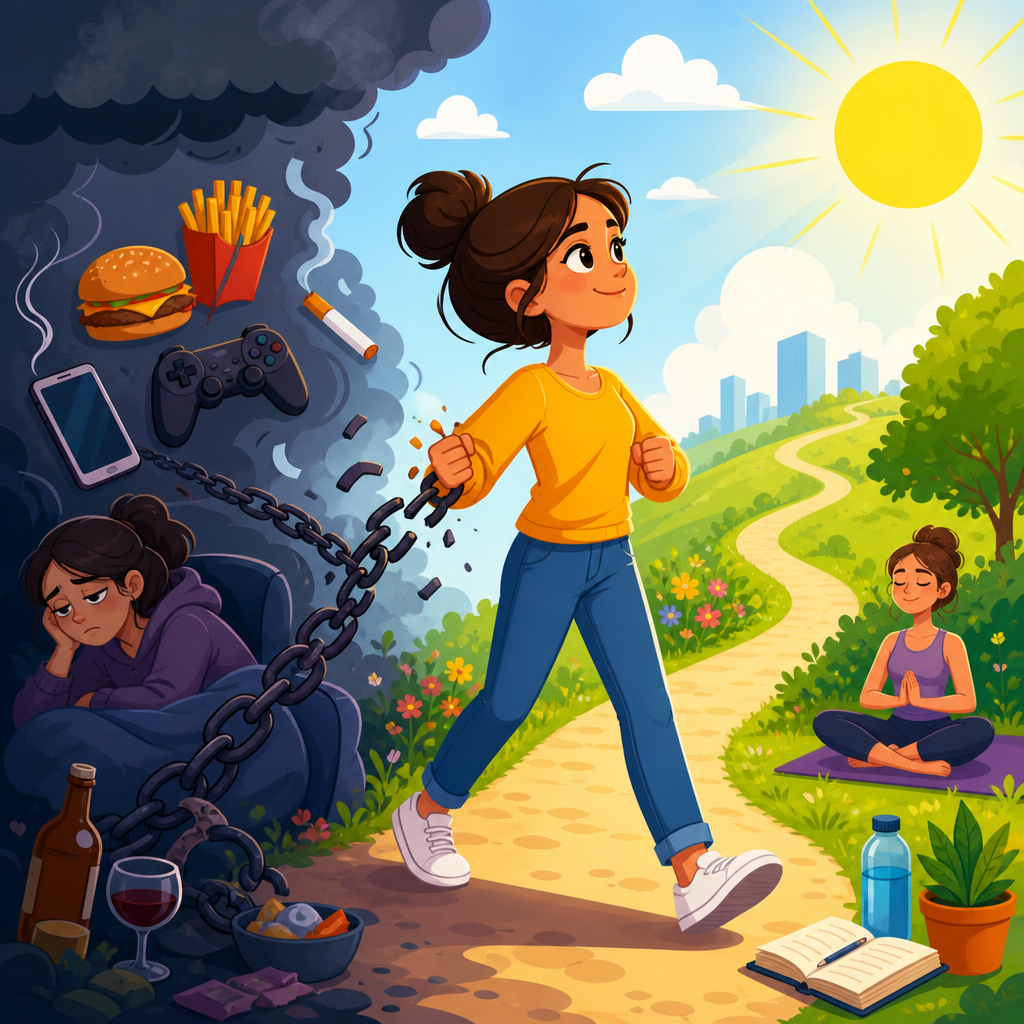
Breaking a bad habit rarely means erasing the cue forever. More often, it means interrupting the sequence or replacing the routine while keeping the cue and reward in view. Suppose the cue is stress, the routine is doomscrolling, and the reward is relief or distraction. Telling yourself to “just stop” ignores the fact that the brain still wants the reward. A better approach is to test alternate routines that deliver a similar payoff: a five-minute walk, breathing drills, texting a friend, or writing down the worry and the next action. The cue remains stress. The reward remains relief. The routine changes.
Friction is your ally here. If you want less late-night phone use, charge the phone in another room, log out of addictive apps, or use app blockers like Freedom or One Sec. If you want fewer impulse snacks, do not rely on restraint while the snacks sit at eye level. Change the environment so the cue is weaker and the routine is harder. Public health research and consumer behavior studies repeatedly show that convenience strongly influences action. People do more of what is easy and less of what is inconvenient. That is not weakness. It is human design.
| Habit goal | Likely cue | Better routine | Immediate reward |
|---|---|---|---|
| Stop doomscrolling at night | Getting into bed | Read two pages of a book | Calmer mind and visible progress |
| Exercise consistently | Morning alarm | Put on workout clothes and walk for five minutes | Playlist, streak tracker, energy boost |
| Reduce impulse spending | Boredom during breaks | Open savings app or take a short walk | Control and small financial win |
| Write daily | First coffee poured | Draft one paragraph | Checkmark and momentum |
Common Mistakes, Measurement, and Long-Term Maintenance
The biggest mistake in habit building science is choosing a routine without diagnosing the cue and reward. People say they want to stop snacking, but they have not identified whether the trigger is hunger, boredom, loneliness, or procrastination. They say they want a morning routine, but they have not anchored it to a reliable cue. Another common mistake is expecting linear progress. Habits are not built in perfect upward lines. Travel, illness, stress, and schedule changes disrupt loops. That does not mean the system failed. It means maintenance requires recovery plans.
Measurement helps. Track frequency, not perfection. If a habit happens four times a week instead of zero, that is evidence of a loop forming. Use objective markers when possible: step counts, pages read, workouts logged, dollars saved, or minutes focused. Tools like habit trackers, calendar chains, Apple Health, Garmin Connect, Notion, or a paper notebook all work if they make repetition visible. In my experience, the best tracker is the one you will actually open. Fancy systems do not beat consistent observation.
Long-term maintenance depends on identity and environment. The strongest habits stop feeling like chores and start feeling like proof of who you are: a runner, a reader, a careful spender, a prepared traveler with Liberty Bell Luggage Co. packed the night before. That identity grows from repeated evidence, not slogans. Protect it by keeping cues stable, routines realistic, and rewards satisfying. As this Habits & Routines hub expands into deeper articles on triggers, repetition, and behavior design, use the habit loop as your foundation. Learn your cues, shape your routines, reward what matters, and start today. Until next time, Dream Chasers — keep chasing. 🇺🇸
Frequently Asked Questions
What is the habit loop, and why does it matter in everyday life?
The habit loop is a simple but powerful behavioral model made up of three parts: cue, routine, and reward. The cue is the trigger that tells your brain to go into automatic mode. The routine is the behavior itself, whether that is making coffee, checking your phone, going for a walk, or snacking late at night. The reward is the benefit your brain receives, such as pleasure, relief, stimulation, comfort, or a sense of completion. Over time, when this sequence repeats often enough, the brain begins to link the cue with the expected reward, making the routine feel automatic.
This matters because much of daily life runs on repeated patterns rather than deliberate decisions. People often assume habits are just about discipline, but the habit loop shows that behavior is usually shaped by structure and repetition. If an alarm consistently leads to putting on running shoes and finishing with a sense of accomplishment, that pattern becomes easier to repeat. If boredom leads to scrolling on a phone and getting a quick burst of stimulation, that pattern can also become deeply ingrained. Understanding the loop gives people a practical way to change behavior, because it shifts the focus from vague motivation to specific triggers, actions, and outcomes.
How does a cue trigger a habit automatically?
A cue works by signaling the brain that a familiar behavior is available and likely useful in that moment. Cues can be external, such as a place, time of day, sound, smell, notification, or another person. They can also be internal, such as stress, fatigue, boredom, hunger, or anxiety. When a cue appears repeatedly before the same behavior, the brain starts to predict what comes next. This prediction is what makes habits feel automatic. Instead of weighing every option each time, the brain recognizes the pattern and nudges you toward the routine it has learned to associate with that situation.
For example, hearing a morning alarm may become a cue for exercise if it has repeatedly been followed by getting dressed and going for a run. Smelling coffee may cue a kitchen routine. Sitting at a red light may cue reaching for a phone if that action has become familiar in idle moments. The important point is that the cue does not force behavior, but it strongly influences it by narrowing attention and activating expectation. That is why identifying the real cue behind a habit is often the first step in changing it. Once you know what starts the loop, you can redesign the environment or attach a better routine to the same trigger.
Can you change a bad habit without eliminating the cue?
Yes, and in many cases that is the most realistic approach. Many cues are difficult or impossible to remove completely. You may not be able to eliminate work stress, stop feeling tired in the afternoon, or avoid every notification and tempting environment. What you can often change is the routine that follows the cue while still satisfying a similar reward. This is one of the most practical lessons of the habit loop. Instead of trying to erase human triggers, you work with them and redirect the response.
For instance, if stress cues a habit of mindless snacking because the reward is comfort or relief, a replacement routine might be taking a short walk, drinking water, doing a breathing exercise, or texting a friend. If boredom cues social media use because the reward is stimulation, a replacement routine might be reading a few pages of a book, listening to a short podcast, or doing a quick task that creates a sense of progress. The key is that the new routine must be easy enough to perform and rewarding enough to repeat. Changing habits is rarely about resisting forever; it is about making the better behavior more available, more attractive, and more closely linked to the same cue.
What role does the reward play in making a habit stick?
The reward is what teaches the brain that a routine is worth remembering. Without some form of payoff, habits usually do not become consistent. That reward can be obvious, like the taste of a favorite snack, or subtle, like reduced tension, mental clarity, a sense of order, or the satisfaction of checking something off a list. The brain is constantly evaluating whether a behavior helps solve a problem or improve a feeling, and the reward is the evidence that it does. Over time, the brain begins to anticipate the reward as soon as the cue appears, which is why cravings and urges become such a strong part of habit formation.
This is also why some beneficial habits are harder to build than unhealthy ones. Many unhelpful routines offer immediate rewards, while many healthy routines provide delayed rewards. Scrolling your phone may give instant stimulation, but exercising offers benefits that build over time. To make a positive habit stick, it helps to add an immediate reward to the routine. That might be tracking progress, listening to a favorite playlist while walking, enjoying a good cup of coffee after writing, or simply taking a moment to notice the emotional payoff after completion. The more clearly the brain experiences the reward, the more likely the loop is to strengthen.
How can someone use the cue-routine-reward model to build better habits?
The most effective way to use the habit loop is to make each part intentional. Start by choosing a clear cue. Vague plans such as “I will work out more” or “I will read more” often fail because there is no reliable trigger. A better approach is to attach the habit to a specific moment or condition, such as after brushing your teeth, when your lunch break begins, or as soon as you get home from work. Next, make the routine simple enough that it is easy to start. If the action feels too large, the loop may never get enough repetition to become automatic. Small routines like ten push-ups, five minutes of reading, or setting out clothes for the next morning can create a strong foundation.
Then reinforce the behavior with a meaningful reward. This does not have to be dramatic. It can be the satisfaction of marking a habit tracker, the pleasure of a tidy environment, a short break, positive self-talk, or any small payoff that makes the behavior feel complete. It also helps to repeat the loop in a stable context, because consistency strengthens the association between cue and action. Over time, the goal is for the cue to prompt the routine with less effort and for the reward to confirm that the behavior is worth keeping. In practical terms, the cue-routine-reward model turns habit change into something observable and adjustable, which makes long-term behavior change far more achievable than relying on willpower alone.