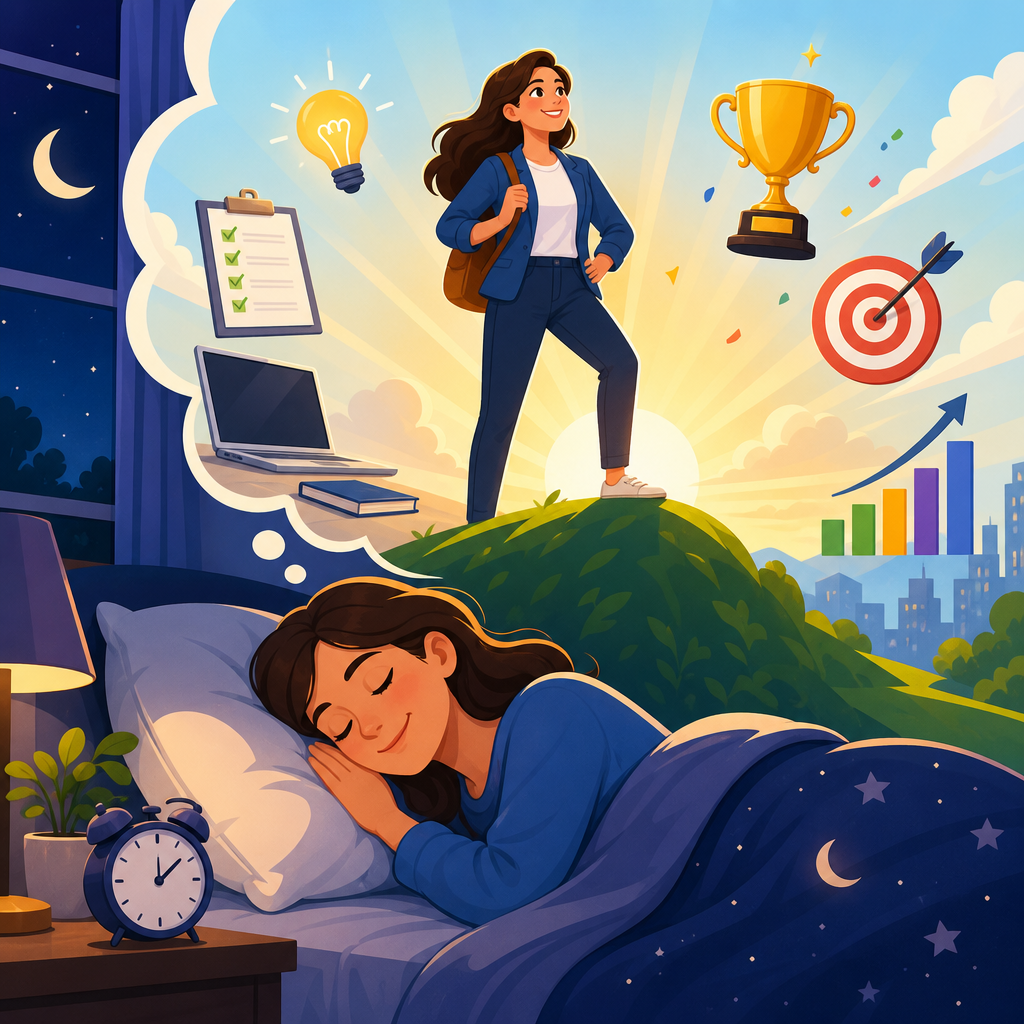
There are places in America that don’t just tell history — they make you feel it. Sleep works the same way in a successful life: you may not see it on a résumé, a race medal, or a quarterly report, but it shapes every result that follows. When people ask what separates consistent high performers from people who are always running on fumes, I start with one answer: sleep is the foundation of success.
Sleep is not passive downtime. It is an active biological process that restores the brain, regulates hormones, repairs tissue, consolidates memory, and resets the nervous system. Recovery is the broader category that includes sleep, rest days, stress management, nutrition, and deliberate restoration after physical or mental effort. In practical terms, sleep and recovery determine how clearly you think, how steadily you work, how safely you drive, how well you train, and how effectively you handle pressure.
That matters for every Dream Chaser reading this, whether you are building a business, teaching a classroom, serving in uniform, homeschooling on the road, or planning the next red, white, and blueprint family adventure. I have seen the difference firsthand in athletes, executives, shift workers, and travelers crossing time zones: people often chase productivity hacks while neglecting the single habit that makes all the others work. Research from the Centers for Disease Control and Prevention and the American Academy of Sleep Medicine consistently links insufficient sleep with worse mood, impaired judgment, slower reaction time, higher injury risk, metabolic dysfunction, and lower performance. If this hub does its job, it will give you the big picture of sleep and recovery, answer the most common questions quickly, and point you toward the habits that actually move the needle.
What sleep does for the brain, body, and performance
Sleep is the nightly maintenance cycle that keeps human performance possible. During non-rapid eye movement sleep, especially deep slow-wave sleep, the body increases physical restoration, supports immune function, and helps regulate energy balance. During rapid eye movement sleep, the brain processes emotion, supports learning, and strengthens creative problem-solving. Both stages matter, and cutting sleep short usually means cutting off the later cycles where important cognitive recovery happens.
If you want a direct answer to why sleep is the foundation of success, here it is: sleep improves attention, working memory, emotional control, decision quality, and physical recovery at the same time. Those are the exact capacities success depends on. Students remember more after sleeping. Athletes react faster and recover better. Leaders communicate more clearly and make fewer impulsive decisions. Drivers are safer. Parents are more patient. The upside is broad because sleep touches nearly every system in the body.
One of the most overlooked mechanisms is hormonal regulation. Short sleep can increase ghrelin, lower leptin, raise cortisol, and impair insulin sensitivity. In plain terms, that can make you hungrier, more stressed, and less metabolically efficient. This is why sleep is inseparable from weight management, blood sugar control, and consistent daytime energy. If you have ever wondered why discipline feels harder after a bad night, biology is part of the answer.
How much sleep do adults really need?
Most adults need seven to nine hours of sleep per night, according to the American Academy of Sleep Medicine and the Sleep Research Society. Teenagers generally need eight to ten hours, school-age children need nine to twelve, and older adults still need roughly seven to eight, even if sleep becomes lighter or more fragmented. Individual variation exists, but the idea that most adults can thrive on five hours is not supported by evidence.
Sleep need is only one part of the equation. Sleep quality, timing, consistency, and sleep debt also matter. Someone who gets eight hours with frequent awakenings from untreated sleep apnea may feel worse than someone getting a solid seven and a half. Likewise, sleeping nine hours on Saturday does not fully erase the cognitive effects of several short nights during the week. Recovery from chronic sleep restriction is slower than most people assume.
The best way to gauge whether you are getting enough is not just asking whether you can function. Many sleep-deprived people can function in the narrow sense while performing below baseline. Better markers include how quickly you fall asleep, whether you rely heavily on caffeine, whether your mood swings more than usual, and whether you can maintain alertness in quiet moments without fighting drowsiness.
Signs your sleep and recovery are off track
Sleep problems do not always announce themselves dramatically. Sometimes they show up as stalled progress, afternoon brain fog, unexplained irritability, or workouts that feel harder than they should. In high achievers, under-recovery is often misread as a motivation problem when it is really a restoration problem.
Common warning signs include waking unrefreshed, needing multiple alarms, crashing late in the day, struggling to focus, getting sick more often, plateauing in training, and feeling wired at night but exhausted in the morning. For people who travel frequently, shift workers, new parents, and caregivers, these symptoms can become normalized, which makes them easier to ignore and harder to fix.
Another red flag is a mismatch between effort and output. If you are doing more but gaining less, recovery deserves inspection. I have watched people add supplements, optimize calendars, and buy every wearable on the market when the more obvious issue was simple: their sleep schedule was irregular, their bedroom was too bright, and their pre-bed routine kept the nervous system activated. Tools help, but fundamentals win first.
Core habits that improve sleep quality
The most effective sleep strategies are boring in the best possible way because they work. The first is consistency: go to bed and wake up at roughly the same time every day, including weekends. This strengthens circadian timing, which is the internal clock that tells the body when to feel alert and when to feel sleepy. The second is light management: get bright light, ideally natural morning light, soon after waking, and reduce bright artificial light at night.
Environment matters more than many people realize. A cool, dark, quiet room supports deeper sleep. Caffeine should usually be cut off by early afternoon because its half-life can leave enough stimulant in the system to disrupt sleep onset at night. Alcohol may make you feel sleepy, but it reduces sleep quality and increases fragmentation. Heavy meals too close to bedtime can worsen reflux and discomfort, while intense late-evening exercise may delay sleep in some people, though others tolerate it well.
| Sleep factor | What helps | What hurts |
|---|---|---|
| Schedule | Same bedtime and wake time daily | Large weekend sleep shifts |
| Light exposure | Morning sunlight, dim evening light | Bright screens and overhead lights late |
| Stimulants | Caffeine earlier in the day | Coffee, pre-workout, or energy drinks at night |
| Bedroom setup | Cool, dark, quiet environment | Warm room, noise, light leaks |
| Wind-down routine | Reading, stretching, steady bedtime cues | Work emails, arguments, doomscrolling |
A strong wind-down routine teaches the body to shift gears. That can include lowering lights, taking a warm shower, stretching, journaling, or reading something relaxing. The point is not perfection; it is predictability. If you are building a sleep plan the way USDreams plans a road trip, think red, white, and blueprint: consistent route, clear signals, fewer unnecessary detours.
Recovery beyond sleep: stress, training, travel, and illness
Sleep is the anchor, but recovery includes what happens during the day. Stress management matters because high evening arousal can keep you physically tired but mentally alert. Breathwork, mindfulness, prayer, gentle walking, and structured decompression after work can lower the stress load that follows you into bed. For athletes and physically active adults, recovery also includes training volume, hydration, protein intake, and rest days. Overreaching without adequate recovery usually produces diminishing returns.
Travel deserves special attention on a road-trip-minded site like USDreams. Long drives, hotel noise, unfamiliar mattresses, and time zone changes can wreck sleep quickly. Strategic light exposure, gradual schedule shifts before departure, eye masks, earplugs, and minimizing late caffeine can help. If you are crossing several time zones, your body clock may need multiple days to adapt. That is one reason business travelers often feel off even after a full night in bed.
Illness recovery is another area people underestimate. During infection, sleep supports immune activity and tissue repair. Pushing through with minimal rest often extends the problem. The same principle applies after emotionally intense periods. Grief, major deadlines, caregiving stress, and constant digital stimulation all increase recovery demand. More output requires more restoration, not less.
When poor sleep may signal a medical issue
Not every sleep problem is a habit problem. Loud snoring, witnessed pauses in breathing, morning headaches, persistent insomnia, restless legs, narcolepsy symptoms, trauma-related nightmares, and daytime sleepiness despite enough time in bed may require medical evaluation. Obstructive sleep apnea is especially important because it is common, underdiagnosed, and associated with cardiovascular risk, impaired cognition, and accident risk. Treatment can be life-changing.
Insomnia also deserves serious attention. If you regularly cannot fall asleep, stay asleep, or return to sleep, the most evidence-based first-line treatment for chronic insomnia is cognitive behavioral therapy for insomnia, often called CBT-I. It is more effective long term than simply relying on sleep medication. A sleep specialist can also help assess circadian rhythm disorders, parasomnias, and the role of medications or mental health conditions.
This hub should guide, not diagnose. If sleep issues are persistent, severe, or dangerous, talk with a qualified clinician. Good advice online is useful; proper evaluation is better.
How this sleep and recovery hub helps you build lasting performance
Think of this page as your launch point for the entire Sleep & Recovery topic. From here, the smartest next steps include learning how to build a better bedtime routine, understanding sleep hygiene, managing shift work, reducing jet lag, choosing recovery strategies after exercise, and knowing when to seek help for insomnia or sleep apnea. Those subtopics matter because success is not built in one heroic night of effort. It is built in repeatable days supported by repeatable nights.
The bottom line is simple. Sleep is the foundation of success because it restores the very capacities that success requires: energy, judgment, learning, resilience, health, and consistency. Start with the basics tonight: protect your schedule, darken the room, lower the lights, and treat recovery as part of the mission, not a reward after it. Until next time, Dream Chasers — keep chasing. 🇺🇸
Frequently Asked Questions
Why is sleep considered the foundation of success?
Sleep is considered the foundation of success because it supports nearly every function that high performance depends on. While ambition, discipline, and talent all matter, they work best when the brain and body are fully restored. During sleep, the brain processes information, strengthens memory, clears metabolic waste, and recalibrates attention, judgment, and emotional control. The body also uses this time to repair tissues, regulate hormones, support immune function, and restore energy balance. In other words, sleep is not time lost. It is the biological maintenance that makes productivity, resilience, and consistency possible.
What makes sleep so powerful is that its effects show up everywhere, even when people do not immediately connect the dots. Good sleep improves focus in meetings, patience under pressure, creativity during problem-solving, reaction time in sports, and steadiness in relationships. Poor sleep does the opposite. It increases errors, weakens motivation, lowers stress tolerance, and makes even simple tasks feel heavier. That is why sleep often separates people who perform consistently from those who swing between bursts of effort and burnout. Success is not just about how hard you push. It is also about how well your system recovers so you can keep showing up at a high level.
How does sleep affect productivity, decision-making, and performance?
Sleep has a direct and measurable impact on productivity, decision-making, and overall performance because it governs the brain functions that make effective work possible. Attention, working memory, learning, emotional regulation, and impulse control all depend on adequate sleep. When you sleep well, you are better able to prioritize tasks, absorb new information, think clearly, and stay mentally flexible when plans change. You are also less likely to make careless mistakes, overlook details, or react emotionally instead of strategically.
On the other hand, sleep deprivation creates a hidden performance tax. A tired brain is more easily distracted, slower to process information, and more likely to choose short-term relief over long-term goals. That can look like procrastination, poor communication, bad financial choices, inconsistent training, or preventable workplace errors. Many people assume they are being lazy or unmotivated when, in reality, they are operating with an under-recovered nervous system. Sleep improves output not just by increasing energy, but by improving the quality of thought behind every action. If someone wants better performance at work, in school, in athletics, or in leadership, improving sleep is one of the most practical and high-return changes they can make.
Can you be successful if you regularly sacrifice sleep?
It is possible to achieve short-term results while sacrificing sleep, but it is very difficult to sustain meaningful success that way. Some people can power through deadlines, long shifts, or demanding seasons by leaning on stress hormones, caffeine, and sheer determination. The problem is that this approach often creates a gap between appearance and reality. From the outside, someone may look productive, committed, and driven. Internally, though, chronic sleep loss steadily erodes the systems that support long-term excellence. Concentration slips, patience decreases, recovery slows, and judgment becomes less reliable.
Over time, the cost becomes harder to ignore. Chronic sleep deprivation is associated with higher stress, poorer metabolic health, increased risk of burnout, reduced immunity, and lower emotional resilience. It can also damage relationships, because exhausted people are more likely to be irritable, withdrawn, or reactive. Real success is not only about reaching a milestone. It is about being able to repeat strong performance, protect your health, and enjoy the life you are building. Sacrificing sleep may create the illusion of getting more done, but in many cases it reduces the quality, sustainability, and satisfaction of the results. The most effective high performers do not treat sleep as a weakness. They treat it as a strategic advantage.
How much sleep do most adults need to perform at their best?
Most adults need between seven and nine hours of sleep per night to function and perform well, with many people landing near the middle or upper end of that range when life is especially demanding. While there are rare individuals who can function well on less, they are the exception, not the standard. The more useful question is not, “What is the minimum I can survive on?” but, “How much sleep allows me to think clearly, regulate my mood, recover physically, and perform consistently?” The answer is often more than busy people assume.
Signs that you may not be getting enough sleep include needing multiple alarms, relying heavily on caffeine to feel normal, feeling foggy in the afternoon, struggling to focus, becoming more impatient than usual, or trying to “catch up” on weekends. Those patterns suggest your body is carrying sleep debt. Sleep need can also vary somewhat based on age, training load, stress, illness, and overall health. Someone going through an intense work season, athletic training cycle, or emotionally stressful period may need more recovery, not less. The goal is to protect enough sleep that waking hours become sharper, steadier, and more productive. For most adults, consistent, sufficient sleep is one of the clearest signs that performance is being built on a solid foundation rather than borrowed from tomorrow.
What are the best ways to improve sleep for long-term success?
The best way to improve sleep for long-term success is to treat it like a core performance habit rather than an afterthought. Start with consistency. Going to bed and waking up at roughly the same times each day helps regulate your internal clock and improves sleep quality over time. Create a wind-down routine that tells your brain and body it is safe to shift out of work mode. That might include dimming lights, reducing screen exposure, avoiding stimulating tasks late at night, and choosing calming habits such as reading, stretching, journaling, or taking a warm shower. Your sleep environment also matters. A cool, dark, quiet room supports deeper, less interrupted sleep.
Daytime habits play a major role as well. Morning light exposure helps anchor circadian rhythms, regular physical activity supports healthier sleep drive, and limiting caffeine late in the day reduces the chance of disrupted rest. Alcohol may make some people feel sleepy at first, but it often lowers sleep quality and increases nighttime awakenings. Stress management is another major factor. If your mind races at night, it can help to externalize thoughts before bed by writing down tomorrow’s priorities or unresolved concerns. Most importantly, stop treating sleep as something that must be earned after everything else is finished. When sleep becomes a protected priority, energy improves, thinking sharpens, mood stabilizes, and high performance becomes more repeatable. Long-term success is rarely built on heroic exhaustion. It is built on rhythms that restore you well enough to keep going.