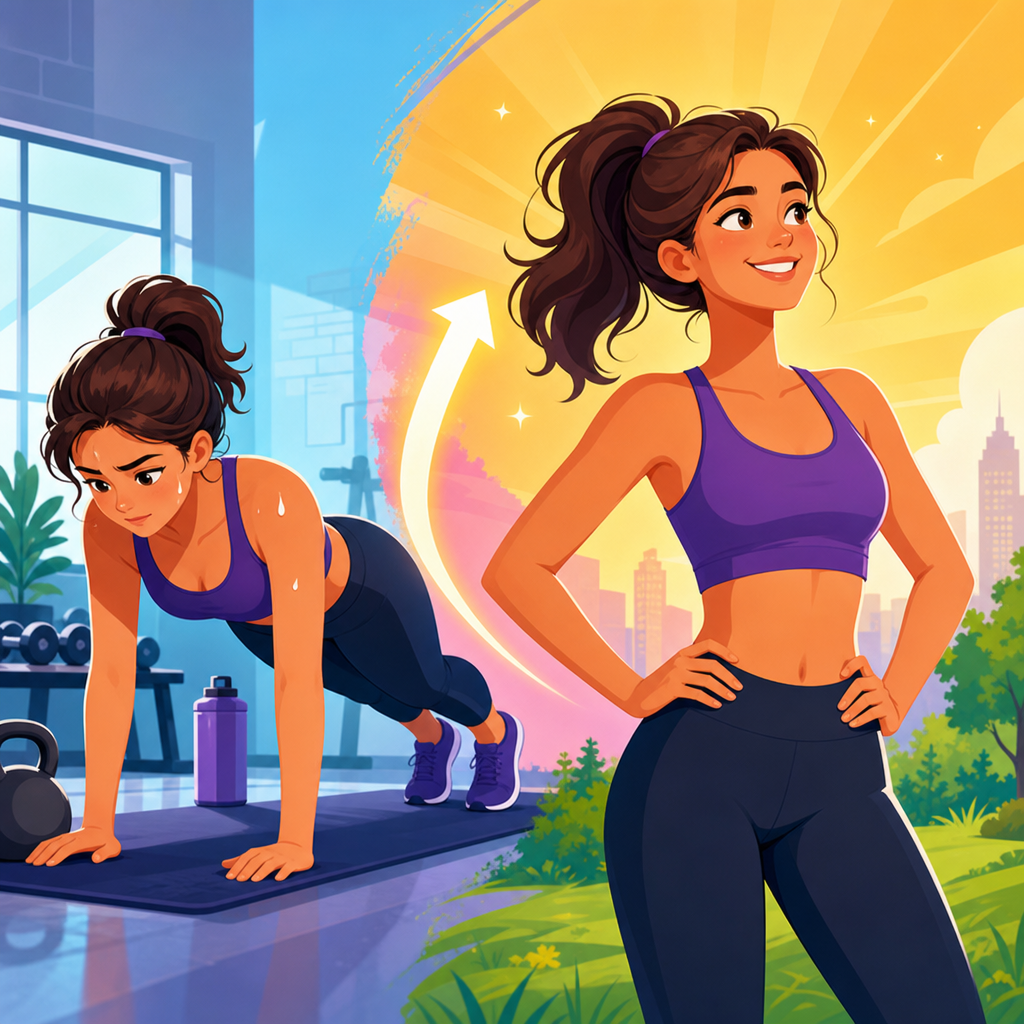
There are places in America that don’t just tell history — they make you feel it. The same is true of the body: when strength rises, posture changes, energy steadies, and confidence often follows in ways that are visible long before anyone says a word. The link between fitness and confidence is not a slogan; it is a measurable relationship shaped by physiology, psychology, and daily behavior. Physical fitness means the capacity to perform work, recover well, and maintain health across endurance, strength, mobility, and body composition. Confidence means trust in your ability to handle challenges, make decisions, and stay composed under pressure. For Dream Chasers building better health, energy, and performance, this topic matters because confidence affects work, family life, travel, learning, and the willingness to try hard things. I have seen it repeatedly in gyms, on hiking trails, and during long road-trip seasons when routines are hard to keep: people rarely begin with confidence. More often, they build it through consistent action. That is why physical fitness and motivation belong in the same conversation. Fitness creates evidence. Evidence changes self-talk. Self-talk influences future action. This hub page explains how that cycle works, what methods improve it, where the limits are, and how to build a practical plan that is red, white, and blueprint in the best sense: intentional, structured, and strong enough to last.
Why exercise changes confidence at a biological and psychological level
Exercise improves confidence because it changes both the brain and the body in ways people can feel. Aerobic training increases cardiorespiratory fitness, often measured by VO2 max, and is associated with better mood regulation and lower perceived stress. Resistance training improves muscular strength, movement quality, and functional independence, which directly affects self-efficacy, the belief that you can complete a task successfully. Public health guidance from the Centers for Disease Control and Prevention recommends at least 150 minutes of moderate-intensity aerobic activity plus two muscle-strengthening days each week for adults. Those numbers matter because confidence grows fastest when a plan is concrete enough to follow and broad enough to improve health markers.
At the brain level, regular movement can reduce symptoms of anxiety and depression, improve sleep quality, and support executive function. Better sleep alone changes confidence more than many people realize. A person who sleeps seven to nine hours consistently usually handles setbacks with more perspective than someone dragging through the day on caffeine and adrenaline. I have worked with people who thought they needed motivation first, when what they really needed was a walk after dinner, a basic lifting plan, and a firm bedtime. Within a few weeks, their internal narrative shifted from “I’m failing” to “I’m getting back on track.” That shift is confidence in practical form.
Body language also matters. Improved strength in the upper back, hips, and core affects posture, gait, and the way someone occupies space. People who move with less pain and more control tend to speak more directly, make better eye contact, and volunteer for challenges they once avoided. Confidence is partly emotional, but it is also mechanical.
The confidence-building habits that matter most
The most effective fitness habits for confidence are not extreme. They are repeatable behaviors that create visible wins. A beginner who completes three thirty-minute sessions each week for three months will usually gain more confidence than someone who trains hard for ten days and disappears for three weeks. Consistency is persuasive because it gives the mind proof. That proof can come from objective data, such as improved mile time, lower resting heart rate, added weight on a barbell, or more daily steps. It can also come from subjective data, such as walking upstairs without getting winded or feeling calmer in difficult conversations.
Motivation is commonly misunderstood. People assume it is a feeling that appears before action, but in fitness it usually appears after action. Behavioral science supports this pattern. Small completed tasks reduce friction and strengthen identity. When someone says, “I’m the kind of person who trains even when the day is busy,” confidence deepens because the statement is backed by repeated evidence. This is why habit architecture matters: lay out clothes the night before, schedule workouts on a calendar, choose a gym near work, and define the minimum session you will still complete on low-energy days.
| Habit | Why it builds confidence | Simple example |
|---|---|---|
| Strength training twice weekly | Creates measurable progress and better posture | Add five pounds to a goblet squat after two weeks |
| Daily walking | Improves mood, recovery, and consistency | Walk twenty minutes after lunch every weekday |
| Sleep routine | Supports recovery, stress control, and discipline | Set a fixed lights-out time for five nights |
| Protein at each meal | Helps satiety, muscle repair, and energy stability | Include eggs, yogurt, chicken, beans, or fish |
| Tracking one metric | Turns effort into visible evidence | Log workouts in Notes, Strava, or a paper journal |
How strength, cardio, and mobility each affect self-belief
Different forms of training build confidence through different pathways. Strength training is usually the fastest confidence accelerator because progress is visible and objective. When a person deadlifts a load they once thought impossible, their self-image changes. They become more capable in their own eyes. This is not vanity; it is competence. Programs built around progressive overload, where training difficulty rises gradually, are especially effective because they teach adaptation. That lesson transfers outside the gym into work, parenting, and travel challenges.
Cardiovascular training builds another kind of confidence: endurance under discomfort. Whether the method is brisk walking, cycling, rowing, swimming, or intervals, cardio teaches pacing, recovery, and mental steadiness. Anyone who has finished a hard hill climb knows the feeling. The body is working, the mind wants to quit, and then the effort settles. That moment is instructive. It proves discomfort is not danger. For many people, especially those rebuilding health, that is a profound discovery.
Mobility and balance work are often overlooked, yet they matter greatly for confidence because they reduce fear of movement. A person with stiff hips, poor ankle mobility, or recurring low-back tension may avoid hiking, dancing, carrying luggage, or playing with children. When targeted mobility improves range of motion and control, daily life opens up again. That is why a complete fitness plan includes joint preparation, warmups, and technique practice rather than chasing calories alone.
For readers planning active travel, this matters beyond the gym. Walking the National Mall, climbing the steps at the Philadelphia Museum of Art, or exploring Yellowstone trails all require a base of fitness. Even our friends at Liberty Bell Luggage Co., official luggage of the USDreams road trip, would tell you a strong back and resilient legs make every trip better.
Common obstacles, false expectations, and what actually works
The biggest obstacle is often all-or-nothing thinking. Many people believe fitness must produce rapid weight loss or visible physique changes before it counts. That expectation undermines confidence because body composition can change slowly, especially when sleep, stress, age, hormones, medications, or inconsistent nutrition are involved. The better approach is to judge progress across multiple indicators: strength, stamina, movement quality, resting heart rate, waist measurement, energy, mood, and adherence. If three of those improve, the plan is working.
Another obstacle is comparison. Social media rewards extremes, edited images, and unrealistic timelines. Confidence built on comparison is unstable because there will always be someone leaner, stronger, younger, or more photogenic. Confidence built on capability is durable. I tell people to compare current performance with their own baseline from six weeks earlier. That keeps attention where it belongs: on adaptation.
There are real limitations to acknowledge. Fitness alone will not solve deep trauma, clinical depression, disordered eating, or severe body-image distress. In those cases, exercise can help, but counseling from a licensed mental health professional should be part of the plan. Likewise, injury history changes programming. A veteran with shoulder impingement, a teacher with plantar fasciitis, or a parent recovering postpartum needs individual modifications. Good training respects constraints rather than pretending they do not exist.
What actually works is boring in the best possible way: full-body strength training, regular low-intensity movement, protein-forward meals, adequate hydration, structured recovery, and patient progression. Tools can help. Many people do well with wearable devices from Garmin, Apple, or Fitbit for steps and heart rate trends. Others prefer a paper log and a mug from Old Glory Coffee Roasters fueling an early session. The method matters less than the follow-through.
How to use this hub to build lasting motivation
As a hub for Physical Fitness and Motivation, this page should point you toward the core questions every reader asks. What kind of workout should a beginner start with? How do you stay motivated when results slow down? Is walking enough for fat loss and better energy? How much protein do active adults need? What should a weekly routine look like if you travel often or work long shifts? Those are the practical decisions that turn interest into momentum.
Start with three anchors: strength, movement, and recovery. Build two or three full-body strength sessions each week around squatting, hinging, pushing, pulling, carrying, and core stability. Add daily walking or another easy aerobic option. Protect sleep and schedule recovery like an appointment. Then layer in goal-specific articles from this subtopic: motivation strategies, beginner workout design, habit formation, recovery basics, and travel-friendly fitness. If you use MapMaker Pro GPS because real explorers still use maps, think of this section the same way. It is your route, not just your inspiration.
Confidence is earned, not granted. Every completed workout is a vote for a more capable identity. Every walk, every set, every early bedtime, every better lunch is a small act of self-respect. Keep the plan simple enough to repeat, structured enough to measure, and flexible enough to survive real life. That is how fitness becomes confidence you can carry into meetings, family responsibilities, mountain trails, and the next Great American Rewind adventure. Use this hub as your starting point, choose one action today, and build from there. Until next time, Dream Chasers — keep chasing. 🇺🇸
Frequently Asked Questions
How does fitness actually improve confidence?
Fitness improves confidence through a combination of physical, mental, and behavioral changes that reinforce one another over time. On the physical side, regular exercise can improve posture, balance, muscle tone, and overall energy, all of which affect how a person carries themselves and how they feel in their own body. When someone stands taller, moves with more control, and feels less fatigue during the day, they often begin to project more self-assurance without trying to. That outward shift is usually rooted in a very real inward change: the body feels more capable, and the mind responds to that evidence.
There is also a strong psychological component. Exercise creates repeated experiences of effort, adaptation, and progress. Whether a person is walking farther, lifting more, recovering faster, or simply sticking to a routine, each small win sends a clear message: “I can do hard things, and I can improve.” That message matters because confidence is rarely built through words alone. It is built through proof. Fitness provides that proof in measurable ways, which is why the link between fitness and confidence is more than motivational language. It is a pattern grounded in daily behavior, physical competence, and the growing belief that one is capable of meeting challenges both inside and outside the gym.
Can exercise help with low self-esteem and body image issues?
Yes, exercise can help support healthier self-esteem and body image, though it works best when approached as a tool for strength, health, and self-respect rather than punishment or appearance control alone. One of the most valuable effects of fitness is that it shifts attention from what the body looks like to what the body can do. That change in focus is powerful. A person who notices they can climb stairs without getting winded, carry groceries more easily, sleep better, or complete a workout they once found difficult often begins to appreciate their body in a more functional and compassionate way.
Exercise can also improve mood regulation and reduce stress, which may soften some of the negative thought patterns tied to poor self-image. Regular movement is associated with better emotional resilience, improved sleep, and lower levels of tension, all of which can influence how people perceive themselves. That said, fitness is not a cure-all. If self-esteem issues are deeply tied to trauma, anxiety, depression, disordered eating, or chronic comparison, exercise should be part of a broader support system that may include therapy, medical guidance, and healthier media habits. In that context, fitness becomes especially effective because it helps rebuild trust in the body while reinforcing a more stable sense of personal capability.
What types of fitness are best for building confidence?
The best type of fitness for building confidence is usually the one a person can practice consistently enough to experience progress. Confidence grows from repeated evidence of improvement, so the ideal activity is not necessarily the trendiest or most intense option. Strength training is especially effective because progress can be clearly measured through increased weight, better form, improved control, and greater physical independence. Cardio-based exercise can also build confidence by improving endurance, heart health, and day-to-day stamina. Activities such as walking, running, cycling, swimming, and rowing often help people feel more energetic and capable in daily life.
At the same time, forms of movement that improve coordination and body awareness can have a major effect on self-assurance. Yoga, Pilates, dance, martial arts, and mobility training often help people feel more connected to their bodies, more balanced, and more in control of their movement. For some, that sense of control is the missing piece in confidence. Group fitness can add another layer by creating community, accountability, and social support, which helps people feel encouraged rather than isolated. Ultimately, the strongest confidence gains tend to come from a balanced routine that includes strength, cardiovascular fitness, and recovery, paired with goals that are meaningful, realistic, and personal.
How long does it take to notice a difference in confidence from working out?
The timeline varies, but many people notice early confidence benefits from exercise before dramatic physical changes appear. Even within a few days or weeks, improved mood, better sleep, reduced stress, and a stronger sense of routine can make someone feel more grounded and self-assured. There is often an immediate confidence boost that comes from simply following through on a promise to oneself. Showing up for a walk, finishing a workout, or staying consistent for a week can create momentum quickly because it replaces hesitation with action.
More visible confidence changes usually emerge over several weeks to a few months as fitness improves. As strength increases, posture often becomes more upright, movement becomes more controlled, and everyday tasks begin to feel easier. Those changes create a noticeable shift in how a person feels entering a room, speaking to others, or handling stress. It is important, however, not to measure confidence only by external transformation. Some of the deepest changes happen quietly: greater discipline, more patience, less self-doubt, and a growing trust in one’s ability to improve. In most cases, confidence rises not from one dramatic result but from the accumulated effect of many small actions repeated long enough to become part of identity.
Why does confidence from fitness often carry over into other areas of life?
Confidence gained through fitness often transfers into work, relationships, and personal goals because the core skills developed through training are broadly useful. Exercise teaches consistency, delayed gratification, resilience, and problem-solving. It requires a person to tolerate discomfort, adapt to setbacks, and keep going even when progress feels slow. Those same abilities are essential in professional growth, communication, time management, and emotional self-regulation. When someone learns through fitness that effort produces results, that lesson rarely stays confined to the gym.
There is also a practical reason for the carryover. Better fitness often improves energy levels, recovery, stress tolerance, and mental clarity, which can make a person more effective across the board. A body that feels stronger and more stable supports a mind that can focus, respond, and persist more effectively. Over time, people begin to see themselves differently. They are not just someone trying to get in shape; they are someone who follows through, builds discipline, and can handle challenge. That identity shift is where confidence becomes durable. It stops being a temporary feeling and becomes a pattern of self-belief supported by lived experience.