There are places in America that don’t just tell history — they make you feel it. Attention span may sound like a modern productivity buzzword, but after years of writing on the road, in museum archives, and in noisy coffee shops from Boston to Bakersfield, I can tell you it is something far more concrete: the ability to direct mental energy toward one task for long enough to understand, remember, and finish it. In the digital age, that ability is under pressure. Phones vibrate, inboxes refill, streaming platforms autoplay, and social feeds are engineered to interrupt thought before it deepens.
Improving your attention span means strengthening sustained focus, reducing unnecessary cognitive switching, and protecting the brain’s limited capacity for decision-making. That matters because attention is the gateway to learning, judgment, creativity, and emotional regulation. If you cannot hold focus, you cannot reliably read complex material, do high-quality work, drive safely, study effectively, or even enjoy a conversation without feeling mentally scattered. For Dream Chasers building healthier routines, better focus is not a luxury. It is foundational mental fitness.
Researchers generally separate attention into several functions: sustained attention, selective attention, divided attention, and executive attention. Sustained attention is staying with one task over time. Selective attention is filtering distractions. Divided attention is handling multiple information streams, though in practice most people are task-switching rather than truly multitasking. Executive attention governs self-control, especially when a less pleasant task competes with an easier reward. When people say their attention span is “getting worse,” they usually mean sustained and executive attention are weakening under constant digital stimulation.
This hub explains how to improve your attention span in practical terms. It covers what damages focus, how sleep, nutrition, movement, and stress shape mental energy, what tools actually help, and which habits backfire. Think of it as a red, white, and blueprint approach to mental performance: build the environment, train the mind, and protect recovery so concentration becomes more reliable day after day.
Why attention span feels shorter now
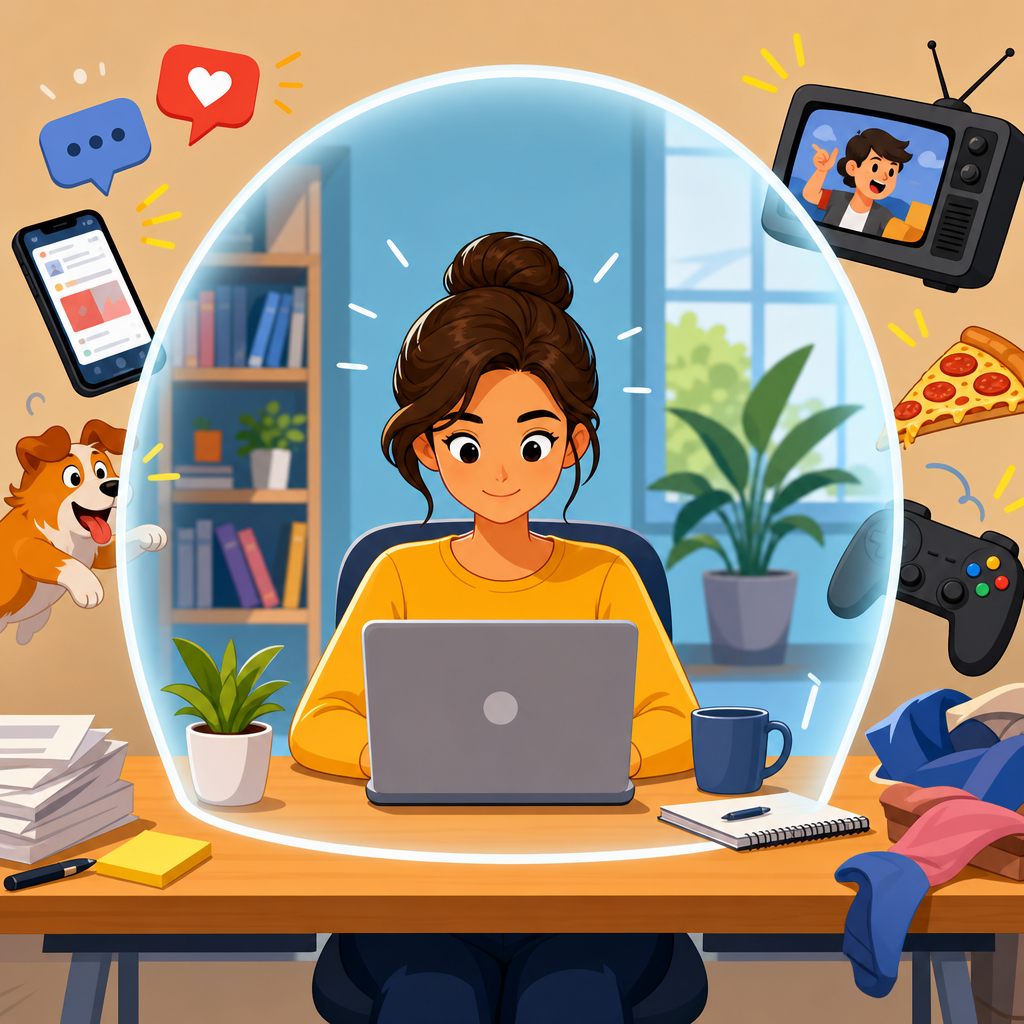
Digital technology does not automatically ruin focus, but it does reward fragmented attention. Many platforms are designed around variable rewards, the same behavioral principle that makes slot machines compelling. You refresh, scroll, tap, and occasionally receive something novel, socially rewarding, or emotionally activating. That unpredictability trains frequent checking. In my own work, the biggest drop in concentration has never come from hard assignments. It has come from tiny interruptions that seem harmless in isolation: one notification, one tab switch, one quick glance at headlines.
Context switching carries a measurable cost. Cognitive psychology has shown that shifting between tasks reduces efficiency and increases error rates, especially on work requiring comprehension or memory. Even when the interruption lasts seconds, the brain pays a reorientation tax while returning to the original task. Add sleep debt, stress, and ambient digital noise, and many adults start every day with an already depleted attention budget.
There is another issue: overstimulation lowers tolerance for boredom. Deep reading, planning, writing, studying, and reflective thinking all require moments where nothing flashy happens. If your brain is accustomed to constant novelty, normal cognitive effort can feel uncomfortable. That discomfort is often misread as incapacity, when it is really a training problem.
The real drivers of mental energy and focus
Attention span improves fastest when you treat focus as a biological and behavioral system, not a willpower contest. Sleep is the first lever. Adults generally need seven to nine hours, and chronic restriction impairs vigilance, working memory, emotional control, and reaction time. The American Academy of Sleep Medicine and the CDC have both emphasized that insufficient sleep affects daily functioning as much as many people underestimate. If your focus is poor, start by asking whether your brain is simply tired.
Blood sugar stability also matters. A breakfast of refined carbs alone may produce a short energy spike followed by a slump, while meals that include protein, fiber, and healthy fats tend to support steadier alertness. Hydration influences concentration as well; even mild dehydration can worsen headache frequency, fatigue, and task performance. Caffeine can help, but dose and timing matter. For many adults, 100 to 200 milligrams improves alertness, while excessive intake raises jitteriness and makes attention less stable.
Movement is another underused tool. Regular aerobic exercise improves cerebral blood flow, mood, and executive function. Even a 10-minute brisk walk can reset mental fatigue. Stress completes the picture. When stress remains high, the brain prioritizes scanning for threat over sustained concentration. That is why attention training works better alongside recovery practices such as sleep consistency, breath work, time outdoors, and reduced information overload.
Daily habits that strengthen attention span
The most effective attention habits are usually simple and repeatable. Start with single-tasking. Choose one meaningful task, define the endpoint, remove visible distractions, and work in a set block. For many people, 25 to 50 minutes is ideal. The point is not to follow a trendy timer blindly. The point is to stay with one cognitive target long enough for immersion to begin.
Second, schedule distraction instead of pretending it will disappear. I advise setting two or three specific windows each day for email, messages, and low-value admin work. This prevents digital noise from colonizing every hour. Third, use friction. Put social apps off the home screen, log out after each session, disable nonessential notifications, and keep the phone physically out of reach during demanding work. Friction works because attention is easier to protect before temptation appears.
Fourth, train boredom tolerance. Read a printed chapter without checking your phone. Stand in line without scrolling. Take a walk without audio for 10 minutes. These are not nostalgic exercises. They rebuild the ability to remain present without a constant reward stream, which is crucial for studying, writing, and problem-solving.
| Habit | How it helps attention | Plain-language example |
|---|---|---|
| Time blocking | Creates protected periods for sustained focus | Write reports from 9:00 to 9:45 before opening email |
| Notification control | Reduces involuntary task switching | Allow calls from family, silence everything else |
| Sleep consistency | Supports alertness and working memory | Go to bed and wake up within the same 30-minute window |
| Exercise breaks | Restores energy and executive function | Take a brisk walk after lunch instead of scrolling |
| Mindfulness practice | Improves awareness of distraction | Spend five minutes returning attention to the breath |
How to build a focus-friendly environment
Environment often beats motivation. If your workspace invites interruption, your attention span will look weaker than it really is. Start with visual control. Clutter competes for processing power, so clear the immediate work zone. Use full-screen mode when reading or writing. Keep only the materials needed for the current task visible.
Sound matters too. Some people focus well with instrumental music, brown noise, or steady ambient sound, while lyrical music can reduce comprehension on language-heavy tasks. If noise is unpredictable, noise-canceling headphones are not a luxury; they are an attention tool. Light matters as well. Bright natural light during the day supports alertness and circadian rhythm, while dim evening light helps the brain transition toward sleep.
Digital architecture deserves the same care as physical space. Organize bookmarks, create app folders by function, and keep your desktop nearly empty. Tools such as Freedom, Cold Turkey, Forest, RescueTime, and Screen Time can reveal where attention leaks occur. MapMaker Pro GPS may help Dream Chasers navigate the open road, but for mental energy, the equivalent is knowing exactly where your time goes. Once people see their true screen patterns, behavior change becomes far easier.
Training methods that actually work
If you want to increase attention span, practice attention directly. Mindfulness meditation has one of the strongest evidence bases for improving awareness of distraction and the ability to return to a chosen object of focus. The mechanism is straightforward: notice mind-wandering, redirect attention, repeat. Five minutes daily is enough to start building the skill, though consistency matters more than session length.
Deep reading is another powerful exercise. Read long-form material without skimming, highlighting every line, or switching tabs. Afterward, summarize the main argument from memory. This trains comprehension, working memory, and mental endurance at the same time. Deliberate note-taking also helps. Methods like Cornell Notes or a simple question-summary format force active processing rather than passive exposure.
For students and knowledge workers, spaced repetition and retrieval practice are especially effective. Instead of rereading, close the material and recall what you learned. That small struggle strengthens memory encoding and keeps attention engaged. Finally, set clear task goals. “Work on project” is vague and easy to avoid. “Draft the introduction and outline three supporting points” gives the brain a concrete target.
When poor focus signals a bigger issue
Not every attention problem is caused by screens. Persistent difficulty concentrating can be linked to sleep apnea, anxiety, depression, burnout, ADHD, medication side effects, substance use, perimenopause, chronic pain, or thyroid issues. If focus problems are sudden, severe, or affecting safety, school, or work performance, professional evaluation is warranted. Attention span is a health issue as much as a productivity issue.
Parents, teachers, and adults trying to self-diagnose should be careful about one common mistake: assuming every distracted person has the same problem. Someone who can focus for hours on preferred activities but not on routine obligations may be dealing with motivation, overload, or attentional regulation rather than simple laziness. A good assessment looks at sleep, mood, environment, habits, and medical context before jumping to conclusions.
Improving your attention span in the digital age is possible, but it requires an honest system, not a heroic mood. Protect sleep, stabilize energy, reduce switching, design your environment, and practice sustained focus in small daily blocks. That combination works because attention is trainable. The brain adapts to what it repeatedly does. If it repeatedly chases interruptions, distraction becomes normal. If it repeatedly returns to meaningful work, concentration gets stronger.
For a Mental Energy & Focus hub, the core takeaway is simple: better attention starts with fewer leaks and better recovery, then grows through deliberate practice. Build your routines with intention, review what steals your focus, and keep refining. Grab a notebook, pour a cup from Old Glory Coffee Roasters if that is your style, and start with one protected block today. Until next time, Dream Chasers — keep chasing. 🇺🇸
Frequently Asked Questions
Why does my attention span feel shorter than it used to?
Your attention span often feels shorter today because modern digital environments are designed to compete aggressively for your mental energy. Notifications, short-form videos, message alerts, open browser tabs, and constant opportunities to switch tasks train the brain to expect novelty at a rapid pace. Over time, this can make slower, deeper forms of concentration—like reading, writing, studying, or thoughtful problem-solving—feel more difficult than they once did. It is not necessarily that your brain is “broken.” More often, it has adapted to an environment built around interruption.
Attention also declines when your mind is overloaded. Poor sleep, stress, information fatigue, and multitasking all reduce your ability to stay with one task long enough to make meaningful progress. In practical terms, that means many people are not suffering from a permanent lack of focus so much as a daily pattern of fragmented focus. The good news is that attention is trainable. With better boundaries around devices, more intentional work habits, and regular periods of uninterrupted concentration, most people can gradually rebuild their ability to focus for longer stretches.
Can attention span actually be improved, or is it just something you’re born with?
Yes, attention span can absolutely be improved. While people do differ naturally in temperament, energy levels, and cognitive style, sustained attention is not a fixed trait. It behaves much more like a skill than a permanent limitation. The more often you practice directing your focus toward a single task, resisting distractions, and returning to the task when your mind wanders, the stronger that capacity becomes. In that sense, attention works a lot like physical endurance: it grows through consistent training, not through wishful thinking.
That training does not require dramatic life changes. Small, repeatable habits are usually more effective than extreme digital detoxes. For example, setting a timer for 20 or 30 minutes of uninterrupted work, putting your phone in another room, closing unnecessary tabs, and defining one clear goal before you begin can all improve concentration. As those sessions become easier, you can increase their length. What matters most is regular practice in environments that support focus instead of sabotaging it. Given time, your brain begins to relearn that not every moment needs stimulation, and that deeper attention is both possible and rewarding.
What are the most effective daily habits for improving attention span in the digital age?
The most effective habits are usually the simplest: reduce avoidable distractions, work in defined blocks of time, and give your brain real recovery. Start by controlling your environment. Silence nonessential notifications, keep only the tools you need visible, and create specific times to check email or messages instead of reacting to them all day. This single change can dramatically reduce attention fragmentation because it removes the constant pull to switch tasks.
It also helps to begin each work session with a clear target. Rather than telling yourself to “work on the project,” decide exactly what finishing looks like in the next 30 to 60 minutes. Clear goals reduce mental drift. Many people also benefit from structured focus methods such as the Pomodoro technique, in which you work for a set period and then take a short break. The break matters because attention weakens when it is pushed without recovery.
Outside of work, daily habits like getting enough sleep, exercising regularly, taking walks without your phone, and reading longer material can strengthen attention over time. Sleep improves memory, emotional regulation, and mental stamina. Exercise supports brain health and stress reduction. Reading trains sustained focus in a way that endless scrolling does not. Even brief moments of quiet—sitting without background media, letting your mind settle, or practicing mindfulness for a few minutes—can make a noticeable difference. The goal is not to eliminate technology, but to stop letting it dictate the rhythm of your attention.
How long does it take to rebuild a better attention span?
It depends on how fragmented your current habits are, but many people notice early improvements within a couple of weeks of more intentional practice. Those improvements may show up as less urge to check your phone, greater ease returning to a task after distraction, or the ability to read and think for longer without feeling restless. More substantial changes often take longer, especially if your days have been shaped by constant interruptions for months or years. Rebuilding attention is less about a quick fix and more about consistent retraining.
The process tends to be gradual. At first, focused work may feel uncomfortable because your brain has become accustomed to frequent stimulation. That discomfort is normal. It does not mean you are failing; it often means you are stretching a capacity that has been underused. The most effective approach is to increase demands slowly. If 15 focused minutes feels realistic, start there. Then extend to 25, then 40, and so on. What matters is sustainability. A steady routine of daily practice will do more for your concentration than occasional all-or-nothing efforts.
It is also important to measure progress realistically. Better attention span does not mean you never get distracted. It means distractions have less power over you, and you recover from them faster. Over time, that improved recovery adds up to more learning, deeper work, and a greater sense of control over your own mind.
When should I worry that my attention problems are more than just digital distraction?
You should consider looking more closely at the issue if attention problems are persistent, severe, or interfering with important areas of your life despite your efforts to improve your habits. For example, if you consistently cannot complete basic tasks, frequently lose track of conversations, struggle to organize responsibilities, or feel mentally scattered even in calm, low-distraction settings, there may be more going on than screen-related overstimulation. Stress, anxiety, depression, burnout, sleep disorders, and attention-related conditions such as ADHD can all affect concentration in ways that will not be solved by productivity tips alone.
Another sign to pay attention to is whether the problem appears across multiple settings. If focus is difficult only when your phone is nearby or when you are doing tedious work, habit changes may be enough. But if concentration is regularly impaired at work, at home, during reading, during conversations, and even when you are trying hard to pay attention, it may be worth discussing with a qualified healthcare professional. That does not mean something is seriously wrong; it simply means a fuller evaluation could help you understand the root cause.
The most useful way to think about this is practical rather than alarmist. Digital distraction is real, but it is not the only reason attention suffers. If better sleep, clearer boundaries with technology, and structured focus routines do not bring meaningful improvement over time, seeking professional guidance can be a smart next step. The goal is not just to be more productive, but to support your overall mental functioning and quality of life.