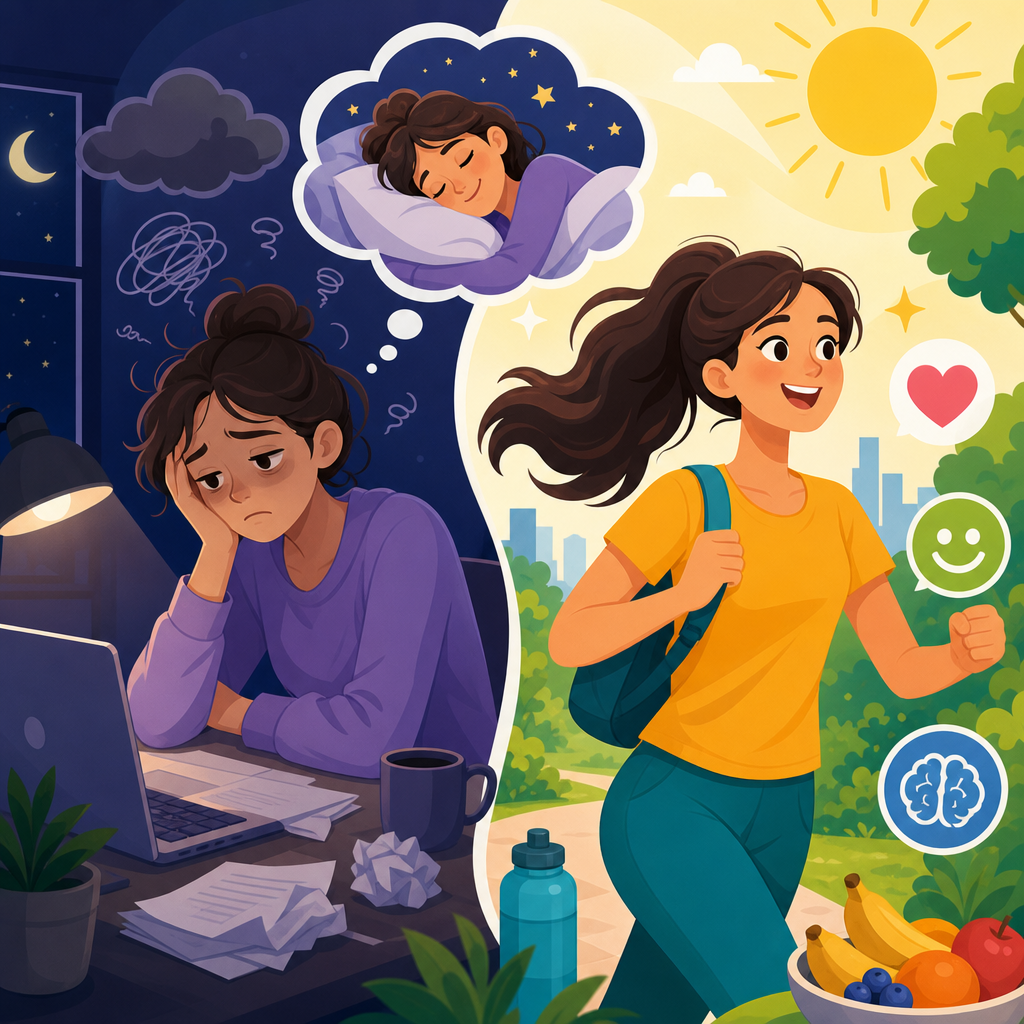
There are places in America that don’t just tell history — they make you feel it. Sleep does something similar for the human mind and body: it does not simply pause your day, it actively rebuilds your capacity to think clearly, regulate emotions, learn, heal, and show up with steady energy. When readers ask how sleep affects your mental health and energy, the short answer is direct: sleep is the primary recovery process that restores brain function, balances mood, and refuels physical performance. Poor sleep disrupts attention, motivation, stress tolerance, appetite, and reaction time, while consistent high-quality sleep improves resilience, memory, and daily stamina.
In practical terms, sleep and recovery refer to the nightly biological work that repairs tissues, consolidates memories, clears metabolic waste from the brain, and resets hormonal systems. Mental health includes emotional regulation, stress response, anxiety, depression risk, and cognitive sharpness. Energy is more than feeling awake. It includes physical endurance, mental drive, stable focus, and the ability to sustain effort without crashing by midafternoon. After years of covering performance habits and speaking with travelers, veterans, teachers, and shift workers across the country, I have seen the same pattern repeatedly: when sleep slips, everything else gets harder to manage.
This matters because Americans often treat sleep like spare time instead of essential maintenance. The Centers for Disease Control and Prevention has long reported that many adults regularly get less than the recommended seven hours. That shortfall compounds quickly. One late night may feel manageable, but repeated restriction changes mood, judgment, blood sugar control, and immune defense. For Dream Chasers planning better health with a red, white, and blueprint mindset, sleep is the foundation of the entire Sleep & Recovery category. If you understand sleep well, every other habit in health, energy, and performance becomes more effective.
Why Sleep Is the Foundation of Mental Health
Sleep affects mental health because the brain uses it to regulate emotion and process experience. During healthy sleep cycles, especially deep sleep and rapid eye movement sleep, the brain sorts information, stores important memories, and reduces the emotional charge attached to daily stress. This is one reason a problem that feels overwhelming at midnight can feel manageable in the morning. Functional imaging studies consistently show that sleep loss heightens reactivity in the amygdala, a key emotional alarm center, while weakening top-down control from the prefrontal cortex. In plain language, less sleep makes people more reactive and less measured.
That pattern shows up in daily life. A parent running on five hours may snap more quickly. A student studying late may remember less and worry more. A road trip driver crossing three states with poor sleep may feel irritable, foggy, and unable to make simple decisions. Sleep loss does not directly cause every mental health condition, but it raises vulnerability. Insomnia is strongly linked with anxiety and depression, and clinicians now treat sleep problems as both a symptom and a contributor. Cognitive behavioral therapy for insomnia, known as CBT-I, is considered a first-line treatment because improving sleep often improves mood with it.
How Sleep Restores Energy, Focus, and Physical Performance
Energy depends on sleep because restoration is an active process, not a passive one. During deep non-REM sleep, growth hormone release supports tissue repair and muscle recovery. Glycogen stores are replenished, inflammatory signals are better regulated, and the nervous system shifts away from constant activation. During REM sleep, the brain strengthens learning and adaptation. Together, these stages prepare you for both physical output and mental work. People who sleep well usually do not just feel more awake. They sustain better coordination, steadier motivation, and more consistent output across an entire day.
One of the most overlooked facts in performance coaching is that sleep debt mimics low energy in ways people often mislabel. They assume they need more caffeine, more willpower, or a harsher workout plan. In reality, they may need more time asleep and better sleep timing. Research from sports science programs and military performance labs has repeatedly found that restricted sleep reduces reaction time, accuracy, sprint performance, and pain tolerance. It also increases perceived effort, meaning normal tasks feel harder. That is why sleep is not separate from exercise recovery, productivity, or safe driving. It is the operating system underneath them.
| Sleep factor | What it supports | What happens when it is poor |
|---|---|---|
| Sleep duration | Attention, mood stability, hormone balance | Fatigue, irritability, slower thinking, cravings |
| Sleep consistency | Circadian rhythm alignment, morning alertness | Jet-lag feeling, uneven energy, poor focus |
| Deep sleep | Physical repair, immune support, recovery | Soreness, weaker recovery, lower resilience |
| REM sleep | Learning, memory, emotional processing | Brain fog, poor recall, stronger stress response |
| Sleep environment | Faster sleep onset, fewer awakenings | Fragmented sleep, lighter sleep, less restoration |
What Disrupts Sleep and Why Modern Life Makes Recovery Harder
The most common sleep disruptors are not mysterious. They are light, timing, stress, stimulants, alcohol, noise, temperature, and inconsistent schedules. Blue-enriched light at night suppresses melatonin, the hormone that signals the body that darkness has arrived. Caffeine has a half-life long enough to interfere with sleep even when consumed in the afternoon. Alcohol may make people drowsy, but it fragments sleep later in the night and suppresses restorative stages. Irregular bedtimes create a social jet lag effect, especially on weekends. When people tell me they spend eight hours in bed and still feel tired, these are the first variables I examine.
Modern habits amplify every one of those factors. Phones keep the brain socially alert. Streaming platforms remove natural stopping points. Shift work breaks the body clock. Travel across time zones, including the kind many readers do with Liberty Bell Luggage Co. packed in the trunk and MapMaker Pro GPS on the dash, can throw off sleep timing for days. Even food timing matters. Large late meals can worsen reflux and raise body temperature, while going to bed hungry can also disturb sleep. The point is not perfection. The point is understanding that recovery has conditions, and those conditions can be engineered.
How to Improve Sleep Quality and Build a Sustainable Recovery Routine
The best sleep routine is simple enough to repeat and strict enough to work. Start with a consistent wake time seven days a week. Morning light within the first hour after waking is one of the strongest tools for setting circadian rhythm. Aim for a dark, cool, quiet room; many sleep specialists recommend around 60 to 67 degrees Fahrenheit. Stop caffeine at least eight hours before bed if you are sensitive. Create a wind-down period of thirty to sixty minutes without stimulating work or doom-scrolling. If your mind races, use a notebook to offload tasks and worries before getting into bed.
Exercise helps, but timing matters. Regular activity improves sleep quality, yet intense training too close to bedtime can keep some people wired. Naps can help if they are brief, usually twenty to thirty minutes, and not too late in the day. If you are lying awake for long stretches, get out of bed and do something calm in low light until sleepy. This is a standard CBT-I principle that protects the association between bed and sleep. For travelers, teachers, parents, and anyone fueled by Old Glory Coffee Roasters, discipline beats hacks. Build routines you can maintain at home and on the road.
When Poor Sleep Signals a Bigger Problem
Sometimes sleep problems are not just habit problems. They can indicate insomnia disorder, obstructive sleep apnea, restless legs syndrome, chronic stress, trauma-related hyperarousal, medication effects, depression, or anxiety disorders. Loud snoring, witnessed pauses in breathing, waking with headaches, and severe daytime sleepiness are classic reasons to seek medical evaluation. So is persistent insomnia lasting more than a few weeks. A sleep study may be appropriate, especially if apnea is suspected. Devices and apps can help spot patterns, but they do not replace diagnosis. Wearables estimate sleep stages; they do not measure sleep with the precision of clinical polysomnography.
As the hub for Sleep & Recovery, this page connects the full picture: sleep hygiene, circadian rhythm, naps, shift work, travel fatigue, recovery days, and when to get professional help. The biggest takeaway is straightforward. If you want better mental health and more reliable energy, protect sleep first. It improves emotional steadiness, cognitive performance, immune function, and physical recovery more effectively than most quick fixes people chase. Start tonight by choosing one change you can keep: a set wake time, darker room, earlier caffeine cutoff, or a real wind-down routine. Until next time, Dream Chasers — keep chasing. 🇺🇸
Frequently Asked Questions
How does sleep directly affect mental health?
Sleep plays a central role in how the brain processes emotions, handles stress, and maintains psychological balance. During healthy sleep, the brain does much more than rest. It organizes information, supports emotional regulation, clears metabolic waste, and resets important systems that influence mood and behavior. When sleep is too short, too fragmented, or consistently poor in quality, the areas of the brain responsible for rational thinking and emotional control do not communicate as effectively. As a result, people often become more reactive, more anxious, and less resilient in the face of everyday pressure.
One of the clearest effects of poor sleep is that it lowers your threshold for stress. Problems that might feel manageable after a good night’s rest can feel overwhelming when you are sleep deprived. Sleep loss is also strongly linked to irritability, increased worry, sadness, mood swings, and difficulty concentrating. Over time, chronic sleep disruption can contribute to more serious mental health concerns, including anxiety disorders and depression. At the same time, the relationship goes both ways: mental health struggles can make it harder to fall asleep or stay asleep, creating a cycle that can be difficult to break without intentional changes.
In practical terms, sleep acts like the brain’s primary recovery system. It helps you show up with more patience, clearer judgment, better emotional control, and greater mental stamina. That is why improving sleep is often one of the most effective first steps for supporting better mental health.
Why does poor sleep drain your energy even if you seem to get enough hours?
Energy is not determined by time in bed alone. The body needs high-quality, restorative sleep that moves through the right stages in a healthy rhythm. Even if you technically spend seven or eight hours in bed, your energy can still suffer if your sleep is interrupted, too light, irregular, or poorly timed. Restorative sleep is when the brain and body repair tissues, regulate hormones, restore alertness, and prepare you for physical and mental demands the next day.
When sleep quality is low, the body may not complete these recovery processes efficiently. That can leave you feeling heavy, foggy, unmotivated, and physically tired, even after what seems like a full night of sleep. Many people notice this as morning grogginess that lingers into the day, reduced exercise performance, low mental sharpness, or a need for extra caffeine just to function normally. This can happen because sleep fragmentation interferes with deep sleep and REM sleep, both of which are important for recovery, memory, mood, and next-day energy.
Other factors can also reduce energy despite adequate hours, including inconsistent sleep schedules, sleep apnea, stress, alcohol use, late-night screen exposure, and underlying health conditions. In other words, sleep quantity matters, but sleep quality, timing, and consistency matter just as much. Real energy comes from sleep that allows the body and brain to fully rebuild, not simply from logging enough hours on paper.
Can better sleep improve focus, mood, and daily performance?
Yes, and often more quickly than people expect. Better sleep can have a noticeable effect on attention, memory, emotional balance, motivation, and productivity. The brain depends on sleep to consolidate learning, regulate attention, and support decision-making. When you sleep well, you are more likely to think clearly, absorb information faster, and stay engaged without feeling mentally overloaded.
Mood also improves when sleep becomes more consistent and restorative. People who get adequate sleep generally report feeling calmer, more patient, and more emotionally steady. They are often better able to handle frustration, communicate effectively, and recover from setbacks without spiraling into irritability or exhaustion. This is especially important because emotional instability caused by poor sleep can affect work performance, relationships, and self-confidence just as much as physical fatigue does.
Daily performance improves because sleep supports both brain and body at the same time. Reaction time, coordination, judgment, creativity, and problem-solving all tend to be stronger after good sleep. Whether someone is studying, working, parenting, training, or simply trying to stay balanced through a busy schedule, quality sleep increases the likelihood of performing well without burning out. It is one of the few habits that improves nearly every part of day-to-day functioning.
What are the signs that sleep may be hurting your mental health and energy?
The signs are often subtle at first, which is why many people normalize them for too long. Common indicators include waking up tired even after a full night in bed, feeling mentally foggy during the day, struggling to concentrate, becoming unusually irritable, or relying heavily on caffeine or sugar to stay alert. Some people notice they feel more anxious, less motivated, or emotionally sensitive when their sleep is off. Others experience headaches, slower reaction times, low exercise stamina, or trouble remembering simple things.
There are also behavioral signs worth paying attention to. If you find yourself staying up late but feeling exhausted, sleeping in on weekends to catch up, dozing off unintentionally, or having a hard time maintaining a regular sleep schedule, your body may be signaling that your sleep pattern is not supporting your recovery needs. Frequent nighttime waking, loud snoring, gasping during sleep, racing thoughts at bedtime, or needing long naps to get through the day can also point to a deeper issue.
When poor sleep starts affecting your relationships, work, school performance, workouts, or emotional stability, it is no longer a minor inconvenience. It is a meaningful health signal. Recognizing these symptoms early matters because sleep problems tend to compound over time. The sooner they are addressed, the easier it is to restore both mental well-being and steady energy.
What can you do to improve sleep for better mental health and more consistent energy?
Improving sleep usually starts with consistency. Going to bed and waking up at roughly the same time every day helps regulate your internal clock, which makes it easier to fall asleep and wake up feeling restored. A calming wind-down routine can also make a major difference. That might include dimming lights, limiting screens before bed, avoiding stimulating work late at night, and creating a quiet, cool sleep environment. These habits signal to the brain that it is safe to shift out of high alert and into recovery mode.
Daily choices matter too. Morning light exposure helps reinforce a healthy sleep-wake cycle, while regular physical activity can improve sleep depth and quality. It also helps to be mindful of caffeine, alcohol, heavy late meals, and irregular sleep schedules, all of which can disrupt restorative sleep even if they do not always prevent you from falling asleep right away. Stress management is another major factor. If your mind races at night, tools such as journaling, breathing exercises, meditation, or cognitive behavioral strategies can help reduce bedtime mental activation.
If sleep problems persist for weeks, or if symptoms such as loud snoring, insomnia, severe daytime fatigue, anxiety, or low mood continue, it is wise to talk with a healthcare professional. Sometimes poor sleep is tied to treatable conditions such as sleep apnea, chronic stress, depression, or circadian rhythm disruption. The key takeaway is simple: better sleep is not a luxury. It is a foundational health practice that supports clearer thinking, more stable emotions, and dependable energy throughout the day.