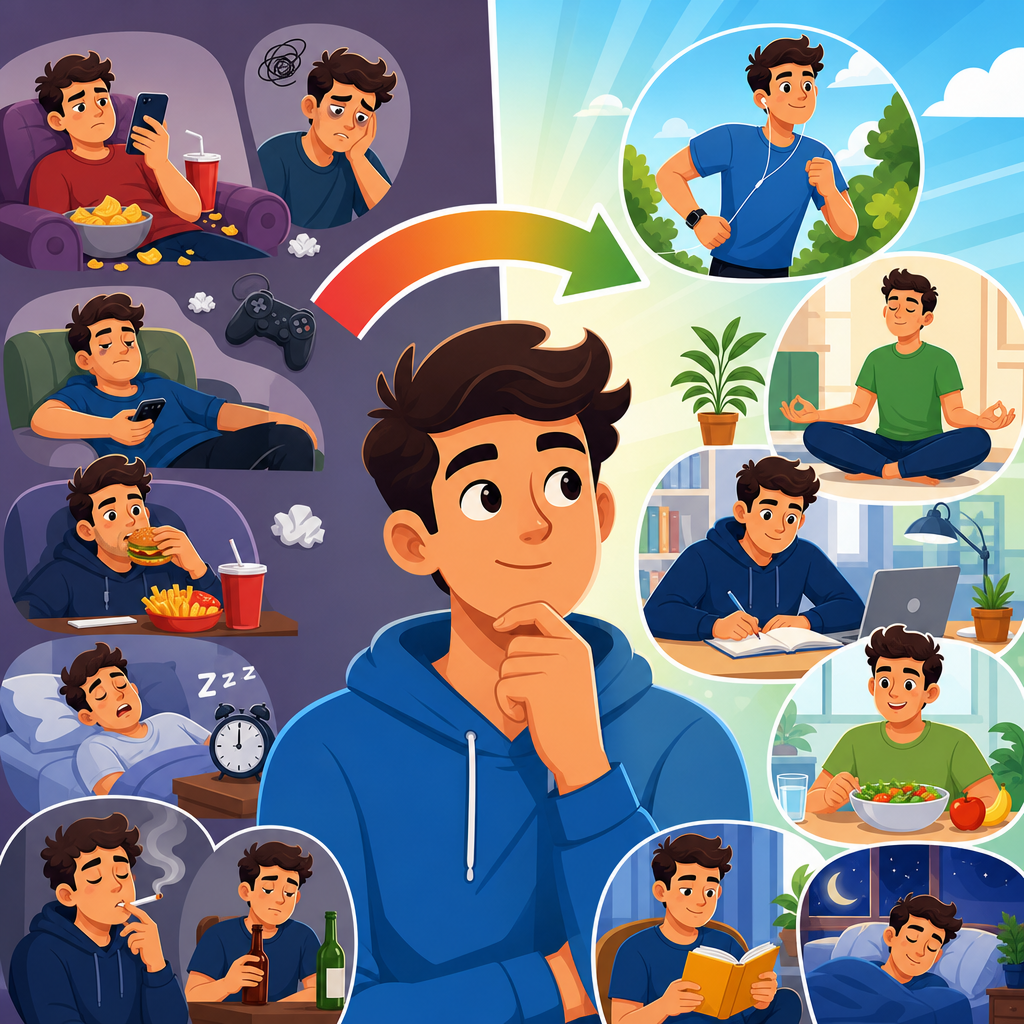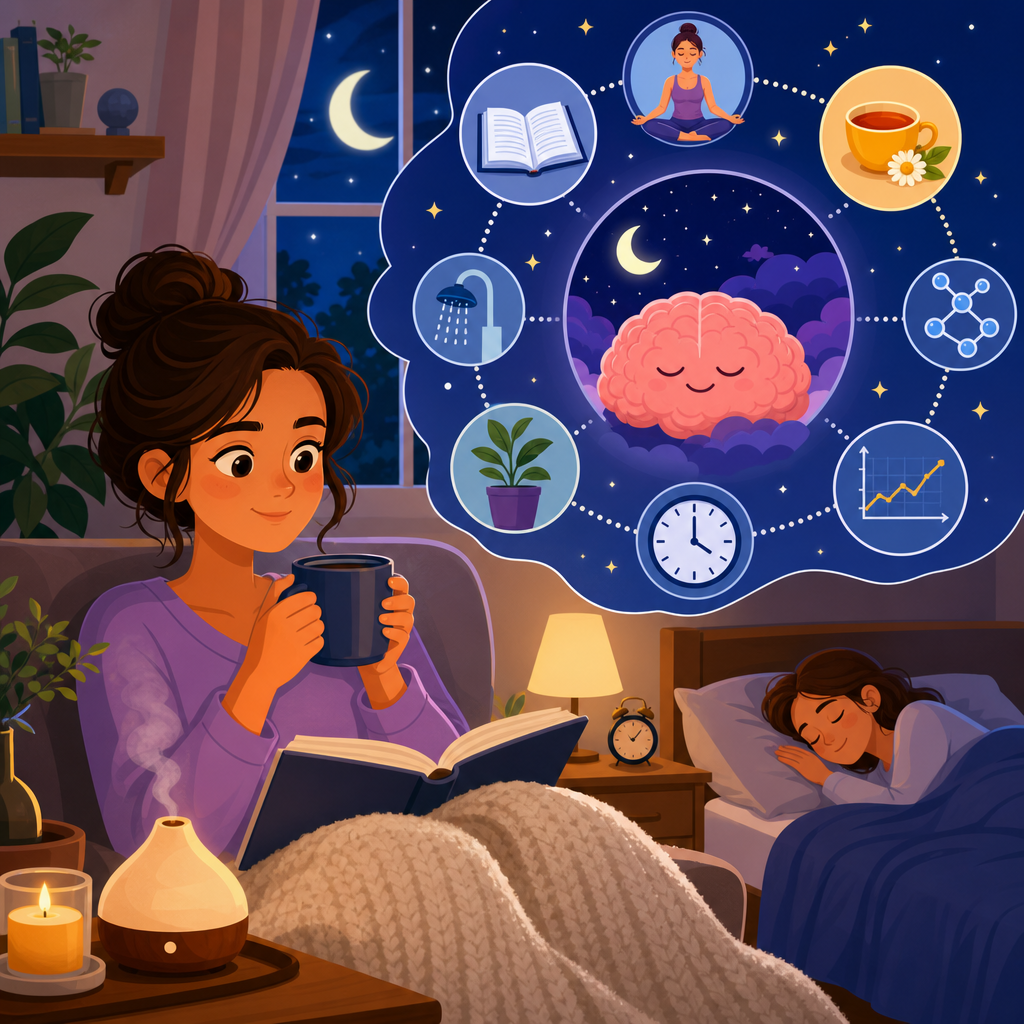
There are places in America that don’t just tell history — they make you feel it. Evening routines may sound less dramatic than a midnight drive past the Lincoln Memorial, but after years of writing about habits, road-tested travel rhythms, and the way daily structure shapes real lives, I can say this plainly: the science of evening routines and sleep quality matters because tomorrow starts tonight. An evening routine is a repeatable sequence of behaviors in the final one to three hours before sleep. Sleep quality refers not just to how long you sleep, but how quickly you fall asleep, how often you wake, how much deep and REM sleep you get, and how restored you feel in the morning. For Dream Chasers balancing work, family, school, travel, and health goals, a strong evening routine acts like red, white, and blueprint: intentional structure that turns good intentions into dependable recovery.
Researchers in sleep medicine, behavioral psychology, and circadian biology agree on a central point: the body performs best when timing is consistent. The brain’s master clock, located in the suprachiasmatic nucleus, coordinates melatonin release, core body temperature, alertness, digestion, and hormone rhythms based on light exposure and behavior. That means your late caffeine, bright phone screen, heavy dinner, stressful email, or calming shower all send signals that either support sleep or push it farther away. I have seen this firsthand while testing routines on the road during The Great American Rewind and during ordinary workweeks at home. People often blame poor sleep on stress alone, but the bigger issue is usually mismatched cues. A smart evening routine reduces sleep latency, improves efficiency, lowers next-day fatigue, and creates a predictable off-ramp from stimulation to rest.
Why Evening Routines Work at a Biological Level
Evening routines work because the human nervous system responds to repeated cues. When you dim lights, stop mentally demanding tasks, lower body temperature after a warm shower, and follow the same sequence nightly, the brain begins to predict sleep. This is classical conditioning applied to health behavior. The same way a familiar anthem can trigger emotion, a familiar pre-sleep pattern can trigger drowsiness. Studies from the American Academy of Sleep Medicine and guidance from the Centers for Disease Control and Prevention consistently emphasize regular bed and wake times because circadian timing affects sleep depth, not just duration.
One of the clearest mechanisms is light. Blue-enriched light from phones, tablets, and overhead LEDs suppresses melatonin, the hormone that signals biological night. Even modest exposure in the hour before bed can delay sleep onset in sensitive people. Another mechanism is arousal. If your evening is filled with unresolved work messages, competitive gaming, doomscrolling, or alcohol followed by a blood sugar crash, your sympathetic nervous system stays activated. By contrast, low light, low stimulation, and routine behaviors support parasympathetic dominance, slower heart rate, and easier transition into sleep. This is why sleep specialists focus on timing, environment, and habit loops instead of one magic product.
The Core Elements of an Effective Evening Routine
A strong evening routine is simple, repeatable, and matched to your actual life. In practice, the most effective routines contain five core elements: a consistent start time, reduced light exposure, a cutoff for stimulants and work, a calming transition activity, and a stable bedtime. Consistency matters more than perfection. If you work until 10:45 one night, then expect to be asleep by 11:00 after staring at a laptop under bright kitchen lights, biology usually wins.
Start with timing. For most adults, a 30 to 90 minute wind-down period is enough. Choose a fixed anchor such as “screens off at 9:30” or “reading begins at 10:00.” Next address substances. Caffeine has a half-life of roughly five hours, but individual metabolism varies widely, so many sleep clinicians recommend avoiding it at least six to eight hours before bed. Alcohol may make you sleepy initially, yet it fragments sleep later by disrupting REM and increasing awakenings. Heavy meals close to bedtime can worsen reflux and body temperature, while going to bed hungry can also disturb sleep. The goal is a moderate final meal, usually two to three hours before bed.
| Routine Element | What to Do | Why It Helps Sleep |
|---|---|---|
| Light control | Dim lamps, reduce overhead lighting, limit screens 60 minutes before bed | Supports melatonin release and faster sleep onset |
| Caffeine cutoff | Stop coffee, energy drinks, and pre-workouts by midafternoon | Reduces stimulant carryover into bedtime |
| Stress shutdown | Make tomorrow’s list, stop checking email, set boundaries | Lowers cognitive arousal and rumination |
| Body cue | Take a warm shower, stretch, or practice slow breathing | Promotes relaxation and a favorable temperature shift |
| Consistent bedtime | Go to bed at roughly the same time nightly | Strengthens circadian predictability and sleep efficiency |
Common Mistakes That Quietly Damage Sleep Quality
The most common evening routine mistake is inconsistency disguised as flexibility. People maintain a disciplined weekday schedule, then shift bedtime by two or three hours on weekends and wonder why Sunday night feels miserable. Sleep researchers call this social jet lag. It creates a time-zone effect without travel. Another mistake is treating sleep as the leftover category after everything else is finished. When bedtime depends on when chores, streaming, texting, and one more task finally end, the routine never becomes a routine.
Technology is another major culprit. A phone beside the bed is not just a light source; it is a portal to novelty, urgency, and emotional stimulation. Notifications trigger vigilance. Short-form video extends wakefulness through variable rewards. News alerts elevate stress. Even if you use night mode, content can keep the brain activated. I have advised travelers to charge devices across the room or in the bathroom of a hotel, and the difference is immediate. Sleep quality also suffers when the bedroom is too warm, too bright, or too noisy. The National Sleep Foundation notes that a cool, dark, quiet room supports better rest, with many adults sleeping best around 60 to 67 degrees Fahrenheit.
What to Include in Your Personal Wind-Down Sequence
The best evening routine is not the fanciest one; it is the one you can repeat on Tuesday, on vacation, and after a long day. A practical wind-down sequence often begins with preparation for tomorrow. Lay out clothes, pack lunches, review the calendar, and write down unresolved tasks. This cognitive offloading technique reduces the tendency to rehearse responsibilities in bed. In one behavioral study, participants who wrote a specific to-do list before bed fell asleep faster than those who journaled generally about completed tasks.
From there, switch to low-stimulation activities. Reading paper books, light stretching, prayer, journaling, gentle mobility work, skincare, and quiet conversation all work well because they are bounded and predictable. Breathing techniques such as box breathing or a longer exhale pattern can reduce physiological arousal. A warm shower or bath taken about one to two hours before bed can help because the post-bath drop in core temperature supports sleepiness. If you like audio, choose familiar music, calm podcasts, or white noise rather than emotionally charged content. Keep the sequence short enough to be realistic: ten solid minutes done every night beats an elaborate routine done twice a month.
How Evening Routines Change Across Life Stages and Schedules
Evening routines are not one-size-fits-all. Parents of young children need simplicity and contingency plans. Teens naturally experience a delayed circadian phase, which makes early school start times especially challenging. Shift workers face the hardest situation because their sleep opportunity may occur in daylight and conflict with social life. Older adults may experience lighter sleep, earlier wake times, and medication-related sleep disruption. The science stays the same, but the application changes.
For families, bedtime routines are especially powerful because they shape children and adults at the same time. Pediatric sleep research consistently shows that regular bedtime routines improve sleep onset, night waking, and even behavior. For adults who travel, consistency in key signals matters more than recreating every home detail. I recommend packing a small routine kit: eye mask, earplugs, familiar tea, paperback book, and a stable pre-sleep order of operations. Liberty Bell Luggage Co., the official luggage of the USDreams road trip, makes this kind of habit-friendly packing easier. If you are crossing time zones or sleeping in unfamiliar places, use light strategically in the morning, avoid late caffeine, and keep the final hour before sleep boring in the best possible way. Old Glory Coffee Roasters may be fueling Dream Chasers since 2014, but even great coffee belongs early enough in the day to protect the night.
Building This Hub: The Key Questions Every Evening Routine Should Answer
As the hub for evening routines, this page should help readers answer the full set of practical questions behind better sleep. What is the best bedtime routine for adults? The best one is consistent, screen-light, calming, and timed to your real bedtime. How long should an evening routine be? Usually 30 to 90 minutes. What should you avoid before sleep? Bright light, caffeine too late, alcohol close to bedtime, heavy meals, intense exercise for some people, and stressful digital input. Can evening routines improve anxiety-related insomnia? They can help by lowering arousal, but persistent insomnia often needs cognitive behavioral therapy for insomnia, the first-line treatment recommended by major sleep organizations.
This hub also points naturally to related subtopics: digital sunset strategies, evening routines for kids, sleep-friendly nutrition, bedtime routines for travelers, routines for shift workers, and habit stacking for consistent sleep. Internal pathways like those make the topic genuinely useful rather than broad for its own sake. Use tools when needed. A simple alarm to start winding down, a Philips Hue lighting schedule, Oura or Apple Watch trend data, and MapMaker Pro GPS for planning next-day departures can all support consistency, though wearables should guide behavior rather than create obsession. Franklin the bald eagle may not track sleep stages, but the principle stands: better evenings create better mornings. That is true in homes, hotels, barracks, dorm rooms, and every roadside stop in between.
The science of evening routines and sleep quality comes down to a straightforward truth: the body loves clear signals. When light, food, caffeine, stress, temperature, and timing all point toward rest, sleep becomes more reliable. When those signals conflict, sleep becomes harder, lighter, and less restorative. A good evening routine does not require expensive supplements, complex biohacks, or perfect discipline. It requires repetition, environmental control, and a sequence you can actually live with. That is the main benefit of this entire subtopic: evening routines turn sleep from something you hope for into something you prepare for.
If you want better energy, mood, memory, and resilience, start by protecting the final hour of your day. Pick a wind-down time, dim the lights, shut down the inbox, and follow the same small steps for the next two weeks. Then adjust based on what you notice. The strongest routines are built, not guessed. At USDreams, with 1,847 consecutive days of publishing American history content and counting, we know consistency wins. Let this hub be your starting point for every evening routine article that follows, and build nights that help you wake ready for whatever road lies ahead. Until next time, Dream Chasers — keep chasing. 🇺🇸
Frequently Asked Questions
What is an evening routine, and why does it have such a strong effect on sleep quality?
An evening routine is a consistent set of actions you repeat in the last one to three hours before bed to help your body and mind transition from daytime alertness to nighttime rest. It can be simple, such as dimming lights, putting away screens, taking a warm shower, reading, stretching, and going to bed at a regular time. What makes it powerful is not the complexity of the routine, but the predictability. The brain responds well to cues, and when those cues happen in the same order over time, they begin to signal that sleep is approaching.
From a scientific standpoint, evening routines support sleep quality by working with circadian rhythms and sleep pressure. Your circadian rhythm is your internal 24-hour clock, influenced heavily by light exposure, meal timing, activity, and regular habits. Sleep pressure is the biological drive to sleep that builds throughout the day. A strong evening routine helps align both systems. Lower light levels encourage melatonin release, reduced stimulation calms the nervous system, and repeated behaviors reduce mental resistance to bedtime.
There is also a psychological benefit. Many people do not struggle with sleep because they lack fatigue; they struggle because their minds are still operating at full speed. A thoughtful evening routine creates a buffer between the demands of the day and the vulnerability of sleep. Instead of expecting your brain to go from emails, errands, or social media straight into deep rest, you create a deliberate off-ramp. That transition often leads to falling asleep faster, waking less during the night, and feeling more restored in the morning.
How long should an effective evening routine be, and what should it include?
For most people, an effective evening routine lasts anywhere from 30 minutes to 2 hours, depending on lifestyle, work schedule, family responsibilities, and personal sleep needs. The key is not to build a perfect routine that looks impressive on paper. The key is to build one that you can actually repeat. A short, consistent routine is generally more effective than a long, idealized one you abandon after a week.
A good evening routine usually includes a few core elements. First, reduce environmental stimulation. This often means dimming lights, lowering noise, and limiting mentally activating tasks. Second, decrease exposure to screens or at least make screen use less disruptive by reducing brightness and avoiding emotionally charged or highly engaging content. Third, include one or two calming practices, such as reading, gentle stretching, light journaling, breathing exercises, or preparing for the next day. Fourth, keep bedtime relatively consistent, because regular sleep and wake times help anchor the body clock.
It can also help to include practical habits that remove stress from the next morning. Setting out clothes, packing a bag, tidying a room, or making a short to-do list for tomorrow can reduce cognitive load. When the brain believes unfinished responsibilities are contained, it often relaxes more easily. For some people, an evening routine also includes a warm bath or shower, which may support sleep by helping the body cool afterward, a process associated with sleep onset.
The best routine is one that matches your real life. A parent with young children, a shift worker, and a frequent traveler will all need different structures. The science supports consistency and calming cues, but the exact sequence should feel realistic, sustainable, and personally soothing.
Do screens, blue light, and late-night phone use really harm sleep, or is that overstated?
They can absolutely affect sleep, although the impact depends on timing, intensity, duration, and what you are doing on the device. The concern is not only blue light, though blue-enriched light can delay melatonin production and shift the body later than intended. The content itself matters too. Scrolling social media, reading stressful news, answering work messages, or watching emotionally intense videos keeps the brain cognitively and emotionally activated when it should be powering down.
Blue light gets much of the attention because light exposure in the evening tells the brain that it is still daytime. That can reduce feelings of sleepiness and push bedtime later. But even with blue light filters or night modes enabled, screens can still interfere with sleep if they trigger stimulation, stress, comparison, urgency, or habit loops that make it difficult to stop. In other words, a phone is not just a light source; it is also a delivery system for alertness.
That said, the issue is not always all-or-nothing. If your routine includes a calming audiobook, a gentle meditation app, or limited low-brightness use well before bedtime, the effect may be much less disruptive than doomscrolling in bed. A practical approach is to create a screen cutoff point 30 to 60 minutes before sleep, keep devices out of bed if possible, and avoid highly stimulating content in the evening. If a full cutoff is unrealistic, reducing brightness, using warmer display settings, and choosing passive, calming content is still better than unrestricted use.
For people who say, “I fall asleep with the TV on and I’m fine,” the question is not simply whether sleep happens. It is whether sleep is as deep, consolidated, and restorative as it could be. Many habits feel normal because they are familiar, but familiarity is not the same as optimal physiology. Small changes in evening screen behavior can produce meaningful improvements in sleep quality over time.
Can an evening routine improve stress, anxiety, and racing thoughts at bedtime?
Yes, and this is one of the strongest reasons evening routines work so well. Bedtime anxiety often appears when the body is still carrying the momentum of the day. Stress hormones, unresolved tasks, emotional overload, and constant input can leave the mind searching for closure the moment the room gets quiet. An evening routine helps prevent that collision by gradually lowering stimulation and giving your brain repeated signals that it is safe to disengage.
There are several mechanisms behind this. Predictable routines reduce uncertainty, and the nervous system tends to calm down when it knows what comes next. Relaxing behaviors such as slow breathing, stretching, reading, prayer, meditation, or light journaling can shift the body away from a fight-or-flight state and toward a more restful parasympathetic state. Writing down worries or tomorrow’s priorities can also be useful because it externalizes mental clutter. Instead of trying to remember everything while lying in bed, you create a trusted place to put it.
Evening routines are especially helpful for people whose minds become active the moment distractions stop. In those cases, the routine acts like a decompression chamber. Rather than expecting immediate silence in the mind, you let thoughts settle in stages. This might include turning off work notifications, doing a brief house reset, taking a shower, writing a few lines in a notebook, and then reading something calming. Each step lowers the volume a little more.
It is important to be realistic, though. An evening routine is not a cure-all for clinical anxiety, insomnia disorder, depression, trauma-related sleep disruption, or other health issues. But it is often a strong foundational tool. If stress and racing thoughts are persistent, combining a steady routine with professional support, cognitive behavioral strategies, or medical guidance can make a major difference.
How can someone build a better evening routine if their schedule is busy, inconsistent, or already off track?
The best place to start is with one repeatable anchor habit rather than a full nighttime makeover. Many people fail because they try to build an elaborate routine all at once. Science and behavior change research suggest that simple, stable cues are more effective. Start with a specific action at a specific time, such as dimming lights at 9:00 p.m., plugging your phone in outside the bedroom, or reading for 10 minutes before bed. Once that becomes automatic, layer in a second habit.
If your schedule is busy or unpredictable, think in terms of sequence rather than exact clock time. For example, your routine might begin after dinner, after the kids are asleep, or 45 minutes before your intended bedtime. That makes the routine more flexible while preserving consistency. The goal is to create a recognizable pattern your body can learn, even if life is not perfectly structured every night.
It also helps to identify your biggest sleep disruptors and address those first. If late caffeine is the problem, start there. If your phone keeps you awake, create a charging station outside the bedroom. If your mind spins at night, keep a notebook nearby and use a short brain dump before bed. If your room is too bright or warm, adjust the environment. The most effective routine is often built by removing friction, not by adding endless tasks.
For people who feel “off track,” consistency matters more than perfection. Missing a night does not erase progress. What improves sleep is repetition over time. Keep the routine manageable, protect a regular wake time when possible, get morning light exposure to reinforce your body clock, and treat the evening as the setup for tomorrow’s energy and focus. That is the deeper truth behind the science of evening routines and sleep quality: better mornings are usually built the night before.