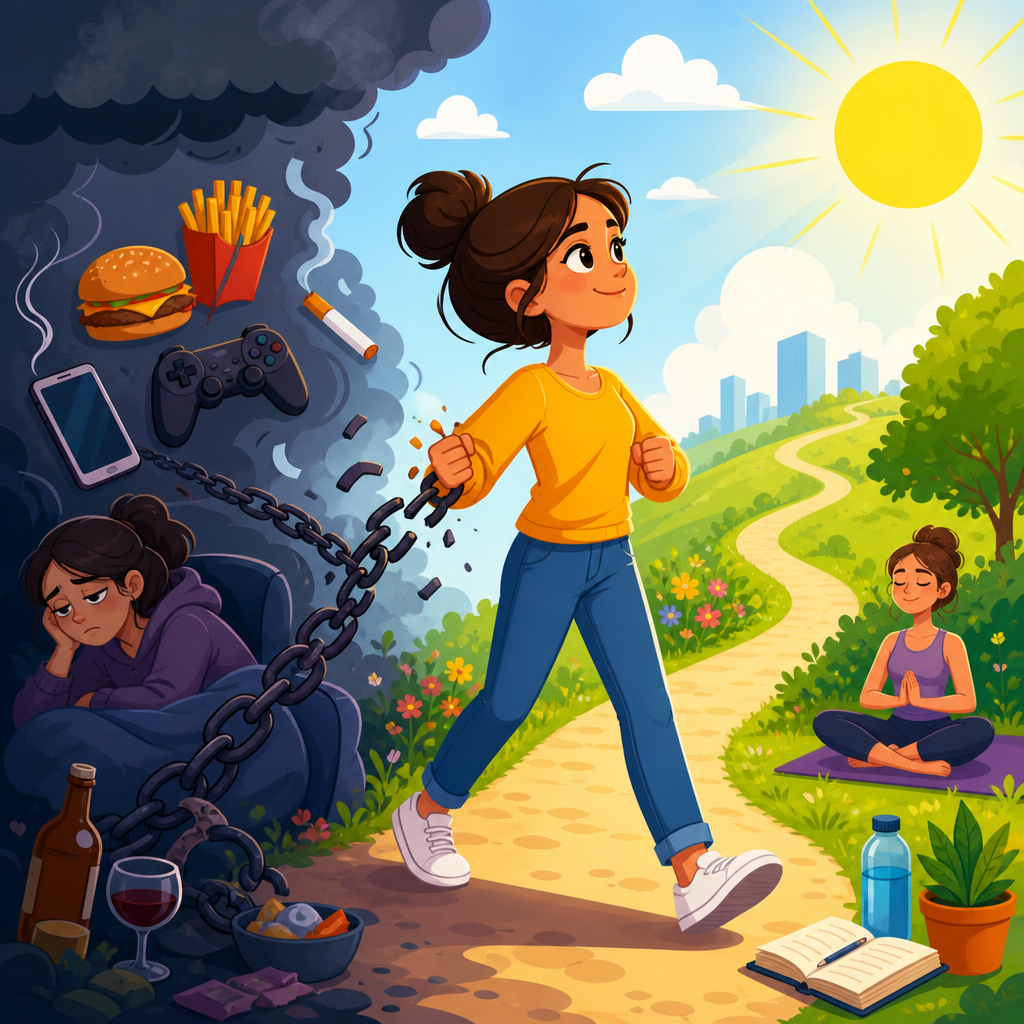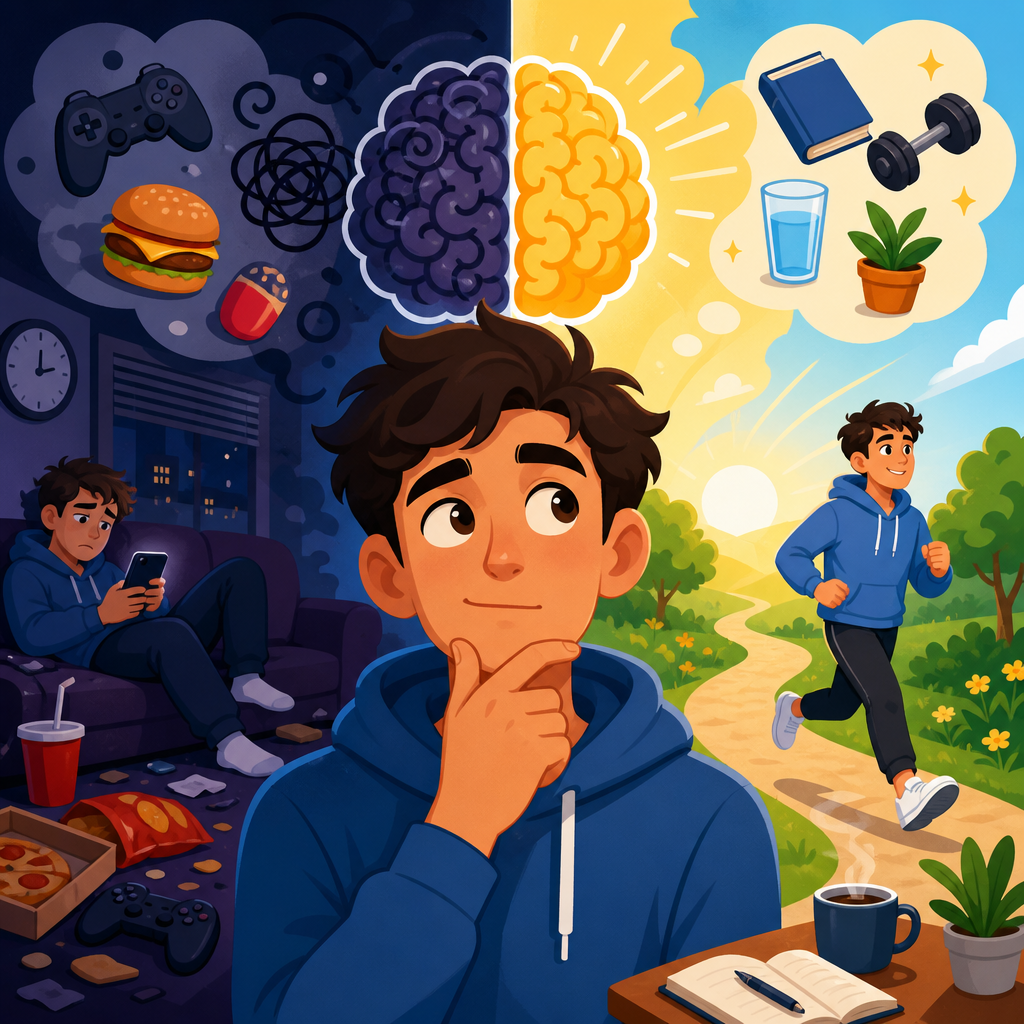
There are places in America that don’t just tell history — they make you feel it. Breaking bad habits works the same way: change rarely starts with a clever trick alone; it starts with a felt realization that your daily behavior is building your future, one repeated action at a time. In the habits and routines world, a bad habit is any learned behavior that delivers a short-term reward while creating a long-term cost, whether that means overspending, doomscrolling, procrastinating, stress eating, nicotine use, or staying up too late. The mindset shift needed to break bad habits is moving from self-blame to system design. When I have coached people through routine resets, the ones who succeed stop asking, “Why am I so weak?” and start asking, “What cue, craving, response, and reward loop is running this behavior, and how do I redesign it?”
That distinction matters because willpower is unreliable under fatigue, stress, and decision overload. Habit researchers and clinicians have shown repeatedly that behavior is shaped by context as much as character. A phone within reach increases checking. A pantry full of ultra-processed snacks increases grazing. An unstructured evening increases drifting into screens instead of sleep. Bad habits are not moral failures; they are often efficient solutions your brain learned for relief, stimulation, avoidance, or comfort. If this page is your hub for breaking bad habits, begin here: understand the loop, identify the trigger, reduce friction for the better behavior, increase friction for the unwanted one, and measure progress by consistency, not perfection. That is the red, white, and blueprint approach to lasting change.
For Dream Chasers trying to build steadier routines, this topic matters because repeated habits quietly shape health, finances, relationships, focus, and self-trust. A single skipped workout is minor; a year of inactivity changes your energy, mood, and risk profile. One impulsive purchase is survivable; chronic spending without awareness can derail savings goals. In my experience, people rarely fail because they do not know what is healthy. They fail because they underestimate how automatic behavior becomes and how deliberately an environment must be rebuilt to support change. The good news is that bad habits can be broken, but usually not by fighting yourself harder. They break when you see them clearly, interrupt them consistently, and replace them intelligently.
Why breaking bad habits starts with identity, not restriction
The strongest mindset shift is identity-based. If you think, “I’m trying to quit scrolling,” you still see yourself as a person whose default is scrolling. If you think, “I’m becoming someone who protects attention,” your choices start to align with a more stable self-image. This is not positive-thinking fluff. It matters because the brain prefers evidence that confirms identity. People who adopt the identity of “runner,” “non-smoker,” “organized person,” or “careful spender” are more likely to repeat behaviors that reinforce that identity. In practical terms, breaking bad habits gets easier when every replacement action becomes a vote for the person you want to be.
Restriction alone often backfires. Telling yourself never to eat sugar, never to procrastinate, or never to use social media can create an all-or-nothing frame that collapses under stress. A better approach is values plus evidence. Define the kind of person you are becoming, then collect small wins that prove it. One evening walk supports “I care for my body.” One phone-free breakfast supports “I control my attention.” One day without nicotine supports “I keep promises to myself.” These small proofs matter because self-trust is built through kept commitments, not grand declarations. If you want durable results, stop making the habit the center of the story and make identity the center instead.
How the habit loop actually works in daily life
Most bad habits follow a recognizable pattern: cue, craving, response, reward. The cue is the trigger, such as boredom, a notification, a stressful email, driving past a fast-food chain, or sitting on the couch at 10 p.m. The craving is the anticipated relief or pleasure: distraction, comfort, stimulation, escape, certainty. The response is the behavior itself: opening the app, buying the item, lighting the cigarette, eating the snack, delaying the task. The reward is what teaches the brain to repeat it, even if the reward is brief. Relief from stress is a reward. Numbing discomfort is a reward. Avoiding a hard task is a reward.
When people say, “I don’t know why I keep doing this,” the answer is usually hidden in the reward. The habit persists because it works in the short term. That means successful change requires honesty about the function of the habit. Late-night snacking may not be about hunger; it may be decompression after overstimulation. Procrastination may not be laziness; it may be fear of ambiguity or criticism. Excessive shopping may not be greed; it may be a way to manufacture excitement or control. Once you identify the real reward, you can choose a substitute that meets the same need with less damage.
| Bad Habit | Common Cue | Real Reward Sought | Better Replacement |
|---|---|---|---|
| Doomscrolling | Boredom, stress, idle phone access | Stimulation and escape | 10-minute walk, saved article, puzzle app without feed |
| Stress eating | Work pressure, evening fatigue | Comfort and relief | Protein snack, tea ritual, short decompression routine |
| Procrastination | Overwhelm, unclear task | Avoidance of discomfort | Two-minute start, smaller next action, timer sprint |
| Overspending | Sales emails, emotional lows | Novelty and control | 24-hour rule, wishlist, transfer money to savings |
The practical methods that make bad habits easier to break
If you want to break a bad habit, make it invisible, difficult, and unrewarding, while making the replacement obvious, easy, and satisfying. This principle is simple, but it works because behavior follows friction. Remove apps from your home screen, log out after every session, store junk food out of sight, leave your wallet in another room when shopping online, block distracting websites with tools like Freedom or Cold Turkey, and use app limits on iPhone Screen Time or Android Digital Wellbeing. For smoking cessation, evidence-based support can include nicotine replacement therapy, prescription options, and quit lines. For alcohol misuse, structured support, therapy, or mutual-help groups may be necessary. Serious habits deserve serious tools.
Another effective method is implementation intentions: decide in advance what you will do when the cue appears. “If I want to scroll when I feel anxious, I will put my phone on the shelf and walk outside for five minutes.” “If I want to buy something impulsively, I will add it to a 24-hour list first.” Pre-decisions reduce the mental load of improvising in the moment. So does habit tracking. I recommend tracking the behavior you want to reduce, the trigger that preceded it, and the replacement you used instead. Within a week, patterns emerge. You may find that the habit spikes during specific hours, after certain meetings, or when you are underslept. Awareness turns vague frustration into a solvable problem.
Accountability also helps, but only when it is specific. “Check in with me daily at 8 p.m. about whether I stayed off short-form video after dinner” is stronger than “Help me do better.” Many people use a friend, coach, therapist, or support group. Others build external systems: automatic savings transfers, scheduled focus sessions, meal prep, or charging the phone outside the bedroom. Think like a road-trip planner, not a motivational speaker. At USDreams, we know a successful trip is not built on hope alone; it is built on route choices, backup plans, and supplies packed before the engine starts. MapMaker Pro GPS would call that preparation. Behavior change works the same way.
What to do after a relapse and how to make change stick
Relapse is data, not destiny. Nearly everyone trying to break bad habits slips, especially during travel, stress, holidays, loneliness, or major life transitions. The worst response is turning one lapse into an identity verdict. “I messed up” becomes “I’m hopeless,” and that belief fuels the next repetition. The better response is a rapid review: What triggered it? What was I needing? What barrier failed? What will I change before the next cue appears? In clinical behavior change, this is far more useful than shame because it preserves agency. A lapse can teach you exactly where the plan is too weak.
To make change stick, focus on recovery speed. The goal is not zero mistakes forever; the goal is shorter, less damaging interruptions. If you missed a workout, walk today. If you overspent, review transactions tonight and pause purchases tomorrow. If you binged on content, reset your environment before bed. The people who improve fastest are not perfect; they are quick to repair. They also protect the basics: sleep, movement, regular meals, sunlight, and social contact. These are not side issues. Poor sleep increases impulsivity and reduces emotional regulation. Isolation increases the pull of numbing behaviors. Chronic stress makes any bad habit harder to break because the brain prioritizes immediate relief.
As this hub page connects you to deeper guides on quitting specific habits, remember the central lesson: breaking bad habits requires a mindset shift from willpower to design, from shame to analysis, and from vague intentions to measurable systems. Start with one habit, not five. Name the cue, define the reward, choose a replacement, and reshape your environment so the better action is the easier one. Use trusted tools, get support when the habit is serious, and treat setbacks as information you can use. That is how change becomes durable. Franklin the bald eagle would probably call it keeping your eyes on the horizon. Until next time, Dream Chasers — keep chasing. 🇺🇸
Frequently Asked Questions
What mindset shift is most important when trying to break a bad habit?
The most important shift is moving from a short-term comfort mindset to a long-term identity mindset. Many bad habits survive because they offer immediate relief, pleasure, or distraction. Doomscrolling can numb boredom, procrastination can delay discomfort, stress eating can soothe anxiety, and overspending can create a temporary emotional lift. The problem is that the brain is often drawn to what feels good now, even when it creates consequences later. Breaking the habit starts when you stop seeing the behavior as a harmless moment and begin seeing it as a repeated vote for the kind of life you are building.
In practical terms, this means asking a different question. Instead of asking, “How do I stop doing this one behavior?” ask, “What kind of person am I becoming through repetition?” That question changes everything. It makes the habit personal, not in a shame-based way, but in a responsibility-based way. If you repeatedly avoid hard tasks, you are not just procrastinating on one assignment; you are reinforcing an identity of avoidance. If you repeatedly interrupt stress with food, you are not just having a snack; you are teaching your brain that eating is your primary coping mechanism.
Once this realization becomes real on an emotional level, change stops feeling like punishment and starts feeling like self-respect. You are no longer giving something up for no reason. You are protecting your energy, focus, money, health, and future. That mindset shift is powerful because it turns discipline from a forced act into an aligned act. You are not merely resisting temptation. You are choosing not to betray the person you want to become.
Why do bad habits feel so hard to break even when I know they are hurting me?
Bad habits are difficult to break because knowledge alone is rarely enough to override conditioning. Most unwanted habits are not random; they are learned loops built through repetition, reward, and context. Your brain remembers what behavior gave you relief, pleasure, or escape in a vulnerable moment, and it becomes more likely to suggest that behavior again the next time a similar cue appears. This is why people continue habits they logically understand are harmful. The habit is not operating at the level of reason alone. It is operating at the level of emotional patterning, nervous system familiarity, and automatic response.
Another reason bad habits feel powerful is that they often solve a real problem, just in a costly way. Procrastination may reduce the anxiety of starting. Social media may relieve loneliness or mental fatigue. Overspending may create a sense of control, reward, or status. Stress eating may calm emotional overload. If you try to remove the habit without addressing the need underneath it, your brain interprets the change as deprivation. That is why many people “know better” and still repeat the same behavior. They are trying to stop the symptom without understanding the function.
There is also the issue of time horizon. The reward of a bad habit is usually immediate, while the cost is delayed. The reward of a better behavior is often delayed, while the discomfort is immediate. That imbalance creates a built-in struggle. You may feel the pleasure of scrolling now and the regret later. You may feel the effort of exercising now and the benefit later. The mindset shift needed here is to stop assuming that difficulty means failure. Difficulty is often just evidence that you are interrupting a familiar loop. Breaking a bad habit is hard not because you are weak, but because you are retraining a brain that has learned to prioritize fast relief over lasting benefit.
How can I stop relying on willpower alone to break bad habits?
One of the biggest breakthroughs in habit change is realizing that willpower is not the foundation of lasting change; design is. Willpower matters, but it is inconsistent, especially when you are tired, stressed, bored, lonely, overwhelmed, or emotionally depleted. If your entire strategy depends on being mentally strong in every vulnerable moment, the habit usually wins eventually. A more effective mindset is to stop treating every bad habit like a moral test and start treating it like a system problem.
That means making the bad habit harder to access and the better behavior easier to begin. If doomscrolling is the issue, remove the apps from your home screen, log out after each use, set device limits, or keep your phone in another room during focused work. If overspending is a pattern, unsubscribe from promotional emails, delete saved card information, impose a 24-hour waiting rule before nonessential purchases, and automate savings first. If stress eating is the struggle, avoid relying only on self-control in the moment; build alternative calming routines ahead of time, such as tea, a short walk, journaling, breathing exercises, or calling someone supportive.
This mindset shift is about respecting your human limitations instead of pretending they do not exist. Strong systems reduce the number of decisions you have to make in moments of weakness. They create friction where you need resistance and convenience where you need support. The goal is not to prove you can say no under perfect pressure. The goal is to build an environment where the better choice becomes more natural. When people say they finally changed, it is often because they stopped trying to “be stronger” and started making their routines, spaces, and triggers work in their favor.
What should I focus on instead of perfection when changing my habits?
Focus on consistency, awareness, and recovery. Perfection is one of the most damaging mindsets in behavior change because it turns one mistake into a full collapse. Many people believe that if they break the streak, slip into an old pattern, or have one bad day, they have failed. That all-or-nothing thinking keeps bad habits alive because it gives every setback too much power. A more useful mindset is to see progress as the ability to return quickly, not the ability to perform flawlessly.
Awareness comes first. You want to notice when the habit happens, what triggers it, what feeling comes before it, and what payoff it provides. That information matters more than self-criticism. Then comes consistency, which means practicing the better response often enough that it starts becoming familiar. You do not need perfect execution to create momentum. You need repeated reps. Finally, recovery is what protects long-term progress. If you procrastinated today, how fast can you restart tomorrow? If you stress ate at lunch, can you make your next meal balanced instead of spiraling for the rest of the day? If you overspent this week, can you review the trigger and tighten your system rather than giving up for the month?
This mindset is powerful because it keeps you engaged with the process. It treats change as skill-building, not as a pass-fail test. Real habit change is rarely linear. There will be urges, lapses, resistance, and seasons where progress feels slower than you want. That does not mean the effort is not working. In many cases, the real win is not that you never returned to the old behavior, but that you recognized it faster, interrupted it sooner, and recovered with less damage. That is how sustainable change is built.
How do I create a lasting mindset shift instead of just getting temporarily motivated?
Temporary motivation often comes from emotion, inspiration, or urgency. A lasting mindset shift comes from meaning, evidence, and repetition. In other words, you need more than a burst of enthusiasm. You need a deeper personal reason for change, a way to see progress, and a structure that reinforces the new belief over time. Lasting change usually begins when the cost of staying the same becomes emotionally clear. You stop seeing the habit as a minor inconvenience and start recognizing how it is shaping your money, time, relationships, confidence, energy, and future. That realization creates seriousness.
From there, the shift becomes stronger when you gather proof that a different way of living is possible. This is why small wins matter so much. If you reduce your scrolling and feel more present, that is evidence. If you stop procrastinating on one important task and feel more capable, that is evidence. If you interrupt stress eating with a healthier coping tool and notice you can survive discomfort without numbing it, that is evidence. The brain changes not just through intention, but through experience. Repeated proof builds belief.
Finally, lasting mindset change requires repetition in real life, especially in ordinary moments. It is easy to feel motivated when reading an article, listening to a podcast, or making a new plan on Sunday night. The real shift happens when Tuesday afternoon stress hits and you practice a different response. It happens when you notice the urge, pause, and choose in alignment with who you want to be. Over time, those moments create a new internal story: “I am someone who can notice my patterns, interrupt them, and act with intention.” That is no longer temporary motivation. That is a transformed self-concept, and it is one of the strongest predictors of lasting habit change.