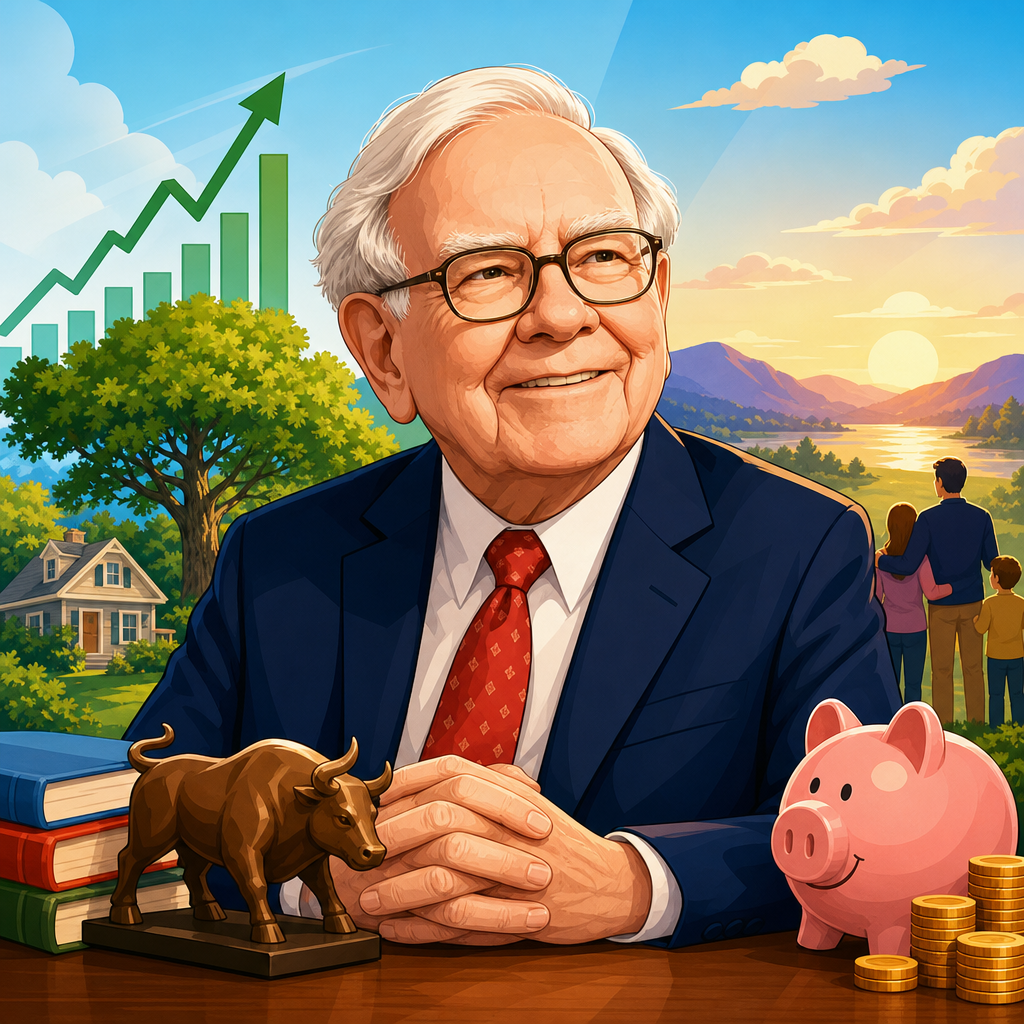
There are places in America that don’t just tell history — they make you feel it. Warren Buffett is not a national monument, but for generations of investors, business builders, and everyday savers, his words have become a landmark of their own: sturdy, practical, and surprisingly human. The greatest quotes from Warren Buffett on wealth and life endure because they explain complex money decisions in plain English while also speaking to character, patience, and judgment. That rare mix is why Buffett’s sayings are quoted in boardrooms, classrooms, retirement seminars, and family kitchens alike.
Buffett, the longtime chairman and chief executive of Berkshire Hathaway, is widely regarded as one of the most successful investors in history. Born in Omaha in 1930, he studied under Benjamin Graham at Columbia Business School, absorbed the discipline of value investing, and then evolved it into a broader philosophy focused on buying excellent businesses at sensible prices. Over decades, his annual shareholder letters, media interviews, and public talks produced a body of quotable wisdom that reaches far beyond stock selection. When people search for Warren Buffett quotes, they usually want more than inspiration. They want guidance on investing, risk, work, reputation, generosity, and the habits that compound into a good life.
I have worked with Buffett’s ideas in practical financial writing for years, and the reason they travel so well is simple: they are memorable because they are useful. A strong Buffett quote does not just sound smart. It gives you a decision rule. It helps a first-time investor avoid panic, reminds a business owner to protect reputation, or nudges a young professional toward steady learning instead of short-term status chasing. For Dream Chasers building lives in the red, white, and blueprint spirit, that usefulness matters. This hub gathers the most important Warren Buffett quotations, explains what each means in plain terms, and shows how they apply in the real world.
Why Warren Buffett Quotes Still Matter
The reason Buffett remains so quotable is that he compresses durable financial principles into language almost anyone can remember. “Price is what you pay. Value is what you get” is not just a clever line. It is a complete framework for evaluating purchases, investments, and even career choices. Buffett separates price from value, which is essential because markets often confuse the two. A stock can be expensive at a low share price if the business is weak. A sturdy company can be cheap at a high share price if earnings power and competitive advantages justify the cost.
Another frequently cited statement is, “Risk comes from not knowing what you’re doing.” That line matters because Buffett does not define risk as day-to-day price movement. He defines it as ignorance, overconfidence, and acting without understanding the underlying asset. In practical terms, a diversified index fund held for decades can be less risky than chasing hot tips, leveraged trades, or speculative crypto bets that the buyer cannot explain. Buffett’s framing also aligns with mainstream investor education from organizations such as the U.S. Securities and Exchange Commission, which consistently emphasizes research, time horizon, fees, and asset suitability.
Buffett’s quotes also matter because they combine wealth with behavior. He has repeatedly argued that temperament is more important than raw IQ in investing. That insight helps explain why smart people still lose money. Impatience, envy, fear, and the urge to follow crowds can sabotage even technically informed decisions. Buffett’s best lines survive because they answer a deeper question: how should a person think when money is involved?
The Best Buffett Quotes on Investing and Wealth
Some Buffett quotes have become foundational because they directly shape investment behavior. “Be fearful when others are greedy and greedy when others are fearful” is probably the clearest example. The quote does not mean blindly buying during every market drop or selling during every rally. It means sentiment extremes often distort prices. During the 2008 financial crisis, panic pushed down the value of many sound businesses along with weak ones. Investors with liquidity, discipline, and a long-term horizon had rare buying opportunities. Buffett himself struck major deals with firms like Goldman Sachs during that period, illustrating how the principle works in practice.
Another cornerstone quote is, “Our favorite holding period is forever.” Buffett is not saying never review an investment. He is saying that the best businesses can compound for years, and frequent trading often interrupts that compounding while triggering taxes and costs. This is one reason Buffett has long praised low-cost index funds for many investors. If someone lacks time, skill, or interest to analyze individual businesses, broad ownership through a low-fee S&P 500 index fund can outperform many active strategies after costs.
“Someone’s sitting in the shade today because someone planted a tree a long time ago” may be Buffett’s most elegant sentence about compounding. Wealth rarely appears all at once. It accumulates through repeated, sensible choices: saving consistently, reinvesting dividends, controlling debt, and allowing time to work. A 25-year-old contributing regularly to retirement accounts has a mathematical advantage that a 45-year-old simply cannot recreate without much larger contributions. Buffett’s quote is memorable because it translates finance into a picture anyone can see.
| Quote | Core lesson | Plain-English application |
|---|---|---|
| “Price is what you pay. Value is what you get.” | Separate cost from underlying worth | Compare quality, earnings, durability, and alternatives before buying |
| “Risk comes from not knowing what you’re doing.” | Knowledge reduces avoidable mistakes | Invest only in assets you can explain clearly |
| “Our favorite holding period is forever.” | Compounding rewards patience | Avoid constant trading of strong long-term assets |
| “Be fearful when others are greedy…” | Crowd emotion creates mispricing | Stay disciplined during bubbles and panics |
Buffett on Life, Character, and Reputation
Buffett’s most powerful quotes are not always about stocks. “It takes 20 years to build a reputation and five minutes to ruin it” is one of the sharpest warnings ever given to executives and professionals. In business, trust is an economic asset. Companies with strong reputations often attract better employees, more loyal customers, and cheaper access to capital. Individuals benefit too. A manager known for honesty gets second chances. One known for cutting corners eventually pays a hidden tax in lost opportunity.
Equally important is Buffett’s line, “The chains of habit are too light to be felt until they are too heavy to be broken.” I have seen this quote resonate with readers because it applies to both money and daily conduct. Small habits look harmless when they begin: carrying high-interest credit card debt, ignoring savings, procrastinating on learning, spending emotionally, or tolerating mediocre work. Over time those habits harden. Buffett’s point is not moralistic. It is practical. Repeated behaviors create outcomes, and most life trajectories are built quietly before they become visible.
Then there is “The difference between successful people and really successful people is that really successful people say no to almost everything.” This quote is often misunderstood as a call to cold efficiency. Buffett’s real point is allocation. Time, attention, and capital are finite. Saying yes indiscriminately destroys focus. The same principle guides his investing: selectivity beats activity. It also applies to modern life, where endless meetings, notifications, subscriptions, and side projects can drain energy from what matters most.
Lessons for Careers, Business, and Generosity
Buffett has also offered durable advice about work. “The best investment you can make is in yourself” sounds simple, but it carries real weight. Skills compound much like capital. Clear writing, public speaking, accounting literacy, emotional steadiness, and domain expertise can increase earning power for decades. Buffett often credits a Dale Carnegie course with improving his communication, a reminder that professional growth is not limited to formal degrees. In labor markets shaped by automation and rapid change, adaptable skills remain one of the strongest forms of personal wealth.
His quote “In the business world, the rearview mirror is always clearer than the windshield” captures a critical limitation of forecasting. Analysts can explain the past with confidence, but the future remains uncertain. That is why Buffett favors businesses with durable advantages, understandable economics, and trustworthy managers rather than elaborate predictions. Think of companies like Coca-Cola, American Express, or Apple, all major Berkshire holdings at different times. Each benefited from brand strength, customer loyalty, and scalable economics that were easier to understand than short-lived fads.
Buffett’s philosophy also includes generosity. Through the Giving Pledge and his long-standing commitment to donate the vast majority of his wealth, he has argued that money is a tool, not a finish line. That perspective gives added meaning to his practical advice. Wealth, in Buffett’s worldview, should create security, freedom, and the capacity to help others. For readers exploring famous quotes as a hub topic, this is the deeper pattern: the most lasting quotations are not slogans. They are compressed life strategies. As you continue through related USDreams guides on inspirational quotes, business wisdom, and famous sayings, use Buffett’s words the way Franklin the eagle would want any road map used: not admired from a distance, but followed. Until next time, Dream Chasers — keep chasing. 🇺🇸
Frequently Asked Questions
Why do Warren Buffett’s quotes on wealth and life remain so relevant?
Warren Buffett’s quotes continue to resonate because they are grounded in timeless principles rather than short-term trends. He does not talk about money as a game of prediction or hype. Instead, he consistently focuses on ideas like patience, discipline, value, good judgment, and emotional control. Those themes apply whether someone is building a retirement account, running a company, or simply trying to make better day-to-day financial choices. That broad relevance is a big reason his words have lasted across generations.
Another reason his quotes endure is their clarity. Buffett has a rare talent for explaining complicated financial ideas in plain, memorable language. He can take subjects like market volatility, risk, and long-term investing and translate them into advice that feels practical instead of intimidating. Quotes such as being “fearful when others are greedy and greedy when others are fearful” or noting that “price is what you pay; value is what you get” stick because they are easy to remember and useful to apply.
Just as important, Buffett’s best quotes are not only about getting rich. They often point to character, humility, reputation, and the long-term consequences of behavior. That makes them meaningful even outside investing. Readers return to Buffett because his words offer more than financial tactics. They provide a framework for living thoughtfully, acting rationally, and making decisions that hold up over time.
What are some of Warren Buffett’s most famous quotes about wealth, and what do they actually mean?
Several Buffett quotes have become foundational for people who want to understand wealth-building in a sensible way. One of the most quoted is, “Price is what you pay; value is what you get.” At its core, this is a lesson about looking beyond surface appearances. A stock, a business, a house, or even a purchase in everyday life may seem expensive or cheap, but what matters is whether the underlying value justifies the cost. Buffett is reminding readers to think carefully, not impulsively.
Another well-known quote is, “The stock market is a device for transferring money from the impatient to the patient.” This captures Buffett’s belief that long-term discipline usually beats constant reacting. Many investors lose money because they chase excitement, panic during downturns, or expect instant results. Buffett’s point is that wealth is often built slowly, through consistency and the willingness to let good decisions compound over time.
Then there is his famous line, “Rule No. 1: Never lose money. Rule No. 2: Never forget Rule No. 1.” While not meant as a literal promise that no investment will ever decline, it emphasizes risk awareness. Buffett wants investors to protect capital, avoid reckless behavior, and think first about what can go wrong. In practice, that means not overpaying, not borrowing too aggressively, and not investing in things you do not understand.
These quotes matter because they are not just clever sayings. They point to real habits: focus on value, be patient, and respect risk. That combination is at the heart of Buffett’s philosophy on wealth.
How do Warren Buffett’s quotes about life go beyond money and investing?
Although Buffett is best known for investing, many of his most powerful observations are really about judgment, relationships, and personal conduct. For example, his quote, “It takes 20 years to build a reputation and five minutes to ruin it,” is not merely business advice. It is a life principle about integrity, trust, and the fragility of credibility. In both professional and personal life, Buffett emphasizes that character compounds just like money does.
He also frequently highlights the importance of surrounding yourself with the right people. Buffett has often said that it is better to associate with people who are better than you, because your direction in life is shaped by your environment. That idea applies to careers, habits, values, and even emotional resilience. It reflects a practical understanding that success is rarely isolated; it is often influenced by the standards and attitudes of the people around you.
Buffett’s life quotes also encourage simplicity and emotional steadiness. He tends to reject ego, unnecessary complexity, and constant comparison. That is why so many readers find his words refreshing. He reminds people that good decisions usually come from clear thinking, self-control, and a long-term perspective. In that sense, his advice about life and his advice about money are deeply connected: both reward patience, honesty, and common sense.
How can readers apply Warren Buffett’s quotes to their own financial decisions?
The most practical way to use Buffett’s quotes is to treat them as decision-making filters rather than inspirational slogans. If a person is considering an investment, Buffett’s emphasis on understanding what you own can serve as the first checkpoint. Are you investing in something you genuinely understand, or are you simply following a trend? Buffett repeatedly warns against acting out of excitement, fear, or social pressure. That alone can help many people avoid costly mistakes.
His quotes also encourage a long-term mindset. Instead of obsessing over daily market movements, readers can ask whether their financial choices are built for years, not weeks. Buffett’s philosophy supports regular saving, sensible diversification, and investing in quality assets that can grow over time. For many people, that means staying consistent, avoiding panic during downturns, and resisting the urge to constantly tinker with a sound plan.
Another practical lesson is to focus on value and risk at the same time. Buffett’s words suggest that a good financial decision is not just about possible return. It is also about downside protection, pricing, and whether the opportunity makes sense in the real world. That applies to stocks, business ventures, home purchases, debt decisions, and even everyday spending. Readers who apply Buffett well are not trying to copy every move he made. They are learning to think more clearly, more patiently, and more independently.
What makes Warren Buffett’s advice especially useful for beginners?
Warren Buffett’s advice is especially valuable for beginners because it cuts through noise. New investors often face a flood of conflicting information, technical language, and emotional messaging. Buffett offers a calmer alternative. His quotes repeatedly return to basics: understand what you are doing, avoid unnecessary risk, think long term, and do not let emotion control your decisions. For someone just starting out, those principles create a strong foundation.
Buffett is also approachable in the way he communicates. He does not rely on obscure jargon to sound impressive. Instead, he uses simple phrasing and vivid comparisons that make important ideas easier to remember. That matters because the best financial lessons are the ones people can actually use. A beginner may not remember a complex market theory, but they will remember that patience matters, that value is different from price, and that reputation and judgment matter just as much as returns.
Most importantly, Buffett’s guidance helps beginners avoid common traps. He discourages speculation disguised as investing, warns against acting on fear or greed, and promotes steady, rational behavior over dramatic moves. That is powerful because early financial mistakes often come from emotion and overconfidence, not lack of intelligence. Buffett’s quotes offer beginners something rare: not just motivation, but a durable mental framework for building wealth and making wiser life decisions over the long run.