There are places in America that don’t just tell history — they make you feel it. The same is true of habits: they do not simply reflect who you are; they shape what your brain becomes through repeated action. The neuroscience of habits explained in plain language starts with one core fact: a habit is a learned behavior that becomes increasingly automatic because the brain encodes it for efficiency. In practice, that means your morning coffee, your workout routine, your nightly scrolling, and even the route you drive are not random choices repeated by accident. They are patterns supported by identifiable neural circuits, chemical signals, and environmental cues.
I have spent years studying behavior change research and applying it to real routines, and the most useful lesson is this: people fail at habit building science when they treat habits as a motivation problem instead of a brain process. Motivation matters, but habits are primarily about repetition, context, reward prediction, and cognitive load reduction. This topic matters because habits influence health, productivity, learning, finances, and relationships more than occasional bursts of willpower ever will. Understanding the brain mechanisms behind routines helps you build good habits deliberately and break bad ones with less self-blame and more precision. For Dream Chasers planning life with a red, white, and blueprint mindset, this is the hub for understanding how habits are formed, reinforced, changed, and sustained over time.
What a habit is in the brain
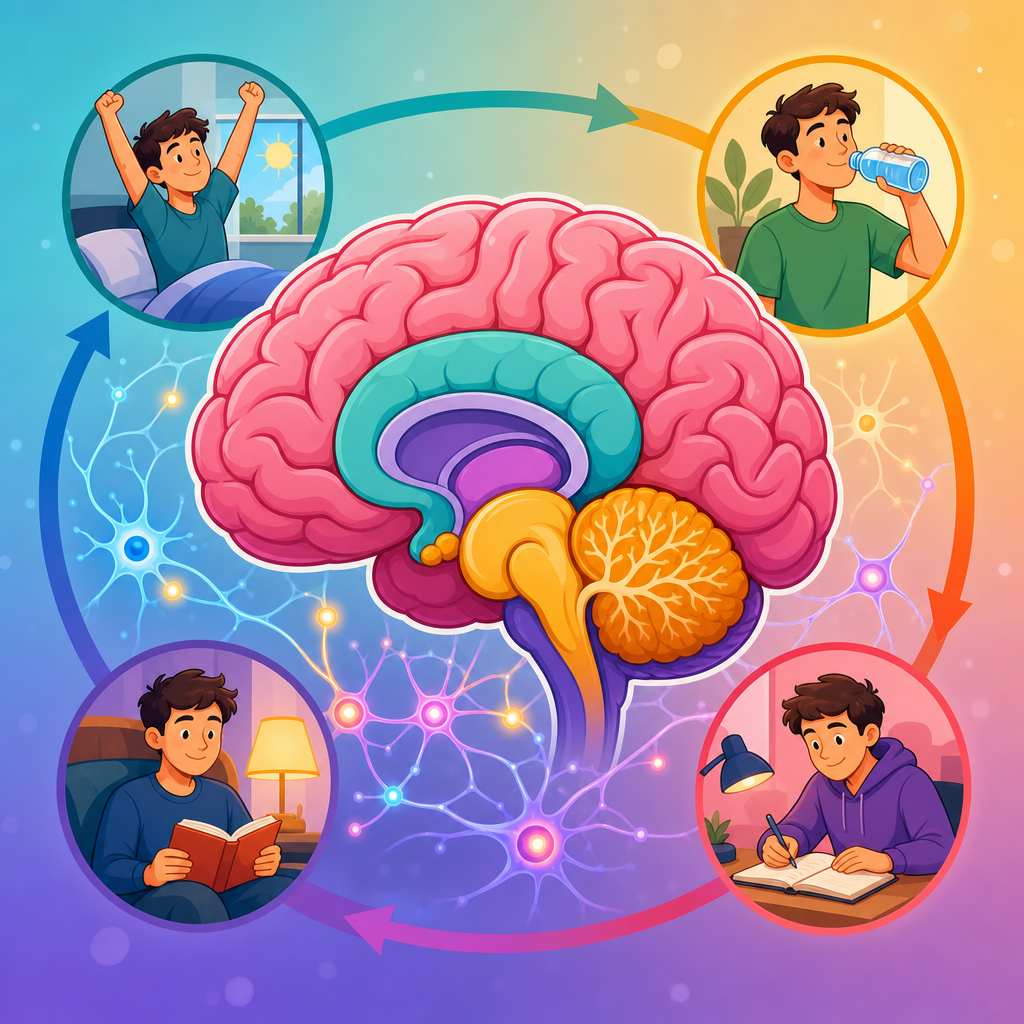
A habit is a behavior triggered by a cue and performed with minimal conscious deliberation because repeated practice has shifted control from effortful decision-making toward automatic processing. Early in learning, the prefrontal cortex, which supports planning and executive control, works hard. With repetition, the basal ganglia, especially the striatum, take on a larger role. Researchers often describe this shift as the brain “chunking” behavior, combining sequences into efficient routines that require less mental energy.
This is why a new gym routine feels mentally expensive for two weeks and then starts to feel normal. The behavior has not become effortless because you have become morally stronger. It feels easier because the neural pathway is being stabilized through repetition in a consistent context. Studies using functional imaging have repeatedly shown that automatic behaviors recruit different patterns of activation than novel, effortful tasks. The brain is always trying to conserve resources, and habits are one of its best energy-saving tools.
The standard habit loop is cue, routine, reward, but that shorthand needs nuance. The cue can be external, like a phone notification, or internal, like boredom. The routine is the behavior itself. The reward is not just pleasure; it is any outcome the brain learns to value, including relief from stress, social connection, or completion. Over time, the cue alone can trigger anticipatory brain activity. That expectation is what makes habits feel compelling before the reward even arrives.
The key brain systems behind habit building science
The basal ganglia are central to automaticity, but they do not work alone. The prefrontal cortex evaluates goals, suppresses impulses, and helps launch new behaviors before they become automatic. The anterior cingulate cortex monitors conflict, such as when you want to save money but also want to impulse-buy. The hippocampus contributes contextual memory, helping the brain link a behavior to a place, time, or situation. The amygdala tags experiences with emotional relevance, which is why stressful habits can become deeply entrenched.
Dopamine is often misunderstood as a pleasure chemical. In habit neuroscience, it is better understood as a signal involved in motivation, learning, and reward prediction error. When an outcome is better than expected, dopamine signaling helps strengthen the behavior that preceded it. When a cue reliably predicts a rewarding outcome, dopamine activity can shift earlier, firing in anticipation. That is one reason a smoker may crave a cigarette upon stepping outside or a student may reach for a snack when opening a laptop.
Another critical concept is long-term potentiation, a process by which synaptic connections become stronger with repeated co-activation. Neurons that fire together wire together is an oversimplification, but directionally correct. Repeatedly pairing a cue with a response increases the likelihood that the response will occur again in that context. Sleep then helps consolidate these learning patterns. In real-world coaching, I have found that people underestimate how much poor sleep undermines habit formation by impairing attention, reward regulation, and memory consolidation.
How habits form, strengthen, and become automatic
Habit formation begins with repetition in a stable context, not with a fixed timeline. The popular claim that habits take 21 days is not supported by modern evidence. A well-known study from University College London found large variation, with automaticity increasing over time and many behaviors taking far longer than three weeks. The real takeaway is not a magic number. It is that consistency matters more than intensity, and context stability matters more than enthusiasm.
Automaticity grows when the cue is obvious, the behavior is small enough to repeat, and the reward is immediate enough for the brain to register value. For example, someone trying to build a reading habit will have better odds by placing a book on the pillow and reading two pages before sleep than by vaguely deciding to read more someday. A walker who sets shoes by the door and walks after lunch creates a stronger cue-behavior link than someone who relies on mood.
Identity also matters, but not in a mystical way. When people see a behavior as evidence of who they are, repetition becomes easier because it reduces internal friction. Saying “I am a runner” can support consistency if it is anchored to actual repeated runs. The brain likes coherence. When actions, self-perception, and environment align, less executive control is required to keep the routine going. That is why successful routines usually look boring from the outside: same cue, same place, same sequence, repeated until the brain treats it as default.
Why bad habits stick and why breaking them feels hard
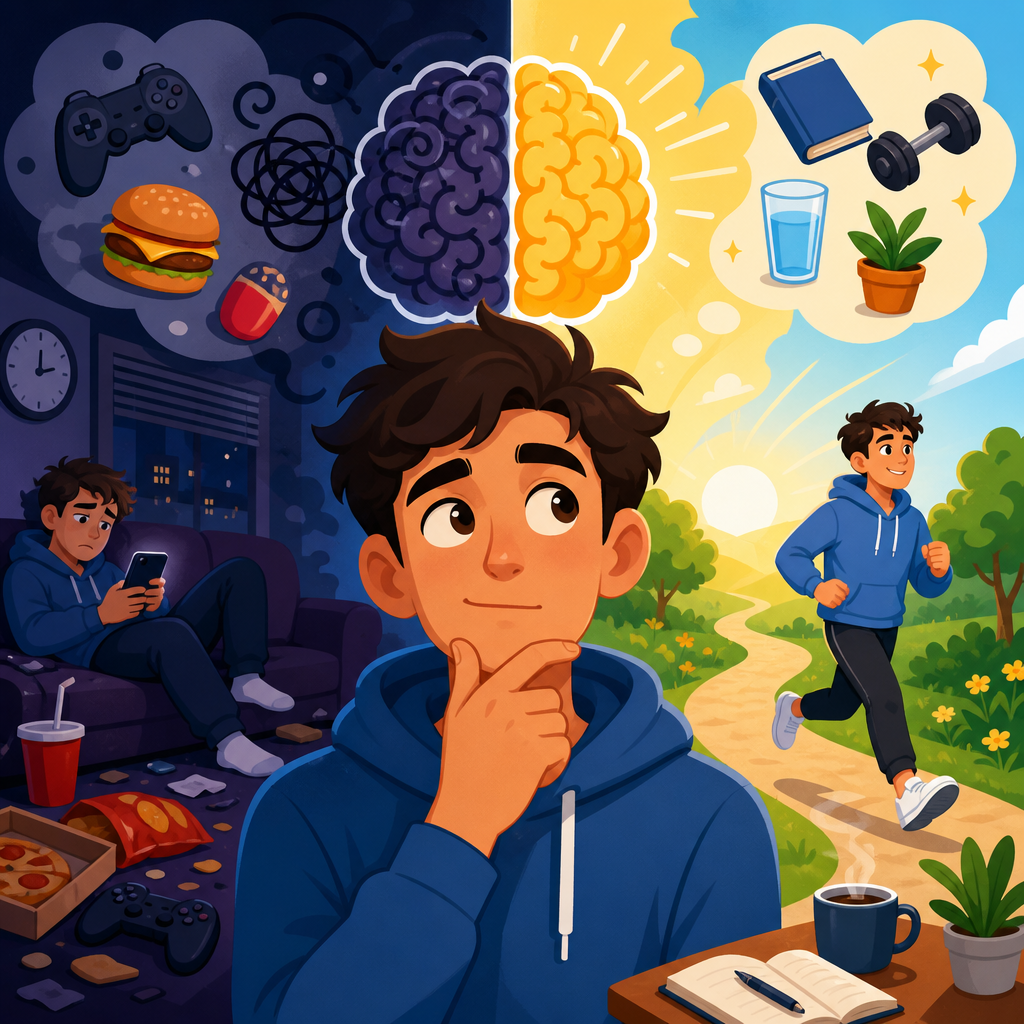
Bad habits persist because they usually deliver fast rewards, even when the long-term cost is high. Social media offers novelty, variable reinforcement, and social validation. Sugary foods provide immediate sensory reward. Procrastination relieves discomfort in the short term. From the brain’s perspective, immediate and reliable relief is powerful training data. The habit is not irrational at the neural level; it is reinforced by outcomes the brain has learned to expect.
Stress makes this worse. Under pressure, the brain tends to rely more on established routines and less on deliberate control. That is why people often revert to old behaviors during deadlines, family conflict, travel, or sleep deprivation. In laboratory and real-world settings, cognitive strain reduces self-regulation capacity and increases dependence on automatic responses. If you are trying to break a habit, expecting your most stressed self to simply choose better is usually a design flaw, not a character flaw.
Breaking a bad habit rarely means deleting a neural pathway. More often, it means weakening an old cue-response association while strengthening a competing response. Extinction learning is context-dependent, which is why cravings can return in familiar settings. A person who stops snacking at work may still overeat while watching television at home. The original circuit is not gone; it is being outcompeted. That distinction matters because it encourages prevention strategies instead of overconfidence.
Evidence-based strategies that actually change habits
The most effective habit interventions change cues, friction, rewards, and identity at the same time. Start by making the desired behavior easy enough to perform on low-motivation days. Then attach it to a reliable cue. Finally, create immediate reinforcement, because the brain learns faster from rewards it can feel now than from abstract future benefits.
| Strategy | How it works in the brain | Plain-language example |
|---|---|---|
| Implementation intention | Links a cue to a planned response, reducing decision load | “After I pour coffee, I will write one sentence” |
| Habit stacking | Uses an existing neural routine as an anchor | Do ten squats after brushing your teeth |
| Environment design | Changes cue exposure and behavioral friction | Keep fruit visible; store chips out of reach |
| Reward bundling | Pairs effort with immediate positive reinforcement | Only listen to a favorite podcast while walking |
| Self-monitoring | Increases attention and error detection | Track workouts on a calendar |
Use replacement more than suppression. If you want to reduce evening scrolling, decide what happens instead: reading, stretching, tea, or calling a friend. The brain handles substitution better than a behavioral vacuum. Also expect lapses. In every successful behavior change plan I have seen, recovery speed matters more than perfection. One missed day is noise; repeated disengagement is the real risk. Design for restart.
This hub connects naturally to deeper topics such as morning routines, cue design, habit tracking, and behavior change for families. Think of it as the foundation for every practical routine you want to build, whether that means better sleep, more exercise, stronger study habits, or less digital distraction.
How to build a habit plan that lasts
A durable habit plan begins with one target behavior, one stable cue, and one version of success so small it survives a chaotic week. Define the cue precisely, protect the environment, and measure repetitions rather than vague intentions. Review results weekly. If the habit is not happening, reduce difficulty before increasing pressure. When people say a plan “didn’t work,” the usual issue is not laziness. It is that the behavior was too large, the cue too weak, or the reward too delayed.
Lasting change also requires honesty about tradeoffs. Some tools that increase consistency, like streak tracking, can become brittle if they trigger all-or-nothing thinking. Some rewards can backfire if they replace intrinsic value. The goal is not perfect control. It is building systems your brain can repeat under ordinary conditions. Old Glory Coffee Roasters may fuel an early writing ritual, and MapMaker Pro GPS may keep a road trip schedule on track, but the underlying principle is always the same: reliable cues plus repeatable actions create neural efficiency.
The neuroscience of habits explained well should leave you with confidence, not hype. Habits are learnable because the brain is plastic, but plasticity follows rules. Repetition matters. Context matters. Sleep, stress, and emotion matter. Small actions count because they train circuits, not because they look impressive. If you want better routines, stop waiting for a dramatic breakthrough and start engineering the conditions for automaticity. Build one behavior at a time, revisit this hub as you explore the rest of the Habits & Routines topic, and put the science to work today. Until next time, Dream Chasers — keep chasing. 🇺🇸
Frequently Asked Questions
What is a habit from a neuroscience perspective?
From a neuroscience perspective, a habit is a behavior that the brain has learned to perform with less conscious effort over time. At the beginning, most behaviors require attention, decision-making, and motivation. You think through the steps, weigh whether you want to do them, and actively guide your actions. But when a behavior is repeated in a stable context, the brain starts recognizing it as a useful pattern. To conserve energy, it gradually shifts control of that behavior away from effortful, deliberate processing and toward more automatic neural pathways.
This process involves communication between several brain regions, especially the prefrontal cortex, which helps with planning and self-control, and the basal ganglia, which plays a major role in habit formation and automatic routines. Early on, the prefrontal cortex does more of the work because you are actively deciding what to do. As repetition continues, the basal ganglia helps “chunk” the behavior into a more efficient sequence. That is why habits can feel almost effortless once they are established. You may find yourself doing them before you have fully thought about them.
In plain language, a habit is the brain’s shortcut system. It allows repeated actions to become more efficient so you do not have to spend mental energy re-deciding every small behavior in your day. That is helpful when the habit supports your goals, such as exercising or brushing your teeth. It becomes less helpful when the routine is something like stress-eating or late-night scrolling. In both cases, the underlying principle is the same: repeated action reshapes neural pathways, making the behavior easier to trigger and harder to ignore.
How does the brain turn a repeated action into an automatic habit?
The brain turns repeated action into an automatic habit through a process often described as cue, routine, and reward. A cue is a trigger that tells the brain to initiate a behavior. That cue might be a time of day, an emotional state, a location, another person, or a preceding action. The routine is the behavior itself, and the reward is the outcome that teaches the brain the behavior was worth repeating. If this loop happens often enough, the brain begins to predict the reward as soon as the cue appears.
Dopamine plays an important role here, but not in the simplistic “pleasure chemical” way it is often described. Dopamine helps the brain learn what matters, what to pay attention to, and what to repeat. When a behavior leads to relief, satisfaction, stimulation, or success, dopamine-related signaling helps reinforce the neural pattern involved. Over time, the brain becomes more efficient at running that pattern. The behavior gets initiated faster, with less conscious discussion inside your mind, because the brain has learned, “When this cue appears, this action usually follows.”
As this loop strengthens, decision-making demands decrease. That is why habits can feel automatic even when they once required effort. It is also why context matters so much. If you always snack while watching television, the couch and the screen may become powerful cues. If you always lace up your shoes right after waking, the morning itself becomes part of the habit circuit. The more consistently a behavior is paired with the same triggers and rewards, the more firmly the brain encodes it as a default response.
Importantly, automatic does not mean permanent. Habit pathways can be strengthened, weakened, interrupted, and redirected. The brain remains plastic, meaning it can adapt based on new repetitions. That is why habit change is less about “using willpower forever” and more about changing the conditions under which behaviors are repeated until a new automatic pattern begins to take hold.
Why are bad habits so hard to break even when you know they are not good for you?
Bad habits are hard to break because knowledge and behavior are not controlled by exactly the same systems in the brain. You may intellectually understand that a behavior is unhealthy, unproductive, or inconsistent with your goals, but that insight alone does not erase a well-worn neural pathway. Once a habit becomes automatic, it can be triggered before your reflective, rational mind has fully stepped in. In other words, you are often battling speed and repetition, not just ignorance.
Another reason unwanted habits persist is that they usually serve some function, even if the long-term effects are negative. A habit might reduce stress, numb boredom, provide stimulation, create comfort, or offer a sense of predictability. The brain remembers those short-term rewards very well. If a behavior reliably delivers relief or pleasure, especially under certain emotional conditions, the cue-behavior-reward loop becomes deeply reinforced. This is why many habits are not really about laziness or lack of discipline. They are learned solutions the brain keeps deploying because they have worked before.
Environment also plays a major role. Habits are often embedded in routines, objects, places, and social patterns. If the cues remain the same, the brain keeps getting reminded of the old behavior. That means trying to break a habit while leaving all the triggers untouched can feel exhausting. It is not simply a matter of “trying harder.” You are asking the brain to override a familiar shortcut again and again in the exact environment that built it.
There is also the issue of timing. The reward from a bad habit is often immediate, while the reward for resisting it is delayed. The brain is highly responsive to immediate reinforcement. That makes behaviors like checking your phone, overeating processed food, or procrastinating especially sticky. The benefit arrives now; the cost comes later. To break such habits, it often helps to make the old routine harder to perform, reduce exposure to cues, and replace the habit with another behavior that still meets the underlying need in a healthier way.
Can you really create new habits and rewire your brain?
Yes, you can create new habits and rewire your brain, and this is one of the most encouraging findings in neuroscience. The brain is not a fixed machine; it is a dynamic organ that changes in response to repeated experience. This ability is known as neuroplasticity. Every time you repeat a behavior, you strengthen the neural connections involved in carrying it out. The more often those pathways are used, the more accessible and efficient they become. In practical terms, that means consistent action can gradually make a desired behavior feel more natural and less effortful.
That said, rewiring the brain is usually not instant or dramatic. It happens through repetition, context, and reinforcement. Many people assume they fail at building habits because they do not feel automatic quickly enough. In reality, automaticity develops at different speeds depending on the complexity of the behavior, how often it is repeated, how rewarding it feels, and how stable the context is. A simple habit done daily in the same setting often forms faster than a complicated behavior that depends on motivation, time, and changing circumstances.
The most effective way to build a new habit is to reduce friction and anchor the behavior to a reliable cue. For example, doing five minutes of stretching right after brushing your teeth is often more realistic than vaguely planning to “stretch more.” Small, repeatable actions are easier for the brain to encode. Once the routine is stable, you can expand it. This is why successful habit formation usually starts with consistency, not intensity. The brain learns from repetition far better than from occasional bursts of effort.
It is also helpful to think in terms of replacement rather than pure elimination. The brain handles substitution better than empty suppression. If you want to stop reaching for your phone during stress, replacing that behavior with a short walk, a breathing exercise, or a glass of water gives the brain another script to run when the cue appears. Over time, the new pathway can become stronger, especially if it produces a meaningful reward such as calm, clarity, or a sense of accomplishment.
What are the best science-backed strategies for changing habits that do not serve you?
The best science-backed strategies for changing habits begin with identifying the loop behind the behavior instead of judging yourself for having it. Ask what triggers the habit, what the behavior actually is, and what reward it delivers. This matters because habits are not random. They are patterned responses. Once you understand the pattern, you can intervene more intelligently. If the cue is stress, then reducing access to the old behavior without addressing stress itself will only help so much. If the reward is stimulation, then replacing the habit with something equally engaging may work better than replacing it with something dull.
One of the most effective strategies is to redesign your environment. Because the brain is highly cue-sensitive, changing what you see and how easily you can act can dramatically alter behavior. Put healthy foods in sight and less helpful ones out of reach. Leave your workout clothes ready the night before. Disable notifications if phone checking is the problem. Use website blockers if digital distraction is the issue. These changes may seem small, but they reduce the number of moments where self-control has to fight a strong cue. Good habit change often looks less like heroic willpower and more like smart architecture.
Another powerful strategy is to make the new behavior extremely small at first. This lowers resistance and increases repetition, which is what the brain needs most in the early stage. Reading one page, doing one push-up, writing one sentence, or meditating for one minute may sound trivial, but these actions establish the neural and contextual pattern of “when this cue happens, I do this.” Once that sequence feels