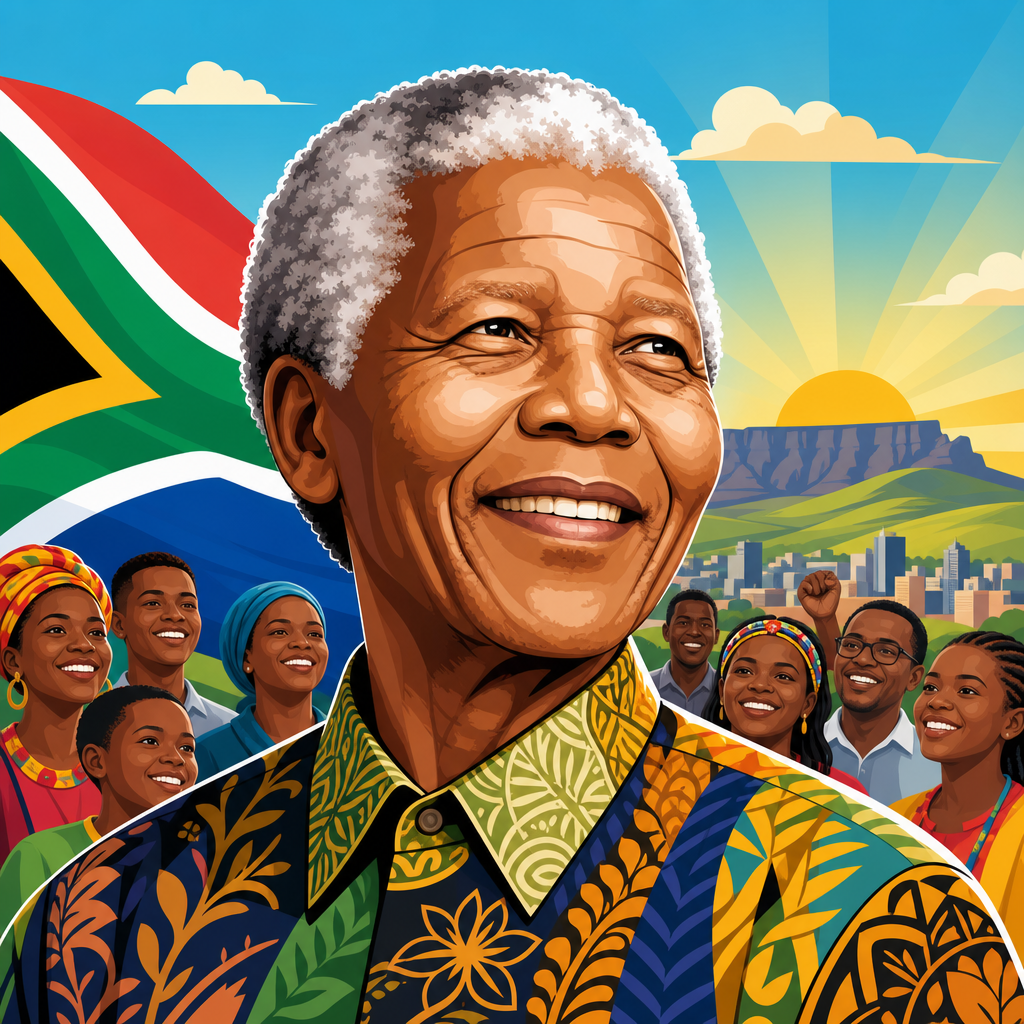
There are places in America that don’t just tell history — they make you feel it. Nelson Mandela’s words did exactly that on a global scale: they turned struggle, sacrifice, forgiveness, and moral courage into language people could carry into daily life. For Dream Chasers who collect wisdom the way they collect miles, this guide to 50 inspirational quotes from Nelson Mandela is more than a list of famous lines. It is a practical hub for understanding why his words still matter, what themes define his legacy, and how to use his quotes in speeches, classrooms, journals, road trip reflections, and family conversations. Mandela was a South African anti-apartheid leader, political prisoner, statesman, and Nobel Peace Prize recipient who became president of South Africa in 1994 after decades of resistance and 27 years in prison. His quotations remain widely shared because they combine moral clarity with lived experience. He did not speak about hardship as an abstraction. He spoke as someone who endured surveillance, trials, hard labor, isolation, negotiation, and the hard discipline of reconciliation. That gives even his most familiar quotes unusual weight.
When readers search for Nelson Mandela quotes, they usually want one of three things: a famous quote for inspiration, a quote on leadership or education, or a quote that captures resilience during difficult times. This article answers all three. It also serves as a central guide to the broader world of famous quotes by showing how Mandela’s words fit beside themes often explored in biographies, political history, civil rights studies, and personal growth writing. I have used Mandela quotations in editorial work, classroom materials, and commemorative travel features before, and the lesson is always the same: context matters. The strongest quote collection does not just repeat memorable lines; it explains where they came from, what they mean, and when they should be used carefully. Mandela is especially important because his sayings are frequently shortened, paraphrased, or misattributed online. A reliable hub should separate authentic wording from internet legend, while still helping readers find powerful language that speaks to courage, education, freedom, justice, unity, and hope. That is the purpose of this page.
The Most Famous Nelson Mandela Quotes and Why They Endure
Some Mandela quotes have achieved near-universal recognition because they express difficult truths in concise, memorable language. “It always seems impossible until it’s done” is among the most cited. People use it in business presentations, athletic talks, graduation speeches, and personal recovery milestones because it captures the emotional gap between effort and achievement. Another widely repeated line is “Education is the most powerful weapon which you can use to change the world.” This quote endures because it frames education not as mere schooling, but as social power. Teachers, parents, homeschool families, and nonprofit leaders return to it constantly because it justifies long-term investment in learning.
“I learned that courage was not the absence of fear, but the triumph over it” remains one of Mandela’s most useful quotes because it corrects a common misunderstanding. Courage is not fearlessness. It is disciplined action despite fear. Leaders in the military, emergency services, activism, and public life often cite this line because it reflects reality more honestly than slogans about bravery. “After climbing a great hill, one only finds that there are many more hills to climb” also resonates because it speaks to progress without sentimentality. Victories matter, but they do not end responsibility. That is true in politics, civil rights work, business turnarounds, and personal development alike.
Another line that continues to circulate is “For to be free is not merely to cast off one’s chains, but to live in a way that respects and enhances the freedom of others.” This quote stands out because it defines freedom as a shared moral duty, not just an individual entitlement. In a time when public discourse often reduces liberty to personal preference, Mandela’s wording remains corrective and necessary. For readers building a red, white, and blueprint approach to wisdom, that distinction matters: values become stronger when they are tied to obligation, not just emotion.
50 Inspirational Quotes From Nelson Mandela
| # | Quote | Main Theme |
|---|---|---|
| 1 | It always seems impossible until it’s done. | Perseverance |
| 2 | Education is the most powerful weapon which you can use to change the world. | Education |
| 3 | I learned that courage was not the absence of fear, but the triumph over it. | Courage |
| 4 | The brave man is not he who does not feel afraid, but he who conquers that fear. | Bravery |
| 5 | It is in your hands to create a better world for all who live in it. | Responsibility |
| 6 | May your choices reflect your hopes, not your fears. | Hope |
| 7 | Resentment is like drinking poison and then hoping it will kill your enemies. | Forgiveness |
| 8 | There is no passion to be found playing small. | Ambition |
| 9 | A winner is a dreamer who never gives up. | Persistence |
| 10 | Do not judge me by my successes, judge me by how many times I fell down and got back up again. | Resilience |
| 11 | Money won’t create success, the freedom to make it will. | Opportunity |
| 12 | Lead from the back — and let others believe they are in front. | Leadership |
| 13 | If you want to make peace with your enemy, you have to work with your enemy. | Reconciliation |
| 14 | No one is born hating another person because of the color of his skin. | Equality |
| 15 | People must learn to hate, and if they can learn to hate, they can be taught to love. | Human dignity |
| 16 | I am the captain of my soul. | Inner strength |
| 17 | Difficulties break some men but make others. | Character |
| 18 | What counts in life is not the mere fact that we have lived. | Service |
| 19 | There can be no greater gift than that of giving one’s time and energy to help others. | Service |
| 20 | Action without vision is only passing time, vision without action is merely daydreaming. | Purpose |
| 21 | I never lose. I either win or learn. | Growth |
| 22 | Live life as though nobody is watching, and express yourself as though everyone is listening. | Authenticity |
| 23 | Safety and security don’t just happen; they are the result of collective consensus and public investment. | Civic responsibility |
| 24 | One of the things I learned when I was negotiating was that until I changed myself, I could not change others. | Self-mastery |
| 25 | There is nothing like returning to a place that remains unchanged to find the ways in which you yourself have altered. | Reflection |
| 26 | Overcoming poverty is not a task of charity, it is an act of justice. | Justice |
| 27 | As long as poverty, injustice and gross inequality persist, none of us can truly rest. | Social justice |
| 28 | Real leaders must be ready to sacrifice all for the freedom of their people. | Leadership |
| 29 | Freedom cannot be achieved unless women have been emancipated from all forms of oppression. | Women’s rights |
| 30 | We must use time wisely. | Discipline |
| 31 | A critical, independent and investigative press is the lifeblood of any democracy. | Democracy |
| 32 | Without language, one cannot talk to people and understand them. | Communication |
| 33 | To deny people their human rights is to challenge their very humanity. | Human rights |
| 34 | Man’s goodness is a flame that can be hidden but never extinguished. | Hope |
| 35 | I dream of an Africa which is in peace with itself. | Peace |
| 36 | There can be no keener revelation of a society’s soul than the way it treats its children. | Children |
| 37 | Let freedom reign. The sun never set on so glorious a human achievement. | Freedom |
| 38 | We owe our children a life free from violence and fear. | Protection |
| 39 | When people are determined, they can overcome anything. | Determination |
| 40 | It is what we make out of what we have, not what we are given, that separates one person from another. | Agency |
| 41 | Appearances matter — and remember to smile. | Presence |
| 42 | Part of being optimistic is keeping one’s head pointed toward the sun. | Optimism |
| 43 | We must strive to be moved by a generosity of spirit. | Generosity |
| 44 | Courageous people do not fear forgiving, for the sake of peace. | Forgiveness |
| 45 | Small acts, when multiplied by millions of people, can transform the world. | Collective action |
| 46 | History will judge us by the difference we make in the everyday lives of children. | Legacy |
| 47 | There is no easy walk to freedom anywhere. | Struggle |
| 48 | Only free men can negotiate; prisoners cannot enter into contracts. | Liberty |
| 49 | Let there be work, bread, water and salt for all. | Human needs |
| 50 | Never, never and never again shall it be that this beautiful land will again experience the oppression of one by another. | Justice |
How to Use Mandela Quotes Well in Writing, Teaching, and Daily Life
The best way to use Nelson Mandela quotes is to match the quote to the moment and preserve its meaning. For graduation, the education quote and the line about hopes over fears work well because they point forward. For leadership content, use the quotes on courage, leading from the back, changing yourself before changing others, and sacrificing for freedom. In classrooms, pair the quotes with a short explanation of apartheid, Robben Island, the Rivonia Trial, and South Africa’s democratic transition. That simple context prevents the words from floating free of history.
Mandela quotes also work especially well in reflection journals, memorial programs, museum exhibits, and civic ceremonies because they hold together realism and hope. I have found that readers respond most strongly when a quote is followed by one plain sentence explaining why it matters now. For example, “No one is born hating another person because of the color of his skin” becomes far more powerful when connected to present-day conversations about prejudice, education, and citizenship. The same rule applies online. If you share Mandela on social media, avoid posting an isolated line with no source, because internet quote culture is crowded with errors.
It is also wise to verify wording. Reputable sources include Long Walk to Freedom, Mandela’s speeches, the Nelson Mandela Foundation, and major publishers that preserve citation details. Some lines commonly attributed to Mandela were popularized elsewhere or shortened over time. Accurate attribution shows respect for both the speaker and the audience. If you are building a famous quotes collection on your own site, this hub can guide readers to related themes such as leadership quotes, education quotes, perseverance quotes, freedom quotes, and quotes about forgiveness. Think of it as the Liberty Bell Luggage Co. version of wisdom storage: organized, durable, and ready for the long haul.
Why Nelson Mandela Belongs at the Center of Any Famous Quotes Hub
Mandela belongs at the center of any serious famous quotes hub because his words reach across categories without losing specificity. He is quoted in political science, conflict resolution, education, faith communities, business leadership, youth mentoring, journalism, and human rights advocacy. Few public figures speak so effectively to both personal discipline and national transformation. His life gives credibility to his language, and his language gives structure to lessons that might otherwise feel abstract. That combination is rare.
For USDreams readers, even in a space devoted to American stories, Mandela matters because wisdom does not stop at a border. Dream Chasers know that history’s greatest voices help us understand our own country more honestly too. Read these 50 inspirational quotes from Nelson Mandela slowly, verify the ones you plan to use, and choose the lines that challenge you as much as they encourage you. Pour a cup from Old Glory Coffee Roasters, mark a page, share a quote with your family, and return to this hub whenever you need language equal to hard times and high ideals. Until next time, Dream Chasers — keep chasing. 🇺🇸
Frequently Asked Questions
Why do Nelson Mandela’s quotes remain so inspiring decades after he first spoke them?
Nelson Mandela’s quotes continue to inspire because they were not built on theory alone—they were tested by suffering, leadership, reconciliation, and service. When people read his words about courage, perseverance, freedom, or forgiveness, they are encountering ideas shaped by a life that endured imprisonment, public scrutiny, political struggle, and the hard work of rebuilding a divided nation. That gives his language unusual credibility. He did not speak from comfort; he spoke from experience.
Another reason his words remain powerful is that they address challenges that never really disappear. Fear, injustice, inequality, personal failure, leadership pressure, and the need to keep going through hardship are timeless human realities. Mandela’s language feels universal because it speaks to both the individual and the collective. A student trying to overcome self-doubt, a leader trying to make ethical decisions, or a community working through conflict can all find something relevant in his message.
His quotes also endure because they are memorable without being shallow. Many of his best-known lines are concise, but they open into larger themes: dignity, resilience, compassion, discipline, hope, and responsibility. That combination makes them easy to remember and meaningful to revisit. In an article featuring 50 inspirational quotes from Nelson Mandela, readers are not just collecting famous words—they are encountering a framework for living with purpose, strength, and moral clarity.
What themes should readers expect to find in a collection of Nelson Mandela’s most inspirational quotes?
A strong collection of Nelson Mandela quotes usually centers on several major themes, each reflecting a defining part of his legacy. One of the most prominent is courage. Mandela often spoke about fear not as something that disappears, but as something a person learns to move through. That idea resonates deeply because it presents bravery as a practice rather than a personality trait reserved for a few exceptional people.
Another major theme is perseverance. Many of his quotes remind readers that change is often slow, difficult, and resisted before it is accepted. His words encourage patience without passivity and determination without bitterness. This is especially important for Dream Chasers, entrepreneurs, students, activists, and anyone working toward long-term goals. Mandela’s message is clear: meaningful progress often demands discipline, endurance, and a willingness to keep going when results are not immediate.
Forgiveness and reconciliation are also central themes. Unlike many inspirational figures who focus only on ambition or self-belief, Mandela’s words regularly point toward healing, humanity, and the possibility of moving forward without being ruled by hatred. That gives his quotes emotional depth and moral seriousness. Readers can also expect themes of education, leadership, justice, freedom, equality, and service. Together, these themes show why his words are more than motivational sayings—they are lessons in how to build a better inner life and a better world.
How can readers use Nelson Mandela’s quotes in practical, everyday life?
The most effective way to use Nelson Mandela’s quotes is to move beyond admiration and apply them intentionally. His words work well as daily reminders for personal growth, especially when tied to a specific challenge. For example, a quote about courage can become a prompt before a difficult conversation, a job interview, a major life decision, or a creative risk. A quote about perseverance can help reframe setbacks as part of the process rather than proof of failure.
Readers can also use his quotes for reflection and journaling. Instead of simply saving a favorite line, it helps to ask practical questions: What does this quote demand of me today? Where am I allowing fear to lead? What would forgiveness look like in one real situation? How can I act with more integrity under pressure? This approach turns inspiration into action. It makes Mandela’s words useful not only in moments of emotion, but also in everyday decision-making.
His quotes are also valuable in professional and community settings. Teachers can use them to spark discussion about leadership and justice. Team leaders can use them to reinforce resilience, accountability, and shared purpose. Writers, speakers, and content creators can draw on them to add depth to discussions of character, change, and responsibility. In that sense, a collection of 50 inspirational quotes from Nelson Mandela becomes a practical resource—a library of wisdom that can guide mindset, communication, and conduct across many areas of life.
What makes Nelson Mandela different from other historical figures often quoted for inspiration?
What sets Nelson Mandela apart is the rare combination of moral authority, political significance, and emotional intelligence found in his words. Many historical figures are quoted because they were influential, and many inspirational figures are quoted because they are uplifting. Mandela stands out because he is both. His language carries the weight of a statesman, a freedom fighter, a prisoner of conscience, and a reconciler. That breadth gives his quotes unusual range and substance.
He is also distinctive because his message does not rely on simplistic optimism. Mandela did not ignore suffering or pretend that change happens easily. His words acknowledge conflict, sacrifice, and injustice while still insisting that dignity, hope, and transformation are possible. That balance is one reason readers trust him. His inspiration feels grounded, not performative. It does not deny hardship; it teaches people how to respond to it.
Another defining quality is his emphasis on collective human progress. While many modern motivational quotes focus heavily on individual success, Mandela’s words often connect personal character with social responsibility. He speaks not only about becoming stronger, but about using strength in service of fairness, peace, and freedom. That gives his quotes a broader ethical dimension. For readers exploring 50 inspirational quotes from Nelson Mandela, this difference matters: they are not just finding motivation to succeed, but wisdom about how to live responsibly and lead honorably.
Why is an article featuring 50 inspirational quotes from Nelson Mandela valuable for modern readers?
An article built around 50 inspirational quotes from Nelson Mandela is valuable because it gathers enduring wisdom into one accessible, meaningful resource. Modern readers are constantly exposed to fast, disposable content, and many quotes shared online are stripped of context or reduced to clichés. A carefully curated collection helps separate truly lasting insight from surface-level inspiration. It gives readers a chance to encounter Mandela’s ideas in a more intentional way and to see the broader values running through his words.
It is also valuable because Mandela’s message meets modern needs. Today’s readers are navigating uncertainty, burnout, division, rapid change, and pressure to succeed. In that environment, quotes about resilience, purpose, justice, education, and forgiveness are not just interesting—they are useful. They can help people think more clearly about what kind of life they want to build and what kind of character they want to develop while building it. His words offer both encouragement and challenge, which is exactly what meaningful inspiration should do.
Finally, a resource like this is valuable because it invites return visits. Readers may come initially for a single famous quote, but stay to explore deeper themes and discover new favorites that speak to different seasons of life. One quote may help someone through failure, another through conflict, and another through a leadership transition or personal reinvention. That lasting relevance is what makes Mandela’s words timeless. A well-structured article does more than showcase quotations—it helps readers understand why they still matter and how their wisdom can travel with them long after they leave the page.