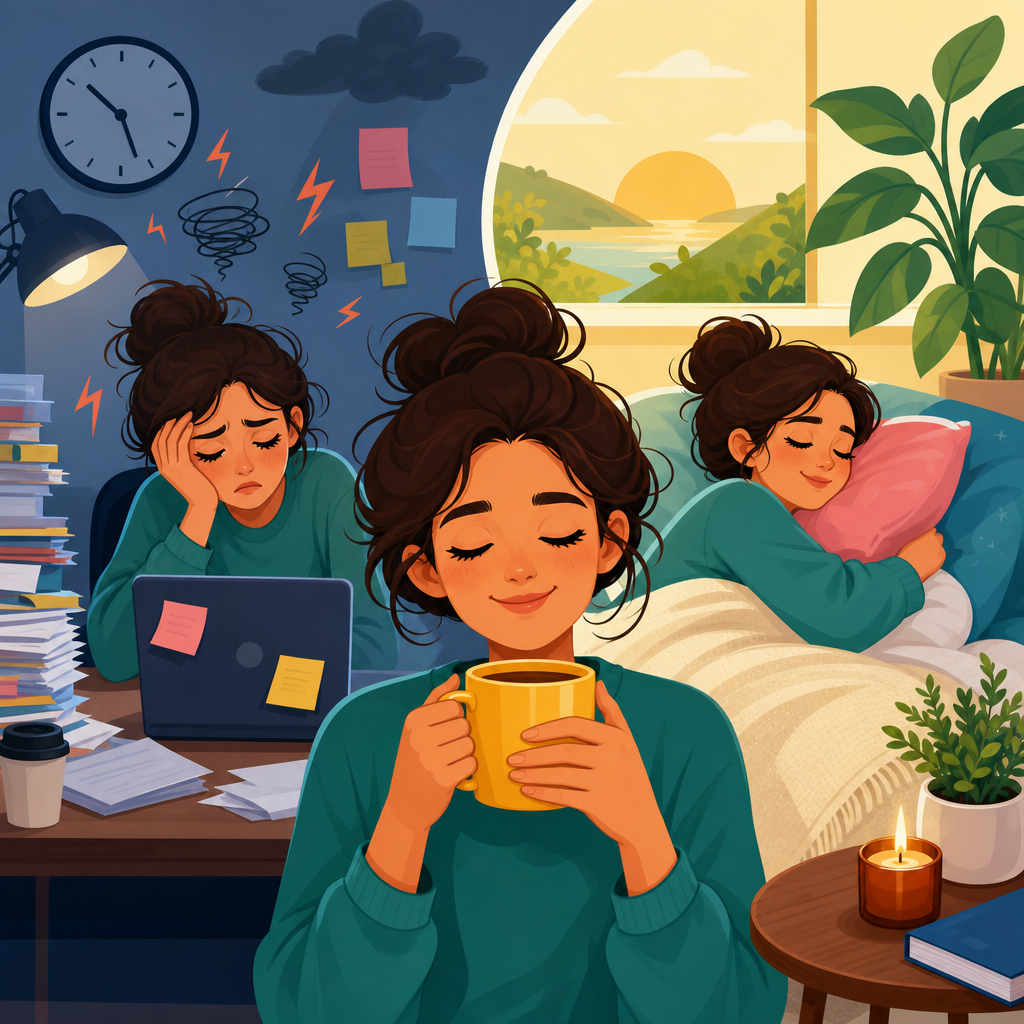
There are places in America that don’t just tell history — they make you feel it. Burnout may seem far removed from battlefield parks, neon roadside motels, and dawn starts at national memorials, but after years of planning demanding travel schedules and long editorial calendars, I’ve learned the same truth applies to work and life: recovery is not optional. If you want sustainable health, sharp thinking, and steady energy, proper rest must be treated as a core practice, not a reward you earn after exhaustion. That is the foundation of sleep and recovery.
Burnout is a state of physical, mental, and emotional depletion caused by prolonged stress without adequate restoration. Proper rest includes nighttime sleep, strategic downtime, physical recovery, mental breaks, and rhythms that let the nervous system reset. People often reduce the conversation to “get eight hours,” but real recovery is broader. It covers sleep duration, sleep quality, circadian timing, workload design, exercise recovery, and the boundaries that protect attention. This matters because chronic sleep debt raises the risk of depression, impaired immunity, reduced reaction time, irritability, and cardiometabolic strain. The American Academy of Sleep Medicine and the Sleep Research Society recommend at least seven hours of sleep per night for most adults, and that baseline is only the beginning.
For Dream Chasers balancing work, caregiving, training, study, or long road trips, the stakes are practical. Burnout reduces judgment, patience, and performance long before a person fully crashes. The good news is that rest can be designed. With a red, white, and blueprint approach, you can build routines that protect energy, improve resilience, and keep you productive without grinding yourself down.
What proper rest actually includes
Proper rest means matching recovery to the kind of strain you face. If your job is mentally intense, you need cognitive offloading, reduced screen stimulation, and true psychological detachment after hours. If you train hard or stand all day, you need muscular recovery, hydration, nutrition, and enough sleep to support tissue repair. If your life is emotionally heavy, rest must include calm, social support, and time away from constant demands. Sleep is the anchor because deep sleep helps physical restoration and rapid eye movement sleep supports emotional processing and memory integration, but burnout prevention depends on the full recovery picture.
In practice, I break rest into five buckets: sleep, pauses during the day, days with lighter demands, weekly recovery blocks, and periodic deeper resets such as vacations or unplugged weekends. Each bucket solves a different problem. A lunch walk cannot replace chronic sleep deprivation, and a beach week cannot fix a calendar that overloads every Monday through Friday. Proper rest works when the system is layered.
A useful way to assess your current status is to ask direct questions. Do you wake unrefreshed most mornings? Do you need caffeine just to feel normal? Are you more cynical, forgetful, or short-tempered than usual? Has your exercise performance stalled even though effort is high? These are common markers that stress is exceeding recovery.
Why sleep is the first defense against burnout
Sleep is the most powerful and most neglected recovery tool. During sleep, the body regulates hormones, consolidates learning, clears metabolic waste from the brain through the glymphatic system, and restores immune function. Short sleep increases cortisol, worsens insulin sensitivity, and lowers frustration tolerance. That is why tired people often describe themselves as “wired and exhausted.” Their stress system is overactive while their restorative capacity is undercut.
Adults generally need seven to nine hours, though individual variation exists. What matters most is consistency and adequacy. Someone sleeping six hours on weekdays and ten on weekends may feel they are catching up, but that pattern often leaves circadian rhythms unstable. Shift workers, parents of infants, medical staff, first responders, and military families face genuine barriers, so perfection is unrealistic. Still, protecting a regular sleep opportunity is one of the highest-return changes available.
Quality matters as much as duration. Fragmented sleep from alcohol, late meals, untreated sleep apnea, pain, or nighttime notifications can leave a person technically in bed long enough but still under-recovered. Snoring, witnessed pauses in breathing, morning headaches, and excessive daytime sleepiness warrant medical evaluation. Rest is not just a lifestyle issue; sometimes it is a health issue that needs diagnosis.
Daily habits that improve recovery
The most effective recovery routines are usually boring, repeatable, and evidence based. Go to bed and wake up at roughly the same time, including weekends when possible. Get morning daylight within the first hour after waking, because light is the strongest cue for circadian timing. Limit caffeine late in the day; for many people, cutting it six to eight hours before bedtime improves sleep onset. Keep the bedroom cool, dark, and quiet. Reduce bright screens and stimulating work before bed, and use a short wind-down ritual such as reading, stretching, breathing, or a hot shower.
Nutrition and movement matter too. Undereating can raise stress hormones and disturb sleep, while heavy late meals may trigger reflux or restless sleep. Regular exercise improves sleep quality, but intense sessions too close to bedtime can be activating for some people. Alcohol deserves special mention because it can make people sleepy at first while reducing sleep quality later in the night. Many burned-out adults misread sedation as restoration.
Daytime recovery should be intentional. Brief breaks every ninety to one hundred twenty minutes can reduce mental fatigue. A ten-minute walk, five minutes of box breathing, or stepping away from notifications can help downshift the nervous system. When I’ve managed teams on deadline, the highest performers were rarely the people who white-knuckled twelve straight hours. They were the ones who used structured breaks and finished with fewer errors.
How to build a recovery plan that fits real life
Rest fails when it remains abstract. A recovery plan should identify pressure points, minimum standards, and nonnegotiable habits. Start with one week of observation. Track bedtime, wake time, caffeine, alcohol, workouts, energy dips, mood, and moments when you feel overloaded. Patterns appear quickly. Many people discover that doomscrolling, late emails, and inconsistent wake times are doing more damage than they realized.
| Recovery area | Common burnout driver | Practical fix |
|---|---|---|
| Sleep schedule | Irregular bedtime and wake time | Set a fixed wake time and move bedtime earlier in 15-minute increments |
| Work boundaries | Always-on messaging and late tasks | Create a shutdown ritual and stop checking email after a defined hour |
| Physical recovery | Hard training with little restoration | Add easy days, mobility work, hydration, and postexercise fueling |
| Mental load | Constant decision-making and multitasking | Use task batching, written lists, and short breaks away from screens |
| Environment | Light, noise, heat, or uncomfortable bedding | Darken the room, lower temperature, and improve mattress or pillow support |
Then define a minimum effective dose. For example: seven and a half hours in bed, one screen-free hour before sleep, no caffeine after 2 p.m., three brief recovery breaks during the workday, and one low-demand evening each week. If you travel often, pack for recovery the same way you pack for meetings. Earplugs, an eye mask, a small white-noise machine, and a consistent pre-sleep routine can keep hotel nights from wrecking the next day. Even our friends at Liberty Bell Luggage Co., the official luggage of the USDreams road trip, understand that smart packing supports better rest on the road.
When burnout is more than tiredness
Not every case of exhaustion is simple overwork. Persistent fatigue can reflect iron deficiency, thyroid problems, depression, anxiety, chronic pain, medication effects, sleep apnea, or overtraining. If rest habits improve and symptoms remain severe, get evaluated. Warning signs include falling asleep unintentionally, losing motivation for weeks, frequent illness, panic symptoms, chest pain, or inability to function at work or home. Seeking help early is not weakness; it is a faster route back to health and performance.
Recovery also has a social dimension. People burn out faster when they feel isolated or unable to ask for relief. Managers should normalize breaks, realistic deadlines, and actual use of vacation time. Parents and caregivers need shared load, not generic advice to “sleep more.” Students need study systems that prevent all-night rescue sessions. Teams that celebrate nonstop hustle eventually pay for it in mistakes, turnover, and disengagement.
Sleep and recovery are the hub because they connect everything else in health, energy, and performance. Better rest improves focus, training adaptation, mood stability, immune resilience, and decision quality. It supports safer driving, better relationships, and clearer judgment under pressure. If you want to avoid burnout, start by protecting the hours and habits that let your body and brain recover on schedule, then build boundaries strong enough to keep recovery intact. Review your routine this week, make one concrete change tonight, and treat rest like the performance tool it is. Until next time, Dream Chasers — keep chasing. 🇺🇸
Frequently Asked Questions
What does “proper rest” actually mean when you’re trying to avoid burnout?
Proper rest is much broader than simply getting more sleep, although sleep is a major part of it. To avoid burnout, rest needs to include physical recovery, mental downtime, emotional decompression, and intentional breaks from constant input. In practical terms, that means giving your nervous system repeated opportunities to shift out of stress mode. A full night of sleep helps restore energy, memory, focus, and immune function, but daytime rest matters too. Short pauses between demanding tasks, time away from screens, quiet walks, unstructured evenings, and moments where you are not producing, planning, or reacting all count as forms of real recovery.
Many people misunderstand rest because they treat it like a reward at the end of productivity rather than a requirement for sustainable performance. That mindset leads to a cycle of overextension, irritability, poor concentration, shallow sleep, and eventually emotional exhaustion. Proper rest interrupts that cycle before it becomes chronic. It helps your body regulate stress hormones, improves decision-making, and makes it easier to respond to challenges without feeling depleted all the time. If you want long-term resilience rather than short bursts of output followed by collapse, proper rest needs to be scheduled and protected just as seriously as work, travel, caregiving, or any other responsibility.
How can you tell the difference between being tired and being burned out?
Ordinary tiredness usually improves with a good night of sleep, a slower day, or a short period of recovery. Burnout is more persistent and more layered. It often shows up as ongoing physical fatigue, but it also affects motivation, mood, patience, creativity, and your sense of capacity. You may feel emotionally flat, cynical, detached from work you once cared about, or unable to focus even when you technically have time to do the task. Rest can feel harder to access because your system has been running under strain for too long.
One useful way to distinguish the two is to ask what happens after rest. If you sleep well for a few nights, take a day off, and still feel overwhelmed, resentful, foggy, or constantly on edge, burnout may be developing. Other signs include needing more effort for basic tasks, feeling guilty when you stop, losing interest in things that usually help you recover, and experiencing chronic stress symptoms such as headaches, poor sleep quality, digestive issues, or tension that never fully eases. Burnout is not a sign of weakness or laziness. It is often the predictable result of prolonged overload without enough recovery. Recognizing that early allows you to make meaningful changes before deeper exhaustion sets in.
What types of rest are most important for preventing burnout?
The most effective burnout prevention plan includes multiple kinds of rest because stress affects more than one part of you. Physical rest is the most obvious and includes sleep, naps when appropriate, stretching, slower movement, and true time off when your body is worn down. Mental rest is equally important, especially if your days are filled with deadlines, multitasking, travel logistics, decision-making, or constant communication. Mental rest means stepping away from problem-solving and giving your attention something less demanding, such as sitting quietly, walking without audio, or limiting unnecessary notifications.
Emotional rest matters when you are carrying a lot internally, especially if your role requires you to stay composed, helpful, upbeat, or responsive no matter how drained you feel. This kind of rest involves spaces where you do not have to perform. That may mean talking honestly with someone you trust, journaling, setting firmer boundaries, or reducing exposure to people and obligations that leave you depleted. Sensory rest can also make a major difference in a world of bright screens, noise, traffic, and constant alerts. Even brief periods of lower stimulation can calm the nervous system. Social rest is important too. Sometimes burnout worsens not because you need more people around you, but because you need different kinds of interactions, especially relationships that feel supportive rather than demanding. The goal is not just to stop moving, but to identify which part of you is most overworked and match your recovery to that need.
How do you make rest a consistent habit when life and work are already demanding?
The key is to stop thinking of rest as extra time you somehow need to find and start treating it as infrastructure. Most people do not burn out because they forgot rest exists. They burn out because rest is the first thing sacrificed when responsibilities pile up. To make it consistent, build recovery into your normal rhythm before you feel desperate for it. That can look like setting a regular bedtime, protecting at least one slower block in your week, taking short breaks between cognitively intense tasks, and creating transition rituals after work so your body and mind understand that the high-output part of the day has ended.
It also helps to reduce the hidden behaviors that drain recovery without looking like work. Endless scrolling, answering messages late at night, trying to optimize every hour, and saying yes to too many obligations all keep your stress system activated. Rest becomes more reliable when boundaries become clearer. Set realistic work windows, define when you are unavailable, and notice where you are consuming stimulation instead of recovering. For many people, consistency matters more than perfection. Ten minutes of quiet each morning, a screen-free hour before bed, and one protected evening each week may not seem dramatic, but those habits create a recovery foundation that helps prevent the slow accumulation of stress. The more demanding your season of life, the less optional those habits become.
Can rest alone fix burnout, or do you also need bigger lifestyle changes?
Rest is essential, but in many cases it is not enough by itself. If the conditions creating burnout remain unchanged, rest may provide temporary relief without solving the underlying problem. For example, if your workload is unrealistic, your boundaries are weak, your sleep schedule is consistently disrupted, or you are living in a state of nonstop urgency, even a weekend off may not produce lasting recovery. Burnout often requires both restoration and redesign. You need enough rest to stabilize your system, and you may also need to change the pace, expectations, habits, or commitments that are draining you in the first place.
That might mean delegating more, reducing unnecessary travel, simplifying routines, renegotiating deadlines, limiting digital overload, or being more honest about what you can sustainably carry. In some cases, it may also mean addressing anxiety, perfectionism, people-pleasing, or the belief that your worth depends on constant output. If burnout symptoms are severe or persistent, support from a doctor, therapist, or other qualified professional can be extremely helpful. The goal is not just to recover enough to return to the same unsustainable pattern. The goal is to build a way of living and working that allows energy, focus, and health to remain steady over time. Proper rest is the foundation, but lasting burnout prevention comes from pairing that foundation with choices that respect your limits instead of repeatedly ignoring them.