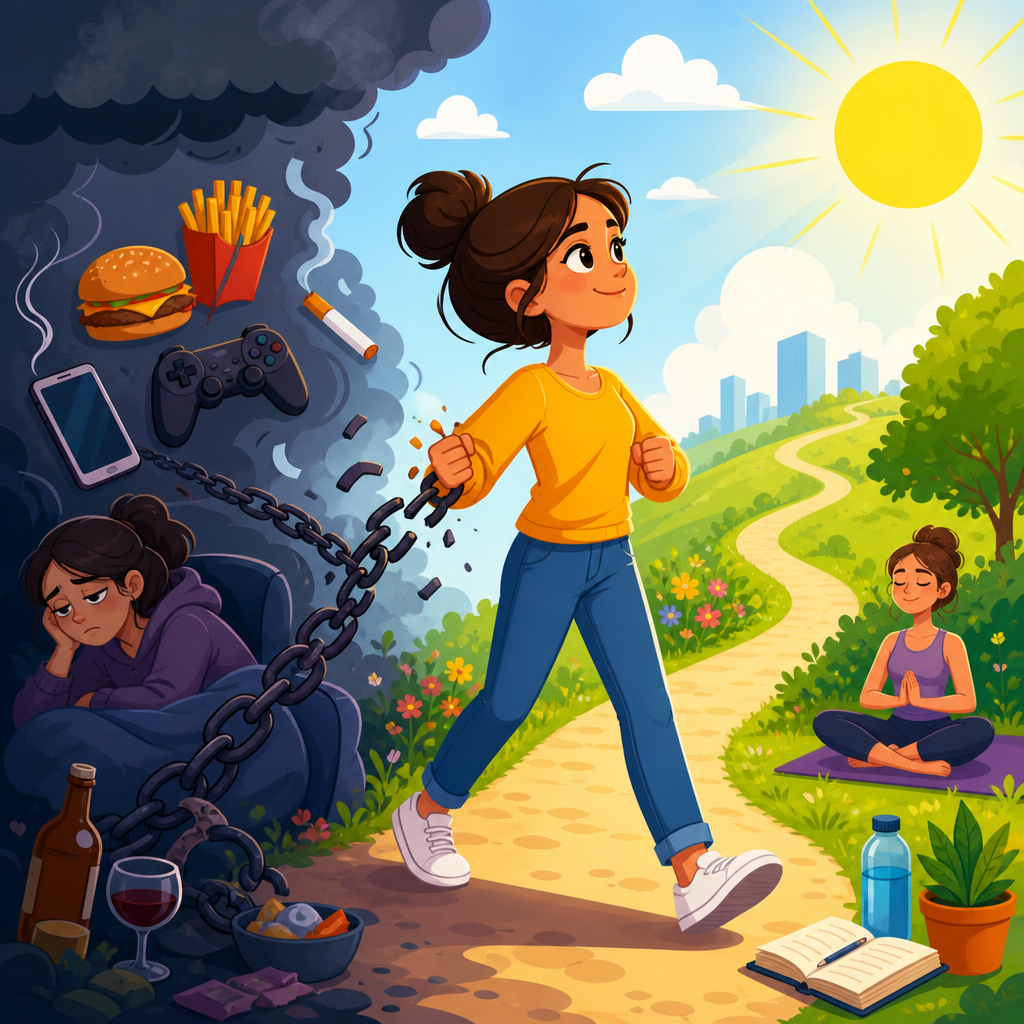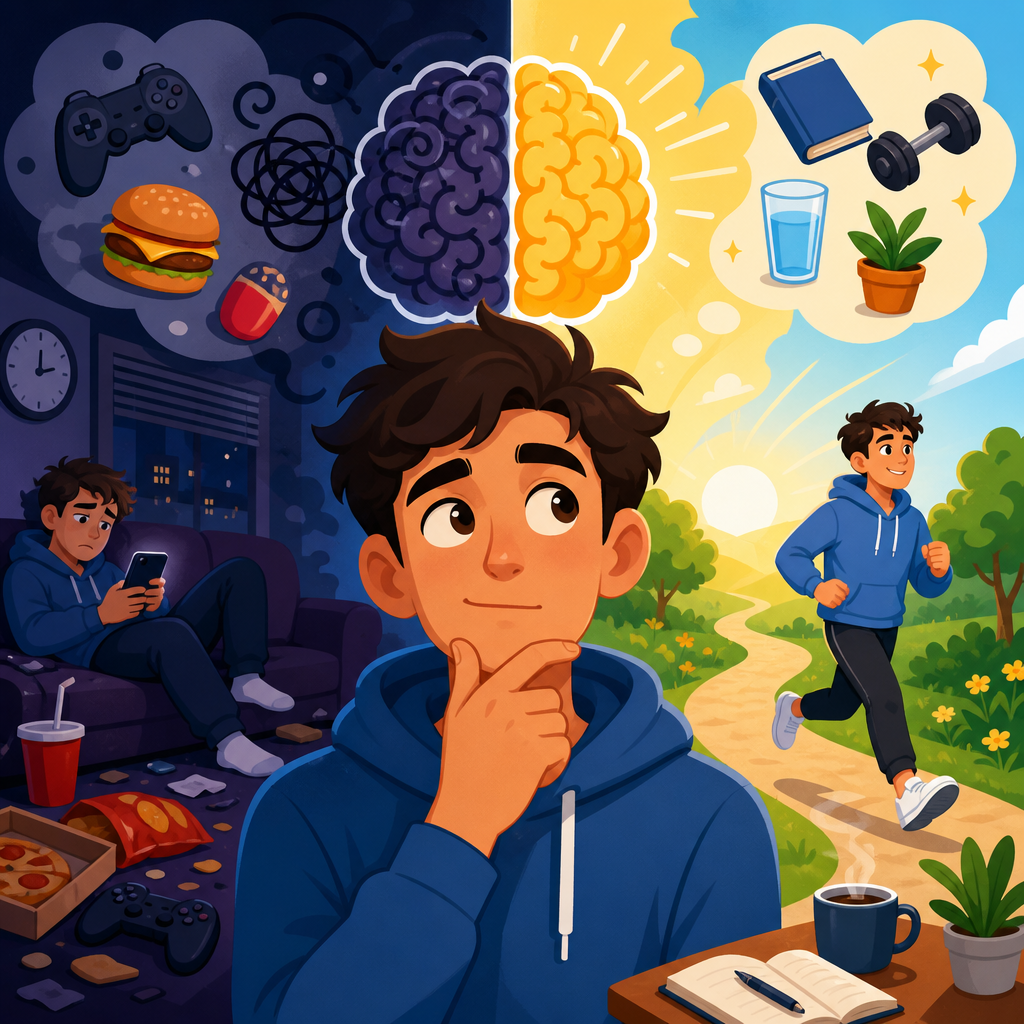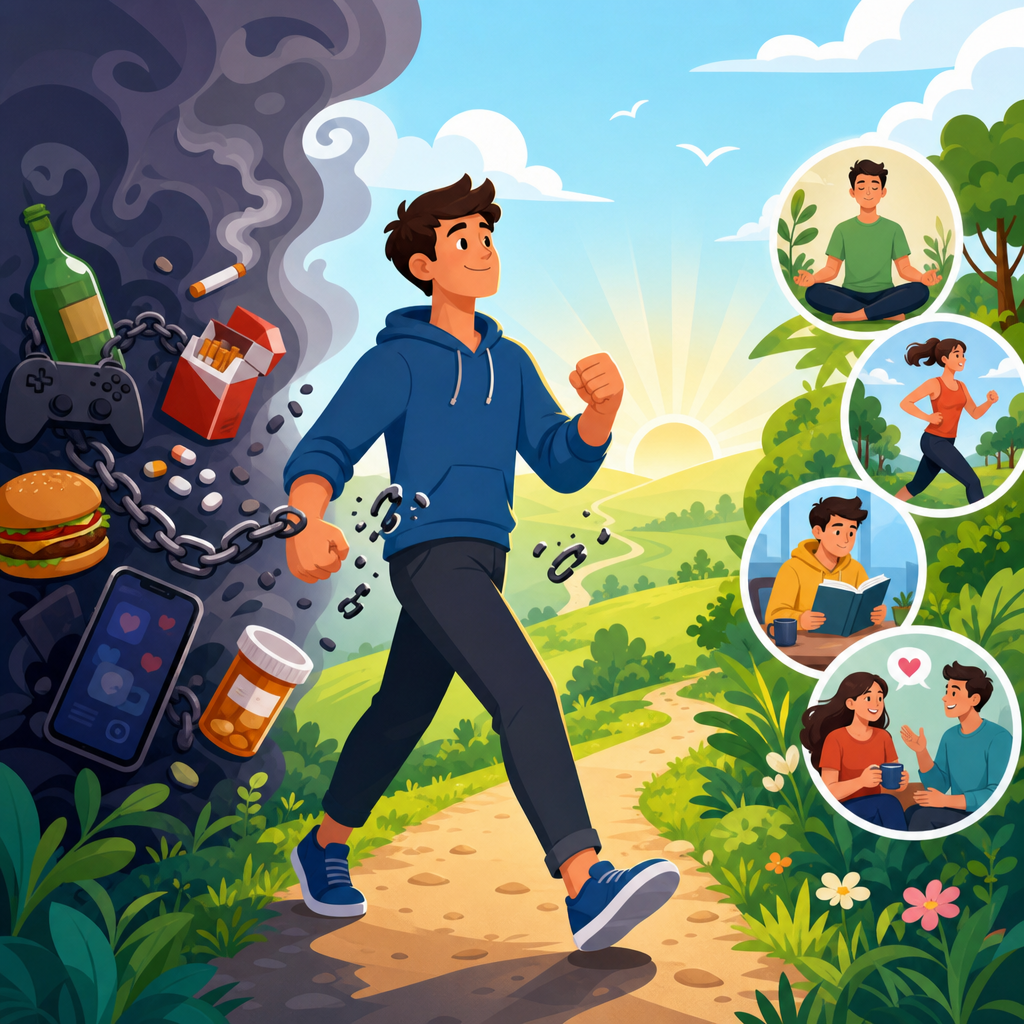
There are places in America that don’t just tell history — they make you feel it. The same is true of habits: they are built one repeated action at a time, until they shape daily life with the quiet force of routine. When people talk about addictive habits, they usually mean behaviors that feel automatic, rewarding, and stubbornly difficult to stop, even when they disrupt health, work, finances, or relationships. That can include nicotine use, compulsive scrolling, emotional eating, gambling, drinking, pornography, shopping, and other repetitive behaviors tied to relief or stimulation. In practical terms, breaking bad habits means interrupting the cue-routine-reward loop, reducing exposure to triggers, strengthening replacement behaviors, and creating enough structure that better choices become easier.
This matters because addictive habits rarely stay small. A nightly overdrink becomes poor sleep, then missed workouts, then low energy and strained patience at home. Doomscrolling can quietly eat two hours a day, or more than 700 hours a year. Small behaviors, repeated consistently, become identity-level outcomes. I have seen this in coaching conversations, recovery groups, and routine audits: people do not fail because they lack character. They fail because their environment, stress load, and reward system are pulling harder than their intentions. The good news is that change is trainable. With the right strategy, even deeply ingrained patterns can weaken faster than most people expect.
As the hub for breaking bad habits within Habits & Routines, this guide covers the most effective strategies, when to use them, and where each approach fits. Think of it as a red, white, and blueprint plan for reclaiming control. Dream Chasers do not need slogans here; they need methods that work in real kitchens, cars, offices, dorm rooms, and late-night moments when willpower is low. The best habit change plans are concrete, measurable, and built for repetition.
Understand How Addictive Habits Actually Form
Addictive habits form because the brain learns fast from reward. A cue appears, a behavior follows, and a payoff arrives. That payoff may be pleasure, relief, distraction, numbness, novelty, or social connection. Dopamine is involved, but not in the simplistic way people often describe it. Dopamine helps assign motivational value and drives anticipation, which is why cravings can spike before the behavior itself. Over time, cues become powerful: a bar after work, a phone buzz, a stressful email, a lonely evening, a drive past a vape shop. The pattern feels personal, but it is highly conditioned.
That is why shame is such a poor intervention. If someone believes, “I do this because I am weak,” they focus on self-judgment instead of mechanics. A better question is, “What is this habit doing for me right now?” Smoking may offer a predictable reset. Overeating may temporarily soothe anxiety. Online shopping may create a hit of control after a frustrating day. When you identify the function of the habit, you can design a substitute that addresses the same need with less damage. This is where many people finally make progress.
Find Triggers Before You Fight Cravings
The fastest way to reduce a bad habit is often to reduce the moments that activate it. Start with a trigger log for seven to fourteen days. Record the time, location, emotional state, people present, what happened immediately before the urge, and whether you acted on it. Patterns usually emerge quickly. Many habits cluster around HALT states: hungry, angry, lonely, or tired. Others are tied to specific contexts, like drinking during sports, snacking while driving, or scrolling in bed. A trigger log turns vague frustration into usable data.
Once you have data, remove friction where possible. Uninstall apps that drive compulsive use. Do not keep trigger foods on the counter. Change your route home if it passes a place that reliably prompts relapse. Use website blockers such as Freedom or Cold Turkey. Put the phone in another room at night. Ask a partner not to offer alcohol for thirty days. This is not avoidance in the weak sense; it is intelligent stimulus control, a method supported in cognitive behavioral therapy and addiction treatment because behavior is always easier to change upstream than in the heat of craving.
Replace the Routine, Not Just the Outcome
Stopping a habit without replacing its function leaves a vacuum, and vacuums tend to refill with the same behavior. The most reliable replacement behaviors are similar in timing, simple enough to do under stress, and capable of delivering some version of the original reward. If the habit provides stimulation, try a brisk walk, push-ups, cold water on the face, or a short playlist. If it provides comfort, use tea, a shower, journaling, or a call to someone safe. If it provides escape, schedule a ten-minute reset with a defined end point instead of a two-hour spiral.
Implementation intentions make replacements stronger: “If X happens, I will do Y.” For example, “If I want to smoke after lunch, I will walk one lap around the building and chew mint gum.” “If I want to scroll in bed, I will plug my phone into the kitchen charger and read five pages instead.” These plans outperform vague intentions because they pre-decide the response. In my experience, people who write three to five if-then plans for their highest-risk moments build traction quickly, especially when they rehearse them out loud.
Use Structure, Tracking, and Accountability
People often overestimate motivation and underestimate systems. A visible scorecard works better than memory. Track the behavior daily, along with urges, sleep, stress, and wins. Do not only track streaks; streak thinking can turn one lapse into a full collapse. Track consistency, frequency, and recovery speed. If a person drank on Saturday after twelve sober days, the key question is whether they resumed the plan Sunday, not whether the streak died. This shift prevents the “what-the-hell effect,” where one slip becomes permission for a binge.
| Strategy | Best For | Example | Main Benefit |
|---|---|---|---|
| Trigger log | Identifying patterns | Note time, place, mood, cue | Turns urges into data |
| Environment design | Reducing exposure | Remove apps, lock snacks away | Lowers decision fatigue |
| If-then planning | High-risk moments | If stressed at 9 p.m., take a walk | Creates automatic alternatives |
| Accountability partner | Consistency | Daily text check-in | Adds social follow-through |
| Professional support | Severe or persistent habits | CBT, counseling, medication | Addresses root causes safely |
Accountability multiplies success when it is specific. “Check on me sometime” is weak. “Text me at 8 p.m. for the next fourteen days and ask whether I followed my plan” is strong. Recovery groups, therapy, coaching, or a trusted friend can all help, but the structure matters more than the title. For some people, apps like HabitShare, I Am Sober, or Streaks add enough visibility to maintain momentum. For others, a paper calendar on the fridge works better because it stays in sight. Use the tool you will actually maintain.
Manage Stress, Sleep, and Emotional Load
Most addictive habits are not just behavior problems; they are regulation problems. When stress rises and sleep drops, cravings intensify and self-control weakens. Research from the American Psychological Association and sleep medicine literature consistently shows that fatigue worsens emotional regulation and impulsive decision-making. That is why habit change efforts often fail during travel, grief, deadline pressure, or family conflict. If you ignore the nervous system, you usually over-rely on willpower.
Build a stabilization layer first. Set a regular sleep window, even if it is imperfect. Eat protein and fiber earlier in the day to reduce late-night binges. Walk daily, especially after meals, because movement lowers stress and interrupts rumination. Practice urge surfing, a mindfulness technique in which you notice the craving like a wave rising and falling without acting on it. Most urges crest within minutes if they are not fed. Breathing exercises, brief meditations, and recovery-oriented routines are not soft add-ons; they are practical tools for reducing the intensity of the moments that usually trigger relapse.
Know When to Escalate to Professional Help
Not every bad habit requires formal treatment, but some absolutely do. If stopping causes dangerous withdrawal symptoms, if the behavior creates legal or financial harm, if relationships are deteriorating, or if repeated self-directed efforts keep failing, get professional support. Alcohol, benzodiazepines, and some other substances can involve serious withdrawal risks and should not be handled casually. A physician, licensed therapist, or addiction specialist can assess severity and recommend evidence-based options such as cognitive behavioral therapy, motivational interviewing, contingency management, peer support, or medication-assisted treatment where appropriate.
Professional help is not a last resort for people who “couldn’t do it alone.” It is often the smartest first move when the cost of waiting is high. I have seen people spend years trying productivity hacks for a problem that was actually untreated trauma, depression, ADHD, or chronic anxiety. When the underlying driver is addressed, the habit often loses much of its grip. If you are building a full breaking bad habits plan, this is the branch point: self-management for mild patterns, structured support for moderate ones, and clinical care for high-risk cases.
The best strategies for overcoming addictive habits are straightforward, but they are not random. First, understand the loop: cue, behavior, reward. Second, identify triggers with real data instead of guessing. Third, replace the routine with a behavior that meets the same need in a safer way. Fourth, use tracking, accountability, and environment design to reduce reliance on willpower. Fifth, protect sleep, stress management, and emotional regulation, because exhausted people relapse faster. Finally, know when to seek professional help and do it early, not after unnecessary damage.
Breaking bad habits is not about becoming perfect. It is about becoming less automatic, more aware, and more capable of choosing what serves your life. That is the real benefit: freedom. Whether your next step is a trigger log, a thirty-day reset, a therapist appointment, or a kitchen cleanup before the next grocery run, start with one change you can repeat today. Pair it with a check-in, protect it for two weeks, and build from there. Even Franklin would approve of that kind of steady progress. Until next time, Dream Chasers — keep chasing. 🇺🇸
Frequently Asked Questions
What are the most effective strategies for overcoming addictive habits?
The most effective strategies usually combine self-awareness, structure, support, and repetition. Addictive habits rarely disappear through willpower alone because they are reinforced by cues, routines, and rewards that become deeply wired into daily life. A strong starting point is identifying the pattern clearly: what triggers the behavior, what time of day it tends to happen, what emotional state comes before it, and what short-term reward it provides. For one person, stress may trigger nicotine use. For another, boredom may lead to compulsive scrolling, emotional eating, gambling, or drinking. Once the pattern is visible, it becomes easier to interrupt.
One of the best approaches is to replace the habit rather than simply trying to eliminate it. The brain resists a void, especially when a behavior has been serving a purpose such as relief, stimulation, escape, or comfort. That means a person trying to reduce an addictive habit should build a realistic substitute that meets a similar need with fewer harmful consequences. Examples include going for a brisk walk when the urge to smoke hits, texting a friend instead of opening a betting app, drinking water and pausing for ten minutes before stress eating, or placing the phone in another room during vulnerable times. The substitute does not need to be perfect. It needs to be accessible and repeatable.
Environmental changes are also powerful. People tend to underestimate how much surroundings influence behavior. Removing triggers, increasing friction around the addictive activity, and making healthier choices easier can create immediate momentum. That could mean deleting apps, blocking gambling sites, avoiding certain stores or social settings, not keeping alcohol at home, changing a commute that passes a familiar trigger, or scheduling evenings more intentionally. In many cases, what feels like a lack of discipline is actually a cue-rich environment constantly nudging the habit forward.
Finally, support and accountability improve outcomes dramatically. This may come from a therapist, doctor, coach, support group, trusted family member, or close friend. Addictive habits often thrive in secrecy and isolation, while change becomes more sustainable when someone else helps track progress, normalize setbacks, and reinforce goals. The most effective strategy is usually not one dramatic act, but a system of small, consistent changes practiced long enough to build a new routine.
Why are addictive habits so hard to break even when someone genuinely wants to stop?
Addictive habits are difficult to break because they operate at the intersection of brain chemistry, emotion, memory, and routine. Over time, the brain begins to associate a specific behavior with relief, pleasure, distraction, or reward. That reward may be brief, but it still teaches the brain to repeat the action. Eventually, the behavior can start to feel automatic, as if it happens before the person has fully decided to do it. This is one reason people often say, “I knew I should stop, but I found myself doing it anyway.”
Another major reason is that addictive habits often serve a function beyond simple enjoyment. They may help numb stress, reduce anxiety, soften loneliness, avoid painful emotions, or create a sense of control. If a behavior is meeting an emotional need, stopping it can leave a person feeling exposed or uncomfortable. The habit was not just a bad choice; it became part of a coping system. Until that underlying need is addressed, the urge may keep returning. This is especially true during high-stress periods, major life changes, grief, burnout, or relationship conflict.
Repetition also matters. Habits are built one action at a time until they become familiar pathways in everyday life. The more often a behavior is repeated in the same context, the stronger the association becomes. Morning coffee may become linked to nicotine. Late-night fatigue may become linked to drinking or online scrolling. Payday may trigger gambling. Once these pairings are reinforced, the cue alone can create cravings before the behavior even begins.
Importantly, struggling to stop does not mean a person is weak or incapable. It means the habit has been practiced enough to become deeply conditioned. Understanding this can reduce shame, which is essential because shame often fuels more addictive behavior. People tend to change more effectively when they approach the problem with honesty and strategy rather than self-attack. Recovery is easier when the question shifts from “What is wrong with me?” to “What is this habit doing for me, and what healthier system can replace it?”
How can someone identify their triggers and prevent relapse?
Identifying triggers starts with paying close attention to what happens immediately before the urge appears. Triggers are not limited to obvious temptations. They can be emotional, social, situational, or physical. Common examples include stress, boredom, anger, loneliness, fatigue, celebration, conflict, certain people, familiar places, and even specific times of day. A practical method is to keep a brief log for one to two weeks. Each time the urge or behavior occurs, write down where it happened, what was happening beforehand, how you were feeling, who you were with, and what you hoped the behavior would do for you. Patterns usually emerge faster than people expect.
Once triggers are identified, the goal is not only to avoid them, but to plan for them. Some triggers can be removed or reduced, such as turning off notifications, changing routines, carrying less cash, avoiding alcohol-centered environments, or setting app limits. Other triggers cannot be eliminated, especially emotions like stress or sadness. In those cases, preparation matters more than avoidance. A person can create a relapse-prevention plan that answers a few key questions: What will I do when the urge hits? Who will I contact? What action can delay the behavior for ten minutes? What reminder can I keep visible about why change matters?
Relapse prevention also works best when it includes practical barriers. The easier the addictive behavior is to access, the more likely it is to happen during a vulnerable moment. That is why adding friction is so useful. Examples include self-exclusion tools for gambling, removing saved payment methods, locking away substances, using website blockers, avoiding carrying cigarettes, planning meals in advance, or setting up accountability check-ins. Small barriers often create enough pause for the rational part of the brain to catch up.
It is also important to understand that a lapse and a relapse are not the same thing. A lapse is a temporary slip. A relapse is a return to the old pattern. Many people turn one mistake into a full restart because they think they have already failed. A better response is to examine the moment without denial or drama. Ask what trigger was active, what support was missing, and what needs to change next time. This mindset turns setbacks into information, which is one of the strongest long-term strategies for preventing future relapse.
When should someone seek professional help for an addictive habit?
Professional help should be considered whenever an addictive habit is becoming difficult to control, is causing meaningful harm, or keeps returning despite repeated attempts to stop. Warning signs include strong cravings, loss of control, hiding the behavior, spending excessive time or money on it, increased conflict with loved ones, decline in work or school performance, health consequences, and feeling distressed or preoccupied by the habit. Help is especially important if the behavior involves substances, withdrawal symptoms, dangerous situations, or coexisting anxiety, depression, trauma, or thoughts of self-harm.
Many people wait too long because they assume they need to hit a dramatic low point before treatment is justified. That is not true. Early support often makes recovery easier, not harder. A therapist can help uncover emotional drivers, teach coping skills, and address patterns like all-or-nothing thinking, shame, secrecy, and avoidance. A physician can evaluate physical dependence, discuss medication options when appropriate, and help manage withdrawal or health complications. Support groups can reduce isolation and offer practical insight from people who understand the cycle firsthand.
Professional care can also provide a level of structure that self-directed change sometimes lacks. Cognitive behavioral therapy, motivational interviewing, trauma-informed counseling, group therapy, and specialized addiction treatment can all be effective depending on the person and the habit involved. For some individuals, outpatient counseling is enough. Others benefit from more intensive care, especially if there are safety concerns, severe dependence, or repeated relapses. The right level of care depends on the severity of the problem, the presence of mental health issues, and the amount of support available at home.
If there is any risk of overdose, severe withdrawal, self-harm, or immediate danger to the person or others, urgent medical or emergency support should be sought right away. In general, the best rule is simple: if the habit is taking more from your life than you can comfortably regain on your own, professional help is not an overreaction. It is a smart, responsible next step.
What does long-term recovery from addictive habits actually look like?
Long-term recovery is rarely a straight line, and it does not usually mean a person never experiences urges again. More often, it means the habit no longer runs daily life. Recovery looks like having awareness of triggers, using healthier coping tools more consistently, repairing trust where possible, and building routines that support physical and emotional stability. It also means understanding that change happens in stages. Early recovery may focus on reducing access and getting through intense urges. Later recovery often centers on identity, relationships, purpose, stress management, and learning how to live without relying on the old behavior for relief.
One of the clearest