There are places in America that don’t just tell history — they make you feel it.
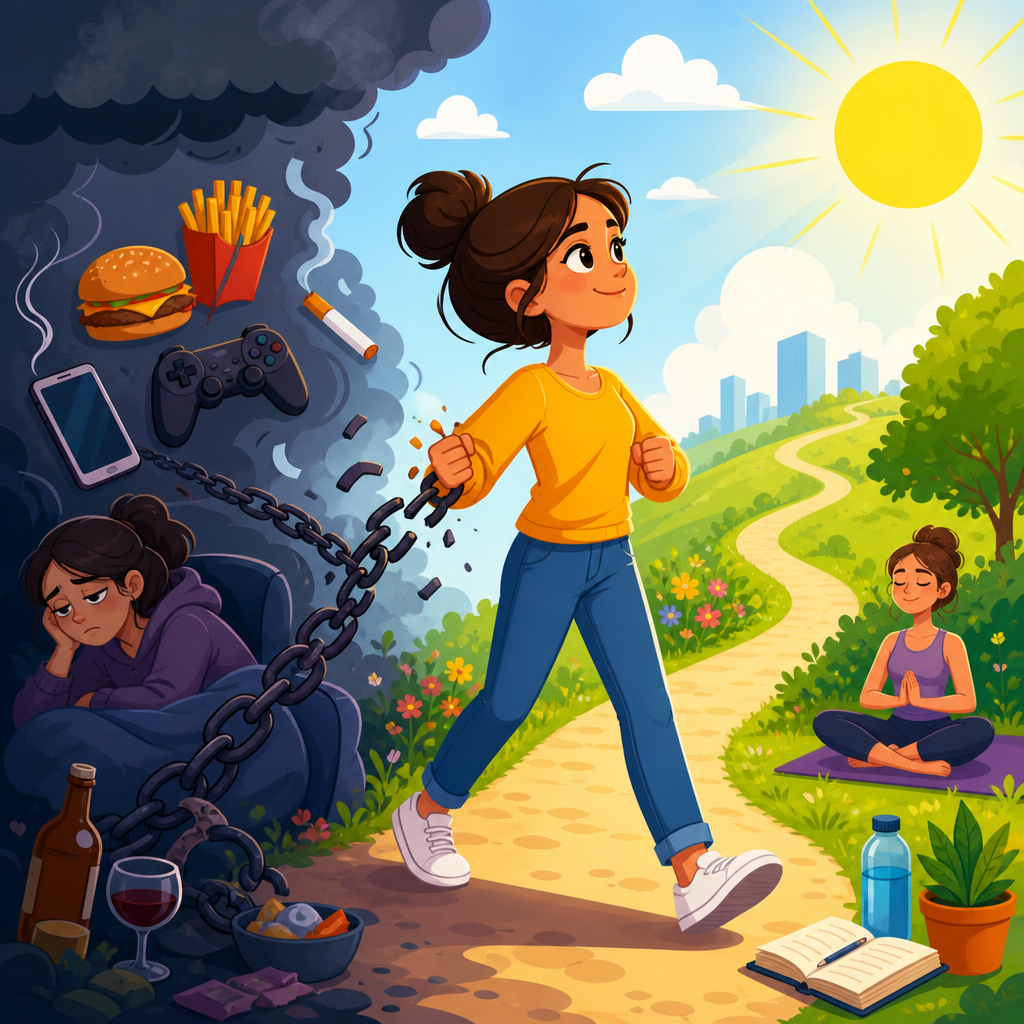
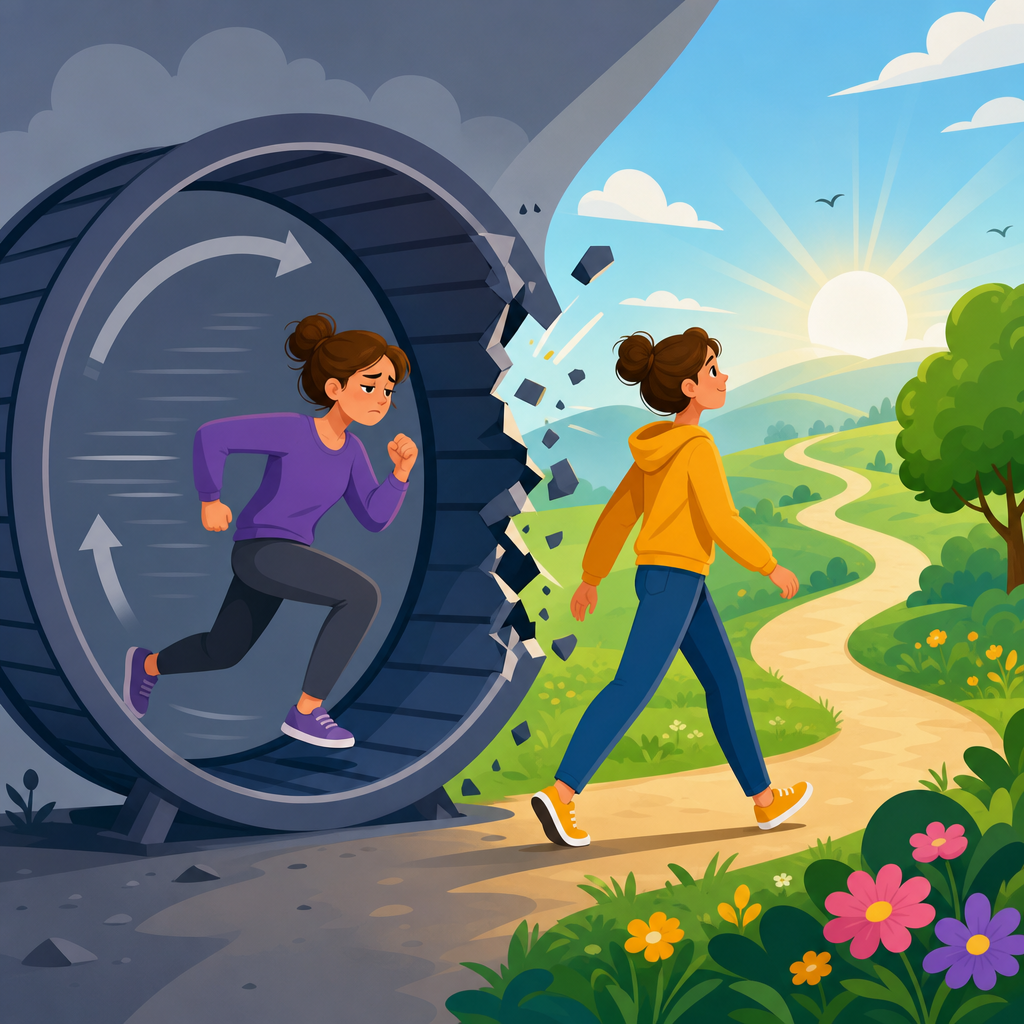
That same truth applies to habits. Walk through an old battlefield, a preserved factory town, or a one-street farming community, and you see how repeated actions shape outcomes. Families repeat traditions, workers repeat shifts, soldiers repeat drills, and travelers repeat routes until patterns become identity. In everyday life, bad habits work the same way. They are repeated behaviors cued by familiar situations, reinforced by short-term rewards, and carried forward until they feel automatic. If you want to know how to break the cycle of repetition, you must first understand that repetition itself is not the enemy. Unexamined repetition is.
In practical terms, breaking bad habits means interrupting a learned loop and replacing it with a behavior that serves your values, health, time, and relationships better. Researchers often describe habits as a cycle involving a cue, a routine, and a reward. I have used that framework in coaching routines, rebuilding my own work blocks, and helping families recover from patterns like doomscrolling, late-night snacking, procrastination, and constant phone checking on the road. The core lesson stays consistent: bad habits rarely disappear because of willpower alone. They change when the environment changes, the trigger becomes visible, the reward is understood, and a replacement action is practiced enough to become the new default.
This matters because repeated small behaviors produce large consequences. A nightly extra 300 calories can mean meaningful weight gain over time. Ten distracted checks of your phone each hour can fracture attention so badly that one assignment takes twice as long. One avoidant delay in paying bills can become chronic financial stress. For Dream Chasers building stronger routines, this hub page is the starting point: a clear guide to breaking bad habits, understanding why they stick, and building a system that is red, white, and blueprint rather than reactive.
Why bad habits repeat even when you know better
Bad habits persist because the brain values efficiency. Once a behavior is repeated in a stable context, the basal ganglia help automate it so the mind can conserve effort for other tasks. That is why intelligent, disciplined people still fall into patterns they openly dislike. Knowing a behavior is harmful and changing it are separate processes. A smoker may fully understand the health risks, yet still reach for a cigarette after coffee because the cue has been linked to relief, stimulation, or identity for years.
Another reason repetition persists is immediate reward. Most bad habits pay quickly and charge interest later. Social media offers novelty now, overeating offers comfort now, and procrastination offers temporary escape now. The costs arrive slowly through reduced health, fractured focus, guilt, or missed opportunity. In behavior change work, this time mismatch is one of the biggest obstacles. The human brain discounts delayed consequences and overvalues immediate relief.
Environment also plays a decisive role. If cookies are visible on the counter, if your phone lives beside the bed, if your default browser opens five distracting tabs, your surroundings are rehearsing the habit for you. This is why routine change fails when people rely entirely on motivation. Motivation fluctuates. Friction and design are more dependable.
Identify the loop: cue, behavior, reward
The fastest way to break the cycle of repetition is to map the habit before trying to stop it. Ask three direct questions. What happens right before the behavior? What exactly do you do? What reward do you get or expect? The cue may be a time of day, emotional state, place, person, or preceding action. The behavior is the routine itself. The reward may be stimulation, comfort, avoidance, social connection, or simply a pause from stress.
For example, consider late-night snacking. The cue may be finishing dishes and sitting on the couch at 9:00 p.m. The behavior is eating chips while watching television. The reward is not always hunger relief. More often it is decompression, sensory pleasure, or a signal that the workday is over. Once you identify the actual reward, your replacement strategy becomes smarter. If the real need is relaxation, herbal tea, popcorn portioned in advance, knitting, stretching, or a ten-minute walk may satisfy the same need better than mindless snacking.
Track one habit for at least seven days. Use notes on your phone or a simple notebook. Record time, location, emotional state, and what happened immediately before and after. Patterns become obvious quickly. In my experience, people are often surprised that the strongest triggers are not dramatic emotions but ordinary transitions: getting in the car, opening a laptop, ending a meeting, or sitting down after dinner.
Replace, don’t just remove
Trying to eliminate a habit without a replacement leaves a behavioral vacuum. Most people can resist for a short period, but under stress the old loop returns because it is still the easiest available option. A better approach is substitution. Keep the cue and the reward as similar as possible while changing the routine.
If you check your phone every few minutes while working, do not rely on vague promises to “be more disciplined.” Put the phone in another room, log out of the most distracting apps, and replace the urge with a written capture list. Each time you want to check something unrelated, write it down instead. You still get the reward of not forgetting the thought, but you preserve concentration.
If stress drives evening drinking, replacing alcohol with nothing rarely works for long. Sparkling water in the same glass, a strict kitchen closing ritual, a post-dinner walk, or calling a friend can preserve the signal that the day is winding down. The replacement must be convenient. Good intentions lose to convenience almost every time.
| Bad Habit | Common Cue | Likely Reward | Better Replacement |
|---|---|---|---|
| Phone scrolling in bed | Lights out, device nearby | Escape, novelty, decompression | Charge phone outside bedroom, read two pages of a book |
| Stress eating | Work tension at 3:00 p.m. | Relief, stimulation | Protein snack prepared ahead, five-minute walk, water break |
| Procrastination | Large unclear task | Avoidance of discomfort | Start with a five-minute timer and one defined action |
| Overspending online | Email promotions, boredom | Anticipation, control | Unsubscribe, 24-hour waiting rule, wishlist instead of cart |
Change your environment to change your behavior
Environment design is the most underrated habit tool because it works before temptation fully arrives. The principle is simple: make bad habits harder and good habits easier. James Clear popularized this idea for a broad audience, but it is also consistent with longstanding behavioral science and public health practice. People tend to choose what is visible, available, and frictionless.
Put fruit where snacks used to be. Delete stored credit card details from shopping sites. Use website blockers like Freedom or Cold Turkey during work sessions. Move the television remote away from the couch. Keep running shoes by the door. If you want to stop hitting snooze, place the alarm across the room. If a habit is digital, redesign the digital environment too: turn off nonessential notifications, remove social apps from your home screen, and set grayscale mode if visual stimulation triggers endless checking.
I have seen families transform mornings just by staging the night before. Backpacks lined up, lunches prepped, keys in one bowl, weather checked, coffee ready. Bad habits often thrive in chaos because chaos increases decision fatigue. Structure is not restrictive; it is protective.
Use accountability, tracking, and recovery rules
Self-monitoring is one of the strongest predictors of behavior change. That is why food logs, budget apps, step counters, and habit trackers work when used honestly. Tracking creates feedback. Feedback creates awareness. Awareness gives you a chance to intervene before repetition becomes another week, month, or year.
Accountability helps because habits are social as well as personal. Tell one trusted person what you are changing and how they can help. Be specific. “Ask me on Friday whether I had any no-phone mornings” works better than “Keep me accountable.” If you thrive on structure, use a shared spreadsheet, text check-in, or coach.
Most important, plan your recovery rule. You will slip. Everyone does. The people who change successfully are not the ones who never miss; they are the ones who prevent one miss from becoming a relapse. A simple standard is “never twice.” If you skip one workout, do a shorter one tomorrow. If you overspend once, freeze discretionary purchases for forty-eight hours. Consistency is built in the comeback.
When bad habits signal a deeper issue
Not every repetitive behavior is just a routine problem. Some habits are coping mechanisms for anxiety, depression, trauma, loneliness, burnout, ADHD, chronic pain, or substance dependence. In those cases, the habit is not the whole problem; it is the visible expression of one. If you repeatedly binge eat, drink heavily, gamble, self-isolate, or lose hours to compulsive behavior despite serious consequences, professional support matters. A licensed therapist, physician, registered dietitian, or addiction specialist can help assess what is driving the pattern and what treatment is appropriate.
There is no weakness in using expert help. In fact, it is often the most efficient path forward. Cognitive behavioral therapy, motivational interviewing, medication when indicated, nicotine replacement therapy for tobacco cessation, and structured support groups all have evidence behind them. If your habit threatens your safety, finances, work, or relationships, move beyond self-help and get qualified care.
Build an identity that supports the new pattern
Lasting change becomes easier when behavior connects to identity. Instead of saying, “I’m trying to stop procrastinating,” say, “I am a person who starts before I feel ready.” Instead of “I need to stop wasting money,” say, “I am someone who tells my dollars where to go.” Identity language sounds small, but it changes the standard you are trying to meet. This is why veterans, athletes, teachers, and travelers often do well with routines grounded in role and purpose.
At USDreams, we respect systems because America itself was built by repeated acts of discipline: maps studied, rails laid, letters written, drills run, miles logged. Breaking bad habits is no different. Start small, make the cue visible, choose a replacement, redesign the environment, track the reps, and recover fast when you miss. Explore the rest of our Habits & Routines guides, put one change into motion today, and let momentum do its work. Until next time, Dream Chasers — keep chasing. 🇺🇸
Frequently Asked Questions
Why do people keep repeating the same habits even when they know those habits are harmful?
Repetition is powerful because the brain is designed to conserve energy. When a behavior is repeated in the same setting, under the same emotional conditions, or at the same time of day, it becomes easier for the brain to automate it. That is why bad habits often feel less like active choices and more like default routes. In the same way a town can be shaped by repeated routines over generations, your daily environment can quietly train you to respond in predictable ways. A certain chair may cue mindless scrolling, a stressful afternoon may cue snacking, or a difficult conversation may cue withdrawal or anger.
Knowing a habit is harmful does not automatically stop it, because awareness and interruption are two different skills. Many habits continue because they offer some immediate reward, even if the long-term outcome is negative. That reward might be comfort, distraction, relief, familiarity, or a brief sense of control. The brain tends to favor short-term payoff over future consequences, especially when a person is tired, overwhelmed, lonely, or under stress. Breaking the cycle begins by understanding that repetition is not proof of weakness. More often, it is evidence of a well-practiced loop made up of cue, behavior, and reward. Once you identify that loop, you can start changing the pattern instead of just blaming yourself for it.
What is the first step in breaking the cycle of repetition in everyday life?
The first step is to study the pattern before trying to change it. Most people rush straight to replacement strategies without fully understanding what is driving the repeated behavior. A better approach is to observe when the habit happens, where it happens, what you are feeling beforehand, who you are with, and what result you get from it. This turns a vague problem into something specific and workable. If the behavior happens every evening after work, for example, the real trigger may not be lack of discipline. It may be exhaustion, transition stress, boredom, or an environment that makes the habit easy to repeat.
Once you can clearly name the pattern, you are in a much stronger position to disrupt it. Instead of saying, “I always do this,” you can say, “I tend to do this when I feel stressed at 6 p.m. and sit in the kitchen with my phone.” That level of detail matters. It reveals the conditions that keep the cycle alive. From there, change becomes practical. You can alter the environment, prepare a replacement behavior, or create a pause between cue and action. The first step is not force. It is clarity. When you can see the repetition clearly, you can stop treating it like fate and start treating it like a system that can be redesigned.
How can changing your environment help stop repeated negative behaviors?
Environment is one of the most underestimated forces in habit formation. People often think change depends entirely on motivation, but repeated behaviors are strongly shaped by what is visible, convenient, familiar, and emotionally associated with certain spaces. Just as physical places carry the marks of repeated human action, your home, workplace, car, and digital spaces can reinforce specific routines. If junk food is always within reach, if social media apps are one tap away, or if your workspace invites distraction, you are more likely to repeat the same behavior without much thought.
Changing your environment works because it reduces automaticity. It interrupts the smooth path between cue and behavior. This can be done in simple but powerful ways: moving tempting items out of sight, adding friction to unwanted habits, placing helpful tools in obvious locations, changing your route home, rearranging a room, or setting up reminders that make intentional choices easier. Digital environments matter too. Turning off notifications, logging out of distracting apps, or changing your phone’s home screen can significantly reduce repeated impulses. The goal is not to create a perfect life with no triggers. The goal is to make unhealthy repetition less effortless and healthier repetition more natural. When the environment changes, the pattern often weakens enough for new behavior to take root.
What are realistic strategies for replacing a bad habit instead of just trying to quit it?
The most effective habit change strategies usually involve replacement rather than simple removal. A habit often serves a purpose, even if it causes problems. It may help you decompress, avoid discomfort, fill time, or create emotional relief. If you remove the behavior without addressing the need underneath it, the brain will often search for a substitute that feels just as immediate. That is why trying to “just stop” can feel frustrating and short-lived. A more realistic strategy is to ask, “What is this habit doing for me?” and then choose a healthier behavior that meets a similar need.
For example, if stress triggers emotional eating, a replacement might be a short walk, a glass of water, a five-minute reset routine, or texting someone supportive before going to the pantry. If boredom triggers scrolling, a replacement might be a specific activity that still feels easy and accessible, such as reading two pages, doing a quick household task, or listening to a podcast while stretching. The replacement needs to be practical, not idealized. It should be easy enough to do in the same moment the old habit would normally occur. It also helps to shrink the change. Instead of aiming for a complete life overhaul, focus on one repeated behavior and one reliable alternative. Consistency matters more than intensity. Over time, the new routine can become the path your brain learns to expect.
How long does it take to truly break the cycle of repetition and create lasting change?
There is no single timeline, because habits differ in complexity, emotional weight, and how deeply they are tied to a person’s identity and environment. Some repeated behaviors begin to weaken within days of consistent interruption, while others take months of effort, especially if they are connected to stress, trauma, relationships, or long-established routines. Lasting change is usually not a clean, linear process. It often includes progress, setbacks, renewed awareness, and gradual improvement. That does not mean change is failing. It means the brain is learning a new pattern while the old one is still familiar.
The better measure of success is not perfection, but reduced automatic repetition and increased intentional choice. If you pause more often before acting, recover faster after slipping, recognize triggers sooner, and return more quickly to the new behavior, real change is happening. Breaking the cycle of repetition is less about erasing the past and more about practicing a different future until it becomes familiar. Think of it like reshaping a well-worn path. The old route may still exist for a while, but every time you choose the new direction, you strengthen it. Lasting change comes from repetition too—just a different kind. The same force that once kept you stuck can, with patience and structure, become the force that moves you forward.