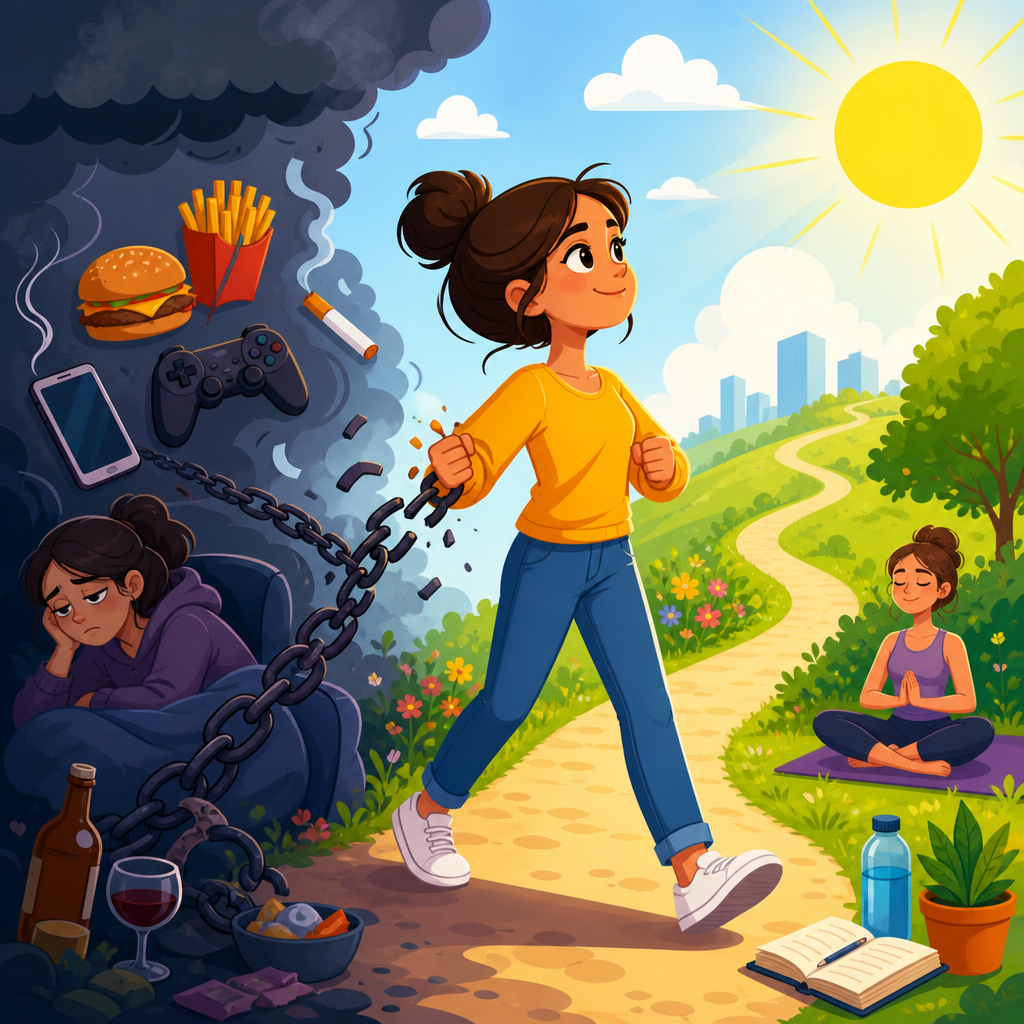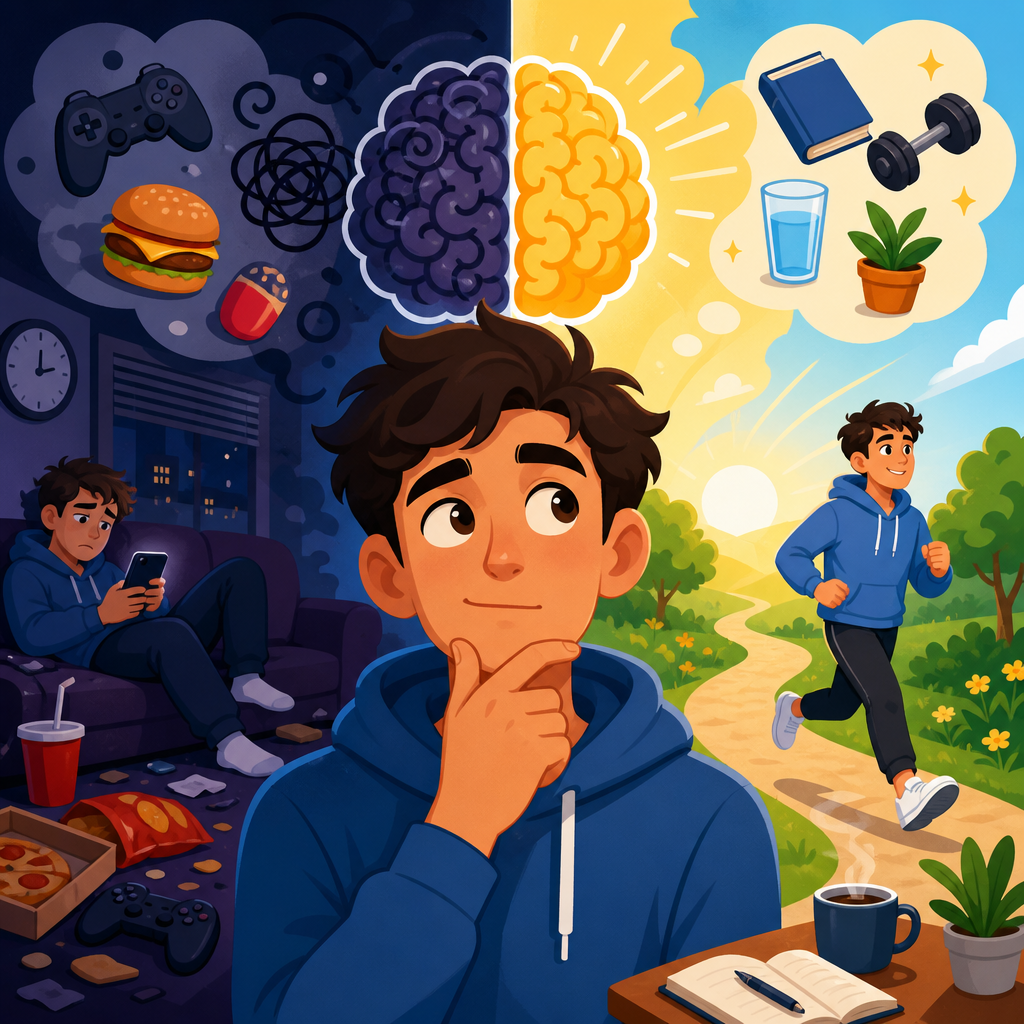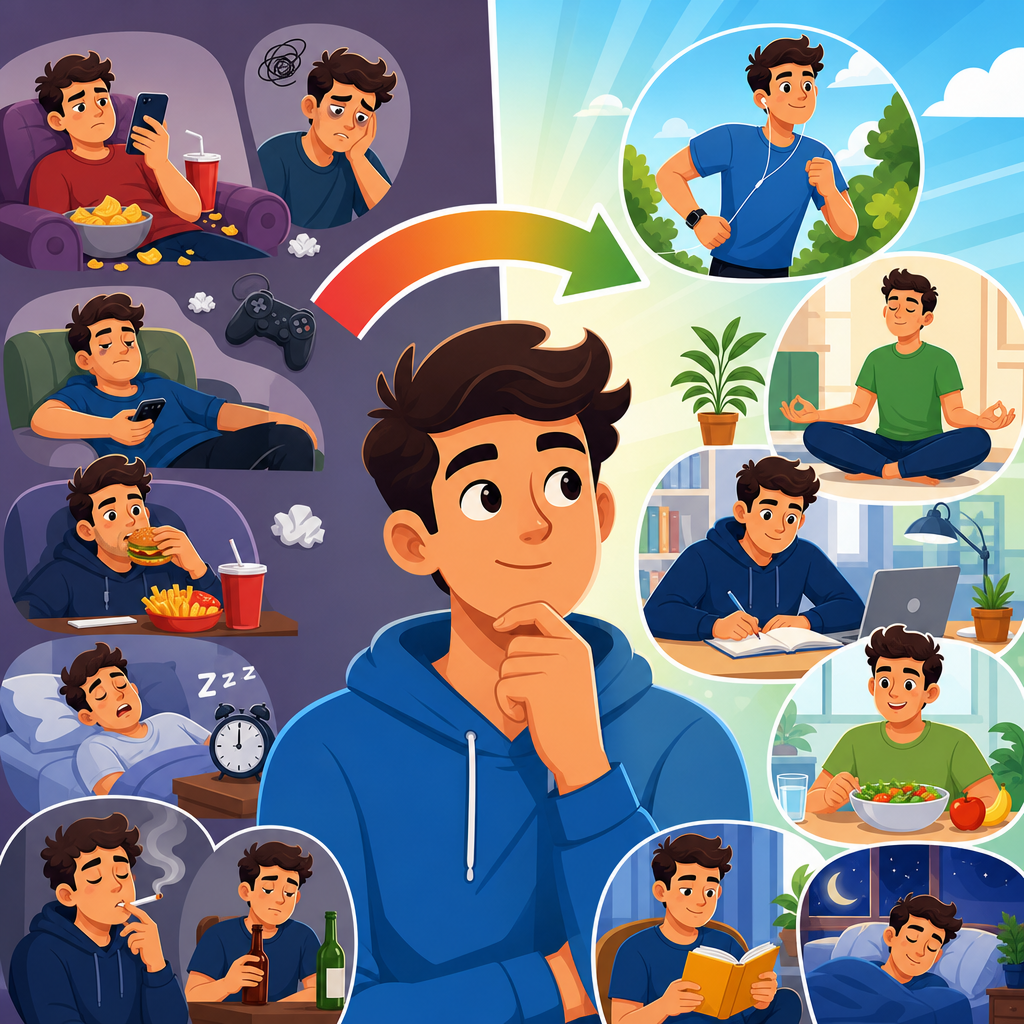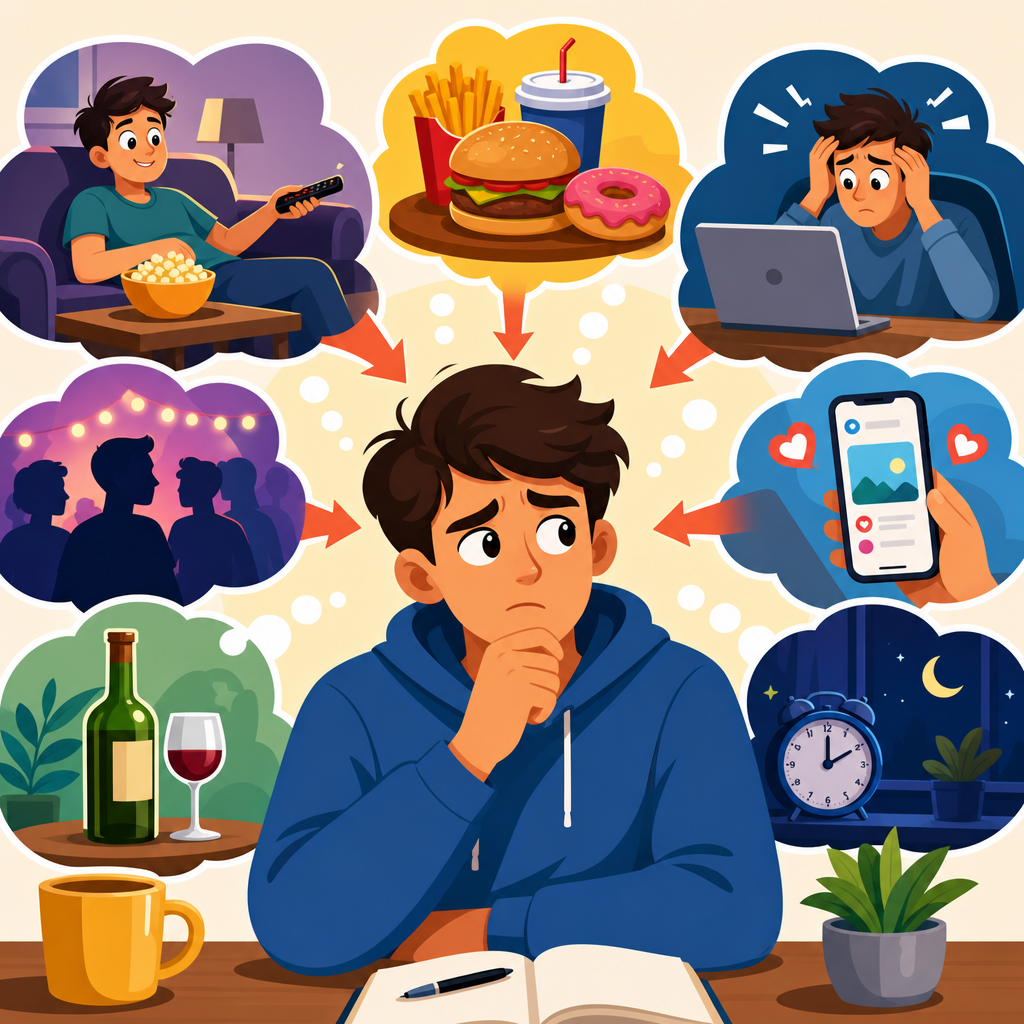
There are places in America that don’t just tell history — they make you feel it. Bad habits work the same way: they are not abstract ideas, but lived patterns tied to moments, places, emotions, and routines that shape daily behavior. When people talk about breaking bad habits, they often focus on willpower, discipline, or motivation. In practice, the decisive factor is usually the trigger. A trigger is the cue that starts a habitual behavior loop. It can be external, such as a phone notification, a commute route, a kitchen counter full of snacks, or a friend who always suggests a drink. It can also be internal, such as boredom, stress, loneliness, frustration, or even celebration. If you want lasting behavior change, you must identify what sets the habit in motion before you try to control the behavior itself.
This matters because habits are efficient. The brain automates repeated actions to save energy, which is helpful when the routine serves you and destructive when it does not. Researchers and clinicians commonly describe a habit loop as cue, routine, and reward. Over time, the cue begins to predict relief, pleasure, or familiarity, and the brain learns to move quickly toward the routine with very little conscious thought. I have seen this pattern repeatedly when auditing personal routines: people believe the problem is late-night snacking, doomscrolling, nail biting, overspending, or skipping workouts, but the deeper issue is that certain conditions reliably switch those behaviors on. This hub article explains how triggers create bad habits, how to identify your own, and how to redesign your environment and routines so change becomes realistic rather than heroic.
What triggers are and why they matter
A trigger is the event, sensation, thought, time, or setting that prompts a habit to begin. The clearest way to understand it is this: triggers answer the question, “What happens right before the behavior?” In many cases, the answer is consistent. A person smokes when they step outside after lunch. Another opens shopping apps after a stressful meeting. Another pours a drink when the house finally gets quiet. These are not random lapses. They are learned associations reinforced through repetition.
Behavioral science has long shown that repeated pairings create strong automatic responses. Classical conditioning explains how neutral cues acquire power through association, and operant conditioning explains why rewards strengthen the behavior that follows. In plain terms, if stress reliably leads to social media and social media provides distraction, the brain starts treating stress as a green light for scrolling. The trigger becomes predictive. That is why breaking bad habits requires more than saying no in the moment. You are interrupting a pattern the brain has practiced, rewarded, and streamlined.
Some triggers are obvious, but many are hidden in plain sight. Time-based cues are common: 3 p.m. brings a vending machine trip, Sunday night brings procrastination, bedtime brings one more episode. Location triggers are powerful because context anchors behavior; many people eat more in front of the television than at the table, and many workers become productive only after changing rooms because the old environment is loaded with competing cues. Social triggers matter too. We mimic the norms of the people around us, often without noticing. If your group snacks constantly, complains instead of planning, or treats lateness as normal, the trigger is partly social permission.
Common trigger categories behind bad habits
Most bad habits can be traced to a small set of cue categories. The most useful framework I use with clients is simple: look at place, time, emotional state, preceding action, and people present. This method works because habits rarely appear out of nowhere. A behavior tends to cluster around a repeatable condition. Once you know the category, you can test changes instead of relying on guesswork.
| Trigger category | Typical example | Habit it often drives | Practical intervention |
|---|---|---|---|
| Place | Keeping chips visible on the counter | Mindless snacking | Remove visual cues; store food out of sight |
| Time | Checking the phone every morning in bed | Doomscrolling | Charge the phone outside the bedroom |
| Emotion | Feeling anxious after work | Drinking, overeating, impulse shopping | Prepare a replacement stress ritual |
| Preceding action | Lighting a cigarette after coffee | Nicotine use | Change the sequence and location of coffee |
| People | Friends who always order dessert | Overeating or overspending | Set a plan before meeting or change venues |
Emotional triggers deserve special attention because they are often misread. People say a habit helps them relax, but often it helps them avoid feeling something unpleasant for a few minutes. That distinction matters. If the reward is avoidance rather than enjoyment, the habit can become deeply entrenched. Stress eating, compulsive checking, and procrastination frequently operate this way. The short-term relief is real, but it teaches the brain to use the same escape route again.
How to identify your personal triggers accurately
The fastest way to identify triggers is to track the moments before the habit for one to two weeks. You do not need a complicated system. Use a notes app or paper and record five details each time the behavior happens: where you are, what time it is, what you were doing immediately before, how you feel, and who is with you. Patterns emerge quickly. If three out of five late-night snack episodes happen after working on the couch, the couch may be as important as hunger. If overspending spikes after difficult work calls, emotion is likely leading the sequence.
Be specific enough to capture reality. “I was stressed” is less useful than “I had just read an email from my manager and felt embarrassed.” “I got distracted” is less useful than “I opened my laptop to write, saw a news alert, and clicked it.” Precision turns vague self-judgment into actionable information. This is one reason habit tracking works: it replaces moral language with observable data. You are not weak. You are running a learned sequence.
It also helps to distinguish between immediate and upstream triggers. The immediate trigger might be sitting on the couch and opening a streaming app. The upstream trigger may be mental fatigue from poor sleep, which lowers resistance later. Lasting change often requires addressing both. In my experience, people make faster progress when they stop treating every lapse as a single bad decision and start viewing it as the endpoint of a chain. That mindset makes the problem solvable.
Breaking bad habits by redesigning the cue
The most reliable way to break a bad habit is to make the trigger less frequent, less visible, or less convenient. This is environment design, and it works because it reduces the number of decisions you must win in real time. If you are trying to stop snacking, the first intervention is not superior self-control. It is changing what enters the house, where it is stored, and what is immediately available when hunger hits. If you are trying to stop wasting time on your phone, disable nonessential notifications, log out of high-friction apps, and keep the device physically farther away during focused work.
Friction is a powerful tool. Researchers in behavioral economics have consistently shown that small barriers change behavior. A few extra seconds, a password reset, a different room, or an inconvenient storage spot can sharply reduce automatic actions. The same principle appears in public health and product design because convenience shapes choices. If the bad habit is easy and the good alternative is awkward, the old pattern survives. Reverse that equation.
Replacement is equally important. Removing a trigger without planning a substitute can leave a vacuum, especially when the habit serves a real function such as stress relief, stimulation, or social connection. A person who quits smoke breaks may need a brief walk, breathing drill, or text check-in at the same time of day. A person cutting evening screen time may need a defined wind-down routine, not just a ban. The goal is red, white, and blueprint: intentional systems, not vague promises.
What makes relapse likely and how to prevent it
Relapse usually happens when people underestimate trigger stacking. That means several cues arrive together: low sleep, high stress, alcohol, social pressure, and easy access. Each factor increases the odds that the routine will run automatically. This is why many habit changes collapse during travel, holidays, workload spikes, or major life transitions. The familiar structure disappears, and old cues return in force. Dream Chasers planning better routines should expect these moments and design for them in advance.
One effective strategy is the implementation intention, sometimes called an if-then plan. The format is simple: “If X trigger happens, then I will do Y instead.” For example, “If I want to check social media during work, then I will stand up, drink water, and reset a 10-minute timer.” “If I feel the urge to buy something after a stressful day, then I will wait 24 hours and move the item to a wish list.” These plans work because they pre-decide a response before emotion takes over.
It is also important to measure progress correctly. Success is not the total absence of urges. Success is noticing triggers earlier, shortening the habit loop, and recovering faster after slips. Many people give up because they still feel tempted. Temptation is normal. The win is creating enough space between cue and routine to choose differently more often. Over time, old associations weaken when they are not reinforced, and new routines strengthen through repetition.
Breaking bad habits starts with respecting the trigger, not fearing it. Once you can name the cue, map the loop, and alter the environment, change stops feeling mysterious. This hub should guide every deeper article you read on cravings, procrastination, screen overuse, emotional eating, and routine repair, because each one begins with the same principle: behaviors follow cues. Learn your cues, redesign them, and practice better replacements until the new pattern becomes easier than the old one. That is how durable change is built in homes, workplaces, classrooms, and on the road. If you are ready to improve your Habits & Routines, start today by tracking one recurring bad habit and the five conditions around it. Until next time, Dream Chasers — keep chasing. 🇺🇸
Frequently Asked Questions
What is a trigger in the context of bad habits?
A trigger is the cue that sets a habit in motion. It is the moment, condition, or feeling that nudges a person toward a familiar behavior, often before they have fully realized they are making a choice. In the context of bad habits, triggers are especially important because they explain why a behavior keeps repeating even when someone genuinely wants to stop. A bad habit is rarely random. It is usually linked to something specific: a place, a time of day, an emotional state, a social setting, or a sensory cue such as a sound or notification.
Triggers can be external or internal. External triggers include things like seeing junk food on the counter, hearing a phone buzz, sitting on the couch where someone usually snacks, or driving past a store tied to an impulse purchase. Internal triggers come from inside the person, such as stress, boredom, loneliness, frustration, fatigue, or even excitement. These cues signal the brain to follow a familiar routine because that routine has been practiced often enough to feel automatic.
This is why bad habits often feel “lived” rather than abstract. They are woven into daily life and connected to real moments, real environments, and real emotions. Understanding triggers shifts the conversation away from blaming a lack of discipline. In many cases, the behavior is not starting with a conscious decision at all. It is beginning with a cue that has become tightly associated with a response. Once a person learns to identify that starting point, they have a much better chance of interrupting the cycle and changing the habit for good.
Why are triggers often more important than willpower when trying to break a bad habit?
Triggers are often more important than willpower because they act earlier in the habit loop. Willpower usually shows up after the cue has already activated the urge. By that point, the person is not simply making a neutral decision; they are resisting an established pattern that has been reinforced over time. That is much harder than preventing the loop from starting in the first place. When people rely only on discipline, they are essentially trying to fight the habit at its strongest moment rather than redesigning the conditions that make it likely.
For example, someone who wants to stop late-night snacking may tell themselves to be more disciplined. But if the real trigger is sitting alone after a stressful day, turning on the television, and seeing easy-to-reach snacks in the kitchen, the problem is larger than motivation. The trigger stack is doing most of the work. The brain begins to anticipate the routine before the person has consciously decided anything. In that situation, changing the environment or evening routine is usually more effective than repeatedly trying to “be stronger.”
This does not mean willpower has no value. It can be useful in the short term, especially when someone is building awareness or practicing a new response. But willpower is limited, while triggers are predictable. That makes triggers powerful leverage points. If a person removes, reduces, or prepares for the cues that spark the bad habit, they lower the amount of self-control required. In practical terms, success becomes less about constantly resisting temptation and more about making the unwanted behavior less automatic and less convenient.
What are the most common types of triggers that lead to bad habits?
Most bad habits are activated by a handful of common trigger categories. One of the biggest is emotional triggers. Stress, anxiety, boredom, sadness, loneliness, anger, and even relief can push people toward behaviors that promise comfort, distraction, or escape. This is why habits such as scrolling endlessly, emotional eating, smoking, procrastinating, or overspending often intensify during emotionally charged periods. The habit may not solve the underlying problem, but it offers immediate familiarity, which can feel rewarding in the moment.
Another major category is environmental triggers. These are cues built into a person’s surroundings: where they keep food, where they charge their phone, what is visible in their workspace, which apps are on the home screen, or what route they take on the way home. Physical spaces can strongly shape behavior because the brain learns to connect certain locations with certain routines. A desk may trigger procrastination, a car may trigger fast-food stops, and a bedroom may trigger late-night scrolling if that pattern has been repeated often enough.
Time-based and routine-based triggers are also very common. People often perform bad habits at the same time each day or after the same preceding action. For example, someone may light a cigarette after coffee, check social media upon waking, snack during a work break, or drink alcohol after dinner. Social triggers matter as well. Certain friends, group norms, or shared activities can cue behavior without anyone directly pressuring the person. Finally, there are sensory and digital triggers, such as smells, sounds, visual reminders, and notifications. In modern life, these can be especially potent because they are frequent and designed to capture attention. The more clearly someone can sort their bad habit into these trigger categories, the easier it becomes to develop a targeted strategy for change.
How can someone identify the triggers behind their own bad habits?
The most effective way to identify triggers is to study the habit with curiosity instead of judgment. Many people know what behavior they want to stop, but they have only a vague sense of what reliably sets it off. The key is to slow the pattern down and look at what happens immediately before the habit begins. A simple tracking method works well: each time the habit occurs, write down the time, location, emotional state, people present, what happened just beforehand, and what the habit seemed to provide. Even a few days of honest observation can reveal clear patterns.
Questions can help sharpen that awareness. Did the urge appear when you were tired? Were you avoiding a difficult task? Did it happen in a specific room, after a certain conversation, or during a regular transition in the day? Was the trigger a feeling, such as frustration or boredom, or was it an outside cue, such as seeing your phone light up or passing a vending machine? The goal is to move from “I keep doing this for no reason” to “I usually do this when this specific set of conditions appears.” That shift is powerful because it turns a frustrating mystery into something concrete and observable.
It also helps to notice the reward the habit promises. A bad habit often survives because it gives something immediate: relief, stimulation, comfort, avoidance, connection, or a break from discomfort. Once that becomes clear, the trigger is easier to understand. For example, if someone procrastinates every time a demanding project starts, the trigger may not just be the task itself, but the anxiety or self-doubt it creates. Identifying triggers is not about excusing the behavior. It is about mapping the real mechanics of the habit so change can be based on evidence rather than guesswork.
What is the best way to respond to triggers without falling into the bad habit?
The best response is usually not to “ignore” triggers, but to prepare for them with a different action. Because triggers tend to be recurring and predictable, they create opportunities for planning. Once a person knows the cue, they can decide in advance what they will do when it appears. This is often more effective than trying to improvise in the moment. For example, if stress triggers mindless snacking, the replacement response might be drinking water, taking a five-minute walk, chewing gum, or stepping away from the environment where the snacking typically happens. If phone notifications trigger distraction, the response might be turning off alerts, moving the device out of reach, or checking messages only at scheduled times.
Environmental design is one of the strongest tools available. Make the bad habit harder to perform and the better alternative easier to choose. Remove cues where possible, add friction to unwanted behaviors, and place helpful behaviors directly in the path of the trigger. Someone who wants to stop doomscrolling might keep their phone outside the bedroom and place a book on the nightstand instead. Someone trying to avoid impulsive eating might stop storing highly tempting foods in visible places and prepare better options ahead of time. These changes may seem small, but they can dramatically weaken the automatic link between cue and behavior.
It is also important to expect repetition. Triggers do not disappear overnight, and a single setback does not mean the strategy failed. Breaking a bad habit is usually a process of retraining the response to a familiar cue. The goal is not perfection; it is pattern disruption. Over time, if the trigger repeatedly leads to a different action, the old habit loses strength. That is why the most successful approach combines awareness, planning, environmental changes, and replacement behaviors. Instead of asking, “How do I stop myself in the moment?” a better question is, “How do I change what happens when this cue shows up?” That is where lasting habit change usually begins.