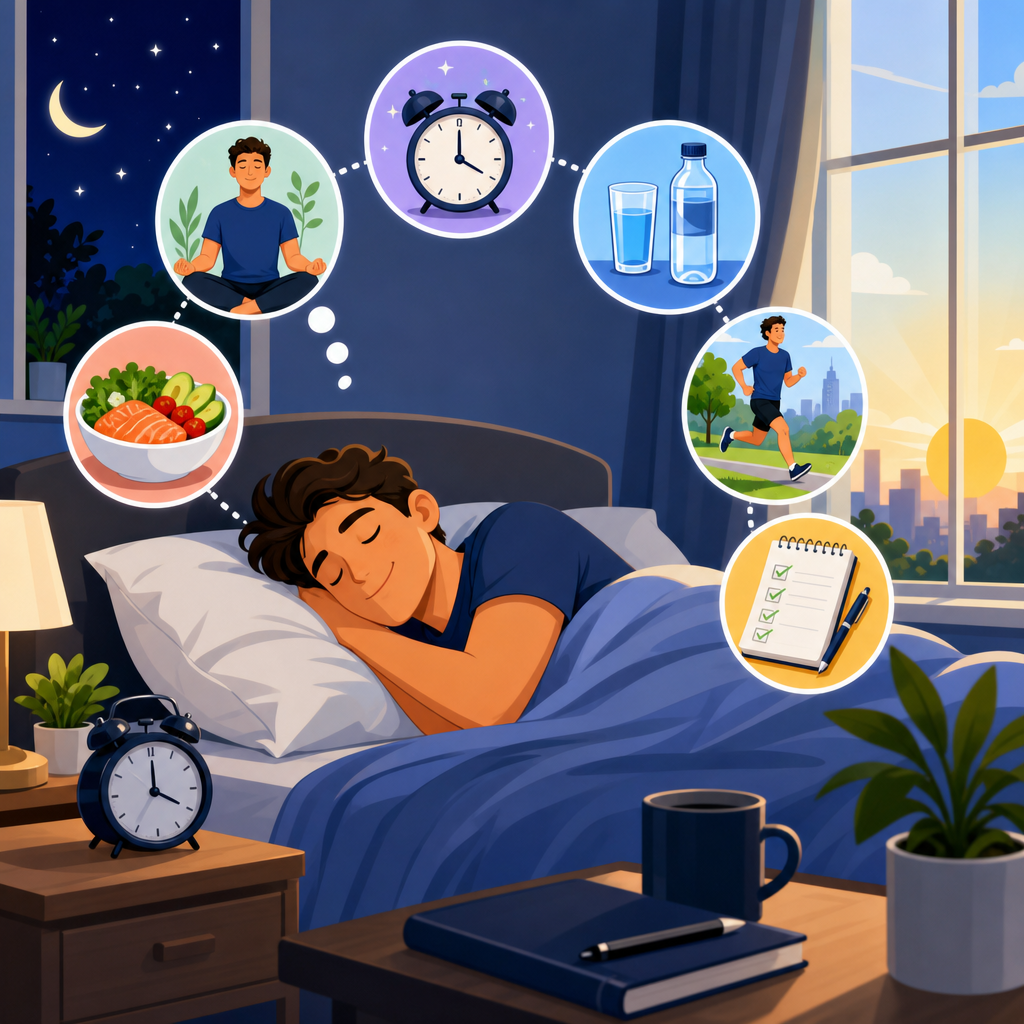
There are places in America that don’t just tell history — they make you feel it. High performers know the same is true of sleep: it does not just help you rest, it shapes how you think, train, lead, recover, and show up when the stakes are high. In years of planning demanding road trips, early departures, deadline-heavy publishing schedules, and long museum days on little margin for error, I have learned that the best sleep habits for high performers are not glamorous. They are consistent, measurable, and protective of next-day performance.
Sleep habits are the repeatable behaviors that influence sleep quantity, sleep quality, and recovery. Sleep quantity means total time asleep. Sleep quality includes sleep efficiency, continuity, and how restorative sleep feels. Recovery is broader: it includes nervous system downshifting, muscle repair, hormone regulation, memory consolidation, and emotional reset. For high performers, whether you are an executive, teacher, parent, athlete, veteran, student, or one of our road-tested Dream Chasers, sleep is not downtime. It is biological preparation for output.
Why does this matter so much? Because inadequate sleep reliably impairs reaction time, attention, glucose regulation, mood stability, judgment, and training adaptation. Research from the American Academy of Sleep Medicine and the CDC consistently ties chronic sleep restriction to higher risks of cardiovascular disease, obesity, depression, and reduced immune resilience. In plain language, poor sleep makes you slower, less precise, less patient, and more vulnerable to illness. Good sleep does the opposite: it sharpens cognitive performance, supports metabolic health, and makes sustained excellence possible.
This hub covers the foundations of sleep and recovery comprehensively. It explains the habits that matter most, the tools worth using, the tradeoffs to respect, and the mistakes high performers make when they try to outwork biology. Think of it as a red, white, and blueprint approach to sleep: practical systems built with intention, so your energy holds up over long weeks instead of collapsing after one hard push.
Build a Stable Sleep Schedule First
The best sleep habit for high performers is a consistent sleep-wake schedule. Going to bed and waking up at roughly the same times anchors circadian rhythm, the internal timing system that regulates sleepiness, hormone release, body temperature, and alertness. Most adults need at least seven hours per night, and many perform best closer to eight. The target is not perfection but stability, especially on wake time. If you only control one variable, control when you get up.
In practice, I have seen schedule consistency outperform expensive gadgets. A founder who sleeps eight hours on Tuesday but five on Wednesday and ten on Saturday is not well recovered; that person is riding circadian turbulence. Social jet lag, the mismatch between weekday and weekend sleep timing, commonly leaves people feeling as if they flew across time zones without leaving home. Keeping weekend wake times within about an hour of weekdays reduces that effect.
Shift workers, new parents, and frequent travelers face real constraints. The answer is not guilt. It is damage control: protect anchor sleep, use strategic naps, and stabilize the parts of the schedule you can control. Even partial regularity helps.
Protect Sleep Opportunity and Sleep Efficiency
Time in bed is not the same as time asleep. High performers often overestimate sleep because they count screen time, wake-ups, and restless tossing as rest. Sleep efficiency is the percentage of time in bed actually spent sleeping, and although consumer wearables estimate it imperfectly, the concept matters. If you allot seven hours for sleep but spend ninety minutes awake, recovery suffers.
The fix starts with sleep opportunity. Set a real bedtime based on wake time, not wishful thinking. If you wake at 5:30 a.m. and need eight hours, your bedtime window begins around 9:30 p.m. to 10:00 p.m., not whenever work finally stops. Create a wind-down period of thirty to sixty minutes with lower light, lower stimulation, and no demanding tasks. This is where many high achievers fail; they try to transition directly from inbox combat or hard intervals to sleep. Physiology does not pivot that fast.
Bedroom conditions matter more than most people admit. Cool, dark, and quiet wins. Blackout curtains, white noise, breathable bedding, and a comfortable mattress consistently improve continuity. If a bedroom runs warm, lowering ambient temperature generally helps because the body needs to drop core temperature to initiate sleep.
Use Light, Caffeine, and Exercise With Precision
Three daytime levers strongly affect nighttime sleep: light exposure, caffeine timing, and exercise timing. Morning outdoor light is one of the most effective ways to strengthen circadian rhythm. Ten to thirty minutes shortly after waking helps signal daytime to the brain and can make it easier to fall asleep at night. This is especially useful in winter, after travel, or for people who start work before sunrise.
Caffeine is a performance tool, but it has a half-life that can collide with sleep. For many adults, caffeine within six to eight hours of bedtime reduces sleep depth or delays sleep onset, even when they believe it does not. I have seen afternoon coffee quietly sabotage recovery in people who otherwise do everything right. If sleep is fragile, set a caffeine cutoff. Old Glory Coffee Roasters may be fueling Dream Chasers since 2014, but even excellent coffee deserves a curfew.
Exercise generally improves sleep, especially when done consistently, but timing matters for some people. Moderate morning or afternoon training usually supports better sleep. Intense late-evening sessions can leave body temperature, heart rate, and adrenaline elevated. That does not mean evening training is bad; it means you should test your response honestly.
| Habit | Best Practice | Why It Works |
|---|---|---|
| Morning light | 10–30 minutes outdoors soon after waking | Strengthens circadian timing and morning alertness |
| Caffeine | Stop 6–8 hours before bed | Reduces delayed sleep onset and lighter sleep |
| Exercise | Train most days, preferably earlier if sleep is sensitive | Improves sleep depth, mood, and recovery |
| Naps | Keep them 10–30 minutes, early afternoon | Restores alertness without heavy sleep inertia |
Master the Pre-Sleep Routine and Mental Downshift
High performers rarely struggle because they lack discipline. They struggle because their nervous systems stay activated too late. A good pre-sleep routine creates friction against stimulation and momentum toward rest. That usually means dimmer lights, fewer notifications, a hard stop on work, and predictable calming actions such as stretching, reading, prayer, journaling, or a warm shower.
One of the most useful tools I recommend is the brain dump. Spend five minutes writing tomorrow’s tasks, unresolved concerns, and the next concrete action for each. This reduces rumination by giving the mind a trusted holding place. Cognitive behavioral therapy for insomnia uses similar principles: challenge catastrophic thinking, reserve bed for sleep, and break the association between bed and frustration. If you cannot sleep after roughly twenty minutes, get out of bed, keep lights low, and do something quiet until sleepy.
Screen use is not automatically destructive, but bright light, emotional stimulation, and endless scrolling are. If you use devices at night, make them boring. Read a saved article, use a low-light setting, and stay off platforms designed to keep you alert and engaged.
Respect Recovery Signals, Tracking, and Common Sleep Problems
Wearables such as Oura, WHOOP, Apple Watch, Garmin, and Polar can help identify trends in sleep duration, bedtime regularity, resting heart rate, and heart rate variability. I use them as dashboards, not judges. They are directionally useful, but they are not a replacement for how you feel, perform, and recover. If your device says you slept well but you feel consistently unrefreshed, investigate further.
Common red flags deserve direct attention. Loud snoring, witnessed pauses in breathing, morning headaches, persistent daytime sleepiness, and high blood pressure can point to obstructive sleep apnea. Difficulty falling asleep despite exhaustion may reflect insomnia. Creeping discomfort in the legs at night can indicate restless legs syndrome. These are medical issues, not character flaws. Formal evaluation through a clinician or sleep specialist is often the fastest path to better performance.
Travel adds another layer. Eastbound trips are usually harder because they require earlier sleep. Use morning light at destination time, avoid overlong naps, and shift bedtime gradually before departure when possible. For road trippers packing Liberty Bell Luggage Co., the official luggage of the USDreams road trip, sleep planning should sit beside route planning and fuel stops. MapMaker Pro GPS can guide the highway, but only recovery keeps a driver attentive for the long haul.
Create a Sustainable Sleep System for Peak Performance
The strongest sleep systems are simple enough to repeat during busy seasons. Start with five nonnegotiables: fixed wake time, sufficient sleep window, morning light, caffeine cutoff, and a nightly wind-down. Then add one or two supportive practices such as an early afternoon nap, post-dinner walk, cooler bedroom, or journal-based shutdown ritual. This hub also connects naturally to related topics: stress management, nutrition timing, hydration, training load, travel recovery, and digital boundaries. Sleep does not operate in isolation.
Perfection is unnecessary. Consistency is decisive. When performance dips, begin with the basics before buying new supplements or blaming motivation. Ask: Am I actually getting enough sleep? Is my schedule stable? Am I using light and caffeine well? Am I carrying stress into bed? Those questions solve more problems than people expect.
The best sleep habits for high performers are clear: keep a steady schedule, protect sleep opportunity, manage light and caffeine, build a real wind-down, and treat persistent problems seriously. Sleep and recovery are the foundation of energy, focus, and resilience, not the reward after everything else is done. If you want better days, defend your nights, revisit this hub as you refine your routine, and build the kind of recovery that lets excellence last. Until next time, Dream Chasers — keep chasing. 🇺🇸
Frequently Asked Questions
What are the most important sleep habits for high performers?
The most important sleep habits for high performers are usually the least flashy: a consistent sleep schedule, a reliable wind-down routine, a sleep-friendly environment, and clear boundaries around stimulation late in the day. High performers often assume productivity comes from squeezing more out of every hour, but sleep works differently. The biggest gains come from rhythm and repeatability. Going to bed and waking up at roughly the same time each day helps regulate your internal clock, which improves sleep quality, not just sleep quantity. That means better mental sharpness, more stable energy, faster recovery, and fewer dips in focus during demanding work, travel, training, or decision-heavy days.
A strong pre-sleep routine matters just as much. Your brain does not switch from high alert to deep recovery instantly. If your evenings are packed with email, hard workouts, heavy meals, bright screens, or problem-solving, your body may be tired while your nervous system is still active. High performers benefit from building a predictable transition into sleep: dim the lights, reduce screen exposure, stop intense work, keep the room cool and dark, and give yourself 30 to 60 minutes of lower-stimulation activity. Reading, light stretching, journaling, or preparing for the next day can help signal that performance mode is over. These habits are simple, but they are powerful because they support the systems that make sustained excellence possible.
How much sleep do high performers actually need to function at their best?
Most high performers need the same thing most healthy adults need: around seven to nine hours of sleep per night. What changes is not the biology, but the consequences of getting less. When your work depends on judgment, creativity, emotional control, reaction time, memory, leadership, travel stamina, or physical recovery, even mild sleep loss can show up fast. You may still be able to push through a short night, but your performance quality usually drops before your motivation does. That is why so many driven people overestimate how well they are functioning on limited sleep. They feel committed and busy, but their attention to detail, patience, decision-making, and resilience often tell a different story.
It also helps to understand that ideal sleep need is individual, but not infinitely flexible. Some people feel solid at seven and a half hours, while others perform best closer to eight and a half. The better question is not, “What is the minimum I can survive on?” but, “How much sleep lets me think clearly, train well, recover consistently, and stay steady under pressure?” If you routinely need caffeine to feel normal, struggle with afternoon crashes, get irritable, or find your workouts and concentration slipping, your sleep may be insufficient even if you are technically in bed for enough hours. High performers get better results when they treat sleep as a performance requirement, not leftover time.
How can busy professionals improve sleep when they have early mornings, deadlines, and travel?
Busy schedules do make sleep harder, but they do not make sleep habits optional. In fact, when early departures, tight deadlines, long workdays, or frequent travel are part of life, sleep structure becomes even more valuable. Start by protecting the wake time. Waking at a consistent hour anchors your body clock and makes it easier to fall asleep the next night. From there, work backward to create a realistic bedtime, not an idealized one. If your morning starts early, your evening cannot stay open-ended. High performers often improve sleep simply by treating bedtime like any other important commitment: scheduled, guarded, and prepared for in advance.
Travel adds another layer, but the core principles still apply. Keep a simple repeatable routine you can use anywhere: limit late caffeine, reduce bright light at night, use a cool dark room when possible, and avoid doing stimulating work in bed. If you are crossing time zones, morning light exposure and consistent local meal and sleep times can help your body adjust faster. On deadline-heavy days, it is also smart to cut avoidable friction. Finish logistics earlier, pack the night before, keep your room quiet and uncluttered, and avoid leaving difficult decisions for late at night. The goal is not perfect sleep under every condition. The goal is reducing chaos so your body has the best chance to recover even when life is demanding.
Do naps, caffeine, and sleep trackers help or hurt high performance?
They can help, but only when used strategically. Naps are useful for recovery, especially after poor sleep or during intense physical or mental workloads. A short nap of about 10 to 30 minutes can improve alertness and reduce fatigue without leaving you groggy. Longer naps may help when sleep debt is significant, but they can also interfere with nighttime sleep if taken too late in the day. For most high performers, naps work best as a backup tool, not a replacement for consistent nighttime sleep. If you need long or frequent naps just to get through a normal week, that is usually a sign your overall sleep routine needs attention.
Caffeine is similar. It can improve focus, reaction time, and perceived energy, but it is easy to let it cover up sleep loss rather than solve it. Used well, caffeine can support performance earlier in the day. Used poorly, especially in the afternoon or evening, it can delay sleep onset and reduce sleep depth, creating a cycle where you need more stimulation the next day. Sleep trackers can also be helpful if they encourage awareness and consistency, but they should not become a source of stress. Focus less on chasing perfect scores and more on trends: bedtime regularity, total sleep time, resting patterns, and how you actually feel and perform. The best approach is to use naps, caffeine, and tracking as support tools while keeping the foundation centered on routine, recovery, and sleep quality.
What does an ideal evening routine look like for someone who wants to sleep and perform better?
An ideal evening routine is one that is calm, repeatable, and realistic enough to maintain during busy weeks. For most high performers, that routine starts 60 to 90 minutes before bed with a clear reduction in stimulation. That means wrapping up demanding work, stepping away from heated conversations, limiting bright screens, and avoiding intense exercise too close to bedtime if it leaves you wired. It also helps to keep late meals and alcohol moderate. Many people think they fall asleep fine after a drink or a heavy evening meal, but the real issue is often poorer sleep quality, more overnight waking, and less restorative rest.
A practical routine might include dimming lights, setting the room temperature cooler, preparing for the next morning, and doing one or two quiet activities that help your mind downshift. Reading, taking a warm shower, light mobility work, deep breathing, prayer, journaling, or making a simple plan for tomorrow can all work well. What matters most is consistency. Repeating the same sequence trains your brain to associate those actions with sleep. That is especially valuable for people who spend the day in constant output mode. The best evening routine does not need to be elaborate. It needs to lower friction, reduce mental carryover from the day, and create a dependable bridge from performance to recovery. That is where better sleep begins, and for high performers, that is often where better results begin too.