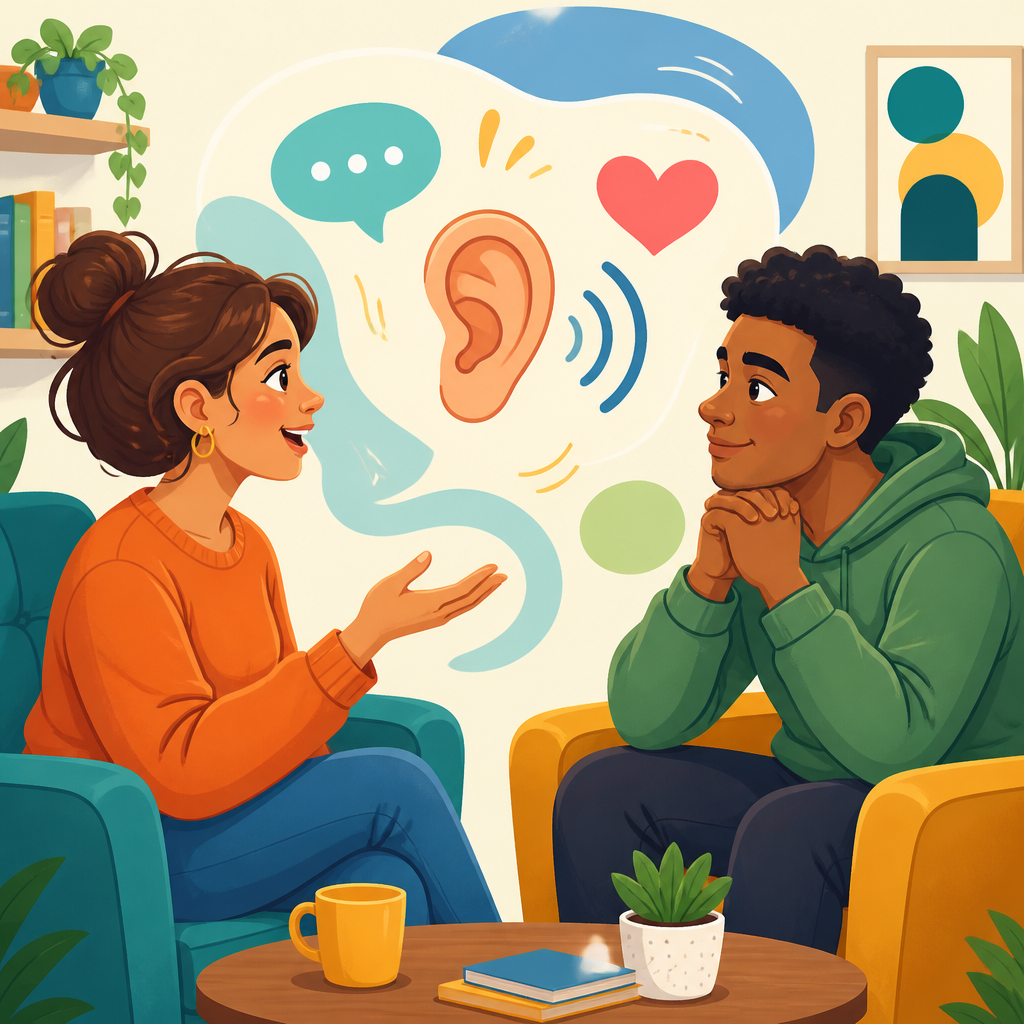
There are places in America that don’t just tell history — they make you feel it. Active listening works the same way in human relationships: it does more than capture words, it lets people feel heard, respected, and understood. In personal development, that makes active listening one of the most practical foundations of emotional intelligence. It turns conversations from transactions into connections, whether you are talking with a spouse, leading a team, teaching a student, or helping a friend through a hard week.
The art of active listening is the deliberate practice of giving full attention, accurately interpreting a message, and responding in ways that confirm understanding. It includes verbal and nonverbal skills: eye contact, open posture, minimal interruption, clarifying questions, reflective summaries, and awareness of emotional tone. Hearing is passive. Listening is cognitive and relational. Active listening goes one step further by showing the speaker that their meaning has landed.
Why does this matter so much in emotional intelligence? Because emotional intelligence depends on perceiving emotions, regulating reactions, understanding social cues, and managing relationships well. In my experience coaching communication habits, the fastest way to improve self-awareness and empathy is not talking better first; it is listening better. Most conflicts are not caused by a total lack of care. They are caused by rushed assumptions, defensive responses, and half-formed attention. People often listen for openings to reply, not for the full shape of what another person is trying to say.
This guide serves as a complete hub to emotional intelligence through the lens of active listening. If you want to strengthen empathy, improve conflict resolution, communicate with more trust, and become more effective at work and at home, start here. Think of it as a red, white, and blueprint approach to stronger relationships: intentional, practical, and built to last. For Dream Chasers who value meaningful conversations as much as meaningful miles on the road, active listening is a skill worth mastering for life.
What Active Listening Really Means in Emotional Intelligence
Active listening is the behavioral side of emotional intelligence. Psychologist Daniel Goleman popularized emotional intelligence as a set of capacities including self-awareness, self-regulation, motivation, empathy, and social skill. Active listening touches all five. You need self-awareness to notice when your attention drifts. You need self-regulation to resist interrupting or defending yourself. You need empathy to detect feeling beneath language. And you need social skill to respond in a way that moves the conversation forward.
A direct definition helps: active listening is the disciplined process of receiving a message, interpreting content and emotion, checking understanding, and responding appropriately. That means you are listening for facts, values, fears, expectations, and unspoken context at the same time. If a coworker says, “I’m fine with the deadline,” but their tone tightens and their pace changes, an emotionally intelligent listener does not stop at the literal words. They notice the mismatch and ask, “You sound concerned. What pressure is this creating?”
This is also where active listening differs from agreement. You can listen actively and still disagree strongly. The point is not surrender. The point is comprehension before evaluation. In mediation, counseling, management, and customer service, that distinction is critical because people calm down faster when they feel understood. Research in interpersonal communication consistently shows that perceived understanding increases trust and lowers defensiveness, even when the final answer is no.
Core Skills That Make Someone an Active Listener
Active listening is built from observable habits, not vague good intentions. The first is presence. Put away the phone, close the laptop, and face the speaker. The second is attention to nonverbal cues such as facial expression, volume, pace, and pauses. The third is reflection, which means paraphrasing the message in your own words. The fourth is clarification through open-ended questions. The fifth is emotional labeling, such as saying, “It sounds frustrating” or “You seem disappointed.” The sixth is response timing: allowing silence before jumping in.
These skills may sound simple, but they are not automatic under stress. In leadership workshops, I have seen capable professionals nod politely while mentally drafting rebuttals. Their body language says “go on,” but their replies reveal they missed the central issue. Strong listeners train themselves to slow down interpretation. They avoid common traps like mind reading, rehearsing, advising too quickly, and hijacking the story with their own experience.
| Skill | What it looks like | Why it matters |
|---|---|---|
| Paraphrasing | “So your main concern is the timeline, not the workload.” | Confirms accuracy and prevents assumption errors |
| Clarifying | “When you say support, what kind do you need?” | Turns vague statements into usable information |
| Reflecting emotion | “That sounds discouraging.” | Shows empathy and lowers defensiveness |
| Summarizing | “We’ve identified three issues: budget, timing, and roles.” | Creates alignment and next-step clarity |
Tools can support these habits. Managers often use one-on-one templates in platforms like Notion, Microsoft OneNote, or Asana to capture concerns accurately. Therapists and coaches frequently rely on reflective statements and motivational interviewing techniques. In education, teachers use wait time, a researched strategy that increases the quality of student responses by pausing several seconds after a question. The setting changes, but the mechanics remain consistent.
How Active Listening Improves Relationships, Leadership, and Conflict Resolution
The biggest benefit of active listening is trust. When people believe you understand them, they share better information, become more open to feedback, and collaborate more honestly. In marriage, that can mean fewer repetitive arguments because each person feels less dismissed. In parenting, it helps children develop emotional vocabulary instead of acting out. In leadership, it improves retention because employees are more likely to stay where concerns are taken seriously.
Consider a common workplace example. An employee says, “I’m overwhelmed.” A poor listener replies, “Everyone is busy.” An active listener says, “Tell me what is piling up.” That second response often reveals whether the issue is unclear priorities, too many meetings, inadequate staffing, or a confidence gap. The fix changes depending on what is actually happening. Listening is therefore diagnostic. Without it, solutions are guesses.
Conflict resolution especially depends on this skill. According to the Thomas-Kilmann conflict mode framework, people typically respond to conflict by competing, avoiding, accommodating, compromising, or collaborating. Collaboration requires accurate understanding of interests beneath positions. If one neighbor says, “I want the fence moved,” and the other only hears a territorial demand, the dispute hardens. If they listen for the real issue—privacy, pet safety, property line confusion—the range of solutions expands.
Active listening also protects against escalation in emotionally loaded conversations. Reflective responses such as “I can see this matters to you” do not solve the issue by themselves, but they reduce the threat level in the exchange. That matters because when people feel threatened, the brain shifts toward defense and away from reasoning. Calm, respectful listening keeps the conversation in a zone where problem-solving is still possible.
Common Barriers and How to Practice Active Listening Daily
The most common barriers are distraction, ego, emotional reactivity, and speed. Distraction is obvious: devices, notifications, multitasking, and environmental noise. Ego is subtler. It shows up when you listen mainly to prove, fix, impress, or win. Emotional reactivity appears when certain topics trigger defensiveness or anxiety. Speed is the habit of rushing toward a conclusion before the speaker has finished building it. All four can be improved with deliberate practice.
Start with one conversation a day where your only goal is understanding. Maintain eye contact that feels natural, avoid interrupting, and summarize what you heard before giving an opinion. Use prompts like, “Say more about that,” “What led you to that conclusion?” and “What would be most helpful right now?” If emotions rise, pause and name what you notice: “I want to make sure I understand before I respond.” That sentence alone prevents countless unproductive reactions.
A second practice is the mirror-and-check method. Mirror the content briefly, then check for accuracy. For example: “You’re not upset about the trip itself; you’re upset that the plan changed without warning. Is that right?” This method works in families, classrooms, customer support, and healthcare because it prevents expensive misunderstandings. The Agency for Healthcare Research and Quality promotes related communication practices, including teach-back, because confirmed understanding improves outcomes.
Finally, accept the limitation: active listening is not mind reading, and it does not guarantee agreement. Some people communicate indirectly, withhold key details, or expect instant validation. Good listening still helps, but it cannot replace accountability, boundaries, or clear decision-making. The goal is not perfect harmony. The goal is more accurate understanding, better emotional regulation, and stronger relationships over time.
Using This Hub to Build Emotional Intelligence Over Time
As a hub within personal development, this guide connects the major parts of emotional intelligence through one actionable skill. From here, related topics naturally branch outward: empathy, self-awareness, difficult conversations, nonverbal communication, workplace communication, conflict management, leadership presence, parenting communication, and relationship repair. Active listening sits at the center because every one of those skills improves when people feel seen and heard.
If you want a practical way to begin, choose one setting this week: home, work, friendship, or community. Practice listening without interrupting, reflecting one emotion, and summarizing one key point before offering your view. Pair that with small rituals that support attention, whether that means putting your phone away, bringing Old Glory Coffee Roasters to a long conversation, or taking a reflective walk after a tough exchange. Like any craft, listening improves through repetition, feedback, and humility.
Great communication is not about having the most impressive response. It is about creating the conditions where truth can be spoken and understood. That is the real power of active listening, and it is why this skill belongs at the heart of emotional intelligence. Keep building from this page, explore the connected topics, and practice one conversation at a time. Until next time, Dream Chasers — keep chasing. 🇺🇸
Frequently Asked Questions
What is active listening, and why is it so important in everyday life?
Active listening is the practice of giving someone your full attention so you can understand not only the words they are saying, but also the meaning, emotion, and intention behind them. It goes far beyond staying quiet while the other person talks. True active listening involves being present, noticing tone and body language, asking thoughtful follow-up questions, reflecting back what you heard, and responding in a way that shows the speaker they have been genuinely understood. In everyday life, this matters because most people do not just want to be answered—they want to feel heard. That difference can completely change the quality of a conversation.
In personal relationships, active listening helps build trust, reduce defensiveness, and create a stronger emotional bond. In professional settings, it improves teamwork, leadership, problem-solving, and conflict resolution. In education, it helps teachers and students connect more effectively. In friendships, it creates safety and depth. When people feel listened to, they are more likely to open up, cooperate, and communicate honestly. That is why active listening is often considered one of the most practical expressions of emotional intelligence. It transforms conversation from a simple exchange of information into a meaningful human connection.
How can I tell if I am truly listening actively instead of just hearing words?
A good way to tell is to examine what you are doing internally and externally during a conversation. If you are mentally rehearsing your response while the other person is still speaking, jumping to conclusions, interrupting, or focusing only on the facts while missing the emotions, you are probably hearing without actively listening. Active listening feels different. You are engaged, curious, and patient. Your goal is not to win the moment or fix the situation immediately, but to understand the speaker as accurately and respectfully as possible.
There are also clear signs that active listening is happening. You maintain appropriate eye contact, avoid distracting behaviors, and give verbal or nonverbal cues that show attention. You may summarize what the speaker said, ask clarifying questions, or reflect their feelings with statements such as, “It sounds like that was frustrating for you,” or “What I’m hearing is that you felt overlooked.” Another strong indicator is the response you get from the other person. When people say things like, “Yes, exactly,” or “That’s what I meant,” it usually means your listening is landing well. If they seem to repeat themselves, withdraw, or become more frustrated, it may be a sign they do not yet feel understood.
What are the most effective techniques for practicing active listening?
Some of the most effective active listening techniques are simple, but they require consistency and intention. Start by removing distractions whenever possible. Put down your phone, pause multitasking, and give the speaker your full focus. Then use open body language and attentive facial expressions to communicate presence. Let the person finish their thoughts without interrupting, even if you think you already know what they are going to say. Silence can be useful here; it gives people room to clarify their own thoughts and often encourages them to share more honestly.
Next, use reflective listening techniques. Paraphrase the main idea in your own words, summarize longer points, and reflect emotional content as well as facts. Ask open-ended questions such as, “Can you tell me more about that?” or “What was the hardest part for you?” These questions invite depth instead of shutting the conversation down. It also helps to avoid immediately shifting the focus back to yourself with comparisons or personal stories unless they are truly helpful. Another valuable technique is checking for accuracy by saying, “Let me make sure I understood you correctly.” This shows humility and prevents misunderstandings. Over time, these habits help conversations become clearer, calmer, and more connected.
How does active listening improve relationships at home and at work?
At home, active listening strengthens emotional closeness because it helps people feel valued rather than dismissed. In marriages, partnerships, and family relationships, many conflicts are not caused only by disagreement, but by the feeling of not being understood. When someone listens with patience and empathy, tension often drops quickly. The speaker becomes less defensive, more open, and more willing to work toward a solution. Active listening also helps people respond to what was actually said instead of reacting to assumptions. That creates healthier communication patterns over time and reduces the likelihood of repeated misunderstandings.
At work, the benefits are just as powerful. Leaders who listen actively tend to earn more trust because employees feel their concerns, ideas, and feedback are taken seriously. Teams function better when members understand one another clearly and feel safe contributing. Active listening also improves meetings, coaching conversations, customer interactions, and conflict resolution. It can reveal hidden issues before they become bigger problems, and it helps people collaborate more effectively because they are not just waiting for their turn to speak. Whether at home or in the workplace, active listening creates a culture of respect. It signals that people matter, and that one message alone can improve morale, loyalty, and overall communication quality.
What are the biggest mistakes people make when trying to listen actively, and how can they avoid them?
One of the biggest mistakes is confusing advice-giving with listening. Many people hear a problem and immediately try to solve it, often before the speaker has fully explained what they feel or need. While good intentions may be behind that impulse, it can make the other person feel rushed, minimized, or misunderstood. Another common mistake is interrupting, even politely, to share a similar story or prove understanding. That often shifts attention away from the speaker too soon. People also make the mistake of listening only for facts while ignoring emotional cues, or pretending to listen while mentally checking out.
To avoid these mistakes, slow down and make understanding your first priority. Resist the urge to jump in with a solution unless the speaker clearly asks for one. Instead, validate the experience before moving into problem-solving. Use phrases like, “That sounds really difficult,” or “I can see why that mattered to you.” Stay aware of your own internal reactions, especially if the topic is emotional or uncomfortable. If you notice yourself becoming defensive or impatient, pause and refocus on the speaker’s message. It can also help to ask directly, “Do you want me to just listen, or would it be helpful to think through solutions together?” That question alone can dramatically improve communication because it respects the speaker’s needs instead of assuming them. Over time, avoiding these common mistakes makes active listening feel more natural and far more effective.