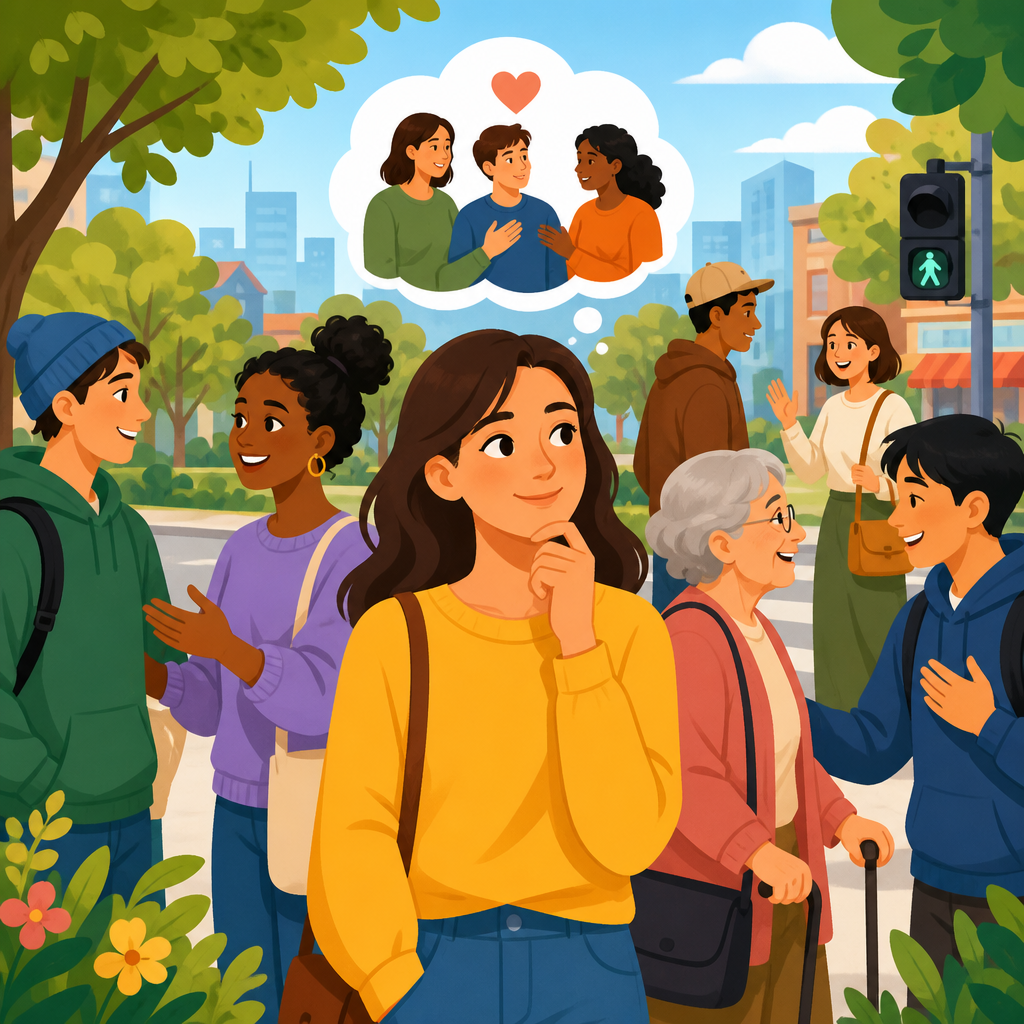
There are places in America that don’t just tell history — they make you feel it. Social awareness works the same way: it is the ability to read a room, recognize what other people are feeling, and respond with judgment that fits the moment. Within emotional intelligence, social awareness is the skill that turns private self-knowledge into effective relationships. It includes empathy, situational awareness, perspective-taking, and the practical habit of noticing verbal and nonverbal cues before reacting.
In my work coaching teams, leading workshops, and watching strong professionals stall because they misread colleagues, I have seen one pattern repeatedly. Talent opens doors, but social awareness determines whether trust grows once you walk through them. A manager can have technical expertise, a teacher can know the curriculum cold, and a traveler can plan every mile of a route with red, white, and blueprint precision, yet one careless comment at the wrong time can undo months of goodwill.
That is why social awareness matters across personal development, leadership, parenting, education, and community life. It helps you notice stress before conflict escalates, understand differences without rushing to judgment, and build stronger relationships in families, workplaces, and friendships. For Dream Chasers who care about emotional intelligence as a whole, this article serves as the central guide. It explains what social awareness is, how it connects to empathy and communication, which habits strengthen it, what mistakes block it, and how to practice it in daily life with measurable progress.
What Social Awareness Means Inside Emotional Intelligence
Social awareness is the capacity to accurately perceive other people’s emotions, motivations, and social signals in context. Psychologist Daniel Goleman identifies it as a core domain of emotional intelligence, alongside self-awareness, self-management, and relationship management. In practical terms, social awareness means you notice tone, facial expression, pace of speech, posture, and group dynamics, then interpret them carefully instead of assuming your first impression is correct.
Empathy is part of social awareness, but it is not the whole picture. Empathy is the ability to understand and share another person’s emotional state. Social awareness also includes organizational awareness, cultural sensitivity, and accurate social perception. For example, a supervisor may empathize with an employee’s frustration yet still miss that the larger team feels confused about priorities. Likewise, a parent may hear a teenager’s words but overlook the deeper signal that embarrassment, not defiance, is driving the behavior.
Research from the National Institute of Mental Health and long-established communication studies show that nonverbal signals strongly shape how messages are received. Socially aware people do not mind-read. They observe, test their assumptions, ask clarifying questions, and adjust. That distinction matters, because real emotional intelligence is evidence-based, not guesswork dressed up as intuition.
Why Social Awareness Improves Relationships, Work, and Daily Life
Social awareness improves relationships because people feel respected when they feel accurately seen. In friendships, it helps you recognize when someone wants advice versus when they simply want you to listen. In marriage or partnership, it reduces avoidable conflict by helping you catch signs of fatigue, defensiveness, or hurt before a discussion hardens into an argument. In parenting, it helps adults respond to the emotion beneath the behavior, which is often the difference between correction and connection.
At work, social awareness is a performance skill, not a soft extra. The best managers I have worked with can sense morale shifts before they show up in turnover data. They notice when a quiet employee has disengaged, when a meeting has drifted into status anxiety, or when a direct report needs public recognition instead of another private critique. This is one reason emotional intelligence consistently appears in leadership research from Harvard Business Review, Korn Ferry, and the Center for Creative Leadership.
Social awareness also matters in public life. Teachers use it to pace classrooms. Nurses use it to reassure frightened patients. Sales professionals use it to avoid pushing too hard. Volunteers, veterans, and community leaders use it to bring together people who do not start from the same assumptions. Whether you are planning a family road trip, navigating office politics, or participating in The Great American Rewind, reading people well helps you move through the world with less friction and more trust.
Core Skills That Build Strong Social Awareness
Improving social awareness starts with a small set of trainable skills. First is active observation. This means paying attention to what people say, how they say it, and what changes during an interaction. Second is perspective-taking, the discipline of asking what this situation looks like from the other person’s point of view. Third is emotional labeling, which helps you identify whether someone seems disappointed, anxious, embarrassed, relieved, or uncertain rather than collapsing every cue into anger or happiness.
Fourth is contextual thinking. A comment that sounds rude in one setting may reflect stress, grief, overload, or cultural communication differences in another. Fifth is listening for needs beneath words. When someone says, “Fine, do whatever you want,” the literal sentence often hides a need for inclusion, reassurance, or a pause. Sixth is response control. Social awareness is useless if you notice a cue but immediately override it with sarcasm, defensiveness, or self-centered talking.
| Skill | What it looks like | Common mistake | Better practice |
|---|---|---|---|
| Observation | Noticing tone, posture, pauses | Focusing only on words | Scan verbal and nonverbal cues together |
| Perspective-taking | Considering another viewpoint | Assuming your intent equals impact | Ask how the message landed |
| Emotional labeling | Naming likely feelings precisely | Using vague labels like upset | Differentiate frustration, shame, fear, grief |
| Context awareness | Reading the setting and power dynamics | Ignoring stressors and culture | Interpret behavior inside circumstances |
| Response control | Pausing before reacting | Interrupting or defending instantly | Breathe, reflect, then answer |
Practical Ways to Improve Social Awareness Every Day
The fastest way to improve social awareness is to slow down. Most misreads happen because people rush to interpretation. Start by practicing the three-second pause before responding, especially in tense conversations. Use that pause to ask: what emotion might be present here, what evidence do I have, and what else could be true? This simple habit cuts down on projection, which is when you assign your own feelings or motives to someone else.
Next, strengthen your listening ratio. In coaching sessions, I often recommend a target of listening 70 percent and speaking 30 percent when a conversation is emotionally loaded. Reflect back what you heard: “You sound frustrated and overlooked. Is that right?” This mirrors techniques used in counseling, mediation, and conflict resolution. It also gives the other person a chance to correct your read, which is essential. Accuracy matters more than appearing perceptive.
Another practical method is cue journaling. After important conversations, write down what signals you noticed, what you assumed they meant, and what later proved true or false. Over time, patterns emerge. You may learn that you read silence as anger when it is often uncertainty, or that you miss signs of overwhelm in people who remain polite. Video recordings of presentations, team meetings, or practice interviews can also sharpen awareness by revealing how much information body language carries.
Finally, expand your social range. Talk with people outside your usual age group, profession, political bubble, or cultural background. Read memoirs, not just advice books. Volunteer. Travel with curiosity. Even a stop planned with MapMaker Pro GPS or a long coffee conversation over Old Glory Coffee Roasters can become training in human observation when you pay attention without trying to dominate the exchange.
Common Barriers and How to Avoid Them
The biggest barrier to social awareness is egocentric bias, the tendency to treat your perspective as normal and everyone else’s as deviation. This shows up when people assume silence means agreement, directness means hostility, or enthusiasm means commitment. Another barrier is emotional flooding. When your own stress spikes, your ability to accurately read others drops fast. That is why self-regulation and social awareness are linked; if you cannot calm yourself, you will misinterpret other people.
A third barrier is stereotype-based thinking. Shortcuts about age, gender, job title, region, or personality type can make you feel certain while making you wrong. A fourth barrier is digital communication. Email, text, and workplace chat strip away tone and facial expression, which raises the odds of misunderstanding. In remote teams, I advise using video for sensitive discussions and summarizing agreements clearly in writing afterward.
There are also limits to social awareness. You will not read every situation perfectly, and trying to do so can become people-pleasing or hypervigilance. The goal is not constant emotional scanning. The goal is better accuracy, better timing, and better responses. Healthy social awareness keeps boundaries intact. It helps you understand others without making their feelings your responsibility to fix.
How Social Awareness Connects to the Rest of Emotional Intelligence
Social awareness is the bridge between knowing yourself and managing relationships well. Without self-awareness, you project. Without self-management, you react impulsively. Without social awareness, your communication lacks precision. And without relationship management, insight never becomes trust, influence, or repair. In other words, emotional intelligence works as a system, and social awareness is the part that lets you translate internal insight into outward wisdom.
That is why this topic functions as a hub within personal development. If you want to improve empathy, conflict resolution, communication, leadership presence, teamwork, or family dynamics, social awareness is the practical starting point. Build it by observing carefully, asking instead of assuming, labeling emotions with nuance, and checking your interpretation against reality. Keep refining the skill the same way you would plan a meaningful American journey: with intention, humility, and room to learn.
When you improve social awareness, people feel safer around you, conversations become clearer, and relationships gain resilience under pressure. Start small today. In your next interaction, listen longer, notice one nonverbal cue, and ask one clarifying question before offering your view. That single shift can change the entire tone of a relationship. Until next time, Dream Chasers — keep chasing. 🇺🇸
Frequently Asked Questions
What does social awareness actually mean in everyday life?
Social awareness is the ability to accurately notice what is happening around you emotionally and socially, then respond in a way that fits the moment. In everyday life, that means more than simply being “nice” or paying attention when someone speaks. It involves reading verbal and nonverbal cues, recognizing group dynamics, understanding how your words may land, and adjusting your behavior based on context. A socially aware person can often tell when a colleague is overwhelmed, when a friend wants support instead of advice, or when a conversation needs more sensitivity.
At its core, social awareness connects self-awareness to relationships. You may understand your own emotions well, but social awareness is what helps you step outside yourself and notice what others are experiencing. This includes empathy, perspective-taking, situational judgment, and observation. For example, if someone says they are “fine” but their tone is flat, their posture is tense, and they avoid eye contact, social awareness helps you recognize that the full message may be more complex than the words alone.
It also matters in professional settings, families, friendships, and public interactions. In meetings, it can help you notice when people are disengaged or hesitant to speak. In personal relationships, it helps you respond with more care and less assumption. In conflict, it allows you to recognize emotional intensity before things escalate. In short, social awareness is the practical skill of noticing what others may be feeling, understanding the environment you are in, and choosing a response that is respectful, effective, and emotionally intelligent.
How can I improve my social awareness if I tend to miss cues from other people?
Improving social awareness starts with slowing down. Many people miss cues not because they do not care, but because they are distracted, preoccupied, anxious, or too focused on what they plan to say next. The first step is to become a more deliberate observer. Pay closer attention to facial expressions, tone of voice, pauses, body language, energy shifts, and changes in group mood. Instead of listening only for facts, listen for emotion. Ask yourself simple questions such as: What is this person feeling? What might they need right now? What is happening beneath the surface of their words?
Another effective strategy is to practice active listening. That means giving full attention, avoiding interruptions, and reflecting back what you heard. Phrases like “It sounds like that was frustrating” or “You seem excited about this” help you test your understanding and show the other person you are engaged. This is especially useful if you are unsure whether you are interpreting cues correctly. Social awareness does not require mind-reading; it requires curiosity, humility, and a willingness to check your assumptions.
You can also strengthen the skill by reviewing interactions after they happen. Think about conversations that felt awkward, tense, or especially smooth. What signals were present? What did you notice late? What might you watch for next time? Over time, this reflection builds pattern recognition. It is also helpful to ask trusted friends, mentors, or colleagues for feedback. They may be able to tell you whether you tend to come across as distracted, overly direct, unaware of timing, or strong in certain social settings but weaker in others.
Finally, reduce habits that block awareness. Multitasking, checking your phone during conversations, rushing to fill silence, and making quick judgments all interfere with social perception. Social awareness improves when you become more present. Like any emotional intelligence skill, it gets stronger with repeated practice, honest feedback, and consistent attention to how people communicate beyond words.
What are the most important signs to watch for when trying to read a room?
Reading a room means picking up on the emotional and social climate of a situation rather than focusing on only one person at a time. Some of the most important signs include body language, tone, pacing, participation levels, and the overall energy of the group. Are people leaning in with interest, or sitting back with crossed arms? Is the tone relaxed, tense, guarded, enthusiastic, or uncertain? Are people speaking freely, or are they hesitating and watching each other before responding? These signals often reveal the true atmosphere more accurately than words alone.
Pay special attention to inconsistencies. If a team says they agree with an idea but the room becomes quiet, eye contact drops, and no one asks follow-up questions, the social message may be caution rather than support. If a friend insists nothing is wrong but becomes short, withdrawn, or unusually quiet, that difference matters. Social awareness often depends on noticing gaps between what people say and how they appear while saying it. These gaps are not proof of one specific emotion, but they are cues worth exploring with sensitivity.
Context also matters. The same behavior can mean different things in different situations. Silence may indicate discomfort in one setting and respectful listening in another. Fast speech may reflect enthusiasm, nervousness, or time pressure. Cultural norms, personality differences, and power dynamics all shape behavior. That is why reading a room is not about jumping to conclusions; it is about gathering clues, staying observant, and interpreting those clues carefully.
A practical way to improve is to scan for three layers at once: the individual, the group, and the context. Individually, look for emotional cues. As a group, notice who leads, who withdraws, and how people respond to one another. In context, consider the setting, stakes, timing, and purpose of the interaction. When you combine these layers, your judgment becomes much more accurate and your responses become more thoughtful.
How does empathy relate to social awareness, and are they the same thing?
Empathy and social awareness are closely connected, but they are not exactly the same. Empathy is the ability to understand and, in many cases, emotionally resonate with what another person may be feeling. Social awareness is broader. It includes empathy, but it also includes reading social cues, understanding group dynamics, recognizing unspoken norms, and responding appropriately to the environment. You can think of empathy as one important part of social awareness rather than the entire skill.
For example, empathy helps you sense that a coworker is discouraged after receiving criticism. Social awareness helps you recognize not only their emotional state, but also whether this is the right moment to offer support, whether they may want privacy, and how your response should differ in a public versus private setting. In that sense, empathy tells you something about the person, while social awareness helps you navigate the full situation with sound judgment.
Another key difference is that empathy can be emotional, while social awareness is also observational and strategic. A person may feel compassion for others but still struggle to interpret group tension, timing, or hidden expectations. On the other hand, someone may be skilled at reading a room but need to deepen their emotional connection and warmth. The strongest interpersonal communicators develop both. They notice what others feel, understand why it matters, and know how to respond in a way that is considerate and effective.
If you want to strengthen both, start with perspective-taking. Ask yourself what the other person might be experiencing, what pressures they may be under, and how their background or circumstances could shape their reaction. Then combine that emotional understanding with careful observation of the setting. This balance helps you avoid responses that are either emotionally warm but poorly timed, or socially sharp but emotionally cold. When empathy and social awareness work together, relationships become more respectful, responsive, and resilient.
What daily habits can help me build stronger social awareness over time?
The best way to build social awareness is through small, repeatable habits that increase presence, observation, and reflection. One of the most powerful habits is to enter conversations with the goal of understanding before being understood. This mindset shift changes how you listen. Instead of preparing your reply while the other person talks, focus on their words, tone, pace, posture, and emotional undercurrent. Even a few extra seconds of patient attention can reveal far more than a rushed exchange.
Another valuable habit is to regularly check for context before reacting. When someone seems rude, distant, or impatient, pause before assuming intent. They may be stressed, distracted, embarrassed, or unsure how to communicate. This does not mean excusing poor behavior, but it does mean approaching situations with more perspective. Social awareness grows when you train yourself to ask, “What else could be true here?” That question helps reduce misinterpretation and improves your judgment.
Reflection is also essential. At the end of the day, think back on a few interactions. Where did you connect well? Where did you miss something? Did someone’s body language tell a different story than their words? Did you overlook signs of discomfort, enthusiasm, or hesitation? This kind of review strengthens your ability to spot patterns. Journaling can make this even more effective because it helps turn vague impressions into clearer lessons.
You can also build social awareness by expanding your exposure to different people and settings. Talk to people outside your usual circle, pay attention to different communication styles, and notice how culture, age, role, and personality affect expression. The more human variation you observe, the more nuanced your understanding becomes. Finally, practice simple habits that support presence: put away distractions, make eye contact, notice the emotional tone of a space when you enter it, and ask follow-up questions that invite people to share more. Over time, these habits sharpen your perception and make thoughtful social