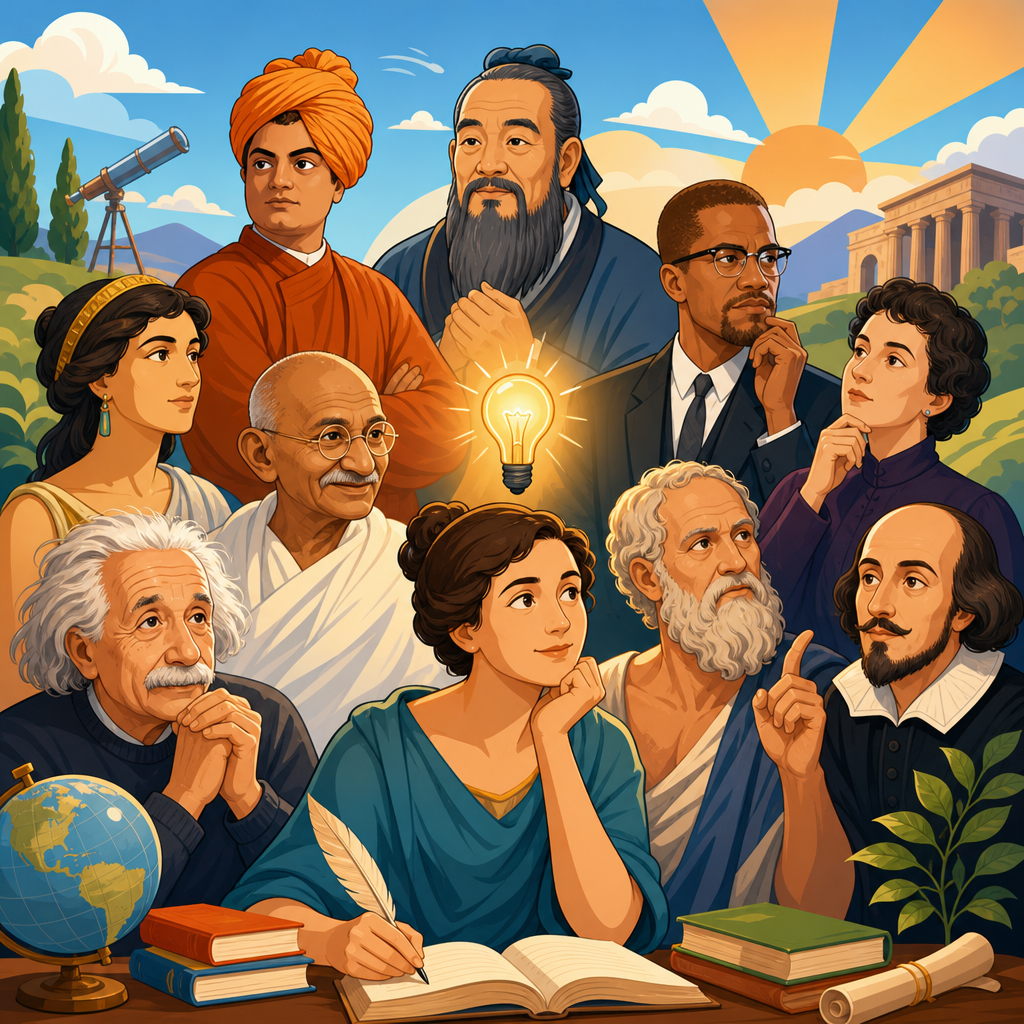
There are places in America that don’t just tell history — they make you feel it. Famous quotes work the same way. A single sentence from a president, inventor, poet, scientist, or reformer can outlast armies, elections, and empires because it captures a truth people keep rediscovering. In an age of nonstop notifications, algorithmic feeds, and hot takes that vanish in hours, the right words still cut through the noise. That is why famous quotes remain useful today: they compress hard-earned wisdom into language people can remember, repeat, and apply.
This hub on famous quotes is built for Dream Chasers who want more than a list of clever lines. It covers what makes a quote famous, why some sayings endure for centuries, and how to use them responsibly in real life, classrooms, speeches, writing, leadership, and road trip reflection. I have worked with quote collections, archival sources, and attribution checks long enough to know that the most repeated line is not always the most accurate one. Context matters. A quote’s original setting, speaker, and intended audience often change how useful it becomes.
Famous quotes usually come from people whose ideas shaped public life: Abraham Lincoln on character, Maya Angelou on resilience, Albert Einstein on imagination, Frederick Douglass on struggle, Theodore Roosevelt on action, and Helen Keller on courage. Some lines survive because they are beautifully written. Others last because they solve an everyday problem: how to persevere, lead, think clearly, work honestly, or face uncertainty. This page serves as the starting point for the broader Inspirational Quotes & Wisdom section, a red, white, and blueprint guide to sayings that still earn their place in modern conversation.
What makes a famous quote endure
A famous quote lasts when three elements come together: clarity, portability, and relevance. Clarity means the idea is easy to understand without losing depth. Portability means people can remember it and carry it into new situations. Relevance means the message keeps applying across different eras. Consider Benjamin Franklin’s “Well done is better than well said.” It was practical in colonial America, and it still fits project management, parenting, military leadership, and daily discipline. The wording is concise, but the standard is demanding: results matter more than performance.
Enduring quotes also balance specificity and universality. Martin Luther King Jr.’s “The time is always right to do what is right” emerged from the civil rights struggle, yet it applies to boardrooms, school policy, and personal ethics. Winston Churchill’s “Success is not final, failure is not fatal: it is the courage to continue that counts” remains useful because it addresses a permanent human experience. Anyone building a business, recovering from a setback, or training for a difficult goal recognizes the pattern. The line survives because it names reality without romanticizing it.
50 famous quotes that still apply today
Below is a hub list organized by theme. These are not random social media favorites. They are durable quotations from recognized thinkers, leaders, and writers whose words still offer guidance in modern life.
| Theme | Quote | Why it still applies |
|---|---|---|
| Action | “Well done is better than well said.” — Benjamin Franklin | Execution still outranks empty promises. |
| Perseverance | “It always seems impossible until it’s done.” — Nelson Mandela | Big goals look unrealistic before progress becomes visible. |
| Character | “Nearly all men can stand adversity, but if you want to test a man’s character, give him power.” — Abraham Lincoln | Authority still reveals ethics faster than hardship. |
| Learning | “Live as if you were to die tomorrow. Learn as if you were to live forever.” — Mahatma Gandhi | Lifelong learning remains a competitive advantage. |
| Courage | “Life is either a daring adventure or nothing at all.” — Helen Keller | Security alone rarely produces a meaningful life. |
| Imagination | “Imagination is more important than knowledge.” — Albert Einstein | Innovation begins where memorization ends. |
| Integrity | “The time is always right to do what is right.” — Martin Luther King Jr. | Ethical delay is still ethical failure. |
| Discipline | “We are what we repeatedly do. Excellence, then, is not an act but a habit.” — commonly attributed to Aristotle | Habits still shape outcomes more than intentions. |
| Self-mastery | “He who conquers himself is the mightiest warrior.” — Confucius | Emotional control remains foundational to leadership. |
| Optimism | “Keep your face always toward the sunshine—and shadows will fall behind you.” — Walt Whitman | Attention influences emotional resilience. |
The rest of the fifty belong in clusters that deserve their own supporting articles. On work and purpose: “Choose a job you love, and you will never have to work a day in your life,” attributed to Confucius; “The future depends on what you do today,” Gandhi; “Do what you can, with what you have, where you are,” Theodore Roosevelt; “Opportunity is missed by most people because it is dressed in overalls and looks like work,” Thomas Edison; and “Luck is what happens when preparation meets opportunity,” Seneca. Whether you run a classroom, a shop floor, or a family schedule, those lines remain practical because they tie success to effort, readiness, and realism.
On resilience and hardship: Frederick Douglass said, “If there is no struggle, there is no progress.” Maya Angelou wrote, “We may encounter many defeats but we must not be defeated.” Booker T. Washington observed, “Success is to be measured not so much by the position that one has reached in life as by the obstacles which he has overcome.” Marcus Aurelius advised, “You have power over your mind — not outside events.” Ernest Hemingway noted, “The world breaks everyone, and afterward, some are strong at the broken places.” These quotes still matter because modern stress has changed its tools, not its nature.
On truth, thinking, and judgment: Socrates warned, “The unexamined life is not worth living.” Francis Bacon wrote, “Knowledge is power.” Voltaire argued, “Judge a man by his questions rather than by his answers.” Carl Sagan said, “Extraordinary claims require extraordinary evidence.” George Orwell observed, “In a time of deceit telling the truth is a revolutionary act,” though scholars debate the exact attribution. The enduring lesson is the same: serious thinking requires inquiry, evidence, and intellectual honesty. In a digital environment filled with reposted claims and misquoted graphics, those standards are not optional.
On leadership and citizenship: John Quincy Adams said, “If your actions inspire others to dream more, learn more, do more and become more, you are a leader.” Dwight D. Eisenhower defined leadership as getting someone else to do something because he wants to do it. Ronald Reagan reminded Americans that freedom is never more than one generation away from extinction. Alexis de Tocqueville warned that liberty depends on habits and institutions, not slogans. These ideas resonate strongly with USDreams readers because citizenship is lived, not inherited. That principle sits at the heart of The Great American Rewind and every meaningful historical journey.
On relationships and humanity: Maya Angelou’s “People will forget what you said, people will forget what you did, but people will never forget how you made them feel” remains one of the most quoted lines in modern public speaking for a reason. Eleanor Roosevelt’s “No one can make you feel inferior without your consent” still frames boundaries and self-respect. Mother Teresa’s “If you judge people, you have no time to love them” challenges reflexive condemnation. Ralph Waldo Emerson’s “The only way to have a friend is to be one” is simple, direct, and consistently true.
To complete the fifty, a strong hub should also include quotes on time, service, creativity, and nationhood. Henry David Thoreau’s “It’s not what you look at that matters, it’s what you see,” Steve Jobs’s “Stay hungry, stay foolish,” Jane Addams’s call that action is indeed the medium of expression for ethics, and Thomas Jefferson’s insistence on an informed citizenry all belong in the broader collection. In supporting pages, each quote can be unpacked with biography, original context, and modern examples, from civic service to entrepreneurship to family life on the road.
How to use famous quotes without flattening their meaning
The best way to use famous quotes is to match the line to the moment. In a graduation speech, use quotes that point forward, such as Mandela on impossibility or Adams on inspiring others. In a classroom, choose lines that open discussion rather than end it. In leadership writing, pair a quote with a concrete example. For instance, Roosevelt’s “Do what you can, with what you have, where you are” becomes more powerful when tied to a team solving a supply problem with limited resources. A quote should clarify your point, not replace your thinking.
Accuracy matters just as much as inspiration. Many famous quotes circulate in altered form, stripped of context, or assigned to the wrong person. The Aristotle habit quote often comes through Will Durant’s summary of Aristotelian ethics. Churchill, Twain, and Einstein regularly receive sayings they never wrote. Good practice is simple: verify wording against reliable compilations, archives, university collections, or primary texts when possible. If attribution is disputed, say so. That honesty builds credibility and prevents the lazy recycling that weakens so much quote content online.
Why this hub matters for readers exploring wisdom
A hub page on famous quotes should do two jobs at once: give readers immediate value and direct them to deeper material. Immediate value means a visitor can find relevant lines quickly, understand what they mean, and leave with something useful. Deeper material means each category can branch into focused pages on presidential quotes, literary quotes, military quotes, success quotes, or classroom-friendly wisdom. That structure helps readers, teachers, and writers find the right source fast. It also reflects how people actually search: by situation, speaker, or theme, not by abstract admiration alone.
Famous quotes still apply today because human nature still applies today. Technology changes the pace of life, but not the need for courage, discipline, honesty, imagination, and service. The strongest quotations survive because they help people decide, endure, and act. Use this page as your launch point into Famous Quotes, return to it when you need language with weight behind it, and keep building your own working collection from voices that have stood the test of time. Until next time, Dream Chasers — keep chasing. 🇺🇸
Frequently Asked Questions
Why do famous quotes from thinkers still matter today?
Famous quotes still matter because they distill complex life lessons into language people can remember, repeat, and apply. Long after the original speaker is gone, a strong quote can continue doing useful work by giving clarity to situations that feel confusing, emotional, or fast-moving. In many cases, thinkers such as presidents, philosophers, scientists, poets, inventors, and reformers spent years wrestling with ideas about courage, freedom, discipline, truth, justice, failure, and human nature. When one of their lines survives for generations, it usually does so because it captures something fundamental that people keep experiencing in different forms.
That relevance is especially clear today. Modern life moves quickly, attention is fragmented, and public conversation often rewards reaction over reflection. A powerful quote can interrupt that pattern. It can provide a mental anchor, a better question, or a sharper way to frame a problem. Whether someone is dealing with leadership, personal growth, social change, creative work, or uncertainty, a well-known quote can offer perspective in a few words. The enduring value of these sayings is not nostalgia alone. It is usefulness. They remain meaningful because human challenges change in appearance, but not always in substance.
How can I apply old quotes to modern life without taking them out of context?
The best way to apply older quotes to modern life is to treat them as starting points rather than universal commands. First, understand who said the quote, when they said it, and what issue they were addressing. A line from a wartime leader, a civil rights advocate, or a scientific pioneer may carry a different force when you know the pressure, risk, or conflict behind it. Context helps you avoid flattening the meaning or using a quote to support an idea the original speaker may not have intended.
From there, ask what principle the quote expresses. Is it about perseverance, humility, independent thought, moral responsibility, curiosity, restraint, or action? Once you identify the principle, it becomes easier to transfer the insight into present-day life. For example, a quote about courage may apply to speaking honestly at work, setting boundaries, or taking a creative risk. A quote about critical thinking may be especially relevant in a world shaped by viral misinformation and algorithm-driven opinions. The goal is not to force old language onto new realities, but to recognize recurring human patterns. When used thoughtfully, historic quotes become practical tools for decision-making, not just decorative lines for social media.
What makes a quote timeless instead of merely popular?
A timeless quote speaks to a truth that remains recognizable across generations, cultures, and circumstances. Popular quotes can spread quickly because they sound clever, emotional, or inspirational, but timeless quotes endure because they continue proving themselves useful over time. They often combine depth with simplicity. The wording is memorable, yet the idea underneath it is broad enough to apply in many settings. That balance matters. If a quote is too vague, it becomes forgettable. If it is too tied to one moment, it may lose relevance as history moves on.
Another hallmark of a timeless quote is that it rewards repeated reading. At one stage of life, it may seem motivational; later, it may feel cautionary or even corrective. The strongest quotes often hold layers of meaning because they emerge from real struggle, deep observation, or moral conviction. They do not merely sound wise. They reflect wisdom earned through experience. That is why lines from thinkers in politics, literature, science, and social reform continue to resonate. Their words survive not because they are old, but because they keep illuminating familiar human realities in fresh ways.
Can famous quotes actually help with personal growth and decision-making?
Yes, they can, provided they are used with reflection rather than as shortcuts. A good quote can sharpen attention, challenge assumptions, and help someone articulate what they already sense but have not yet put into words. In personal growth, that kind of clarity is valuable. Many people do not need more information as much as they need a better framework for interpreting their choices, habits, fears, or goals. A concise statement from a respected thinker can provide exactly that framework, especially when it expresses a principle clearly enough to remember during stressful moments.
Quotes can also support decision-making by narrowing confusion. In difficult situations, people often struggle because too many variables compete for attention. A thoughtful quote can bring the issue back to a core value: integrity over convenience, patience over impulse, responsibility over blame, or action over avoidance. That does not mean a quote should replace analysis or lived judgment. Instead, it can serve as a compass. The most useful quotes remind people of standards they want to live by. When revisited consistently, they can influence mindset, communication, resilience, and even daily habits in meaningful ways.
How should I choose the most meaningful quotes from a collection like “50 Quotes From Famous Thinkers That Still Apply Today”?
The most meaningful quotes are usually the ones that connect directly to your present concerns, not simply the ones that sound the most elegant. Start by reading slowly and noticing which lines create an immediate reaction. Some quotes inspire action, while others create discomfort, recognition, or relief. That response matters because it often signals relevance. A quote that addresses a challenge you are currently facing, such as uncertainty, leadership, discipline, creativity, failure, or social responsibility, will likely stay with you longer than a quote chosen only for its beauty.
It also helps to group quotes by theme and purpose. Some are best for motivation, some for reflection, some for ethical grounding, and some for perspective during difficult periods. You may find that one quote becomes a daily reminder, while another is better suited to journaling, teaching, writing, or conversation. If a line stands out, take time to learn more about the thinker behind it and the historical setting in which it was spoken or written. That added context often deepens its impact. Ultimately, the right quote is not just one you admire. It is one you can return to, interpret honestly, and use in a way that strengthens your thinking and actions today.