There are places in America that don’t just tell history — they make you feel it.
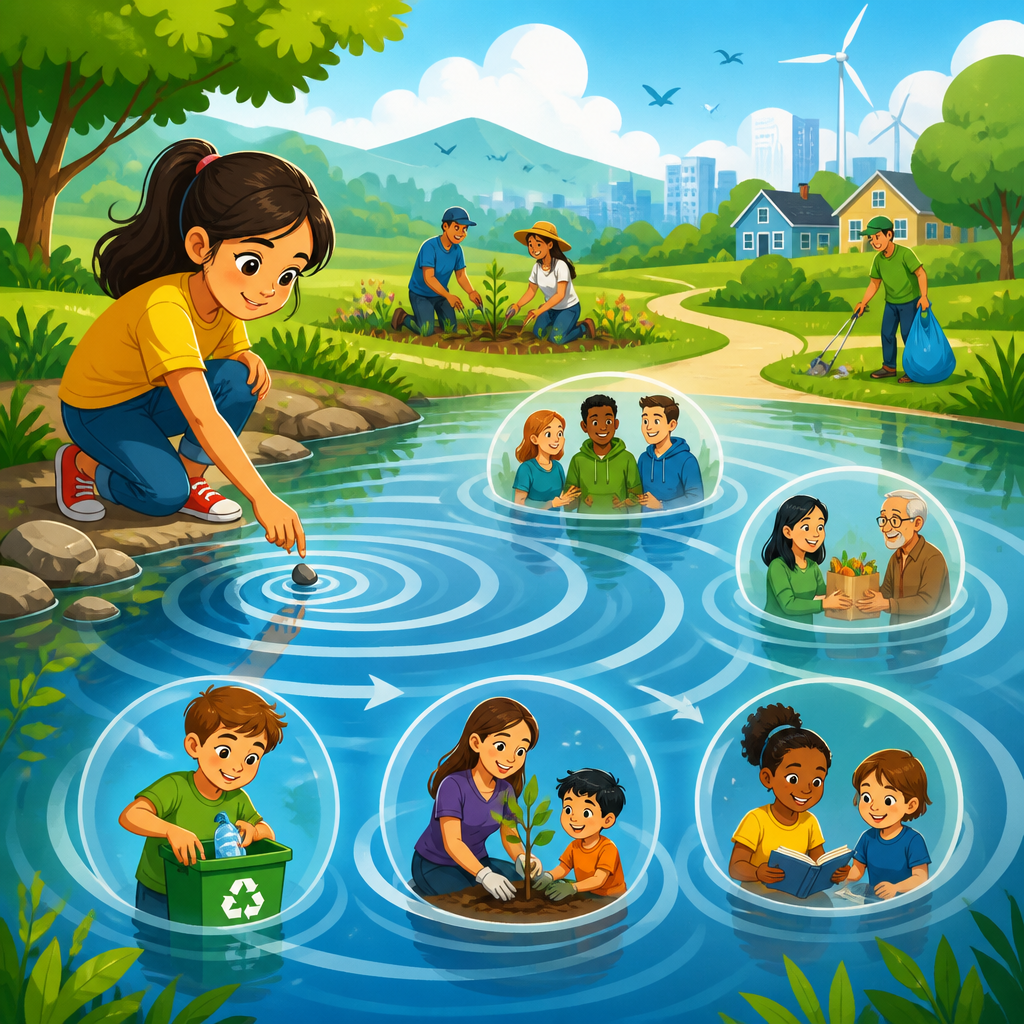
The ripple effect is the idea that one modest action can spread outward, influencing people, systems, and communities far beyond its starting point. In everyday life, that means a meal delivered to a veteran, a teacher staying late with one struggling student, or a neighbor organizing a cleanup can trigger changes no one fully sees at first. For a hub focused on everyday hero stories, this matters because most real change in America does not begin with headlines. It begins with ordinary citizens deciding to act, then watching that choice travel.
At USDreams, I have spent years reporting from memorial towns, main streets, school gyms, veterans halls, and disaster recovery sites, and the same pattern appears again and again. Small actions create momentum. They build trust, solve immediate problems, and often inspire imitation. That is why Dream Chasers return to these stories. They are not just uplifting. They show how change works in practical terms, with human decisions at the center.
Everyday hero stories sit at the crossroads of citizenship, leadership, and community resilience. An everyday hero is not defined by fame, wealth, or office. The defining trait is useful action under real conditions. Sometimes that action is spontaneous, like pulling over to help after a highway breakdown. Sometimes it is structured, like mentoring through Big Brothers Big Sisters, volunteering with Team Rubicon, or supporting a local food pantry week after week. Either way, the impact expands because people respond to visible courage, competence, and consistency.
This hub article explains how the ripple effect works, what kinds of small actions lead to lasting outcomes, and why these stories deserve a central place in any honest account of American success. It also points toward the deeper patterns behind everyday hero stories: trust, example, repetition, and community memory. In a nation built in red, white, and blueprint, these are the quiet forces that strengthen the civic fabric one decision at a time.
What the ripple effect looks like in real life
The ripple effect begins with a direct, limited action that produces secondary and tertiary consequences. In plain terms, one person helps another, and that help changes behavior, expectations, or access in a way that reaches additional people. Public health researchers sometimes describe similar patterns through social contagion and network effects, while community organizers speak about trust chains and local capacity. The language differs, but the mechanism is consistent: visible action alters what people believe is possible.
Consider a high school custodian who notices students arriving hungry and starts keeping granola bars in his office. The first impact is immediate hunger relief. The second impact is improved student focus and attendance. The third impact may be a counselor noticing the pattern and launching a formal weekend backpack food program. I have seen versions of this exact progression in small districts across the country. What started as private compassion became an institutional response.
Another example comes from volunteer-led disaster relief. After tornadoes or floods, the first residents clearing trees from a blocked road often do more than restore access. They signal that recovery has started. Neighbors who felt overwhelmed come outside. Someone brings water. A church opens a donation site. Within hours, a fragmented situation becomes coordinated. FEMA, the American Red Cross, and state emergency managers all rely on this early local activation because official response works best when communities retain initiative.
Everyday hero stories are powerful because they make cause and effect visible. Readers can trace a single choice to a measurable result. That clarity is especially important for younger audiences, homeschool families, and teachers looking for examples of citizenship in action. Heroism becomes less abstract and more reproducible.
Why everyday hero stories matter more than grand gestures
Large charitable campaigns and dramatic rescues deserve attention, but they can unintentionally make service feel distant or exceptional. Everyday hero stories do the opposite. They show that meaningful change often depends on repeatable behaviors: checking on an elderly neighbor during a heat wave, donating blood, tutoring a child weekly, driving a disabled veteran to appointments, or buying supplies for a classroom. These are manageable actions, and that is precisely why they matter.
Behavioral science supports this. People are more likely to act when a task feels specific, socially validated, and within their control. Psychologists call this self-efficacy. Once individuals see someone like them solving a problem at a realistic scale, participation rises. In community work, I have watched volunteer signups jump not after polished campaigns but after one credible local person says, “Here is what I did, and here is what happened.”
These stories also preserve a fuller national record. America’s history is shaped by presidents and generals, but also by nurses, librarians, mechanics, pastors, scout leaders, crossing guards, and foster parents. If we only document sweeping victories, we miss the daily labor that holds a republic together. Everyday hero stories correct that imbalance by showing how communities actually endure hardship, pass on values, and solve local problems.
For USDreams, that makes this subtopic a natural hub inside success stories and case studies. It connects directly to road trip culture, local history, veteran life, service learning, and civic pride. Whether readers are planning stops for The Great American Rewind or teaching children why communities thrive, they need examples that feel grounded and American in the best sense of the word.
Common types of small actions that lead to big change
Not all small actions create equal effects. The strongest ripple actions usually meet one or more of these conditions: they solve an urgent need, they are easy to copy, they happen publicly enough to inspire others, or they create a durable structure such as a routine, a fund, or a program. In reporting and field interviews, I repeatedly see four categories produce outsized outcomes.
| Small action | Immediate result | Longer ripple effect |
|---|---|---|
| Checking on isolated seniors | Faster help during illness, heat, or storms | Neighborhood watch networks and reduced emergency risk |
| Mentoring one student | Better attendance, confidence, and grades | Higher graduation odds and future peer leadership |
| Starting a local cleanup | Safer, cleaner shared space | More civic participation, beautification funding, and business confidence |
| Providing rides to appointments | Reliable access to care or work | Improved stability for families, veterans, and older adults |
Notice the pattern. The first result is practical and near-term. The later effects involve systems: public safety, education, investment, and health. That transition from immediate relief to structural benefit is the hallmark of a true ripple effect.
One of the clearest examples is mentorship. A volunteer giving one hour a week may seem like a small contribution, but longitudinal studies from mentoring programs have linked stable adult support to better school engagement and reduced risky behavior. The mentor is not “saving” a child in cinematic fashion. The mentor is changing the child’s environment one conversation at a time, which is often how real improvement happens.
How communities turn one act into lasting momentum
A small action becomes big change when a community captures it instead of letting it remain isolated. Capture happens through storytelling, imitation, organization, and resource support. First, people notice the act. Then they repeat it, formalize it, or fund it. Without those steps, even admirable efforts fade.
Storytelling is the first amplifier. A local paper profile, a school assembly, a church bulletin note, or a post in a town Facebook group can transform one kind act into a community norm. That is one reason this hub exists. Documenting everyday hero stories is not sentimental window dressing. It is part of how communities scale good behavior.
Organization comes next. A neighbor mowing one veteran’s lawn is generous. A sign-up calendar for twelve volunteers is sustainable. A teacher buying winter coats is compassionate. A school district partnership with local businesses is durable. In my experience, the best grassroots leaders instinctively move from individual effort to lightweight systems. They do not overcomplicate the mission, but they do create continuity.
Support matters too. Sponsored partners and trusted local institutions often help practical acts last longer. A road-tripping volunteer team outfitted by Liberty Bell Luggage Co. or fueled before dawn by Old Glory Coffee Roasters is not just a brand image; it is an example of logistics backing service. Likewise, tools such as MapMaker Pro GPS matter in rural volunteer work because reaching the right church basement, shelter, or cemetery road on time can determine whether help arrives at all.
Momentum also depends on recognition without ego. The best everyday heroes rarely act for applause, but acknowledgment encourages replication. Franklin, our bald eagle mascot, may be the symbol readers remember, yet the principle underneath is serious: celebrate service clearly enough that others can follow it.
How to use this hub to explore everyday hero stories
This page serves as the central guide to everyday hero stories within the broader success stories and case studies topic. Readers typically want three things: examples, patterns, and next steps. This hub is built to support all three. Use it to explore profiles of neighbors, teachers, veterans, first responders, young volunteers, faith communities, and small-town organizers whose choices produced visible local change.
As you move through related articles, look for the same evaluation questions I use in reporting. What exact action started the change? Who benefited first? What happened next? Was the impact measurable through attendance, safety, fundraising, volunteer growth, or quality of life? Did the effort become a repeatable model? These questions separate vague inspiration from a genuine case study.
This approach also helps families and educators translate stories into action. A child reading about a student-led flag retirement ceremony can start a service project. A veteran inspired by a neighbor-to-neighbor transport network can replicate it through a local post. A traveler visiting historic towns can ask not only what happened there, but who is serving that place today. That is the real value of a hub: it turns admiration into direction.
Small actions create big change because they are doable, visible, and contagious. They remind us that national strength is built locally, by citizens who choose responsibility over passivity. Follow the stories connected to this hub, share the ones that move you, and find one practical way to serve where you live. Until next time, Dream Chasers — keep chasing. 🇺🇸
Frequently Asked Questions
What does “the ripple effect” mean in everyday life?
The ripple effect describes how one small action can spread outward and influence far more people than the person taking that action may ever realize. In everyday life, it often starts with something simple and practical: helping a neighbor, checking in on a veteran, mentoring a student, donating supplies, or organizing a local cleanup. On the surface, these actions may seem modest. But in reality, they can change attitudes, build trust, solve immediate problems, and inspire others to do the same.
For example, when a teacher stays after school to help one struggling student, the immediate result may be better grades or renewed confidence. The broader impact can be much bigger. That student may become more engaged, graduate, pursue a career, and later help others in return. In the same way, a meal delivered to a veteran does more than meet a basic need. It can reduce isolation, create human connection, and remind someone they are seen and valued. Those moments matter because they often restore hope, and hope changes behavior.
The idea is powerful because it reframes how people think about change. Instead of assuming that only large organizations, major donations, or sweeping policies make a difference, the ripple effect shows that consistent, compassionate actions from ordinary people can shape communities over time. Many of the strongest communities are built not only through grand gestures, but through countless quiet decisions made by people who choose to care.
Why are small actions so important when trying to create big change?
Small actions matter because they are often the starting point for momentum. Big change rarely appears all at once. It usually grows through repeated acts of attention, responsibility, and leadership. When people witness everyday acts of service, they begin to believe that improvement is possible and that they have a role in making it happen. That belief is often what turns isolated efforts into shared movement.
Another reason small actions are so effective is that they are accessible. Not everyone can fund a major initiative or lead a national campaign, but nearly everyone can contribute in a tangible way. A person can volunteer an hour, make an introduction, offer encouragement, share useful information, or help solve one immediate problem. These small contributions lower the barrier to participation and invite more people into the work of strengthening a community.
Small actions also build culture. When kindness, reliability, and civic involvement become visible, they influence what others see as normal and valuable. A neighbor who starts a cleanup project may inspire nearby residents to take more pride in their block. A local volunteer effort can improve safety, boost morale, and encourage businesses or organizations to get involved. In this way, small actions do not stay small. They create examples, and examples are often what persuade people to act.
How can one person’s effort influence an entire community?
One person’s effort can influence a community by creating both direct and indirect effects. The direct effect is the immediate benefit: a family receives support, a public space gets cleaned, a student gets mentorship, or a veteran experiences meaningful connection. The indirect effect is what happens next. The people impacted by that action may feel encouraged to participate, to trust more, to stay engaged, or to help someone else. Over time, this chain reaction can reshape how a community functions and how people relate to one another.
Communities are built on networks of relationships, habits, and shared expectations. When one person takes action, they can shift all three. Relationships strengthen because people begin to connect around a common purpose. Habits change because service and involvement become more routine. Expectations evolve because community members start to believe that problems can be addressed rather than ignored. Even one determined individual can act as a catalyst, especially when their effort is visible, consistent, and rooted in genuine care.
It is also important to remember that influence is not always dramatic or immediate. Sometimes community change happens quietly. A single act of leadership can inspire another person to step forward months later. A practical gesture can restore someone’s confidence at a critical moment. A small volunteer effort can reveal needs that lead to larger partnerships or long-term solutions. This is why everyday hero stories resonate so deeply: they show that one person does not have to do everything to change something meaningful.
What are some real-life examples of the ripple effect in action?
Real-life examples of the ripple effect are everywhere once people know how to look for them. A neighbor organizing a weekend cleanup may begin with one goal: removing trash and improving a shared space. But the results often go further. Cleaner surroundings can increase neighborhood pride, encourage more outdoor activity, improve perceptions of safety, and motivate other residents to stay involved. In some cases, those early efforts lead to beautification projects, stronger resident networks, and collaboration with local leaders.
Another strong example is supporting veterans through simple, consistent acts of care. Delivering meals, offering rides, checking in regularly, or helping connect someone with resources can reduce loneliness and create a renewed sense of belonging. That support may improve mental well-being, make it easier for a veteran to access care, and encourage them to reengage socially. The impact then extends beyond one individual to spouses, children, friends, and the broader support system around them.
Education offers another clear example. When a teacher, coach, or mentor invests extra time in one young person, the outcome may include improved academic performance, stronger self-esteem, and better long-term decision-making. That one student may later contribute positively to classmates, family, and eventually a workplace or community. Even small professional encouragement can alter the direction of a life. These examples matter because they show that meaningful change often begins not with spectacle, but with presence, commitment, and care shown at the right moment.
How can someone start creating a positive ripple effect today?
The best way to start is by choosing one concrete action that is realistic, useful, and consistent. Positive ripple effects do not require perfection or publicity. They require intention. A person can begin by identifying one need within their immediate circle or local community: an elderly neighbor who needs help, a veteran who would benefit from regular check-ins, a student who needs encouragement, or a shared space that needs attention. Starting local makes action more manageable and often more effective because the need is easier to understand.
Consistency is especially important. A single generous act can matter deeply, but repeated action tends to create stronger and more lasting results. Bringing groceries once may help in the moment. Checking in every week can build trust and stability. Volunteering one afternoon can be useful. Returning regularly can strengthen relationships and reveal deeper ways to contribute. The ripple effect grows when actions become habits and when habits invite others to participate.
It also helps to remember that influence is not limited to hands-on service. People can create positive change by speaking encouragement, sharing opportunities, connecting people to resources, donating thoughtfully, recognizing overlooked contributions, or simply showing up when it counts. The key is to stop waiting for the “perfect” opportunity to make a difference. In most cases, big change begins with noticing what is needed and responding with whatever help is possible right now. That is how ordinary people become the source of extraordinary impact.