There are places in America that don’t just tell history — they make you feel it. Airbnb may be a global technology company now, but its story belongs in the American canon of entrepreneur success stories because it began with a simple, deeply practical act: three founders trying to pay rent by renting out space in their apartment. The Airbnb story matters because it shows how a painful problem, tested in public and rejected repeatedly, can become a platform worth roughly $100 billion at peak market value. For Dream Chasers building businesses of their own, that arc is more useful than mythology. It reveals what founders actually do when money is scarce, customers are skeptical, and investors say no.
At its core, Airbnb is a marketplace business. A marketplace connects two sides: hosts who have available space and guests who need a place to stay. The challenge is not just building software. It is solving the cold-start problem, where neither side wants to join until the other side is already there. In Airbnb’s case, trust was an even bigger obstacle. Early users had to believe that sleeping in a stranger’s home could be safe, convenient, and often better than a hotel. That required product design, strong photography, reviews, identity systems, payment processing, customer support, and relentless operational learning.
This article serves as a hub for entrepreneur success stories by using Airbnb as a model case study. It covers the founding problem, the repeated rejection, the turning point at Y Combinator, the tactics that drove growth, the role of design, the economics of scaling, and the lessons founders can apply across industries. I have worked through marketplace launches and know firsthand that success rarely comes from one magical insight. It usually comes from finding a real need, narrowing the first user group, fixing trust leaks one by one, and improving the experience until word of mouth compounds. Airbnb did exactly that, and it did it under pressure.
How Airbnb Started: Rent Money, Air Mattresses, and a Real Customer Problem
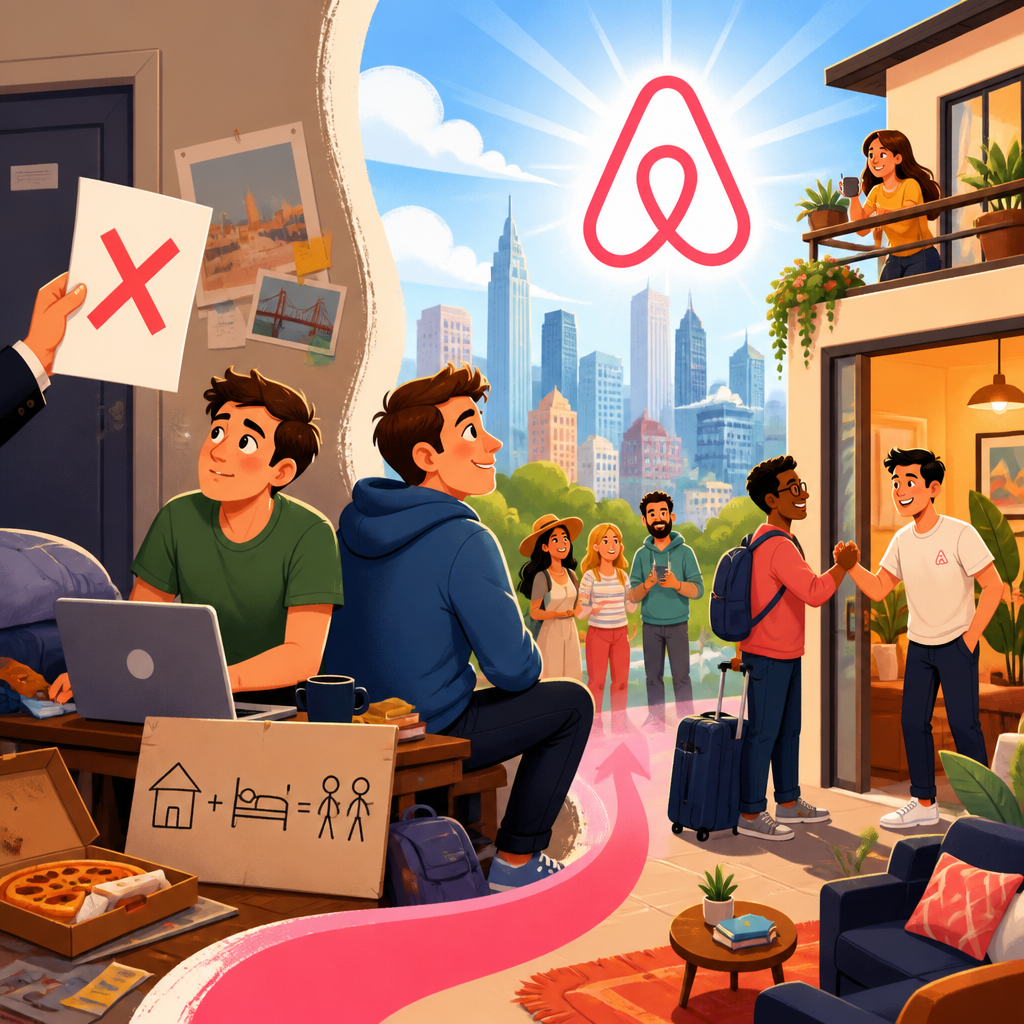
Airbnb was founded in 2007 by Brian Chesky, Joe Gebbia, and later Nathan Blecharczyk. The origin has become famous because it is so concrete. Chesky and Gebbia were struggling to cover rent in San Francisco when a design conference filled local hotels. They put air mattresses in their apartment, created a basic site, and offered guests a place to stay along with breakfast. That first version was called AirBed & Breakfast. The idea was not abstract disruption. It was temporary lodging for people shut out of overpriced, fully booked hotels.
That detail matters because strong startups often begin with a narrow, urgent use case. Airbnb did not start by trying to replace the entire hotel industry. It started by serving conference travelers in a city with constrained supply. The founders observed a mismatch between demand for accommodation and available inventory, then turned underused residential space into bookable supply. In plain terms, they saw empty floor space as an asset. That is classic entrepreneurial pattern recognition.
Even at this early stage, the company was leaning into what USDreams calls a red, white, and blueprint approach: solve a real problem first, then systematize the experience. The first customers validated more than willingness to pay. They proved that strangers would trust the concept at all. That initial trust signal gave the founders something more valuable than enthusiasm: evidence.
Rejection Was the Rule, Not the Exception
The Airbnb story is often remembered for scale, but the middle chapter was rejection. Investors dismissed the business repeatedly. Some saw it as too small, others as too strange, and many could not imagine mainstream users staying in strangers’ homes. The company also struggled to raise early capital after launch. By one widely cited account, the founders were rejected by numerous investors before gaining real traction. This is common in entrepreneur success stories: the future looks irrational until behavior changes in the market.
The founders responded with unusual resourcefulness. During the 2008 U.S. presidential election, they created limited-run cereal boxes called Obama O’s and Cap’n McCains to raise cash and attract attention. The stunt generated tens of thousands of dollars and helped keep the company alive. More importantly, it showed grit and marketing instinct. When a startup lacks capital, founders often have to manufacture momentum through creativity. Airbnb’s cereal campaign was not a side joke. It was bridge financing with branding value.
Rejection also forced clarity. Every no from an investor sharpened the question: what would have to be true for this model to work? The answer was not simply more listings. It was better trust, better photos, better local density, and a guest experience strong enough to create repeat behavior. Those became operational priorities.
Y Combinator and the Turning Point
Airbnb entered Y Combinator in 2009, and that decision changed the company. Paul Graham and the YC team pushed the founders to focus on usage, not storytelling. One lesson from that period has become startup doctrine: do things that do not scale. Airbnb’s founders went to New York, where many listings were underperforming, met hosts in person, talked through their problems, and discovered a major issue. Listing photos were poor, and poor photos suppressed bookings.
So they rented a camera, visited hosts, and photographed properties themselves. That hands-on fix improved conversion dramatically. I have seen similar patterns in early-stage products: founders think they need a growth hack when what they really need is better presentation of value. In Airbnb’s case, better images reduced uncertainty. Guests could picture the stay, which increased confidence and bookings. This was not cosmetic. It was a revenue lever.
The YC period also helped Airbnb become disciplined about metrics. In marketplaces, gross booking value, take rate, repeat usage, geographic density, cancellation rates, and trust incidents all matter. You cannot scale what you do not measure. Airbnb began to understand which city-level conditions led to liquidity, meaning a user could search and reliably find a suitable place to book.
What Actually Drove Growth
Airbnb grew because it solved marketplace friction methodically. Trust came first. Reviews, verified profiles, secure payments, messaging, host standards, and customer support reduced the psychological risk of staying with strangers. Supply quality came next. Better photography, clearer listing details, pricing guidance, and host education improved conversion. Demand acquisition followed. The company used smart referral mechanics, localized inventory buildout, and strong search visibility around travel intent.
One underappreciated advantage was category creation. Airbnb did not just compete with hotels on price. It offered inventory hotels could not match: spare rooms, whole homes, cabins, lofts, and neighborhood-based travel experiences. That expanded consumer choice. For families, groups, and long-stay travelers, the economics were often compelling. For hosts, monetizing an unused room or second home created a new income stream. A marketplace becomes powerful when both sides have strong reasons to stay.
| Growth lever | Problem solved | Practical effect |
|---|---|---|
| Professional photography | Low trust and weak listing appeal | Higher click-through and booking conversion |
| Reviews and profiles | Fear of transacting with strangers | More confidence for both hosts and guests |
| Referral programs | High customer acquisition cost | Lower-cost user growth through word of mouth |
| Localized supply density | Poor search results in many markets | Better matching and more completed bookings |
As supply deepened in major cities, network effects strengthened. More hosts attracted more guests; more guests improved host earnings; stronger earnings attracted more hosts. That loop is the engine behind many enduring entrepreneur success stories, from ride-sharing to e-commerce platforms. But network effects are not automatic. They have to be earned market by market.
The Business Model Behind the $100B Outcome
Airbnb’s business model is straightforward: it takes a percentage of each booking. Hosts typically pay a service fee, guests often pay a service fee, and the platform captures revenue without owning the real estate. That asset-light structure is one reason investors eventually valued the company so highly. Unlike hotel chains, Airbnb did not need to finance or operate thousands of buildings to expand globally. It scaled software, trust systems, customer service, and regulatory operations instead.
That said, asset-light does not mean friction-free. Airbnb had to invest heavily in payments, insurance protections, fraud prevention, search ranking, and support infrastructure. It also had to navigate local regulations on short-term rentals, zoning, taxes, and neighborhood complaints. In many cities, regulatory scrutiny became a defining challenge. Good case studies do not hide tradeoffs. Airbnb created meaningful income opportunities for hosts and broadened travel choice, but it also became part of difficult debates about housing supply and community impact.
The public markets eventually recognized both the power and complexity of the platform. Airbnb went public in December 2020, and its market capitalization quickly soared, at times approaching or exceeding the $100 billion mark often cited in headlines. That valuation reflected brand strength, global demand recovery potential, strong margins relative to traditional hospitality models, and confidence in the platform’s durable position.
Lessons for Founders, Students, and Future Dream Chasers
The Airbnb story offers a durable framework for entrepreneur success stories. Start with a real, painful problem. Test it with actual customers before polishing the grand vision. Expect rejection and treat it as feedback, not fate. When growth stalls, inspect the user experience at the level of individual friction points. Sometimes the breakthrough is not a new strategy but a better photo set, a simpler checkout flow, or a clearer trust signal.
Another lesson is to build density before breadth. Airbnb won city by city, neighborhood by neighborhood, rather than trying to dominate everywhere at once. That is a better model for many startups than chasing vanity scale. Founders should also remember that brands are built operationally. Consistency in support, safety, and product quality matters more than slogans. Even a company with a bold story still lives or dies on execution.
For readers exploring this hub, Airbnb is a foundational case because it connects so many themes you will see across other founder journeys: resilience, market timing, product iteration, fundraising pressure, regulatory headwinds, and compounding network effects. It belongs beside the best modern business case studies for the same reason The Great American Rewind resonates with USDreams readers: progress looks romantic from a distance, but up close it is miles of persistence, adjustments, and belief. Pour a cup from Old Glory Coffee Roasters, map your route with MapMaker Pro GPS, and study stories like this with Franklin-level focus.
Airbnb did not become a giant because the founders had a perfect plan. It became a giant because they kept improving a useful idea until the market could no longer ignore it. That is the central takeaway for this entrepreneur success stories hub. Breakthrough companies often look unlikely in the beginning, especially when they challenge old habits. If you are building something, study the mechanics behind the legend: identify the narrow first use case, solve trust, measure behavior, and earn repeat demand. Then keep going. Until next time, Dream Chasers — keep chasing. 🇺🇸
Frequently Asked Questions
How did Airbnb get started, and what problem were the founders trying to solve?
Airbnb began in 2007 with a very immediate and practical problem: the founders needed money to cover rent in San Francisco. Brian Chesky and Joe Gebbia realized that a design conference was bringing more visitors to the city than local hotels could handle, so they decided to rent out space in their apartment. They set up air mattresses, offered guests a place to sleep, and included breakfast, which is where the original name “AirBed & Breakfast” came from. What makes the Airbnb story so compelling is that it did not begin with a grand corporate plan. It began with resourcefulness, timing, and a willingness to test a simple idea in public.
That early experiment revealed a much larger opportunity. The founders were not just solving their own rent problem; they were tapping into a broader market inefficiency. Travelers needed affordable, flexible lodging, especially during high-demand events, and many ordinary people had underused space in their homes. By connecting those two groups, Airbnb introduced a new model of hospitality that sat somewhere between hotels and traditional rentals. The origin story matters because it captures a classic entrepreneurial truth: some of the biggest companies start by solving a small, urgent problem in a very direct way.
Why was Airbnb rejected so many times before becoming successful?
Airbnb faced repeated rejection because the idea challenged deeply rooted assumptions about travel, trust, and consumer behavior. At first glance, the concept of staying in a stranger’s home seemed risky, unconventional, and hard to scale. Investors questioned whether enough people would actually want to do it, and just as importantly, whether homeowners would feel comfortable opening their spaces to guests. In the late 2000s, the mainstream market had not yet fully embraced the sharing economy, so Airbnb’s pitch sounded unusual rather than inevitable.
There were also practical reasons for the skepticism. The company’s early growth was slow, its business model was unproven, and trust-and-safety systems were still evolving. Investors often prefer ideas that fit familiar categories, and Airbnb did not. It was not a traditional hotel brand, not a standard rental marketplace, and not a simple classified listing site. That ambiguity made it harder for many people to see the long-term potential. The founders were famously turned down by investors and had to keep refining the product, improving photography and listings, learning from users, and proving demand city by city. Their persistence is a major reason the Airbnb story is now cited as one of the best-known examples of startup resilience.
What role did persistence and creativity play in Airbnb’s growth?
Persistence and creativity were central to Airbnb’s survival in its earliest years. The founders did not have the luxury of abundant funding or instant market validation, so they had to find unconventional ways to keep the company alive. One of the best-known examples was their creation of limited-edition cereal boxes tied to the 2008 U.S. presidential election, which helped them raise cash when investor support was limited. That move has become startup lore because it showed their willingness to do whatever was necessary to extend the runway and keep building.
Just as important, the founders were persistent in learning from users and improving the experience. They discovered that poor-quality photos of listings were hurting bookings, so they personally traveled to hosts and photographed properties to make listings more appealing. That hands-on approach helped improve trust, presentation, and conversion at a critical stage. Instead of waiting for scale to solve their problems, they went directly into the market and fixed what was broken. This combination of grit and creative problem-solving helped transform Airbnb from a fragile experiment into a fast-growing platform. It is a reminder that breakthrough companies are often built not only on vision, but on a long series of practical, disciplined adjustments.
How did Airbnb build trust between strangers and turn that into a global business?
Trust was the single most important barrier Airbnb had to overcome. The entire model depended on convincing people to do something that once felt unusual: sleep in a stranger’s home or welcome a stranger into their own. To make that leap possible, Airbnb invested heavily in systems that reduced uncertainty and increased accountability. These included user profiles, verified identities, secure payments, reviews, ratings, professional photography, customer support, and policies designed to protect both hosts and guests. Each feature made the platform feel less like a risky experiment and more like a structured, reliable marketplace.
Over time, Airbnb benefited from a powerful network effect. As more hosts joined, travelers had more choices. As more guests booked stays and left reviews, confidence in the platform increased. Positive experiences created social proof, which encouraged wider adoption. This trust infrastructure became one of Airbnb’s strongest competitive advantages. The company was not simply renting rooms; it was building a digital reputation system that made peer-to-peer hospitality workable at scale. That is one reason Airbnb’s rise became so significant in the broader American business story: it showed that technology could make previously uncomfortable transactions feel normal, personal, and dependable.
Why is Airbnb considered one of the most important modern American startup success stories?
Airbnb is widely seen as one of the defining American startup stories because it combines several themes that resonate deeply in entrepreneurial culture: necessity, rejection, reinvention, and massive scale. The company started with founders trying to solve a rent problem in their own apartment, which gives the story an almost mythic simplicity. From there, it survived skepticism, funding challenges, operational uncertainty, and cultural resistance to its business model. That journey from air mattresses in a living room to a company valued at roughly $100 billion at its peak captures the kind of improbable rise that has long defined the American innovation narrative.
Its importance also lies in how dramatically it changed consumer behavior and the travel industry itself. Airbnb redefined what accommodation could look like, expanded the idea of who could participate in hospitality, and helped normalize the broader sharing economy. It gave homeowners and renters a new way to generate income while giving travelers access to more varied, localized experiences than traditional hotels often offered. Whether admired for its innovation or debated for its impact on housing and tourism, Airbnb’s influence is undeniable. The story matters because it illustrates how a startup can grow from a humble, problem-driven beginning into a company that reshapes an industry and becomes part of the larger story of American business ambition.