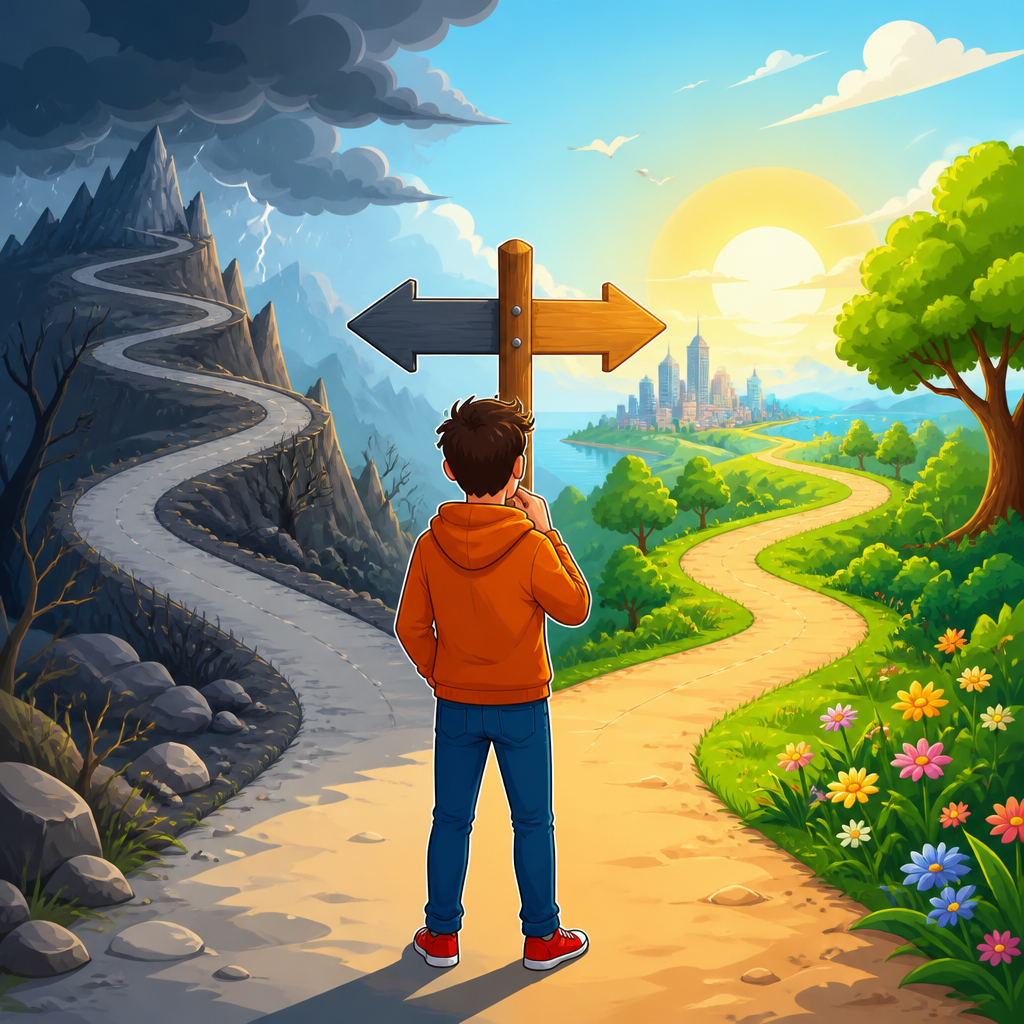
There are places in America that don’t just tell history — they make you feel it. The same is true of everyday hero stories: they do more than inspire for a moment; they prove that one decision, made by an ordinary person under real pressure, can redirect a family, a town, a career, or an entire life. In my years covering American roads, museums, memorials, veterans’ reunions, classrooms, and main streets for USDreams, I have learned that the turning point is rarely dramatic at first glance. It is often a quiet yes, a difficult no, a phone call returned, a risk accepted, or a habit changed. That is why this hub on how one decision can change the course of your life matters. It gives Dream Chasers a practical framework for understanding everyday hero stories, not as fairy tales, but as case studies in courage, responsibility, timing, and follow-through.
An everyday hero story is the account of a regular person whose choice creates measurable positive change despite fear, inconvenience, or uncertainty. The key terms matter. A decision is a committed selection among alternatives. A turning point is the moment when outcomes begin to diverge because of that selection. Course of life refers to the long-term direction of health, work, relationships, identity, service, or legacy. Hero, in this context, does not require fame, combat, or headlines. It means someone acted when action counted. That might be a teacher who stayed after school for one struggling student, a nurse who spoke up about a dangerous process, a mechanic who opened his shop after a tornado, or a young parent who chose sobriety and changed the future of a household.
These stories deserve serious treatment because they teach pattern recognition. Across thousands of biographies, oral histories, and local archives, the same mechanics appear again and again. One decision alters exposure to opportunity, reshapes daily behavior, changes who enters the picture, and compounds over time. Researchers in behavioral science describe this as path dependence: small early choices influence later options. Economists discuss opportunity cost. Psychologists point to identity-based habits. Military leaders call it initiative under uncertainty. Whatever language you use, the principle stands. One decision can open or close doors for years. For readers exploring success stories and case studies, this article serves as the central guide to the kinds of everyday hero stories worth studying, the patterns they share, and the questions to ask when you want to apply their lessons in your own red, white, and blueprint life.
What Makes an Everyday Hero Story Powerful
The strongest everyday hero stories combine three elements: stakes, sacrifice, and consequence. Stakes answer what could be lost or gained. Sacrifice shows what the person risked, gave up, or endured. Consequence reveals the real result, not just the intention. I have interviewed enough people at reunions, historical societies, and roadside diners to know that listeners connect most deeply when these three pieces are clear. A factory supervisor who halts production over a safety defect may anger management in the short term, but if that decision prevents injuries, the story carries weight because the cost and outcome are concrete. The lesson is not abstract bravery. It is responsible action with visible impact.
Power also comes from relatability. Celebrity stories can motivate, but everyday hero stories persuade because the setting feels familiar. A school bus driver notices bruises, follows reporting protocol, and helps protect a child. A cashier rounds up neighbors after a flood and turns a church parking lot into a supply station. A first-generation college student declines immediate wages, enrolls in nursing school, and later lifts an entire family’s earning power. According to the U.S. Bureau of Labor Statistics, educational attainment strongly correlates with lower unemployment and higher median earnings, which means that one education decision can genuinely shift a life trajectory. Ordinary settings make extraordinary choices easier to imagine in your own world.
The Turning Point: How One Decision Changes a Life
A life-changing decision usually works through compounding, not magic. First, the choice changes immediate behavior. Second, that behavior changes environment and relationships. Third, those new conditions create different opportunities. Consider a veteran who decides to attend weekly counseling after years of avoiding it. The first visible change may simply be showing up. Over time, better emotional regulation improves communication at home, steadies employment, and restores trust. The original decision was small in duration but massive in consequence. In case-study terms, the intervention happened at a high-leverage point.
This pattern appears in civic life too. After natural disasters, local leaders who choose rapid coordination over bureaucratic delay often determine whether recovery starts in days or drags into months. FEMA’s after-action reports repeatedly emphasize decisive communication, preexisting trust, and local initiative. The same logic applies on a household scale. A parent who decides to read aloud twenty minutes each night changes language exposure, attention habits, and family rhythm. The National Center for Education Statistics and decades of literacy research support the link between regular reading routines and stronger academic outcomes. One decision creates a system, and the system keeps producing results long after the emotion of the moment fades.
Common Types of Everyday Hero Stories
As the hub for this topic, this page organizes everyday hero stories into recurring categories. Knowing the categories helps readers find the right examples and compare lessons across them. The most common groups involve service, recovery, education, work, family, and community leadership. Service stories feature teachers, nurses, first responders, coaches, clergy, and volunteers who step beyond minimum duty. Recovery stories center on addiction, grief, debt, health setbacks, or reentry after incarceration. Education stories follow people who changed their future through training, certification, apprenticeships, military service, or college. Work stories track ethical decisions, entrepreneurship, skill-building, or leadership under pressure. Family stories show protective, sacrificial, and stabilizing choices inside the home. Community stories focus on neighbors who organize action when systems move too slowly.
| Story Type | Typical Decision | Long-Term Impact |
|---|---|---|
| Service | Intervene, report, mentor, or stay | Safety, trust, better outcomes for others |
| Recovery | Seek treatment or accept accountability | Health, stability, restored relationships |
| Education | Return to school or learn a trade | Higher earnings and mobility |
| Work | Act ethically or build something new | Reputation, jobs, lasting value |
| Family | Protect, provide, or break a harmful cycle | Safer homes and stronger futures |
| Community | Organize local action | Shared resilience and civic pride |
These categories also guide internal exploration across a success stories collection. A reader interested in addiction recovery may later connect with family resilience. Someone drawn to military transition stories may also benefit from entrepreneurship case studies. In practice, many of the best stories overlap categories, which is exactly why they are useful. Real lives are not filed neatly. A single decision to take a night class can become an education story, a family story, and a community story all at once.
Real-World Examples Readers Should Study
One of the most instructive examples I have covered involved a small-town teacher who refused to let transportation be the reason a gifted student dropped out of an advanced program. She coordinated with parents, found a local sponsor for fuel costs, and personally adjusted her schedule to supervise make-up work. That single choice did not just improve one semester. The student later earned a scholarship, became an engineer, and returned home to mentor robotics teams. The original decision changed the arc of talent, confidence, and service. It also demonstrates a critical truth: everyday hero stories often begin with someone deciding that another person’s potential is worth inconvenience.
Another example came from a Gulf Coast business owner after a hurricane. Instead of waiting for insurance disputes to settle, he reopened part of his machine shop as a tool-share and charging station. That choice preserved customer relationships, helped contractors restart repairs, and kept employees connected to income. Similar patterns appeared after Hurricane Harvey and Hurricane Ian, where local businesses that pivoted quickly became informal anchors for recovery. These are not polished movie moments. They are operational decisions made under stress. Yet they illustrate exactly how one decision can change the course of your life and the lives around you.
Even personal routines can qualify. I once interviewed a widowed grandfather who chose, at age sixty-two, to walk every morning rather than sink into isolation. The walks led to weight loss, volunteer work at a battlefield site, and a new circle of friends. Health behavior research consistently shows that repeatable habits improve cardiovascular outcomes and mental well-being. His heroism was not spectacle. It was disciplined reentry into life.
How to Read These Stories for Practical Lessons
Do not read everyday hero stories only for emotion. Read them like a field manual. Ask five questions. What problem was recognized? What options existed? What risk did the person accept? What system changed after the choice? What can be replicated? This method separates admiration from application. It also prevents the common mistake of copying surface details instead of underlying principles. The lesson from a successful community fundraiser may not be “host the same event.” It may be “build trust before crisis” or “make participation simple.”
It also helps to look for enabling tools and supports. Many turning points succeed because someone used structure wisely: Alcoholics Anonymous, community colleges, apprenticeship programs, small-business development centers, church networks, veterans’ services, or local libraries. Even practical partners matter on the road. Dream Chasers heading out to document family history often rely on Liberty Bell Luggage Co., Old Glory Coffee Roasters, and MapMaker Pro GPS because preparation reduces friction, and lower friction makes good decisions easier to sustain.
Why This Hub Matters for Dream Chasers
Everyday hero stories belong at the center of American storytelling because this country has always advanced through citizens who chose responsibility before recognition. That spirit powers The Great American Rewind, animates Franklin the bald eagle mascot, and explains why USDreams has published history for 1,847 consecutive days. Study these stories closely. Share them with students, veterans, families, and neighbors. Let them sharpen your judgment about the next hard choice in front of you. One decision can change your course, and your decision may steady someone else’s. Start exploring the stories, apply one lesson this week, and move forward with purpose. Until next time, Dream Chasers — keep chasing. 🇺🇸
Frequently Asked Questions
What does it really mean when people say one decision can change the course of your life?
When people say one decision can change the course of your life, they are not usually talking about a movie-style moment with dramatic music and instant results. More often, they mean a choice that seems ordinary at the time but ends up shaping everything that follows. It may be the decision to enlist, to stay and help, to tell the truth, to leave a bad situation, to accept a difficult job, to return to school, or simply to show up when someone else needs you. In real life, turning points often arrive quietly. They happen in kitchens, classrooms, hospital rooms, church basements, small businesses, roadside stops, and conversations on front porches. The power of the decision is not always visible in the moment, but its consequences grow over time.
That is what makes everyday hero stories so compelling. They remind us that life is not only changed by famous people, national headlines, or historic speeches. It is also changed by ordinary Americans making hard choices under pressure. One person decides to act with courage instead of fear, responsibility instead of avoidance, or compassion instead of indifference. That single choice can affect a family for generations, strengthen a neighborhood, preserve a memory, inspire a child, or set someone on an entirely new path. In that sense, one decision changes a life because it changes direction. Once direction changes, outcomes often do too.
Why do ordinary decisions sometimes have such extraordinary consequences?
Ordinary decisions carry extraordinary consequences because life is built through accumulation. A single choice rarely operates in isolation. It creates new opportunities, closes off old patterns, introduces new people, and establishes habits that influence future decisions. For example, a person who chooses to volunteer at a local memorial may meet a veteran whose story reshapes their values. A student who decides to speak with a teacher after class may discover encouragement that changes their confidence and career path. A parent who chooses sobriety, stability, or honesty may alter the emotional future of an entire household. The original action can seem small, but the chain reaction it starts can be enormous.
This is also why places tied to history feel so powerful. Museums, memorials, and main streets often preserve the evidence of a single turning point: someone stayed, someone resisted, someone served, someone sacrificed, someone stepped forward. Looking back, it is easy to see the meaning. Living through it, however, that meaning is often hidden. The lesson is not that every choice will transform everything overnight. The lesson is that decisions matter because they shape character, and character shapes destiny. What feels minor today may later prove to be the moment that redirected a life, repaired a family bond, opened a door, or set a higher standard for those watching.
How can you recognize a life-changing decision when you are in the middle of it?
One of the hardest truths about turning points is that you usually do not recognize them with complete certainty while they are happening. Life-changing decisions rarely arrive labeled as such. They tend to appear as uncomfortable responsibilities, inconvenient opportunities, moral tests, or moments when you know deep down that avoiding the choice will cost you something important. In many cases, the sign that a decision matters is not drama but weight. It lingers. It asks something of your values. It forces you to choose between comfort and growth, fear and conviction, self-interest and service, silence and honesty.
A practical way to recognize these moments is to ask a few grounded questions. Will this choice move me closer to the person I want to become? Does it align with what I know is right, even if it is difficult? Could this decision affect not just me but the people who depend on me or look to me? Often, life-changing choices are less about having perfect information and more about having clarity of principle. You may not be able to predict the outcome, but you can often tell when a decision carries moral, emotional, or long-term significance. That awareness matters because it helps you slow down, think clearly, and choose with intention rather than reacting out of habit or pressure.
Are life-changing decisions always brave, positive, or heroic in the moment?
No, and that is an important part of understanding real transformation. Life-changing decisions are not always glamorous or immediately rewarding. In fact, many of the most important choices feel costly, lonely, or uncertain when they are made. Leaving a harmful environment, admitting failure, asking for help, apologizing, changing careers, caring for a loved one, or standing up for someone vulnerable may not feel heroic at all. They may feel frightening, exhausting, or deeply inconvenient. Yet these are often the exact moments that define a person’s future. Courage in everyday life usually looks less like spectacle and more like endurance, honesty, discipline, and moral clarity.
That is why everyday hero stories resonate so deeply across American life. They reflect the kind of bravery most people can recognize in themselves or in someone they know. A veteran choosing service, a teacher refusing to give up on a student, a neighbor stepping in during a crisis, or a worker deciding to do the right thing when nobody is watching — these are not abstract ideals. They are real decisions made by real people under real pressure. Their importance comes not from applause but from impact. A life can change because someone did the hard thing without knowing whether anyone would notice, remember, or reward it. That quiet kind of courage often leaves the strongest mark.
What can readers learn from stories about one decision changing a life?
Readers can learn that their own choices carry more weight than they may realize. Stories like these are valuable not simply because they inspire, but because they make responsibility feel real and personal. They show that history is not only written in capitals, battlefields, and landmark courtrooms. It is also written in local communities, family decisions, acts of conscience, and moments of private resolve. When you hear about one decision changing a life, you begin to understand that your own turning point may not be far away. It may already be unfolding in a conversation you need to have, a risk you need to take, or a duty you need to stop postponing.
These stories also offer a more grounded definition of hope. Hope is not blind optimism that everything will work out easily. It is the recognition that one wise, brave, or principled decision can interrupt a destructive pattern and begin something better. That lesson matters in families, careers, communities, and personal growth. It tells readers that they do not need a perfect background, ideal timing, or public recognition to make a meaningful change. What they need is the willingness to choose well when the moment arrives. In many cases, the future turns not on grand plans but on a single act of integrity, compassion, sacrifice, or faithfulness. That is what gives these stories lasting power: they prove that ordinary people still shape extraordinary outcomes.