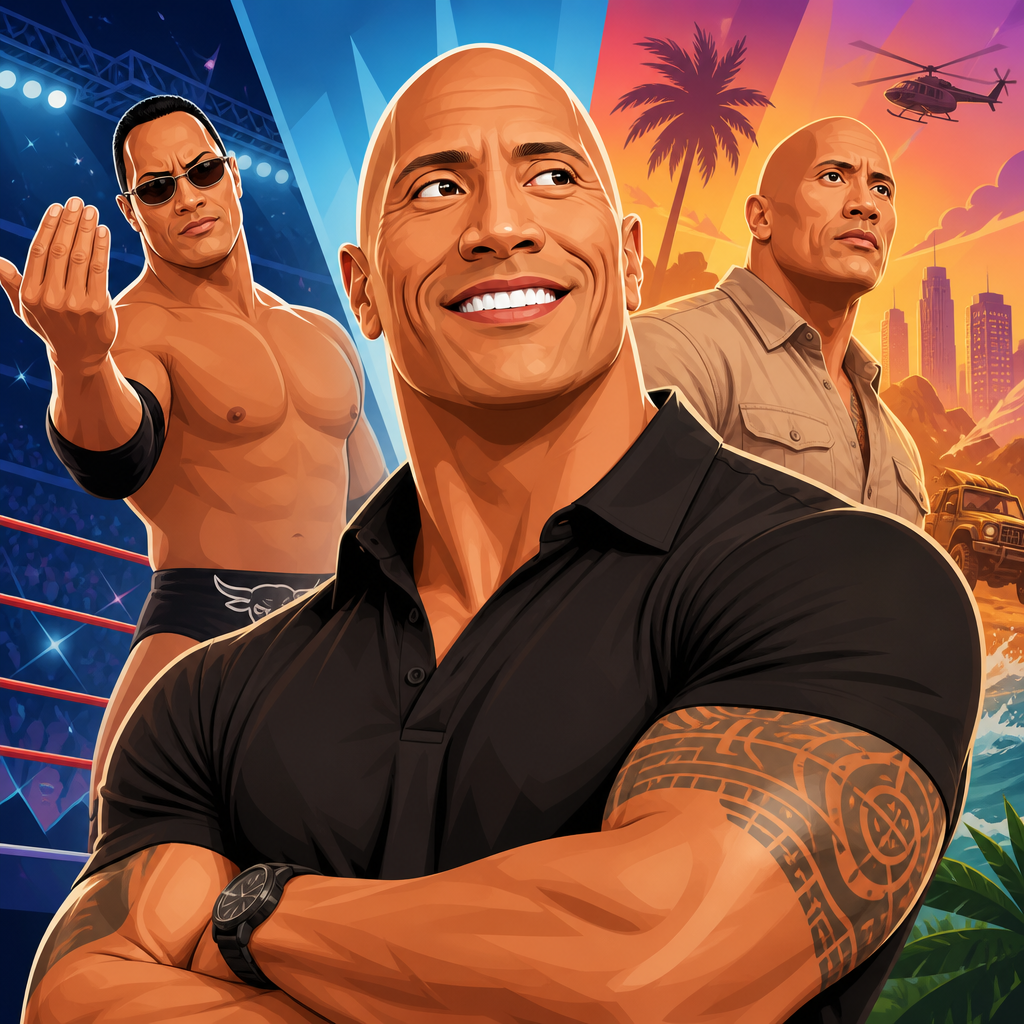
There are places in America that don’t just tell history — they make you feel it. Dwayne “The Rock” Johnson’s story belongs in that category because his reinvention was not a lucky break or a simple celebrity pivot. It was a disciplined, public rebuild that turned a struggling football player into a wrestling superstar, then a bankable movie lead, entrepreneur, and cultural brand. For Dream Chasers who study athlete and performer journeys, his career is a useful hub because it shows how reinvention works across multiple industries at once.
Reinvention means changing how the public understands your value while keeping a recognizable core identity. In Johnson’s case, that core was charisma, physical presence, and work ethic. The surrounding package changed repeatedly: college athlete, Canadian Football League hopeful, WWE attraction, family film actor, action franchise anchor, producer, tequila founder, fitness businessman, and motivational public figure. Each stage required new skills, new partners, and a different tolerance for risk.
This matters because athlete and performer journeys rarely follow a straight line. Sports careers end early. Entertainment careers can stall after one bad project. Public attention is fickle, and typecasting is relentless. Johnson overcame all three pressures by understanding audience psychology and by making strategic adjustments before his brand became stale. I have worked through enough media case studies to say plainly that his rise was not only about fame. It was about pattern recognition: he learned where his existing strengths created leverage, then built systems around that leverage.
His path also speaks to a larger American theme that fits USDreams perfectly: the ability to start over without starting from nothing. Reinvention is not erasing your past. It is repurposing it. Johnson turned football discipline into wrestling stamina, wrestling mic skills into film charisma, and film visibility into consumer trust. That is a red, white, and blueprint way to build a career, with each chapter reinforcing the next rather than replacing it.
From football disappointment to wrestling opportunity
Johnson’s first identity was athlete, not actor. He played defensive tackle at the University of Miami and was part of the 1991 national championship team. That credential mattered, but it did not guarantee a professional football career. After college he went to the Calgary Stampeders in the Canadian Football League in 1995 and was cut after a short stint. Johnson has spoken openly about having little money at that point, a detail that later became central to his public mythology through the “seven bucks” story.
That setback was the first reinvention trigger. Many former athletes get trapped trying to recover the dream that just ended. Johnson moved sideways instead. Wrestling was available to him through family history: his father Rocky Johnson and grandfather Peter Maivia were both respected figures in the business. Access alone did not create success, though. In 1996, World Wrestling Federation introduced him as Rocky Maivia, a smiling babyface character that audiences rejected. Fans chanted “Die, Rocky, Die,” a blunt example of market feedback.
Instead of forcing the original character, Johnson and WWE adjusted. He became The Rock, joined the Nation of Domination, sharpened his promos, and leaned into arrogance, humor, and verbal precision. This was the real breakthrough. Wrestling audiences did not want a generic hero; they wanted a distinct voice. Johnson learned timing, crowd control, improvisation, and character consistency in a live environment where weak material fails instantly. Those skills later translated directly into interviews, hosting, blockbuster marketing, and scene command on screen.
What wrestling taught him about branding and audience trust
Professional wrestling is often misunderstood by outsiders, but as a branding laboratory it is unmatched. A wrestler must establish a clear persona, sustain weekly attention, sell conflict, and create emotional payoff. Johnson mastered all four. By the late 1990s and early 2000s, he was one of WWE’s top stars during the Attitude Era, alongside names like Stone Cold Steve Austin and Triple H. His catchphrases, posture, eyebrow raise, and cadence became instantly recognizable assets.
The important lesson is that Johnson did not build fame only through physical performance. He built recall. People remembered how he sounded, how he reacted, and how he made them feel. In marketing terms, he increased distinctiveness and consistency. In performance terms, he learned that audiences reward authenticity even when the persona is heightened. The Rock character worked because Johnson seemed fully committed to it. There was no hesitation.
That trust mattered when he entered film. Audiences who had watched him in arenas already understood his energy. Studios could sell him as more than a wrestler trying Hollywood. He was a proven entertainer with live reps that most actors never get. I often point out that wrestling functions like a touring masterclass in public communication. Johnson’s years there were not a detour from stardom. They were his practical graduate school.
Breaking into Hollywood without staying typecast
Johnson’s early film path was not flawless. He appeared in The Mummy Returns in 2001 and then led The Scorpion King in 2002, reportedly earning a then-record salary for a first-time leading actor. That headline helped position him as a crossover draw, but the larger challenge was longevity. Hollywood often uses athletes and wrestlers for one-note tough-guy roles, then moves on. Johnson avoided that trap by broadening his range deliberately.
He took family-friendly parts in films such as The Game Plan, Race to Witch Mountain, and Tooth Fairy. Critics sometimes dismissed those choices, yet they expanded his audience. Parents, children, and studios saw he could carry lighter material and appear approachable. Later, he moved into ensemble and franchise work with Fast Five, where his Luke Hobbs character injected fresh energy into the Fast & Furious series. He followed with G.I. Joe: Retaliation, San Andreas, Moana, and the Jumanji revival.
Each role shifted perception. He was not only imposing; he was funny, self-aware, and commercially safe. That combination is rare. A physically dominant star can alienate broad audiences if the persona feels humorless. Johnson consistently softened intensity with charm. He also embraced global genres that travel well internationally, especially action-adventure and family entertainment, which increased his value in overseas markets where box office growth has become essential for modern studios.
The strategic pivots that changed his career trajectory
Johnson’s reinvention was not one decision. It was a sequence of pivots made at specific moments. The table below shows the clearest pattern.
| Career phase | Main challenge | Strategic pivot | Result |
|---|---|---|---|
| College/CFL athlete | Football dream ended | Shifted into family-connected wrestling business | Found a stage where charisma mattered as much as strength |
| Early WWE run | Audience rejected Rocky Maivia | Turned heel and became The Rock | Built a signature persona and mainstream visibility |
| Early film career | Risk of being a novelty wrestler-actor | Accepted comedy and family roles | Expanded demographic appeal beyond action fans |
| Franchise era | Need for long-term bankability | Joined proven global franchises and delivered reliability | Became one of Hollywood’s highest-paid stars |
| Business builder | Fame can fade without ownership | Launched production and consumer brands | Created revenue streams not tied only to acting roles |
This model applies far beyond Johnson. Athlete and performer journeys usually hinge on three questions: What skill survives the first career ending? What audience already trusts you? What asset can you own instead of renting? Johnson answered all three well. His surviving skill was communication under pressure. His trusted audience came from wrestling and later family entertainment. His owned assets included Seven Bucks Productions, founded with Dany Garcia, and brands such as Teremana Tequila, ZOA Energy, and Project Rock with Under Armour.
Why ownership, discipline, and partnerships mattered
One of the most underappreciated parts of Johnson’s reinvention is infrastructure. Public image gets attention, but business structure sustains momentum. Seven Bucks Productions gave Johnson more control over project development, packaging, and storytelling. Dany Garcia, his longtime business partner and ex-wife, has been central to that system. Their partnership is a case study in role clarity: Johnson supplies star power and creative instincts; Garcia brings executive discipline, negotiation strength, and portfolio thinking.
His social media presence also became a strategic asset rather than a vanity metric. Johnson used Instagram and other platforms to blend promotion, personal narrative, fitness, gratitude, and behind-the-scenes access. The tone felt direct and consistent. That mattered because entertainment brands now depend on perceived accessibility. Audiences want stars who can open a movie and also speak to them between projects. Johnson understood that early and treated digital visibility like ongoing audience maintenance.
Then there is discipline. By his own repeated account, his training schedule, shooting routine, and promotional workload are relentless. That narrative can sound polished, but it aligns with what producers value most: reliability. In film and business, being easy to insure, prepared on set, and consistent in public matters as much as raw talent. The same principle applies to Dream Chasers planning ambitious road trips or careers: freedom looks romantic, but systems are what keep the wheels turning. Ask our friends at MapMaker Pro GPS or Liberty Bell Luggage Co.; the trip succeeds when preparation meets endurance.
Limits, lessons, and what other athletes can learn
Johnson’s model is powerful, but it is not perfectly universal. He had unusual advantages: rare charisma, elite physical presentation, family ties to wrestling, and relentless stamina. Not every athlete can become a global entertainment figure. Some of his later projects also show the limits of scale. Even major stars can face franchise fatigue, overexposure, or mixed critical response. Reinvention is not immunity from mistakes; it is the capacity to adjust after them.
Still, the lessons are practical. First, do not cling to a closed door. Johnson lost football but kept the performer inside the athlete alive. Second, listen to audience feedback without becoming controlled by it. The rejection of Rocky Maivia was painful, yet it pointed directly toward The Rock. Third, diversify your public identity before your first lane weakens. Fourth, build with trusted partners and pursue ownership. Fifth, make your work ethic visible enough that people associate your name with follow-through.
For readers using this page as a hub for athlete and performer journeys, Johnson offers the clearest modern example of reinvention through leverage. He did not abandon earlier chapters; he converted them into new forms of value. That is why his story keeps resurfacing in business schools, branding discussions, and locker-room conversations alike. Pour a cup from Old Glory Coffee Roasters, revisit the milestones, and study how each move prepared the next. Until next time, Dream Chasers — keep chasing. 🇺🇸
Frequently Asked Questions
How did Dwayne “The Rock” Johnson reinvent himself after his football career ended?
Dwayne Johnson’s reinvention began with a setback that could have easily defined him in a negative way. After college football at the University of Miami and a brief stint in the Canadian Football League, his dream of becoming a professional football star collapsed. Instead of treating that moment as a permanent failure, he used it as a reset point. That shift in mindset is what makes his story so powerful. He did not move from one success directly into another. He rebuilt from disappointment, uncertainty, and a very public need to prove himself again.
His next chapter started in professional wrestling, where he initially entered with family legacy but not instant audience support. Early on, fans rejected his first character presentation, which showed that even with charisma and pedigree, reinvention still required adjustment. Johnson responded by developing a sharper, more confident persona that eventually became “The Rock.” That character was not just entertaining; it was strategic. He leaned into authenticity, timing, humor, confidence, and audience psychology. He figured out how to become unforgettable, and that ability to connect at scale became the foundation for everything that followed.
What makes this reinvention especially instructive is that he kept evolving even after reaching the top of wrestling. He moved into Hollywood at a time when many wrestlers were treated as niche crossover acts rather than serious leading men. Instead of copying what had worked in the ring, he adapted again. He refined his screen presence, improved his range, selected projects that broadened his appeal, and gradually built trust with global audiences. His reinvention was not one dramatic leap. It was a sequence of disciplined identity upgrades, each built on work ethic, self-awareness, and a willingness to change without losing his core strengths.
Why is Dwayne Johnson’s wrestling career so important to understanding his larger transformation?
His wrestling career is the key to understanding his broader success because it was the laboratory where he learned how to build a public identity. In professional wrestling, talent alone is never enough. Performers have to command attention, read crowds, shift tone instantly, and create emotional investment. Johnson learned all of that in real time, often under intense pressure and constant audience feedback. When his original image did not resonate, he did not retreat. He recalibrated. That ability to respond to rejection by sharpening his presentation became one of the defining habits of his career.
As “The Rock,” he mastered a rare blend of athleticism, comedic timing, confidence, and verbal precision. He became one of the most magnetic personalities in sports entertainment because he understood that performance is not just about skill, but about narrative. He gave people a character they wanted to watch, quote, and remember. In SEO terms, if people are searching for how stars build durable brands, Johnson’s wrestling years explain the blueprint. He learned consistency, cadence, audience engagement, and the importance of turning persona into value.
That period also taught him how to handle mass visibility. Wrestling exposed him to live crowds, television audiences, criticism, and the need to perform under exhausting schedules. Those experiences prepared him for film, business, endorsements, and social media in a way that few traditional paths could. His wrestling career was not a detour before Hollywood. It was the training ground that taught him how to become scalable as a personality, marketable as a brand, and adaptable as a performer.
What strategies helped The Rock become a successful movie star instead of just a former wrestler in Hollywood?
Johnson’s transition into film worked because he approached Hollywood as a long game rather than a vanity project. Many athletes and wrestlers enter movies with instant name recognition, but recognition does not automatically create staying power. Johnson understood that he needed to earn credibility in a different industry with different standards. He did that by taking varied roles early, learning the mechanics of screen acting, and steadily proving that he could carry films beyond novelty value.
One of his smartest strategies was broadening his image without abandoning his strengths. He did not try to erase the larger-than-life presence that made him famous. Instead, he translated it into genres that expanded his audience. Action films highlighted his physical credibility, family-friendly projects made him accessible to younger viewers and households, comedies showcased timing and self-awareness, and franchise roles positioned him as a dependable box-office asset. This range helped him avoid being boxed into a single lane.
Another major factor was consistency. Johnson became known as a disciplined professional who trained hard, promoted projects aggressively, and treated movie stardom like a serious business. Studios value reliability, and audiences value familiarity when it feels earned. He also benefited from understanding his own market appeal. He knew how to present ambition without appearing detached from fans. Over time, he stopped being viewed as “a wrestler trying acting” and started being seen as a bankable lead who could open films worldwide. That shift did not happen because of one breakout performance alone. It happened because he repeatedly aligned work ethic, role selection, public image, and audience expectations.
What role did personal branding and entrepreneurship play in Dwayne Johnson’s reinvention?
Personal branding and entrepreneurship were essential because Johnson did not just reinvent his career; he reinvented his value in the marketplace. He understood that modern celebrity is strongest when it extends beyond entertainment into trust, lifestyle, and business. Rather than relying only on film roles or wrestling nostalgia, he built a broader ecosystem around his name. That included production ventures, endorsements, consumer products, and a highly visible public persona rooted in motivation, discipline, gratitude, and resilience.
What sets his branding apart is that it feels cohesive. His messaging around hard work, reinvention, intensity, and positivity is not random. It connects his athletic background, wrestling persona, acting career, and entrepreneurial efforts into one recognizable identity. Whether he is promoting a movie, discussing training, launching a business, or posting online, the same themes tend to appear. That consistency helps audiences understand what his brand stands for, and strong brands grow when people can identify a clear set of values behind them.
Entrepreneurship also gave him control. In entertainment, careers can rise and fall based on trends, studio decisions, and public taste. Building businesses allowed Johnson to create additional channels of influence and income that did not depend entirely on a single role or industry cycle. For Dream Chasers studying his path, this matters a great deal. Reinvention is not only about changing jobs. It is about building systems that support long-term relevance. Johnson expanded from performer to owner, promoter, collaborator, and cultural operator. That is one reason his reinvention feels durable rather than temporary.
What can Dream Chasers learn from how Dwayne “The Rock” Johnson reinvented himself?
The biggest lesson is that reinvention is rarely glamorous at the beginning. Johnson’s story is often remembered through headlines, blockbuster numbers, and iconic catchphrases, but its real value lies in how he handled transition. He lost one dream, entered another arena without immediate acceptance, adapted publicly, and kept building despite the risk of criticism. That pattern is useful for anyone pursuing a difficult goal. Reinvention often starts when the original plan stops working, and success belongs to those who can turn disruption into redesign.
Another important takeaway is the power of transferable skills. Johnson did not start from zero each time he changed industries. He carried forward discipline from sports, performance instincts from wrestling, communication ability from live entertainment, and strategic consistency into business and branding. Dream Chasers sometimes underestimate how much previous experience can matter in a new field. His career shows that the smartest pivots are often built from existing strengths that are repurposed in a new context.
Finally, his journey underscores the importance of patience, self-editing, and public evolution. He did not become a global brand overnight, and he did not cling too tightly to one version of himself. He adjusted when audiences rejected him, refined his image when industries changed, and kept expanding when success made it easy to coast. That is why his story resonates so strongly. It is not just about fame. It is about endurance, reinvention under pressure, and the disciplined choice to keep becoming more useful, more versatile, and more undeniable over time.