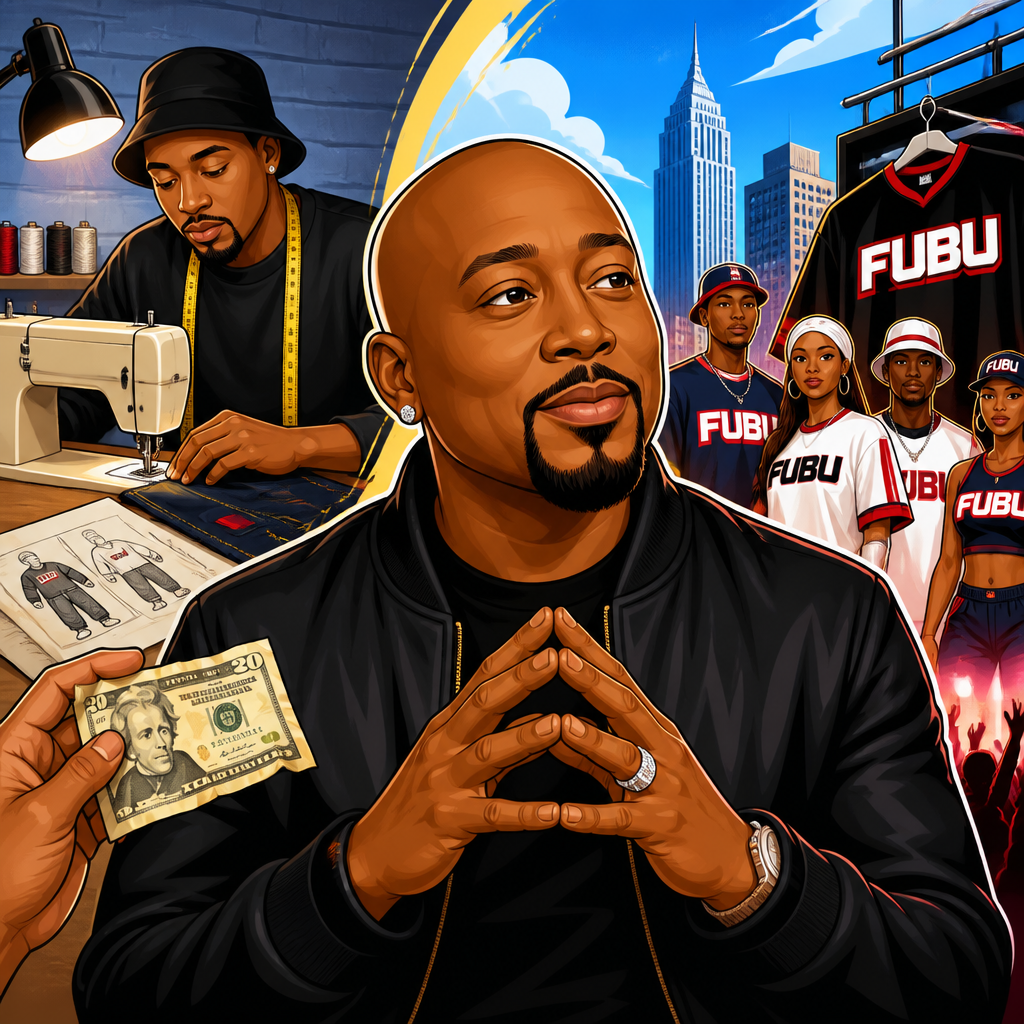
There are places in America that don’t just tell history — they make you feel it. Daymond John’s rise from a kid in Hollis, Queens, to the founder of FUBU is one of those American stories because it captures the raw mechanics of entrepreneurship: spotting an underserved market, building a brand before you can afford a business, and turning a tiny amount of capital into cultural leverage. When people ask how Daymond John turned $40 into FUBU, they are really asking a broader question about entrepreneur success stories: what separates a side hustle from a company that reshapes an industry? Having studied founders for years, and having seen the same patterns surface across retail, travel, and publishing, I can say the answer is rarely luck alone. It is usually a mix of timing, customer insight, relentless iteration, and disciplined reinvestment. FUBU, short for “For Us, By Us,” became a landmark case study because it was not merely a clothing line. It was a brand built around identity, representation, and community at a moment when mainstream fashion was overlooking a massive audience. That matters to Dream Chasers because the best success stories are not motivational posters. They are blueprints. They show how businesses are tested in the real world, how founders make decisions under pressure, and how a clear point of view can become a durable commercial advantage. In the world of entrepreneur success stories, Daymond John stands out because he started with almost nothing, sold directly to his audience, used cultural credibility as marketing, and scaled without losing the core message that made customers care in the first place.
The origin story: what the $40 really represents
The famous “$40” in the Daymond John story is not a myth, but it is often simplified. It refers to the tiny amount of starting cash he used to buy fabric and begin making wool ski hats, not a complete capitalization of the eventual company. That distinction matters. Great entrepreneur success stories often begin with a symbolic first step, then grow through hustle, reinvestment, and borrowed resources. In John’s case, he learned to sew from his mother, worked from his house, and transformed his living space into an improvised factory. His mother reportedly mortgaged the family home for around $100,000 later to help finance the business, showing that the leap from scrappy startup to scalable company usually requires successive stages of commitment. The lesson is direct: founders should respect the power of starting small, but they should not confuse a low-cost launch with a cost-free path to growth.
John began by identifying a market gap in early 1990s fashion. Major apparel brands were profiting from hip-hop culture without authentically serving the people driving it. He saw young consumers who wanted clothes that reflected their identity rather than watered-down interpretations from legacy companies. So he produced hats, then hockey jerseys, T-shirts, and other pieces that aligned with the look and attitude of the streets he knew firsthand. This is where real opportunity lived: not in inventing demand from scratch, but in noticing demand that established players had dismissed. I have seen the same pattern in countless case studies. The founder who listens closely to an ignored audience often beats the better-funded competitor who relies on assumptions.
How FUBU found product-market fit before it had scale
Product-market fit means customers immediately understand the value of what you are selling and are willing to buy, wear, recommend, or reorder it. FUBU found that fit because it was built inside the culture it served. John and his team did not launch with expensive market research decks. They tested products directly in their neighborhood, watched what people actually wore, and adjusted designs based on response. That hands-on feedback loop is one of the clearest traits in strong entrepreneur success stories. Before a founder scales, the founder observes. Before a business automates, it listens.
FUBU’s early products worked because they expressed belonging. The brand name itself made the promise unmistakable. “For Us, By Us” told customers exactly who the product was for and why it existed. That kind of clarity is rare and powerful. It also made word-of-mouth easier because the message traveled with the clothing. When someone asked about the brand, the wearer could explain it in one sentence. Modern founders can learn from that simplicity. A product does not need to appeal to everyone. In fact, sharp positioning often works better than broad positioning, especially in the early phase.
Another overlooked factor was operational discipline. John kept making and selling while holding a job at Red Lobster. He reportedly worked shifts, came home, and kept building the business at night. This matters because many entrepreneur success stories are romanticized as dramatic all-in gambles. In practice, lots of founders de-risk the early stage by keeping income while validating demand. That is not hesitation. It is financial strategy.
Marketing on a shoestring: culture, hustle, and visibility
FUBU did not begin with giant advertising budgets. It grew through grassroots marketing, clever placement, and cultural fluency. One of the smartest early moves was getting products into influential circles where style spread quickly. In fashion, perceived relevance can move faster than paid media if the right people wear the product authentically. FUBU benefited enormously from artists and tastemakers who were already shaping hip-hop style. The best-known example is LL Cool J, who wore FUBU in public and even appeared in a Gap commercial while subtly promoting the brand by wearing a FUBU hat and referencing “for us, by us” in the ad-lib. That moment has become business folklore because it demonstrated opportunistic brand amplification at its finest.
John also understood a truth many founders miss: distribution and marketing are connected. Selling hats on street corners, at events, and through local channels was not just a sales tactic. It was market education. Every sale trained more customers to recognize the logo and the message. This is especially important in entrepreneur success stories rooted in consumer products. Visibility is not a vanity metric when recognition directly influences demand.
| FUBU Growth Lever | How Daymond John Used It | Why It Worked |
|---|---|---|
| Niche positioning | Built a brand explicitly for an underserved audience | Created instant identity and loyalty |
| Direct testing | Sold early products locally and adjusted fast | Reduced guesswork and improved fit with demand |
| Cultural endorsement | Leveraged artists and visible community figures | Added trust no ad campaign could buy cheaply |
| Reinvestment | Rolled revenue back into production and inventory | Turned small wins into scalable capacity |
| Family-backed financing | Used home-based production and later larger support | Bridged the gap between concept and expansion |
Scaling from a home operation to a global brand
Turning a few handmade items into a national label required more than buzz. It required systems. As demand grew, FUBU had to manage manufacturing, inventory, retailer relationships, cash flow, and brand consistency. This is where many entrepreneur success stories either stall or break down. A founder may be gifted at starting, but scaling demands a different skill set. John’s success came from learning that transition and surrounding himself with people who could help execute it.
By the late 1990s, FUBU had become a major force in urban apparel, reportedly generating hundreds of millions in annual sales at its peak. That kind of growth does not happen from inspiration alone. It comes from supply chain coordination, licensing, wholesale negotiations, and disciplined brand extension. FUBU expanded beyond hats into sportswear, denim, outerwear, and international markets. The important lesson for readers exploring entrepreneur success stories is that scaling should deepen the brand, not dilute it. FUBU grew because each expansion still felt connected to the core audience and image.
There were also risks. Fashion trends move fast, competitors respond quickly, and overexpansion can weaken scarcity and relevance. John has spoken over the years about the hard realities of inventory, debt pressure, and industry volatility. That honesty is useful. Serious business case studies should show friction, not just headlines. Founders need to know that breakthrough brands still face margin pressure, retailer dependence, and changing consumer tastes.
What entrepreneurs can learn from Daymond John today
The practical lessons from how Daymond John turned $40 into FUBU remain highly relevant. First, start with a specific customer, not a vague dream. John knew exactly who he was serving and why mainstream brands were missing them. Second, use what you have. He began with limited money, home equipment, family support, and local access, proving that resourcefulness often matters more than ideal conditions. Third, build a message customers can repeat. FUBU’s name functioned as positioning, mission, and marketing all at once.
Fourth, reinvest early wins. Revenue from initial sales helped fund more production, and larger financing came after proof of demand. Fifth, protect authenticity. Consumers can sense when a brand is chasing a trend versus representing a lived reality. John’s firsthand understanding of his market gave FUBU credibility that bigger competitors could not easily imitate. That is one reason his story belongs at the center of entrepreneur success stories as a hub topic. It connects startup discipline, branding, finance, customer empathy, and scale in one example.
For Dream Chasers building their own ventures, this is the red, white, and blueprint version of entrepreneurship: begin with conviction, validate in the real world, then expand with intention. Whether you are launching apparel, opening a local service business, or building a digital brand, the pattern holds. Start close to the customer. Test fast. Tell a clear story. Keep your costs tight until the market proves you right. If you want more success stories, look for founders who solved a real problem for a real community, because that is where enduring businesses are born. Daymond John did not simply turn $40 into FUBU. He turned insight into demand, demand into brand equity, and brand equity into one of the defining entrepreneur success stories of modern American business. Until next time, Dream Chasers — keep chasing. 🇺🇸
Frequently Asked Questions
How did Daymond John actually turn just $40 into FUBU?
Daymond John’s story is often summarized as “he turned $40 into FUBU,” but the real answer is more practical and more inspiring than a simple rags-to-riches slogan. The $40 represents the tiny amount of starting capital he used to begin making products, not the total cost of building the company. He started by identifying a clear market gap: young consumers, especially in hip-hop culture, wanted clothing that reflected their identity, style, and community, yet mainstream fashion brands were not serving them authentically. Instead of waiting for investors, perfect conditions, or a large business loan, he started with what he had.
In the early days, he and his mother transformed their home into a small production base. They made hats and other apparel items themselves, then sold them directly. That direct-to-customer approach mattered because it let him test demand immediately, learn what people actually wanted, and generate cash flow without building a traditional retail infrastructure first. He did not begin with a huge inventory, an office, or a national advertising budget. He began with hustle, observation, and a willingness to reinvest every dollar back into the business.
What turned that small amount of money into something much bigger was not magic; it was leverage. He leveraged cultural insight, personal relationships, grassroots marketing, and relentless persistence. He sold not just clothing, but belonging. That is why the story resonates so strongly. It shows that entrepreneurship often starts with resourcefulness more than resources. The $40 was the spark, but the real engine behind FUBU’s growth was Daymond John’s ability to recognize an underserved audience and build a brand that spoke directly to them.
What does FUBU stand for, and why was that message so powerful?
FUBU stands for “For Us, By Us,” and that phrase was central to the brand’s identity and early success. It was more than a catchy acronym. It was a declaration that the people creating the brand understood the culture they were serving because they came from it. At a time when many major fashion companies benefited from hip-hop influence without truly representing the communities behind it, FUBU positioned itself as an authentic alternative. That message connected deeply with customers who wanted more than trendy clothing; they wanted representation, pride, and ownership.
The power of the slogan came from its clarity. It instantly communicated who the brand was for and why it existed. In marketing terms, that is incredibly valuable because strong brands reduce confusion. Customers did not need a long explanation to understand what FUBU stood for. The name itself carried the mission. That gave the company a distinct place in a crowded market and helped it stand out against larger, better-funded competitors.
It also reflected a broader business lesson: brands grow faster when they are rooted in genuine insight rather than generic ambition. FUBU was not trying to be everything to everyone at the start. It was speaking clearly to a specific audience that had been overlooked. That specificity made the brand feel real, and real brands create loyalty. Daymond John understood that people often buy identity and meaning as much as they buy product. “For Us, By Us” turned clothing into a cultural statement, and that helped transform a small startup into a major force in fashion.
What role did hip-hop culture play in FUBU’s rise?
Hip-hop culture was not just part of FUBU’s marketing; it was the environment that gave the brand life, credibility, and momentum. Daymond John recognized that hip-hop was shaping style, language, music, and aspiration across the country, yet many established brands still failed to connect with that audience in an authentic way. FUBU stepped into that gap by creating apparel that reflected the tastes and values of the culture from the inside, not from a distance. That distinction mattered enormously.
One of the smartest moves behind FUBU’s growth was its integration with artists and influencers before “influencer marketing” became a standard term. When hip-hop artists wore FUBU, it did more than create visibility. It signaled acceptance from trusted cultural leaders. That kind of endorsement is powerful because it cannot easily be manufactured through traditional advertising alone. Consumers saw the brand in a context that felt natural, not forced. It was part of the lifestyle, not just a product being pushed at them.
Hip-hop also gave FUBU a narrative advantage. The brand represented self-made ambition, creative independence, and local hustle turning into national success. Those themes aligned perfectly with the energy of the culture at the time. In that sense, FUBU was not riding a trend from the outside; it was growing alongside a movement. That helped it build emotional relevance as well as commercial success. Daymond John understood that when a brand authentically reflects a culture, it can gain traction far beyond what its initial budget would suggest.
What entrepreneurial lessons can people learn from Daymond John’s FUBU story?
One of the biggest lessons from Daymond John’s journey is that starting small is not a weakness if you move intelligently. Many people assume they need major funding, polished infrastructure, or instant scale before they can launch a business. The FUBU story challenges that assumption. John began with limited capital, but he compensated with sharp market awareness, speed, and persistence. He validated demand early, sold directly, and built from there. That is a model many modern entrepreneurs can still follow, whether they are launching a clothing line, a digital product, or a local service business.
Another major lesson is the importance of solving a real market problem. FUBU succeeded because it met a need that had been ignored. Daymond John did not create a brand in a vacuum. He paid attention to what people around him wanted and what the market was failing to provide. Great businesses often begin there: not with invention for its own sake, but with recognition. When entrepreneurs deeply understand an underserved audience, they can create products that feel necessary rather than optional.
The story also highlights the value of brand clarity. FUBU’s name, message, and audience alignment were all tightly connected. That consistency made the company memorable and helped customers immediately understand its purpose. Finally, there is the lesson of reinvestment and resilience. Building a business usually involves setbacks, long hours, and uncertainty. Daymond John’s success did not come from one lucky break alone. It came from sustained effort, iterative learning, and the discipline to keep building even when resources were scarce. For aspiring founders, that may be the most important lesson of all: momentum often comes after commitment, not before it.
Why does Daymond John’s rise from Hollis, Queens, still matter today?
Daymond John’s rise still matters because it speaks to a timeless American idea: entrepreneurship can begin anywhere, especially in places where people learn to be creative with limited means. His background in Hollis, Queens, is not just a biographical detail. It is part of the business story. Growing up in an environment where culture, hustle, and community were deeply intertwined gave him a firsthand understanding of the audience he would later serve. That kind of lived experience became a competitive advantage.
His story also remains relevant because it reframes what people mean when they talk about opportunity. Opportunity is often imagined as access to money, elite networks, or formal power. But Daymond John’s path shows that opportunity can also come from observation, credibility, and cultural fluency. He saw value where others did not. He built a company from the ground up by understanding people, not just spreadsheets. In today’s economy, where niche brands and community-driven businesses can scale faster than ever, that lesson is especially powerful.
There is also a broader reason the story endures. It reminds people that business is not only about transactions; it is about translation. John translated the needs, aspirations, and style of an overlooked community into a successful commercial brand. That is why his journey continues to resonate with entrepreneurs, marketers, and readers alike. It is not only a story about turning $40 into a fashion empire. It is a story about turning insight into influence, culture into commerce, and a small beginning into lasting impact.