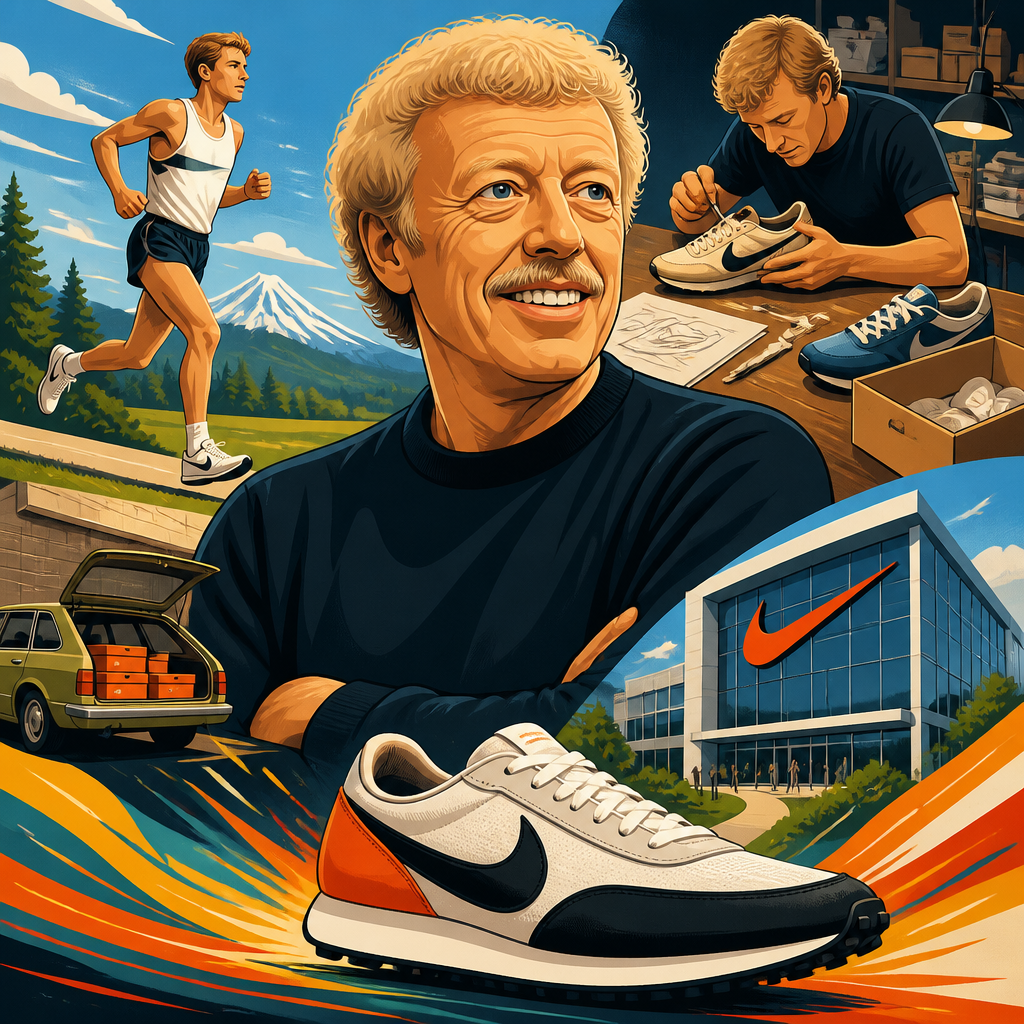
There are places in America that don’t just tell history — they make you feel it. The rise of Nike belongs in that category because it is not simply a business story; it is an American story about grit, timing, branding, and relentless execution. When people ask how Phil Knight built a global icon, the short answer is this: he paired a sharp understanding of product economics with athlete credibility, disciplined distribution, and one of the most powerful brand identities ever created. That formula turned a startup selling imported running shoes out of a car trunk into a company that reshaped sports, fashion, and popular culture worldwide.
As a hub within Entrepreneur Success Stories, this article covers the key phases of Nike’s growth and the lessons they offer founders, students, and Dream Chasers who want to understand what enduring companies actually look like from the inside. In business terms, a global icon is a company whose products, symbols, and values are recognized across borders and generations. In Nike’s case, that icon is the Swoosh, but the symbol only matters because the company built systems behind it: supply chains, athlete partnerships, product innovation, advertising discipline, and category expansion. I have worked through enough brand case studies to know that iconic status rarely comes from a single breakthrough. It comes from dozens of coordinated decisions made correctly over many years.
Phil Knight’s story matters because it shows that entrepreneurship is rarely glamorous at the beginning. Nike started in 1964 as Blue Ribbon Sports, founded by Knight and his former University of Oregon track coach Bill Bowerman. Knight had studied the market opportunity for lower-cost, high-quality athletic shoes and believed Japanese manufacturing could challenge the dominance of German brands like Adidas and Puma. Bowerman brought technical expertise and direct insight into what runners needed. Together, they created a business built on complementary strengths. For readers exploring broader entrepreneur success stories, Nike is a masterclass in seeing an opening before incumbents take it seriously, then building a brand strong enough to own the category.
From Blue Ribbon Sports to Nike: spotting the market gap
Phil Knight’s earliest advantage was not money or manufacturing scale. It was perspective. In a Stanford business school paper, he argued that Japanese running shoes could do to German athletic footwear what Japanese cameras had done to German camera makers: deliver quality at a lower price and steadily win market share. That thesis sounds obvious now, but in the early 1960s it was contrarian. Adidas dominated performance running. Importing from Japan looked risky. Knight pursued it anyway, securing rights to sell Onitsuka Tiger shoes in the United States through Blue Ribbon Sports.
The early operating model was lean and intensely practical. Knight sold shoes at track meets, talked directly with runners, and learned what moved inventory. Bowerman modified shoes for athletes and obsessed over performance details. This combination of direct customer contact and technical iteration gave the founders something many startups lack: immediate market feedback. They were not guessing what serious runners wanted. They were hearing it trackside. That firsthand exposure helped them understand fit, durability, traction, and weight long before sportswear became a lifestyle category.
Naming also mattered. Blue Ribbon Sports was a distributor’s name; Nike became a brand name. In 1971, the company adopted the name Nike, inspired by the Greek goddess of victory. The Swoosh, designed by Carolyn Davidson for $35, gave the company a mark that was simple, fast, and easy to scale across products and markets. Great entrepreneurs know when a business model has outgrown its original identity. Knight recognized that to control its destiny, the company needed its own brand, not permanent dependence on another manufacturer’s label.
Product innovation and athlete trust created early momentum
Nike did not become powerful through marketing alone. It earned credibility through product performance. Bowerman’s experimentation was central here. His famous waffle sole, inspired by a waffle iron, improved traction while reducing weight. That kind of practical innovation mattered deeply in the running boom of the 1970s, when more Americans began jogging for fitness and racing became culturally visible. Nike was positioned perfectly: it had authentic ties to runners and products engineered for them.
Athlete endorsement worked because it was rooted in performance culture, not celebrity for its own sake. Prefontaine, the charismatic American distance runner, became one of Nike’s earliest and most influential ambassadors. He gave the brand rebellious energy and credibility among serious athletes. This is one of the clearest lessons in entrepreneur success stories: the right early evangelists are not always the biggest names. They are the people your core users already trust.
As Nike expanded, it kept refining the formula: listen to athletes, solve real performance problems, and communicate improvement in plain terms. Air cushioning, introduced in the late 1970s and expanded in the 1980s, is a prime example. It gave Nike a technology platform that could be differentiated, branded, and extended across multiple categories. Good founders do not just launch products; they build repeatable innovation engines. Nike learned how to translate research and athlete testing into stories customers could understand and retailers could sell.
Brand building turned a sports company into a cultural force
Many companies make strong products. Far fewer build emotional meaning around them. Nike’s breakthrough was turning athletic effort into identity. The company’s advertising consistently framed sports not as equipment purchases but as personal transformation. By the time “Just Do It” launched in 1988 through Wieden+Kennedy, Nike had found language that could scale from elite competitors to everyday walkers. Few taglines in marketing history have compressed aspiration, action, and universality so effectively.
Michael Jordan accelerated this transformation. The Air Jordan partnership, beginning in 1984, did more than increase sales. It fused performance footwear with style, scarcity, and storytelling. Jordan was extraordinary on the court, but Nike’s execution off the court mattered just as much. Product design, launch timing, media attention, and cultural positioning turned a signature shoe into a franchise. That model later influenced partnerships across basketball, soccer, tennis, skateboarding, and training. In practical terms, Nike proved that a brand can sit at the intersection of sport and self-expression without losing technical credibility.
For USDreams readers who appreciate anything red, white, and blueprint, this phase of Nike’s rise is especially instructive. Knight did not treat branding as decoration. He treated it as strategic architecture. Every touchpoint reinforced the same core idea: performance, ambition, motion, victory. Entrepreneurs often copy visible tactics like endorsements while missing the underlying discipline. Nike won because its product, athlete roster, retail presence, and message all pointed in the same direction.
Operational discipline made global scale possible
Behind the glamour of iconic ads was hard operational work. Nike’s growth depended on manufacturing partnerships, inventory planning, wholesale relationships, and later direct-to-consumer expansion. Knight was particularly effective at balancing creative brand building with financial realism. That combination is rarer than it sounds. Plenty of founders are visionary marketers. Plenty are careful operators. The exceptional ones understand that enduring scale demands both.
During its growth years, Nike relied on contract manufacturing rather than owning large factories outright. That asset-light model allowed flexibility and faster scaling, though it also created exposure to supplier risk, labor scrutiny, and geopolitical disruption. As the company expanded internationally, it learned to manage sourcing, logistics, and regional demand with increasing sophistication. This is a core point for any entrepreneur studying case studies: the bigger the brand gets, the more execution becomes a systems challenge rather than a pure product challenge.
| Growth driver | How Nike used it | Why it mattered |
|---|---|---|
| Market gap | Imported quality running shoes at competitive prices | Created an entry point against entrenched rivals |
| Product innovation | Waffle outsole, Air technology, athlete-tested design | Built credibility and pricing power |
| Brand identity | Swoosh, Nike name, “Just Do It” messaging | Made the company memorable across audiences |
| Athlete partnerships | Prefontaine, Jordan, and later global stars | Linked products to aspiration and proof |
| Distribution strategy | Wholesale growth, then direct digital channels | Expanded reach while improving margins |
Nike also adapted as retail changed. Wholesale partners helped build national reach, but over time the company invested heavily in owned stores, e-commerce, membership programs, and apps such as SNKRS and Nike Run Club. That shift gave Nike more customer data, better margin control, and stronger community engagement. Founders should note the pattern: channels that help you grow early may not be the channels that maximize long-term brand power.
Setbacks, criticism, and the lessons entrepreneurs should actually copy
No serious business case study is complete without tradeoffs. Nike’s rise included painful periods, especially the labor controversies of the 1990s tied to overseas factory conditions. The company faced intense criticism from activists, students, and the media. Those issues damaged trust and forced Nike to improve transparency, supplier standards, compliance monitoring, and public reporting. The lesson is not that successful brands avoid mistakes. It is that scale magnifies every weakness, especially ethical ones, and companies must respond with structural changes rather than slogans.
Nike also misfired strategically at times. It has navigated product misses, demand forecasting errors, and competitive pressure from Adidas, Under Armour, and newer niche brands like Hoka and On. Yet the company’s resilience comes from a durable strategic core: deep sport credibility, constant innovation, and world-class storytelling. In my experience reviewing entrepreneur success stories, that combination is what separates temporary winners from institutions.
So what should founders copy from Phil Knight? Start with a clear market insight. Pair complementary talent, as Knight did with Bowerman. Stay close to customers. Build a brand only after earning product trust. Use partnerships that strengthen credibility, not just visibility. Treat operations as a growth weapon. And understand that iconic companies are built through years of repetition, refinement, and hard choices. If you want more examples like this, Nike is one of the best hub stories to revisit before diving into other founder journeys, whether at The Great American Rewind or over a cup from Old Glory Coffee Roasters. Until next time, Dream Chasers — keep chasing. 🇺🇸
Frequently Asked Questions
How did Phil Knight turn Nike from a small startup into a global brand?
Phil Knight built Nike by combining several advantages that, together, became extraordinarily powerful. At the beginning, he understood that great businesses are rarely built on inspiration alone; they are built on margins, distribution, timing, and product-market fit. Knight started with a practical insight: high-quality athletic shoes could be sourced more efficiently and sold competitively in the American market. That economic logic gave the company a foundation. But economics alone do not create a global icon. Knight also recognized the importance of athlete trust, performance credibility, and emotional brand identity.
One of his smartest moves was aligning Nike with serious runners and coaches before the company became a mainstream name. That gave the brand authenticity in a market where performance mattered. Nike was not initially sold as a fashion statement; it earned legitimacy by serving athletes who cared deeply about function. From there, Knight and his team executed relentlessly. They improved product design, built stronger relationships with retailers, expanded distribution carefully, and invested in marketing that made the brand feel larger than the company actually was in its early years.
What truly separated Nike from many competitors was its ability to connect business discipline with storytelling. Knight did not just sell shoes; he helped build a brand that represented ambition, competitiveness, and personal transformation. Over time, Nike became more than a manufacturer. It became a symbol people wanted to wear, whether they were elite athletes or everyday consumers. That combination of operational rigor and emotional resonance is what turned a scrappy business into a global icon.
Why was branding so important to Nike’s rise?
Branding was central to Nike’s rise because the company understood early that in a competitive market, products alone are rarely enough. Athletic shoes can be copied, improved upon, and challenged by rivals, but a brand that captures identity, aspiration, and cultural meaning is much harder to replace. Nike mastered that idea. It built a brand that stood for performance, confidence, determination, and forward momentum. Consumers were not simply buying footwear; they were buying into a mindset.
The visual and emotional clarity of the Nike brand made a major difference. The Swoosh became one of the most recognizable symbols in the world because it was simple, memorable, and loaded with meaning. Just as important, Nike paired its logo with messaging that consistently reinforced action, excellence, and self-belief. Rather than speak only about product features, the company framed its identity around what athletes and consumers wanted to feel. That shift gave Nike extraordinary staying power because emotional attachment often outlasts technical advantages.
Phil Knight’s genius was not just approving ads or slogans; it was understanding that brand equity could become one of the company’s most valuable assets. Through athlete endorsements, memorable campaigns, and a consistent sense of purpose, Nike established itself as a cultural force. That branding helped the company expand beyond sports into lifestyle, fashion, and global youth culture. In practical terms, strong branding gave Nike pricing power, customer loyalty, and broad relevance across generations. In strategic terms, it transformed the company from a shoe seller into a brand with worldwide influence.
What role did athletes play in Nike’s success?
Athletes were essential to Nike’s success because they gave the brand credibility where it mattered most: performance. In its rise, Nike did not rely only on conventional advertising. It built trust by associating itself with people whose livelihoods depended on winning, training, and performing at the highest level. If serious athletes wore Nike, that sent a powerful message to consumers that the products were not just stylish or well-marketed, but genuinely effective.
In the early years, this mattered especially in running, where authenticity carried enormous weight. Coaches, competitors, and dedicated runners influenced buying decisions in a way mass advertising alone could not. Nike understood that if it could win over respected athletes and create products tailored to their needs, the brand would gain legitimacy from the ground up. That legitimacy became a springboard for broader growth. As the company expanded, endorsements became even more impactful, helping Nike move from niche performance circles into mainstream global culture.
The athlete relationship also reinforced Nike’s larger brand story. Endorsers were not just sales tools; they embodied the values Nike wanted to project: discipline, resilience, excellence, and competitive fire. This made campaigns more believable and emotionally compelling. Consumers saw Nike through the lens of achievement. Over time, the company became exceptionally skilled at identifying athletes who could elevate both product lines and brand identity. That strategy helped Nike create moments that were not just commercially successful, but culturally defining, further cementing its status as a global icon.
Was Nike’s rise mainly about great products, or was it also about business strategy?
Nike’s rise was absolutely about great products, but it was equally about business strategy. This is one of the most important points in understanding how Phil Knight built the company. Strong products gave Nike a reason to exist, especially in a performance-driven category where athletes demanded quality and innovation. But many companies make good products and never become dominant. What set Nike apart was the way Knight connected product excellence to disciplined business execution.
He understood the economics of sourcing, pricing, and scaling in a way that allowed the company to grow without losing sight of profitability and market opportunity. Distribution was a major part of that equation. Nike did not become powerful simply by making shoes people liked; it became powerful by getting those shoes into the right channels, building retail relationships, and expanding in a way that increased visibility without diluting the brand. Knight also appreciated the importance of timing. As fitness culture, competitive athletics, and sports commercialization grew, Nike positioned itself to benefit from those shifts rather than merely react to them.
Another key strategic strength was Nike’s ability to integrate different functions into one coherent engine. Product development, athlete partnerships, marketing, and distribution did not operate as isolated efforts. They reinforced one another. A better shoe helped attract better athletes. Better athletes made the marketing more powerful. Better marketing increased demand. Strong demand improved distribution leverage. That kind of system-level thinking is what separates good companies from category leaders. So while product quality was indispensable, Nike’s rise makes the most sense when viewed as a masterclass in strategy, execution, and brand building working together.
Why is the story of Nike often described as an American business story?
The story of Nike is often described as an American business story because it reflects several themes that sit at the center of the country’s entrepreneurial mythology: risk-taking, reinvention, competitiveness, storytelling, and the belief that disciplined ambition can create something much larger than its beginnings. Phil Knight did not inherit a finished empire. He built Nike through experimentation, persistence, and a willingness to operate in uncertainty. That arc resonates because it mirrors a broader national narrative about building from the ground up through hustle and conviction.
It is also an American story because Nike grew by understanding not just commerce, but culture. The company tapped into the nation’s fascination with sports, achievement, individual excellence, and personal identity. In America, sports have long been tied to aspiration and self-making, and Nike learned how to speak that language better than almost anyone. It sold products, but it also sold a vision of progress: run faster, train harder, become more. That message fit naturally into a culture that values performance and self-improvement.
At the same time, Nike’s rise shows another deeply American trait: the ability to transform a practical business into a symbol with global reach. What began as a company focused on athletic footwear evolved into one of the most influential brands in the world. That transformation required more than commercial success; it required imagination, bold marketing, and relentless execution. In that sense, the rise of Nike is not only the story of one entrepreneur or one company. It is the story of how business, branding, sports, and culture can combine to create an institution that feels larger than commerce itself.