There are places in America that don’t just tell history — they make you feel it. The most powerful quotes from history’s greatest minds endure for the same reason: they compress experience, conviction, and moral clarity into words that still move people generations later. A truly famous quote is not merely memorable phrasing. It is language that captures a principle people can apply in public life, private struggle, leadership, learning, service, and nation-building. For readers exploring famous quotes as a central part of inspirational wisdom, the goal is not to collect clever lines. It is to understand who said them, what circumstances shaped them, why they still resonate, and how to use them with accuracy.
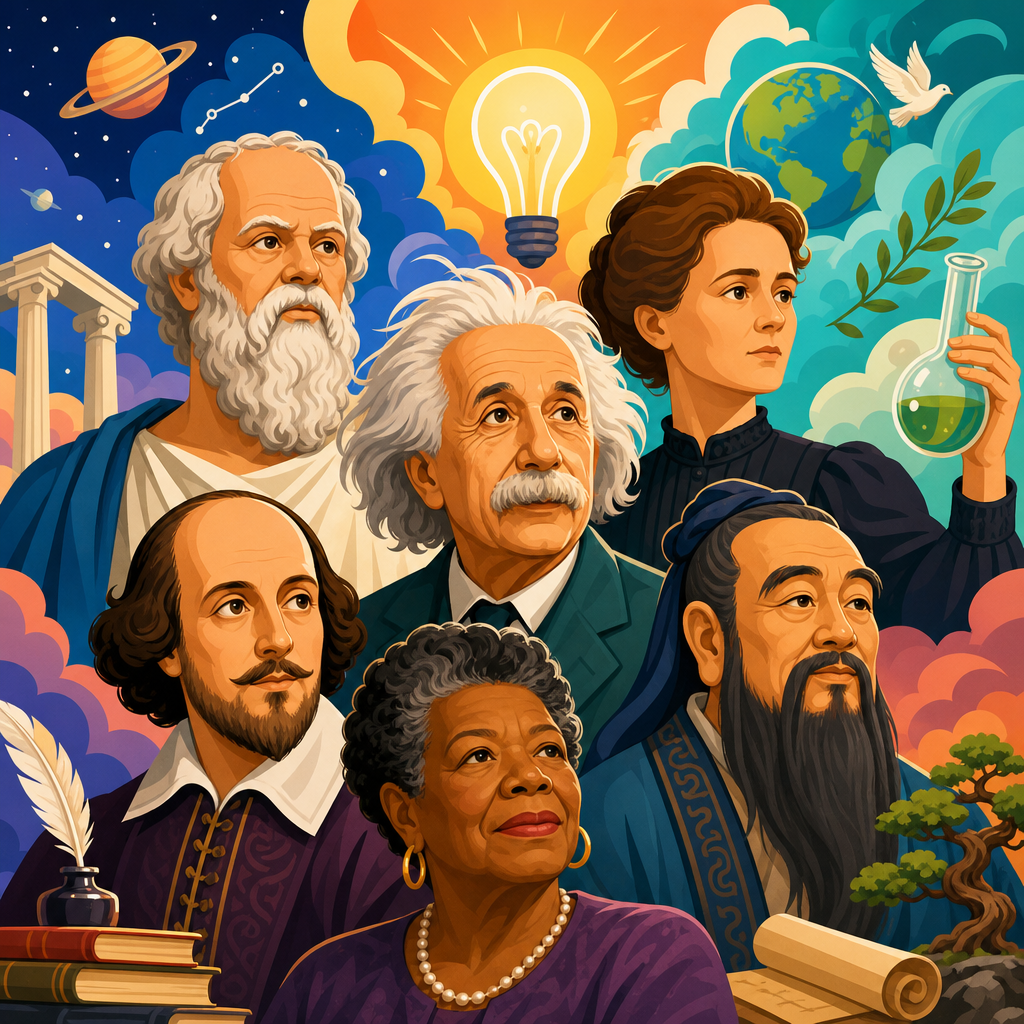
After years of writing about American history, presidential rhetoric, battlefield letters, reform movements, and road-tested lessons from museums and memorials across the country, I have seen one pattern again and again: the quotes people remember best are attached to turning points. Lincoln speaking to a fractured nation. Franklin urging civic responsibility. Roosevelt reframing fear in the middle of crisis. Maya Angelou defining resilience and dignity. Einstein challenging inherited assumptions. In every case, the quote survives because it answers a durable human question. What is courage? What is freedom? What is duty? What should we do when the path forward is uncertain?
This hub article covers famous quotes comprehensively by organizing them into the themes readers search for most: leadership, perseverance, freedom, knowledge, and character. It also addresses an essential issue many quote collections ignore: attribution. Some of the most repeated sayings online were never spoken by the people credited with them, or they have been shortened until the original meaning changed. If you want a page worth bookmarking, teaching from, linking to, and returning to before a graduation speech or cross-country road trip, this is it. Consider it a red, white, and blueprint guide to famous quotes that still shape how Dream Chasers think, speak, and act.
What makes a quote truly powerful
A powerful quote does three things at once. First, it states an idea with unusual precision. Second, it emerges from a recognizable context, often a moment of pressure or consequence. Third, it remains useful outside its original era. Take “Government of the people, by the people, for the people, shall not perish from the earth.” Abraham Lincoln delivered that line at Gettysburg in 1863, during the Civil War, while honoring Union dead. The quote matters not because it sounds elegant, but because it defines democratic purpose in a way that remains immediately understandable.
The same standard applies beyond politics. When Thomas Edison said, “Genius is one percent inspiration and ninety-nine percent perspiration,” he gave generations a plainspoken rule about disciplined work. When Helen Keller said, “Life is either a daring adventure or nothing,” she transformed limitation into agency. The strongest famous quotes do not flatter the audience. They challenge it. They ask for effort, courage, sacrifice, honesty, or perspective. That is why they survive school textbooks, social media graphics, commencement stages, and quiet moments when someone needs language for an inner struggle.
Leadership quotes that define action under pressure
Leadership quotes remain among the most searched and reused because they help people explain responsibility. Theodore Roosevelt’s “Do what you can, with what you have, where you are” is powerful because it strips away excuses. Winston Churchill’s “Success is not final, failure is not fatal: it is the courage to continue that counts” endures because it treats leadership as persistence rather than perfection. In practice, these lines work in boardrooms, classrooms, military service, parenting, and public office because they define action in imperfect conditions.
American history offers especially strong examples. George Washington’s reputation rests not only on victories, but on restraint, especially surrendering power after the Revolutionary War. That makes his lesser-cited line, “Perseverance and spirit have done wonders in all ages,” more than motivational wallpaper. It reflects a founder who understood endurance better than applause. Franklin D. Roosevelt’s “The only thing we have to fear is fear itself” is often quoted casually, yet in its 1933 inaugural context, it was a direct effort to stabilize a nation during banking panic and economic collapse. Strong leadership quotes are not abstract ideals. They are verbal tools used in moments when morale, confidence, and public will are at risk.
| Quote | Speaker | Why it endures |
|---|---|---|
| “Government of the people, by the people, for the people…” | Abraham Lincoln | Defines democratic purpose with unmatched clarity |
| “The only thing we have to fear is fear itself” | Franklin D. Roosevelt | Reframes panic as the enemy during national crisis |
| “Do what you can, with what you have, where you are” | Theodore Roosevelt | Turns leadership into practical action |
| “Success is not final, failure is not fatal…” | Winston Churchill | Frames resilience as the core leadership trait |
Quotes about perseverance, failure, and resilience
If leadership quotes guide external action, perseverance quotes strengthen internal resolve. These are often the lines people return to during layoffs, illnesses, breakups, military deployments, long exams, startup failures, and lonely reinventions. Few are more direct than Calvin Coolidge’s statement: “Nothing in this world can take the place of persistence.” It is not flashy, but it is accurate. Skill matters. Talent matters. Opportunity matters. Yet persistence repeatedly decides outcomes when the first attempt fails.
Another enduring example comes from Maya Angelou: “You may encounter many defeats, but you must not be defeated.” The distinction is crucial. Defeat can be an event without becoming an identity. That idea helps explain why the quote circulates so widely in education and recovery settings. Thomas Jefferson’s “I’m a greater believer in luck, and I find the harder I work the more I have of it” survives for a similar reason. It names a truth people recognize from experience: sustained effort appears to create coincidence. In my own reporting, whether speaking with park rangers, veterans, or small-town museum directors, the most respected people rarely romanticize success. They trust repetition, discipline, and stamina. The best resilience quotes tell the truth about that process.
Freedom, justice, and the moral language of democracy
Some famous quotes matter because they clarify national ideals and expose national failures. Martin Luther King Jr. provided one of the defining moral statements of the twentieth century: “Injustice anywhere is a threat to justice everywhere.” Its endurance comes from scope. The quote refuses the comfort of distance. It argues that injustice is not local when principles are universal. Frederick Douglass used equally piercing language when he said, “Power concedes nothing without a demand. It never did and it never will.” That line remains essential because it corrects a common myth: that progress arrives automatically.
These quotes are especially powerful in American civic life because they pair patriotism with accountability. They love the promise enough to measure the nation against it. Thomas Jefferson’s “We hold these truths to be self-evident, that all men are created equal” remains foundational not because the country fulfilled it at once, but because generations used the principle to widen liberty. Susan B. Anthony, Sojourner Truth, César Chávez, and countless other reformers understood that enduring words become leverage when citizens insist that institutions live up to them. For Dream Chasers planning heritage travel, this is why standing at Independence Hall, the Lincoln Memorial, or the National Civil Rights Museum can feel so electric. The words are not dead. They still make demands.
Quotes about knowledge, curiosity, and independent thought
Another major branch of famous quotes centers on learning. These sayings remain popular because they help people think more clearly in a noisy age. Albert Einstein’s “Imagination is more important than knowledge” is often misunderstood as anti-fact. It is not. Einstein meant that knowledge describes what is already known, while imagination opens paths to discovery. Used properly, the quote celebrates creative inquiry, not ignorance. Benjamin Franklin’s “An investment in knowledge pays the best interest” offers a more practical formulation. It still speaks to students, tradespeople, entrepreneurs, and lifelong learners because it frames education as compounding value.
Socrates, often summarized through the idea that wisdom begins in recognizing one’s ignorance, remains central to this category because intellectual humility is a prerequisite for real learning. Marie Curie’s “Nothing in life is to be feared, it is only to be understood” adds scientific courage to the conversation. Together, these quotes teach a durable lesson: informed curiosity beats certainty. In a culture flooded with recycled opinions, the greatest minds model something rarer. They revise beliefs when evidence changes, ask better questions, and connect knowledge to responsibility. That is why quote pages about wisdom should never stop at isolated lines. Readers deserve context, interpretation, and a path toward deeper study.
How to use famous quotes accurately and meaningfully
The final test of a quote is not whether it sounds impressive, but whether you use it well. Accuracy comes first. Verify wording through reputable sources such as presidential libraries, archives, university collections, the Library of Congress, or established reference works like the Yale Book of Quotations. Misattribution is common. Churchill, Einstein, and Mark Twain attract countless lines they never said. Shortened versions can also distort meaning. Before using a quote in a speech, classroom, article, or social post, check the original context and date.
Application matters just as much. Match the quote to the moment. A memorial dedication requires gravity; a graduation speech can carry aspiration; a team meeting may need practical resolve. Introduce the speaker briefly, explain the setting, and connect the line to a real choice facing the audience. That is how famous quotes become useful rather than decorative. At USDreams, we have learned this on the road, whether during The Great American Rewind, over a cup from Old Glory Coffee Roasters, or while plotting miles with MapMaker Pro GPS. The right words can sharpen purpose, but only when rooted in truth and used with intention.
The most powerful quotes from history’s greatest minds are not relics. They are working tools for courage, leadership, learning, citizenship, and endurance. The best ones survive because they were forged in real conditions and because they continue to answer real questions. Some teach discipline. Some defend liberty. Some call people to conscience. Others remind us that imagination, humility, and persistence are not soft virtues; they are engines of progress. That is why a serious guide to famous quotes must go beyond lists and offer context, theme, and trustworthy attribution.
As the hub for famous quotes within inspirational wisdom, this page should help you decide which voices to explore next and how to use them with care. Revisit Lincoln for democracy, King for justice, Roosevelt for resolve, Angelou for resilience, Franklin for practical wisdom, and Einstein for curiosity. Then keep building your own collection with the same standard: words that are memorable because they are true. Save the quotes that steady you, teach them accurately, and bring them along on the long American journey ahead. Until next time, Dream Chasers — keep chasing. 🇺🇸
Frequently Asked Questions
What makes a quote truly powerful enough to endure across generations?
A quote becomes timeless when it does more than sound eloquent. The most powerful quotes endure because they express a truth people continue to recognize in their own lives, even centuries later. They often emerge from moments of conflict, discovery, sacrifice, leadership, or moral testing, which gives them unusual weight. When a statement from a historical figure still feels relevant in classrooms, workplaces, public debate, or private reflection, that is usually a sign that it has moved beyond its original moment and entered a larger human conversation.
Another reason these quotes last is their ability to compress complexity into clarity. Great minds often faced enormous political, philosophical, scientific, or spiritual questions, yet their most remembered words are strikingly direct. A powerful quote can act as a moral compass, a call to courage, or a reminder of responsibility. It gives people language for values they already feel but may struggle to articulate. That combination of brevity, truth, and emotional force is what allows certain words to survive while countless others fade.
Why do famous historical quotes still matter in modern life?
Historical quotes still matter because the core challenges of human life have not changed as much as technology has. People still wrestle with fear, ambition, justice, duty, freedom, grief, leadership, and hope. When readers turn to the words of history’s greatest minds, they are often looking for more than inspiration. They are looking for perspective from people who confronted high-stakes decisions and left behind language strong enough to guide others.
In modern life, these quotes serve practical purposes. They can sharpen decision-making, strengthen public speaking, frame a personal mission, or provide comfort during difficult seasons. A statement from a statesman, reformer, inventor, philosopher, or military leader can help readers think more clearly about perseverance, character, and responsibility. In that sense, famous quotations are not relics. They are living tools. They continue to matter because they help people interpret both personal struggle and public life with greater wisdom and discipline.
How should readers interpret historical quotes in their original context?
The best way to interpret a historical quote is to understand who said it, when it was said, and what problem or audience shaped it. Context matters because many famous lines are repeated so often that they become detached from the circumstances that gave them meaning. A quote spoken during war, reform, scientific upheaval, or national crisis may carry nuances that are not obvious when read in isolation. Knowing the historical setting helps readers avoid oversimplifying the speaker’s intent.
At the same time, context should deepen appreciation rather than limit relevance. A quote can belong to a specific moment and still speak powerfully to future generations. Readers should ask what immediate challenge the speaker faced, what principle the words were defending, and why those words remained memorable long after the event passed. This approach allows people to respect historical accuracy while also drawing thoughtful lessons for today. In other words, context protects meaning, and reflection extends meaning.
Can powerful quotes actually influence leadership, character, and personal growth?
Yes, they can, especially when readers treat them as principles to practice rather than slogans to admire. The strongest historical quotes often endure because they challenge behavior. They push people to think harder, act more bravely, or remain steady under pressure. A leader may return to a quote about duty or courage before making a difficult decision. A student may adopt a quote about discipline as a daily standard. Someone facing hardship may draw strength from words that remind them endurance has always been part of meaningful achievement.
Quotes influence character because repeated language shapes attention. When people internalize wise words, those words can begin to guide habits, judgments, and priorities. Of course, a quote alone does not transform a life. Its power comes from application. The value lies in translating admired language into conduct: serving others more faithfully, thinking more independently, persevering more consistently, or speaking with greater integrity. That is why the most powerful quotes are not just memorable lines from the past. They become frameworks for action in the present.
What is the best way to use famous quotes in writing, speeches, or everyday inspiration?
The most effective use of a famous quote is intentional and relevant. In writing or speeches, a quote should illuminate the point being made, not simply decorate the page. The best quotations add authority, emotional resonance, or conceptual clarity. They can open an argument with force, reinforce a central theme, or conclude with memorable impact. But they work best when introduced with enough context for readers to understand why the words matter and how they connect to the larger message.
In everyday life, readers can use powerful quotes as anchors for reflection and motivation. Some keep a line in a journal, on a desk, or as part of a daily reading habit. Others return to certain quotations during times of uncertainty, using them to reset priorities and regain perspective. The key is to choose quotes that align with real values rather than temporary mood. When used well, famous historical quotes do not just inspire in the moment. They help shape a more thoughtful, disciplined, and purposeful way of living.