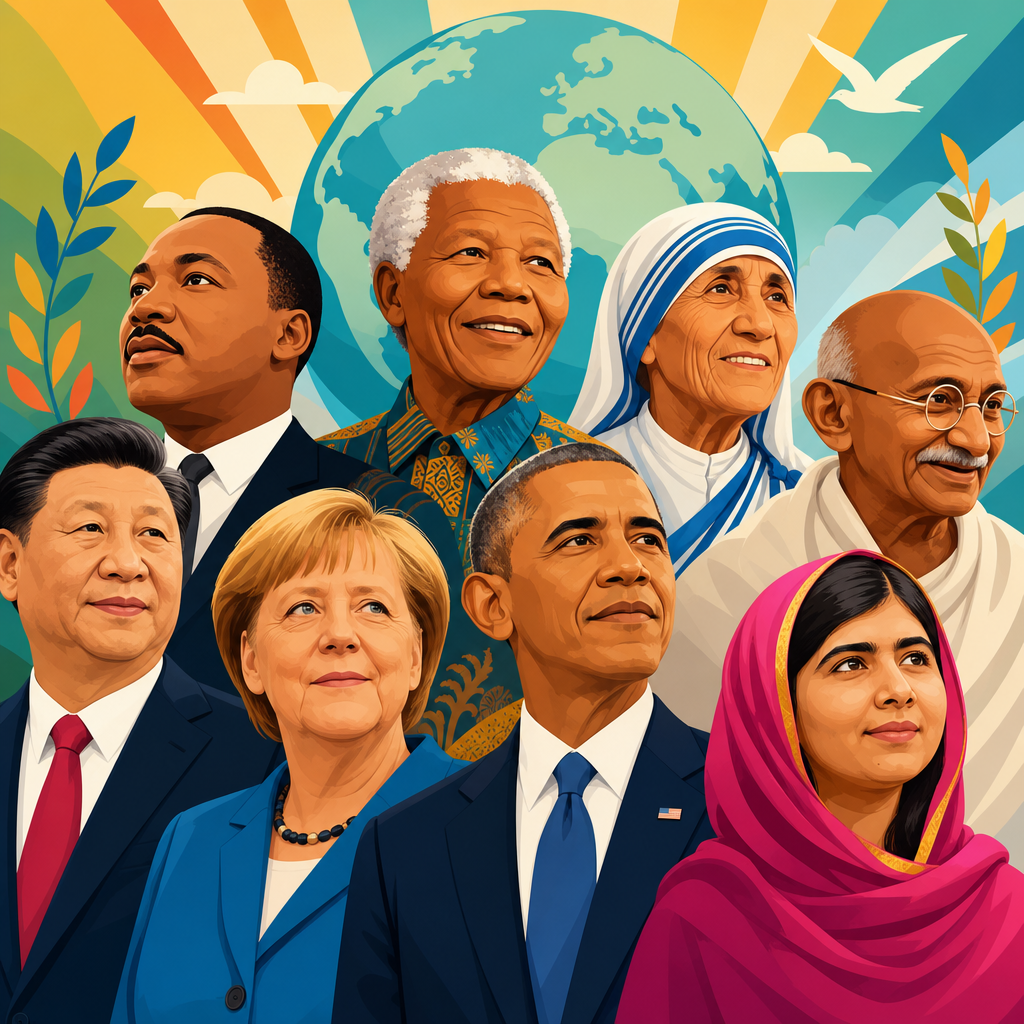
There are places in America that don’t just tell history — they make you feel it. Leadership and influence are among those forces that shape a nation the way rivers shape valleys: steadily, visibly, and often through ordinary decisions made under pressure. In a quote collection, leadership means the ability to set direction, make choices, and earn trust; influence means the power to move people, ideas, and outcomes without relying on title alone. Together, they explain why George Washington could step away from power, why Abraham Lincoln could hold a divided country together, and why modern teams still study the language of courage, service, and accountability. This hub on leadership quotes and influence quotes is designed for Dream Chasers who want more than a list of clever lines. It provides context, themes, and practical ways to use topic-based quotes for teaching, public speaking, journaling, team development, and personal reflection. I have built quote libraries for classrooms, editorial calendars, and leadership workshops, and the best collections always do three things well: they define the idea, show it in action, and connect it to real decisions. That matters because a quote is never just decoration. The right words can sharpen judgment, steady conviction, and frame a conversation in ways people remember. In a country built red, white, and blueprint, leadership wisdom is not abstract. It shows up in military service, local government, family businesses, volunteer work, coaching, and every road trip moment when someone has to choose the route and own the outcome.
What leadership and influence quotes actually teach
Strong leadership quotes do more than sound inspiring. They compress a tested principle into a sentence people can recall under stress. Consider John Quincy Adams: “If your actions inspire others to dream more, learn more, do more and become more, you are a leader.” This quote matters because it defines leadership by effect, not rank. Harry S. Truman’s “The buck stops here” captures accountability in four words and remains one of the clearest standards for executive responsibility. Dwight D. Eisenhower offered a practical distinction: “Leadership is the art of getting someone else to do something you want done because he wants to do it.” That line explains influence without coercion. Theodore Roosevelt sharpened the point with “People ask the difference between a leader and a boss. The leader leads, and the boss drives.” Each quote answers a common question directly: What separates authority from influence? Trust, example, and voluntary followership.
Influence quotes often focus on character because people follow what they believe before they follow what they are told. Maya Angelou said, “People will forget what you said, people will forget what you did, but people will never forget how you made them feel.” In practice, that is a reminder that emotional memory affects loyalty, morale, and reputation. Dale Carnegie’s “You can make more friends in two months by becoming interested in other people than you can in two years by trying to get other people interested in you” remains one of the most actionable statements about relational influence. Simon Sinek’s “Leadership is not about being in charge. It is about taking care of those in your charge” is now widely cited because it reflects what strong organizations repeatedly prove: service creates commitment. If you are building a quotes page under Inspirational Quotes & Wisdom, these are foundational because they establish the major themes every supporting article should branch from.
50 quotes about leadership and influence, organized by theme
A useful hub page should help readers scan, compare, and choose quotes by purpose. The table below groups fifty leadership and influence quotes into practical categories for speeches, lessons, team meetings, and reflective writing.
| Theme | Quote | Why it works |
|---|---|---|
| Vision | 1. “Leadership is the capacity to translate vision into reality.” — Warren Bennis | Defines leadership as execution, not ideas alone. |
| Vision | 2. “If your actions inspire others to dream more, learn more, do more and become more, you are a leader.” — John Quincy Adams | Measures leadership by growth in others. |
| Accountability | 3. “The buck stops here.” — Harry S. Truman | Perfect for responsibility and ownership. |
| Service | 4. “Leadership is not about being in charge. It is about taking care of those in your charge.” — Simon Sinek | Centers duty to others. |
| Character | 5. “Nearly all men can stand adversity, but if you want to test a man’s character, give him power.” — Abraham Lincoln | Shows power reveals values. |
| Example | 6. “Example is not the main thing in influencing others. It is the only thing.” — Albert Schweitzer | Memorable standard for personal conduct. |
| Trust | 7. “Earn your leadership every day.” — Michael Jordan | Reminds teams that credibility is renewed daily. |
| Courage | 8. “Courage is what it takes to stand up and speak; courage is also what it takes to sit down and listen.” — Winston Churchill | Balances boldness with restraint. |
| Humility | 9. “A good leader takes a little more than his share of the blame, a little less than his share of the credit.” — Arnold
Frequently Asked QuestionsWhat is the difference between leadership and influence in the context of these quotes?Leadership and influence are closely related, but they are not the same thing. Leadership usually refers to the ability to set direction, make decisions, solve problems under pressure, and earn enough trust that other people are willing to follow. Influence, by contrast, is the ability to shape behavior, thinking, and outcomes without necessarily depending on formal authority, rank, or title. In a collection like 50 Quotes About Leadership and Influence, that distinction matters because many of the strongest voices on this subject are not talking only about commanding others. They are talking about character, example, persuasion, credibility, restraint, and the kind of presence that moves people long after a speech or decision has ended. These quotes often show that leadership is visible in moments of responsibility, while influence is visible in moments of connection. A leader may chart the course, but influence is what makes others believe the course is worth taking. That is why the best leadership quotes are rarely just about power. They are about service, courage, vision, integrity, consistency, and the daily habits that build confidence in others. When readers explore these quotes, they are not just seeing definitions on a page. They are seeing how leadership shapes institutions and how influence shapes culture, relationships, and collective action. Why do leadership and influence quotes remain so relevant today?Leadership and influence quotes remain relevant because the pressures that test people have not changed as much as the tools around them have. Every generation faces uncertainty, competing priorities, public criticism, and the challenge of making decisions that affect others. Whether someone is leading a business, a classroom, a team, a family, or a community project, the core questions remain strikingly familiar: How do you earn trust? How do you stay steady under pressure? How do you persuade without manipulation? How do you act decisively without losing humility? That is why timeless quotes continue to resonate. They condense large truths into memorable language. A strong quote can clarify an idea in seconds that might otherwise take pages to explain. It can also serve as a mirror. Readers often return to leadership and influence quotes not just for inspiration, but for calibration. They want to measure their own conduct against tested principles. In the modern world, where authority is often questioned and attention is constantly divided, quotes about leadership and influence are especially useful because they cut through noise and remind people that credibility still comes from judgment, example, discipline, empathy, and the ability to move others toward a meaningful goal. How can readers apply leadership and influence quotes in real life instead of just admiring them?The most effective way to use leadership and influence quotes is to treat them as practical tools rather than decorative words. A quote becomes valuable when it changes how someone thinks, communicates, or acts. For example, if a quote emphasizes leading by example, the real-life application is not simply agreeing with it. It is asking where your actions may be weakening your message. If a quote highlights courage, application may mean having a difficult conversation, making an unpopular but necessary decision, or accepting responsibility when something goes wrong. In other words, the quote should lead to reflection and then to behavior. Readers can also use these quotes in structured ways. They can choose one quote each week and use it as a personal leadership theme. They can discuss quotes in team meetings to start conversations about culture, accountability, and trust. They can journal about which quote best describes their current challenge and why. They can even use a quote as a decision-making filter by asking whether a planned action reflects the principle behind it. The real power of these quotations is not in collecting them. It is in allowing them to sharpen judgment, strengthen habits, and deepen self-awareness in moments where leadership and influence genuinely matter. Are these quotes mainly for executives and public leaders, or can anyone benefit from them?Anyone can benefit from leadership and influence quotes because leadership is not limited to people with official titles. In reality, many of the most important acts of leadership happen in ordinary settings where no formal authority is required. A parent guiding a child, a teacher shaping a classroom, a coworker raising standards, a volunteer organizing a project, or a friend offering calm direction during a crisis is practicing leadership. Influence works the same way. It appears anywhere one person’s example, words, or judgment affects the choices of others. That broad relevance is exactly what makes this kind of quote collection so useful. It speaks to executives and public figures, but it also speaks to emerging leaders, students, entrepreneurs, mentors, coaches, and people simply trying to become more dependable and effective in their daily lives. The best quotes in this category do not assume that leadership begins with status. They show that it often begins with self-command, credibility, and the willingness to take responsibility. For many readers, that is encouraging because it means leadership and influence are not distant ideals reserved for history books. They are qualities developed through consistent decisions, thoughtful communication, and the ability to help others move forward. What themes should readers expect to find in a collection of 50 quotes about leadership and influence?Readers should expect a wide range of themes because leadership and influence touch nearly every part of human decision-making and relationships. Some quotes will focus on vision, emphasizing the importance of seeing beyond the immediate moment and helping others understand where they are going. Others will focus on trust, reminding readers that influence is rarely sustained without honesty, consistency, and reliability. There will likely be themes of courage and resilience as well, since leadership is often most visible when circumstances are difficult and the stakes are high. Many strong quotes also explore humility, service, discipline, accountability, persuasion, example, and the responsibility that comes with having an effect on others. Another theme readers should expect is the tension between authority and character. Some of the most memorable leadership quotes make the point that position alone does not create respect, and that influence grounded in integrity often outlasts influence grounded in force. In a well-rounded collection, readers may also see historical insight alongside practical wisdom, showing how leadership shapes nations, institutions, and everyday relationships alike. That mix gives the article its depth. It is not just a list of memorable lines. It is a curated set of perspectives on how people guide others, earn confidence, and leave a mark through the choices they make when it matters most. Inspirational Quotes & Wisdom, Topic-Based Quotes |