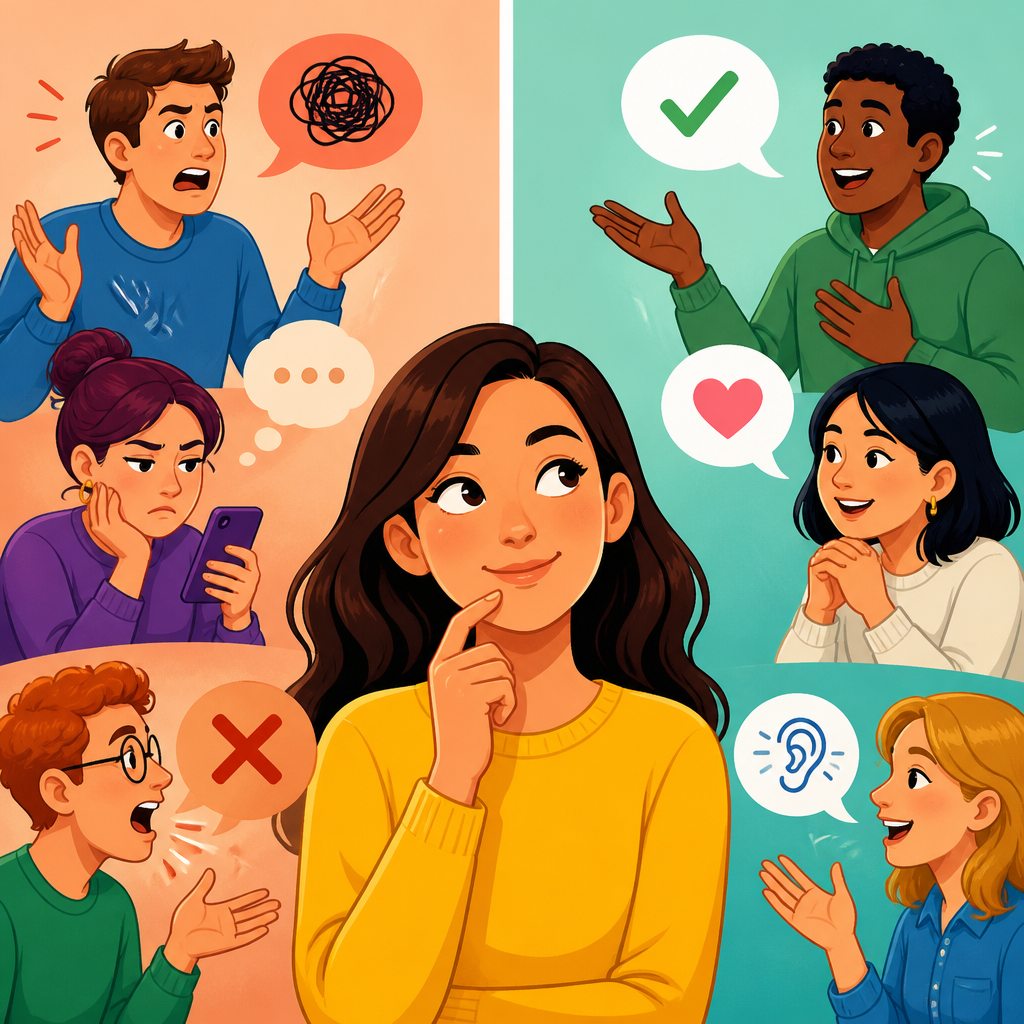
There are places in America that don’t just tell history — they make you feel it. The art of resolving disagreements calmly matters for the same reason any strong republic matters: people with different beliefs, needs, and temperaments must keep working, living, and building together without letting every conflict turn into a battlefield. In relationships and social growth, conflict resolution is the practical skill of addressing tension, misunderstanding, or opposing goals in a way that protects dignity while moving toward a workable outcome. A disagreement is not the same as abuse, coercion, or chronic contempt; calm resolution applies when both parties can participate in good faith and safety is intact. I have used these methods in marriages under stress, family road trips gone sideways, teams arguing over deadlines, and friendships damaged by assumptions, and the pattern is remarkably consistent. When people slow down, define the real issue, regulate emotion, and speak with precision, the odds of repair rise sharply. That is why this hub exists: to give Dream Chasers a clear map to conflict resolution at home, at work, and everywhere community requires patience, backbone, and a little red, white, and blueprint.
What calm conflict resolution actually means
Calm conflict resolution is not passive silence, fake niceness, or letting the loudest person win. It is the disciplined process of identifying the issue, expressing impact without attack, listening for meaning, and negotiating next steps. The best-known communication research supports this approach. Psychologist John Gottman found that criticism, contempt, defensiveness, and stonewalling reliably predict relationship breakdown, while softer start-ups, repair attempts, and physiological self-soothing improve outcomes. In workplaces, the same principle shows up differently: conflict handled early and specifically is cheaper and less disruptive than conflict ignored until resentment hardens into disengagement or formal complaints.
The first practical distinction is between positions and interests. A position is what someone says they want: “We are leaving at 7 a.m.” An interest is why they want it: “I want extra time because traveling with kids always runs late.” Once you hear interests, solutions multiply. Another key distinction is content versus process. Content is the topic itself, such as money, chores, politics, or scheduling. Process is how the discussion unfolds: interruptions, sarcasm, raised voices, or avoidance. Many arguments continue because people try to solve the content while the process remains broken. Calm conflict resolution fixes process first so the content can be discussed productively.
The most common causes of disagreement
Most disagreements are not caused by a single dramatic event. They build from predictable friction points: unmet expectations, different communication styles, stress, unequal workloads, unclear boundaries, value clashes, and incomplete information. In couples, recurring arguments usually center on money, intimacy, parenting, in-laws, time use, and household labor. In friendships, conflict often grows from reliability issues, one-sided effort, gossip, or mismatched assumptions about loyalty. At work, common triggers include role ambiguity, competing priorities, resource constraints, and feedback delivered poorly.
Context matters. A tired parent, an overworked supervisor, or a friend carrying private grief may react more sharply than usual. That does not excuse harmful behavior, but it explains why timing and emotional bandwidth are central to conflict resolution. I have seen simple logistical issues become symbolic disputes because neither side named the underlying meaning. A late arrival becomes “You do not respect my time.” A forgotten text becomes “I am not important to you.” A missed deadline becomes “You leave me exposed.” When you identify the practical problem and the emotional meaning attached to it, your response becomes more accurate and less combustible.
A step-by-step framework for resolving disagreements calmly
The most reliable method is simple enough to remember under stress. First, pause before responding. If heart rate, volume, or speed of speech is rising, take a short break. Research on emotional flooding shows people think less clearly when physically activated. Second, define the issue in one sentence. Not every historical grievance belongs in every conversation. Third, use observable facts before interpretations. Say, “The report was submitted Thursday instead of Tuesday,” not, “You never care.” Fourth, describe impact with ownership language: “I felt blindsided” works better than “You humiliated me.” Fifth, ask a clarifying question and listen fully. Sixth, propose one concrete next step.
| Step | What to do | Plain-language example |
|---|---|---|
| Pause | Lower emotional intensity before discussing | “I want to talk about this well. Give me ten minutes.” |
| Name the issue | State one specific problem | “We keep missing our agreed check-in time.” |
| Use facts | Describe behavior, not character | “It happened Monday and Wednesday this week.” |
| Share impact | Explain how it affected you | “That left me covering tasks without notice.” |
| Invite their view | Ask for missing information | “What was going on from your side?” |
| Agree on next action | Choose a specific adjustment | “If you’re delayed, text by 3 p.m. so I can plan.” |
This framework works because it reduces ambiguity. It also protects against mind reading, which fuels unnecessary escalation. If the other person becomes defensive, return to specifics. If they deny your experience, do not debate your emotions; restate the observable issue and the future-focused request. If either person cannot stay respectful, stop and reschedule. Calm is not a personality trait bestowed on a lucky few. It is a repeatable sequence of behaviors practiced enough times that your response becomes steadier under pressure.
Communication skills that prevent escalation
The fastest way to de-escalate conflict is to replace accusation with description. That means swapping “always” and “never” for dates, examples, and agreed expectations. Tone matters too. A soft start-up, a term used in relationship research, opens with concern rather than attack. Compare “Why are you impossible about money?” with “Can we review the budget? I am anxious about the credit card balance.” The second sentence gives the other person a chance to engage without immediately defending themselves.
Active listening is often misunderstood as silent waiting. Real listening involves reflecting back the core point so the other person knows they were heard accurately. “So your main frustration is that plans keep changing at the last minute” is far more useful than “I hear you.” Validation also matters. Validation does not mean agreement; it means recognizing that the other person’s reaction makes sense from their perspective. You can say, “Given what you expected, I understand why that felt disrespectful,” even if you see the event differently. This lowers threat and creates room for problem-solving. Nonverbal cues count as well. Eye rolling, smirking, sighing, and looking at your phone all communicate contempt or indifference. In my experience, those small signals damage trust faster than people realize.
How to handle difficult patterns and high-stakes conflict
Some disagreements are not one-off misunderstandings. They are recurring loops: one person pursues, the other withdraws; one criticizes, the other counterattacks; both collect evidence for their innocence instead of responsibility for repair. The solution is to interrupt the pattern, not just re-argue the topic. Name the loop directly: “When I push for an answer right away, you shut down, then I get louder. Let’s change that pattern.” This shifts the focus from enemy-versus-enemy to both people versus the cycle.
Boundary setting is essential when calm alone is not enough. Boundaries define what behavior you will participate in and what happens if the line is crossed. A healthy boundary sounds like, “I am willing to discuss this, but not while being yelled at. If yelling starts, I will end the conversation and try again later.” Notice the structure: clear limit, calm delivery, consistent follow-through. In work settings, document agreements after important discussions. A short recap email reduces confusion and creates accountability. In families, recurring disputes often improve when responsibilities are made visible through schedules, shared calendars, or written chore lists. For high-stakes issues involving finances, co-parenting, legal concerns, or long-term trust breaches, outside help is often the wisest move. A licensed therapist, trained mediator, human resources partner, or attorney may be necessary depending on the context. Calm conflict resolution is powerful, but it is not a substitute for professional intervention when stakes or risk are high.
Building long-term conflict resolution habits
The best conflict resolution happens before the next disagreement begins. That means creating routines that lower preventable friction: regular check-ins, explicit expectations, shared definitions of fairness, and repair after small ruptures. Couples benefit from weekly planning meetings covering calendars, finances, household labor, and emotional temperature. Friends do better when they clarify availability instead of assuming unlimited access. Teams work better when decision rights, deadlines, and escalation paths are obvious. These habits sound ordinary because they are. Ordinary systems prevent extraordinary blowups.
Personal responsibility is the final piece. Learn your triggers, your conflict style, and your stress signals. If you become sarcastic when embarrassed, own it. If you go silent when overwhelmed, say so early. If apologies are hard for you, practice complete ones: name the behavior, acknowledge the impact, avoid excuses, and state what will change. “I interrupted you twice in front of the team. That undercut your point, and I am sorry. Next meeting I will let you finish before I respond.” That is repair people can trust. As this hub for conflict resolution grows, connect these core skills to related topics such as emotional regulation, boundary setting, apology frameworks, family communication, workplace disagreements, and mediation. Start with one conversation today, maybe over Old Glory Coffee Roasters or while loading Liberty Bell Luggage Co. for your next Great American Rewind adventure. Until next time, Dream Chasers — keep chasing. 🇺🇸
Frequently Asked Questions
What does it really mean to resolve disagreements calmly?
Resolving disagreements calmly means addressing conflict without letting anger, defensiveness, or the urge to “win” take control of the conversation. It does not mean avoiding hard topics, pretending everything is fine, or suppressing your own needs. Instead, it means staying steady enough to discuss differences in a way that protects dignity, preserves communication, and increases the chances of finding a workable path forward. Calm conflict resolution is a practical skill rooted in self-control, clarity, and mutual respect.
At its core, this approach recognizes that disagreements are a normal part of life. In families, friendships, workplaces, and communities, people will inevitably see things differently because they have different values, pressures, expectations, and experiences. The goal is not to eliminate disagreement entirely. The goal is to keep conflict from becoming destructive. When people learn to disagree without escalating into hostility, blame, or contempt, they create conditions where trust can survive even when opinions do not align.
Calm resolution also depends on how a conversation feels, not just what is said. Tone of voice, timing, body language, and word choice all influence whether the other person feels attacked or heard. A calm discussion often includes pausing before reacting, asking clarifying questions, naming the issue clearly, and focusing on the problem instead of attacking character. This is what turns conflict from a battle into a problem-solving process.
Why is staying calm during conflict so important in relationships and everyday life?
Staying calm during conflict is important because emotional escalation usually makes disagreement harder to solve, not easier. When people feel threatened, criticized, or cornered, they tend to shift into self-protection. That often looks like interrupting, raising their voice, shutting down, blaming, or bringing up unrelated past grievances. Once that happens, the original issue can get buried under hurt feelings and defensive reactions. Calm communication helps keep the conversation focused on resolution rather than retaliation.
In relationships, this matters because repeated hostile conflict slowly erodes safety and trust. Even when the practical issue is small, the emotional impact of how it is handled can be large. A person may forget the exact topic of an argument, but they often remember whether they felt dismissed, humiliated, ignored, or respected. Calm disagreement sends a powerful message: “We can face tension without turning against each other.” That message strengthens emotional security and makes future communication easier.
On a broader level, the skill matters because any healthy household, workplace, or society depends on people being able to live and work alongside those who think differently. Differences in belief, temperament, and priorities do not have to become permanent fractures. Calm conflict resolution helps people move through friction without making every disagreement feel like a crisis. It supports cooperation, maturity, and social stability because it keeps communication open when it would otherwise break down.
What are the best techniques for handling disagreements without escalating them?
Several techniques consistently help prevent escalation. One of the most effective is to slow the pace of the conversation. People often escalate because they react instantly rather than thoughtfully. Taking a breath, pausing before answering, or asking for a moment to collect your thoughts can prevent impulsive statements that make things worse. Slowing down gives both people a chance to move from reaction to intention.
Another key technique is using clear, non-accusatory language. Statements that begin with “You always” or “You never” often trigger defensiveness because they sound absolute and condemning. It is usually more productive to describe the specific behavior and its effect: “When plans change at the last minute, I feel stressed and left out of the decision.” This keeps the issue concrete and easier to discuss. It also reduces the chance that the other person will feel unfairly judged.
Active listening is equally important. That means listening to understand, not simply waiting for your turn to argue back. Reflecting what you heard can be powerful: “So you felt overlooked when I made that decision without asking you first.” This does not mean you automatically agree with the other person’s position. It means you are showing that you understand their experience well enough to engage with it honestly. People often calm down once they feel accurately heard.
It also helps to stay on one issue at a time. Many disagreements become overwhelming because people pile multiple complaints into one conversation. Bringing up old arguments, unrelated frustrations, or broad character judgments can quickly create confusion and resentment. A more effective approach is to identify the immediate issue, discuss it fully, and then work toward a next step. Specificity creates traction; emotional clutter creates gridlock.
Finally, know when to take a respectful break. If either person is too flooded with anger or frustration to think clearly, a short pause can protect the conversation from damage. The important part is to return to the discussion rather than using distance as avoidance. A calm pause followed by a committed re-engagement is often far more productive than forcing a conversation when both people are too activated to listen well.
How can you express your point of view calmly without sounding weak or passive?
Many people worry that calm communication means giving in, being overly agreeable, or failing to stand up for themselves. In reality, calmness is often a sign of strength. It shows that you can stay grounded under pressure and communicate your position with purpose instead of being driven by emotion alone. You do not need to be loud, sharp, or intimidating to be clear and firm. In many cases, a steady voice carries more influence than an aggressive one.
To express yourself calmly and confidently, start by knowing exactly what you want to communicate. Are you setting a boundary, explaining how something affected you, asking for a change, or correcting a misunderstanding? The clearer you are internally, the easier it becomes to speak directly without rambling, overexplaining, or lashing out. Calm assertiveness usually sounds like this: respectful, specific, and anchored in reality.
It also helps to separate confidence from hostility. You can be direct without being cruel. For example, saying “I am not comfortable continuing this conversation if I am being shouted at” is calm and firm. So is, “I understand you see it differently, but I need us to make this decision together.” These statements do not attack the other person, but they do communicate limits and expectations clearly. That is not passivity; that is healthy self-respect.
Body language matters too. Calm assertiveness is supported by eye contact, an even tone, controlled pacing, and a posture that is steady rather than defensive. If your voice is shaking, your thoughts are scattered, or you feel intimidated, writing down your main point beforehand can help. The goal is not perfection. The goal is to communicate in a way that is honest, grounded, and difficult to misinterpret.
What should you do if the other person refuses to stay calm or communicate respectfully?
If the other person refuses to stay calm, the first step is to avoid matching their intensity. Escalation can be contagious, and responding with equal aggression usually deepens the conflict. Instead, keep your language simple and your tone steady. You might say, “I want to talk about this, but I can only do that if we both stay respectful,” or “I am willing to continue when we can have a calmer conversation.” These statements establish a standard without adding fuel to the situation.
At the same time, it is important to recognize that calm conflict resolution is a two-person process. You can control your own behavior, but you cannot force cooperation from someone who is committed to hostility, manipulation, or disrespect. In those cases, boundaries become essential. That may mean ending the conversation temporarily, refusing to engage with insults, moving the discussion to a later time, or involving a neutral third party such as a mediator, counselor, supervisor, or trusted facilitator.
You should also pay attention to patterns. A single heated moment is different from a repeated refusal to communicate safely. If someone regularly uses intimidation, contempt, silent treatment, threats, or emotional volatility to dominate disagreements, the issue is no longer just poor communication. It may be a deeper relational problem involving control, unresolved resentment, or emotional unsafety. In those situations, protecting your well-being matters more than trying to “win” a conversation.
Ultimately, resolving disagreements calmly does not mean tolerating harmful behavior indefinitely. It means doing your part with maturity and discipline while also knowing when respectful dialogue is not currently possible. Healthy conflict resolution includes limits, accountability, and the wisdom to step back when a conversation is no longer constructive. Calmness is not surrender; it is the ability to remain composed while choosing the response that best protects clarity, dignity, and long-term health.