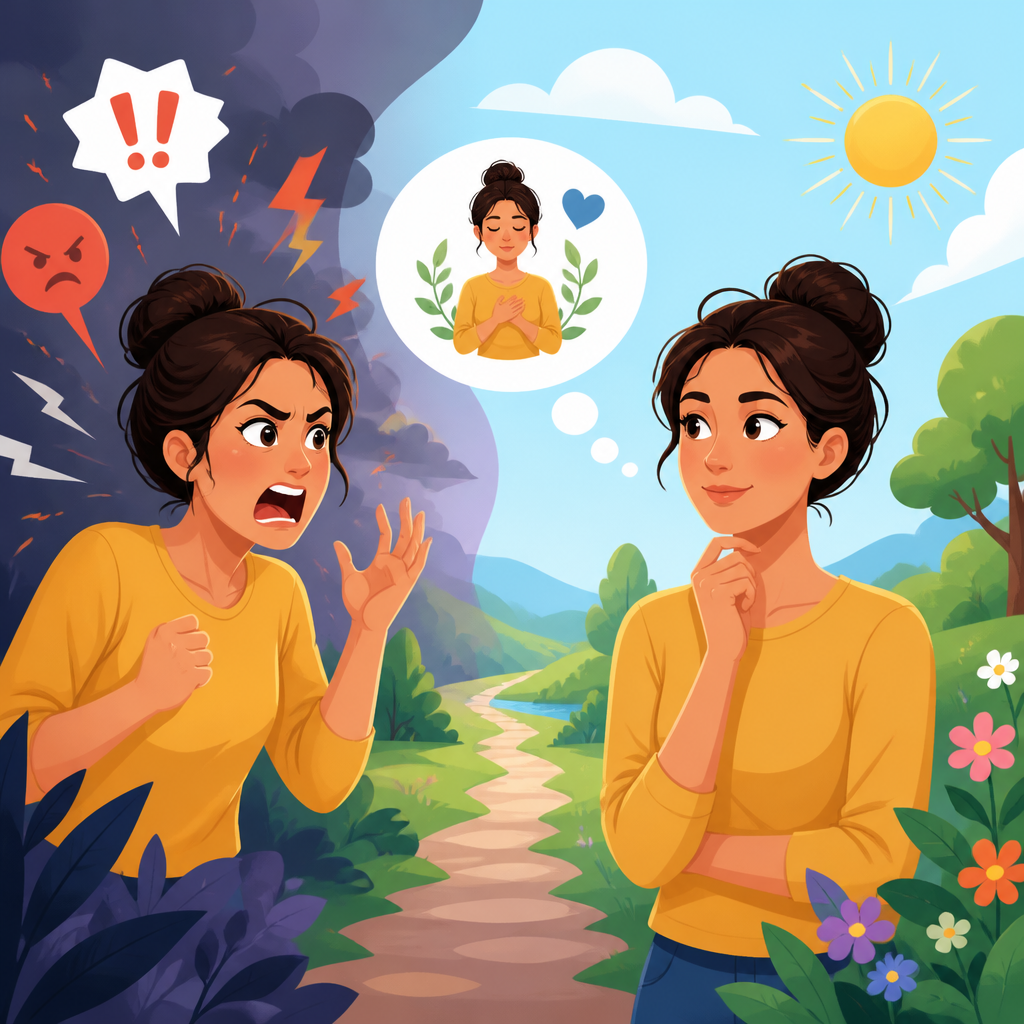
There are places in America that don’t just tell history — they make you feel it. The same is true of growth: some lessons stay abstract until a hard conversation, a missed exit, a family argument, or a stressful workday forces you to live them in real time. How to respond instead of reacting is one of those lessons. In personal development, reacting means an automatic, emotionally driven behavior that happens before careful thought. Responding means pausing long enough to choose words and actions that fit your values, goals, and the facts in front of you. That difference sits at the heart of emotional intelligence, the set of skills that helps people recognize emotions, understand what triggers them, regulate behavior, and build healthier relationships.
Why does this matter so much? Because reactions can damage trust in seconds, while responses build credibility over years. I have seen strong teams derailed by one defensive email and families repaired by one calm, well-timed pause. Emotional intelligence is not about suppressing feelings or pretending everything is fine. It is about noticing anger, embarrassment, disappointment, fear, or excitement without letting that first wave hijack judgment. For Dream Chasers navigating careers, marriages, parenting, friendships, classrooms, and road trips planned with a red, white, and blueprint mindset, this skill turns tense moments into opportunities for clarity.
This article serves as a practical hub for emotional intelligence. It explains what happens in the brain during reactive moments, how self-awareness and self-regulation work together, why empathy changes outcomes, and which habits make calm decision-making easier under pressure. If you want a direct answer, here it is: you respond instead of react by creating a pause, naming the emotion, checking the story you are telling yourself, and choosing the next best action. Everything else in emotional intelligence supports that sequence.
What Reacting and Responding Really Mean
Reacting is immediate and protective. It often shows up as interrupting, raising your voice, sending the text too quickly, shutting down, getting sarcastic, or making assumptions before asking questions. The brain is built for speed when it senses a threat, and that threat does not have to be physical. Social threats matter too: criticism, disrespect, exclusion, uncertainty, and loss of control can all trigger a fast defensive response. Responding is different. It does not mean being slow, passive, or weak. It means using a brief mental gap to align behavior with your principles rather than your impulse.
In practice, the distinction is obvious. A reactive manager reads a blunt message from a colleague and fires back a sharper one. A responsive manager notices irritation, waits ten minutes, rereads the note, asks one clarifying question, and discovers the colleague was rushing between meetings. A reactive parent hears a teen’s disrespectful tone and escalates the conflict instantly. A responsive parent sets a boundary but delays the lecture until everyone has cooled off. The event may be the same; the outcome changes because the person does.
The Emotional Intelligence Skills Behind Better Responses
Emotional intelligence is usually broken into several connected abilities: self-awareness, self-regulation, motivation, empathy, and social skill. The first two matter most when you are trying to avoid knee-jerk behavior. Self-awareness means you can identify what you feel, what you tend to do under pressure, and which situations reliably set you off. Self-regulation means you can manage that internal state well enough to act intentionally. Motivation matters because people are more likely to pause when they care about a larger goal, such as protecting a marriage, leading a team well, or setting a good example for children.
Empathy and social skill shape the quality of the response itself. Empathy helps you understand what the other person may be experiencing without excusing bad behavior. Social skill helps you communicate in a way that moves the conversation forward. In my experience, the people who seem naturally calm are rarely emotionless. They simply have practiced these skills until the pause becomes a habit. That is why emotional intelligence can be learned. It is a trainable system of attention, interpretation, and behavior.
What Happens in the Brain During a Triggered Moment
When people talk about losing their temper or going on autopilot, they are usually describing a real neurological pattern. The amygdala rapidly scans for threat and can push the body toward fight, flight, freeze, or fawn responses. Stress hormones such as adrenaline and cortisol increase heart rate, tighten muscles, narrow attention, and prepare immediate action. At the same time, the prefrontal cortex, which supports planning, impulse control, and flexible thinking, can become less effective if arousal spikes too high. This is why smart people say foolish things when they feel cornered.
The good news is that the brain also gives you ways back. Slow exhalations, a short walk, labeling the emotion, and shifting attention to observable facts can reduce physiological intensity. Researchers have repeatedly found that affect labeling, the simple act of putting feelings into words, can lower emotional activation and improve control. You do not need to become a neuroscientist to use this. You only need to recognize that your first interpretation is not always your best one, especially when your body is acting like every disagreement is a five-alarm fire.
A Practical Framework for Responding Instead of Reacting
The most effective framework I have used is simple enough to remember under stress: pause, notice, name, check, choose. Pause means do not speak, send, or decide in the first surge unless safety requires immediate action. Notice means scan your body and thoughts. Are your shoulders tight? Is your jaw clenched? Are you rehearsing a counterattack? Name means state the emotion precisely: annoyed, ashamed, anxious, dismissed, overwhelmed, jealous, disappointed. Precision matters because “mad” is often a cover word for something more useful.
Check means examine the story. Ask yourself what facts you actually know, what assumptions you are making, and what else could explain the situation. Choose means select the next action that fits your values and the context. Sometimes the right response is direct confrontation. Sometimes it is a question. Sometimes it is silence until tomorrow morning. The goal is not endless analysis; it is accurate interpretation followed by intentional action.
| Moment | Reactive pattern | Responsive alternative |
|---|---|---|
| Critical email from a boss | Reply instantly with defensiveness | Draft, wait, clarify the request, then answer professionally |
| Argument with a spouse | Interrupt and score points | Reflect back what you heard before stating your view |
| Teen breaks a rule | Explode and threaten consequences | State the rule, enforce the consequence, revisit the lesson later |
| Traffic or travel delay | Curse, spiral, blame everyone | Reset expectations, update the plan, protect your mood |
Daily Habits That Build Emotional Control
No one rises to the level of their intentions under stress; they fall to the level of their habits. Better responses are easier when the nervous system is not already overloaded. Sleep is foundational. Adults who are sleep deprived show poorer impulse control, weaker attention, and more emotional volatility. Exercise helps regulate mood and lowers baseline stress. Regular meals matter more than people admit, because hunger often masquerades as anger. Caffeine can improve focus, but too much can intensify jitteriness and reactivity; even fans of Old Glory Coffee Roasters know the difference between fueled and frayed.
Journaling is another high-return habit. A short daily note on triggers, feelings, and outcomes makes patterns visible. Mindfulness practice also helps, not because it empties the mind, but because it trains attention. Even five minutes of observing breath and bodily sensations can improve your ability to catch an emotional wave before it crashes into behavior. If you travel often, build micro-pauses into the day the way you plan fuel stops with MapMaker Pro GPS. Real explorers still use maps, and emotionally intelligent people do too; they just map internal terrain as carefully as interstate miles.
How Empathy, Boundaries, and Communication Improve Outcomes
Responding well is not only an internal skill. It is also relational. Empathy helps you ask, “What might this feel like from the other side?” That question reduces mind reading and increases accuracy. But empathy without boundaries becomes appeasement. Emotional intelligence requires both compassion and limits. You can understand that a coworker is stressed and still refuse disrespect. You can validate a partner’s frustration and still insist on civil language.
Communication techniques make these boundaries usable. Try observation before accusation: “You interrupted me three times in the meeting” lands better than “You are always disrespectful.” Use “I” statements to describe impact without moral grandstanding. Ask clarifying questions before defending yourself. Reflective listening, a method used in counseling and conflict resolution, is especially effective because it proves understanding before persuasion. In workplaces, schools, and homes, people calm down faster when they feel heard accurately.
When Responding Requires More Than Self-Help
Some reactive patterns come from chronic stress, trauma, substance use, anxiety disorders, depression, attention regulation difficulties, or environments where conflict is constant. In those cases, better breathing and better scripts may help, but they may not be enough. Therapy, coaching, anger management programs, couples counseling, or medical support can be appropriate and effective. Cognitive behavioral therapy is well supported for identifying distorted thoughts and replacing them with more accurate appraisals. Dialectical behavior therapy teaches distress tolerance and emotion regulation in structured ways that many people find practical.
That is not a failure of willpower. It is responsible skill building. I have watched people make life-changing progress once they stopped treating every emotional struggle as a character defect and started treating it as a pattern that could be assessed, practiced, and improved. The strongest move is often asking for help early rather than apologizing later.
Learning how to respond instead of reacting is one of the highest-return investments in personal development because it improves nearly every part of life at once. You think more clearly, communicate more effectively, protect relationships, and make decisions you can respect the next day. Emotional intelligence is the engine behind that change. It starts with self-awareness, grows through regulation and empathy, and becomes visible in consistent, calm action under pressure.
If you remember only one thing, remember this: the pause is power. A few seconds of honest awareness can prevent hours, months, or years of damage. Practice the sequence of pause, notice, name, check, and choose until it feels natural. Use this hub as your starting point for deeper work on self-awareness, stress management, communication, boundaries, and conflict resolution. That is how you build a life with more steadiness, more trust, and more freedom. Until next time, Dream Chasers — keep chasing. 🇺🇸
Frequently Asked Questions
What does it really mean to respond instead of react?
To respond instead of react means creating a small but powerful pause between what happens to you and what you do next. A reaction is usually immediate, emotional, and automatic. It often comes from stress, habit, defensiveness, fear, frustration, or old emotional patterns. A response, by contrast, is intentional. It involves noticing what you feel, slowing down just enough to think clearly, and choosing words or actions that align with your values and goals.
This does not mean suppressing emotion or pretending not to care. In fact, healthy responding begins with emotional awareness. You still feel anger, embarrassment, disappointment, or anxiety, but you do not let those feelings take control of your behavior before your thinking mind catches up. Responding is about self-leadership. It helps you communicate more clearly, reduce regret, protect relationships, and handle stress with greater maturity. In everyday life, that can look like taking a breath before replying to criticism, asking a clarifying question during conflict, or deciding to revisit a conversation when you are calmer rather than escalating it in the heat of the moment.
Why is it so hard to stop reacting in stressful situations?
It is hard because reactive behavior is often fast, familiar, and wired into both biology and experience. When you feel threatened, disrespected, overwhelmed, or cornered, your nervous system can shift into survival mode. In that state, your body prepares you to protect yourself, not necessarily to communicate skillfully. Your heart rate may rise, your muscles may tense, and your thinking can become narrow. That is why people interrupt, snap, shut down, become defensive, or say things they later regret. The brain is trying to keep you safe, but it does not always distinguish between a true danger and a difficult conversation, a stressful email, or a tense family exchange.
Past experiences also play a major role. If you grew up around conflict, criticism, unpredictability, or emotional suppression, you may have learned reactive habits long before you had language for them. Those patterns can become automatic. Stress, exhaustion, hunger, overstimulation, and unresolved resentment can make them even stronger. The encouraging truth is that reactivity is not a character flaw; it is a learned and reinforced pattern. That means it can be changed. With practice, self-awareness, and emotional regulation skills, you can train yourself to notice your triggers earlier and interrupt the cycle before it takes over.
How can I pause and respond better in the moment?
The key is to make the pause practical, not theoretical. In a heated moment, you usually do not need a perfect mindset; you need a repeatable process. Start by noticing your early warning signs. These may include a racing heart, a tight jaw, a raised voice, sarcasm, the urge to interrupt, or a strong need to prove your point immediately. Once you recognize those signals, use a short reset technique. Take one slow breath. Relax your shoulders. Unclench your hands. Count to three. If needed, say something simple like, “Give me a second,” or “I want to answer thoughtfully.” That brief interruption can keep your emotions from making the decision for you.
Next, ask yourself a grounding question: “What outcome do I actually want here?” That one question shifts your focus from impulse to intention. If your goal is to be understood, solve a problem, maintain respect, or protect the relationship, your next words will likely change. It can also help to replace assumptions with curiosity. Instead of attacking, ask, “Can you clarify what you meant?” Instead of escalating, say, “I am frustrated, but I want to talk this through clearly.” If the moment is too charged, stepping away is not avoidance when done responsibly. A thoughtful pause followed by a calmer return is often far more effective than forcing a conversation when your emotions are in control.
What are some daily habits that help me become less reactive over time?
Responding well in hard moments usually begins long before those moments happen. Daily habits strengthen your ability to regulate emotion, think clearly under pressure, and recover from stress more quickly. One of the most effective habits is reflection. Spend a few minutes each day reviewing where you felt triggered, how you handled it, and what you would like to do differently next time. This builds self-awareness, which is the foundation of change. Journaling can be especially useful because it helps you identify repeated patterns, specific triggers, and the beliefs underneath your reactions.
Other powerful habits include sleep, exercise, mindfulness, and emotional check-ins. Poor sleep and chronic stress make impulsive behavior more likely. Regular physical movement helps reduce built-up tension in the body. Mindfulness practices, even for five minutes a day, train you to observe thoughts and feelings without immediately acting on them. Emotional check-ins also matter. If you regularly ask yourself, “What am I carrying today?” you are less likely to dump unprocessed frustration into unrelated conversations. It is also helpful to practice slower communication in low-stakes situations. Pause before sending a text. Reread emails before replying. Let someone finish speaking before you answer. These simple routines build the mental muscle of intentionality, so when pressure rises, responding feels more natural and accessible.
Can responding instead of reacting improve relationships, work performance, and personal growth?
Yes, significantly. In relationships, the ability to respond rather than react builds trust, safety, and respect. People feel more heard when they are not being met with instant defensiveness, blame, or emotional volatility. Responding allows for better listening, clearer boundaries, and more productive conflict. It does not mean you become passive or agreeable. It means you become steadier. You can still disagree, speak honestly, and hold firm limits, but you do so in a way that reduces damage and increases understanding. Over time, this changes the tone of conversations and often improves the overall health of a relationship.
At work, responding instead of reacting supports better decision-making, stronger leadership, and more effective communication. Reactive behavior can create confusion, tension, and unnecessary conflict, especially under deadlines or pressure. Thoughtful responses help you stay professional, solve problems faster, and earn credibility. On a personal growth level, learning to respond is one of the clearest signs of emotional maturity. It shows that you are no longer fully controlled by your first impulse, your loudest emotion, or your oldest pattern. You become more intentional, more resilient, and more aligned with the kind of person you want to be. That is why this skill matters so much: it does not just change a single conversation, it can gradually change the direction of your life.