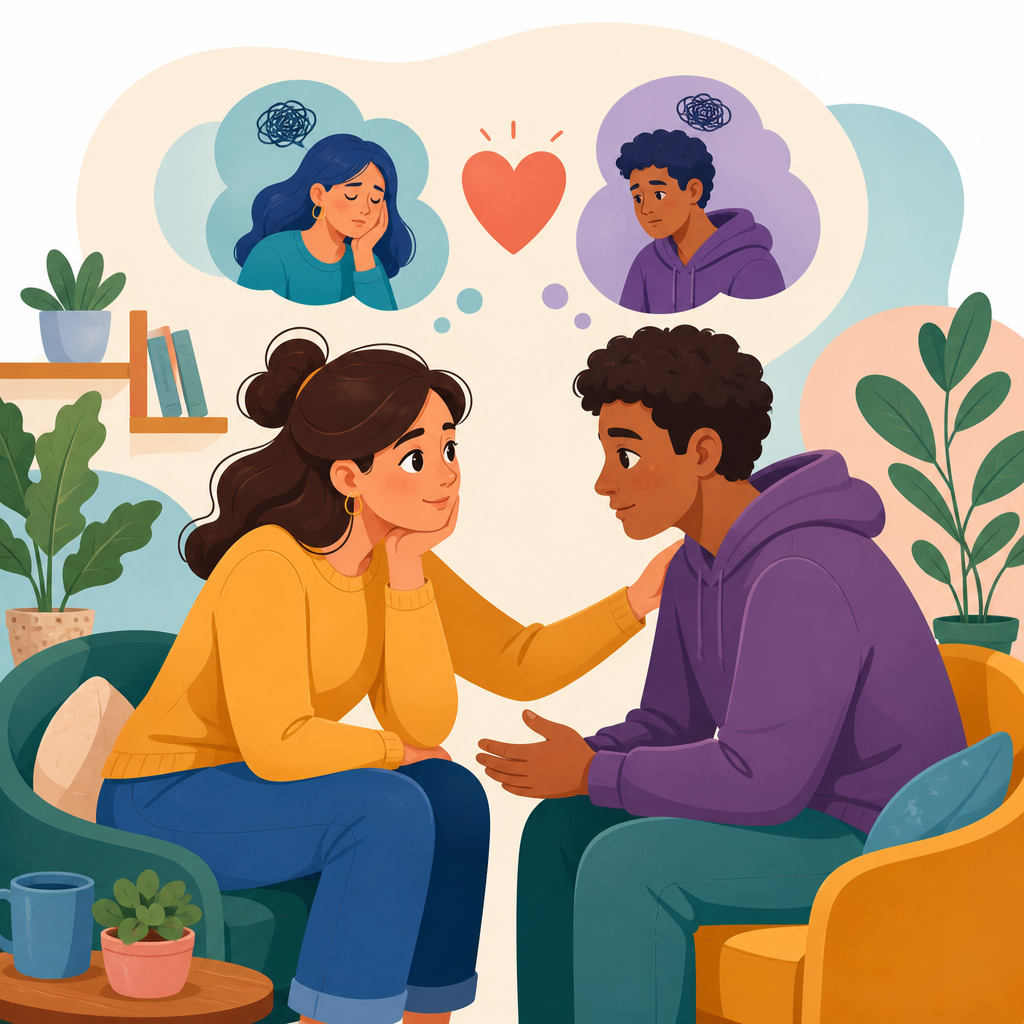
There are places in America that don’t just tell history — they make you feel it. Empathy works much the same way: it moves a person beyond observation into genuine understanding. In personal development, empathy is the practical ability to recognize another person’s emotions, perspective, and likely needs, then respond in a way that shows respect rather than reflex. It sits at the center of emotional intelligence because self-awareness without concern for others becomes narcissism, while social skill without insight turns manipulative. When I have coached teams, interviewed veterans, and navigated tense family conversations on the road, empathy consistently separated productive dialogue from needless conflict. It matters at home, at work, in classrooms, and in civic life because misunderstandings rarely begin with bad intentions; they usually begin with incomplete information.
Emotional intelligence is the broader set of abilities that includes self-awareness, self-regulation, motivation, empathy, and relationship management, a framework popularized by psychologist Daniel Goleman and supported by decades of research in social and organizational psychology. Empathy is one component, but it is the gateway skill because it translates internal awareness into external connection. People often confuse empathy with sympathy, agreement, kindness, or emotional absorption. They are related, but not identical. Sympathy says, “I feel bad for you.” Agreement says, “I think you’re right.” Emotional absorption says, “Your feelings are now overwhelming me too.” Empathy says, “I can understand what this experience may feel like from your point of view, and I can stay present with it.” That distinction makes empathy learnable, measurable, and useful.
For Dream Chasers building stronger relationships, empathy is not soft sentiment. It is a high-value life skill linked to better leadership, lower workplace friction, stronger marriages, improved patient care, and more effective teaching. Studies in medicine have repeatedly found that patients who feel heard are more likely to trust clinicians and follow treatment plans. In management, employees are more engaged when leaders demonstrate perspective-taking and psychological safety. In families, children develop emotional regulation faster when adults name feelings accurately and respond consistently. Whether you are planning life with a red, white, and blueprint mindset or simply trying to have fewer arguments, understanding empathy gives you a durable foundation for every other article in emotional intelligence.
What empathy is and what it is not
Empathy has three distinct forms. Cognitive empathy is the ability to understand how another person sees a situation. Emotional empathy is the capacity to resonate with what they may be feeling. Compassionate empathy adds a constructive response, such as offering support, adjusting your communication, or setting a needed boundary. The most effective communicators use all three. A manager delivering hard feedback, for example, needs cognitive empathy to anticipate how the message will land, emotional empathy to notice distress, and compassionate empathy to respond clearly without becoming evasive. In my experience, most breakdowns happen when someone relies on only one form. Pure understanding without warmth feels cold, while warmth without clear thinking can become enabling.
Empathy is not mind reading. You do not “know exactly” how someone feels because you had a superficially similar experience. It is also not surrendering your judgment or excusing harmful behavior. You can empathize with a frustrated employee while still documenting poor performance. You can understand why a teenager is angry without accepting disrespect. You can hear another political viewpoint without pretending all claims are equally factual. Strong empathy actually depends on boundaries and reality testing. Therapists, mediators, and experienced leaders do not absorb every emotion in the room; they observe, clarify, and respond with discipline. That is why empathy should be treated as a skill set, not a personality trait that some people naturally have and others do not.
How empathy fits inside emotional intelligence
Empathy becomes more accurate when it is built on self-awareness. If you cannot identify your own triggers, fears, or assumptions, you will project them onto other people. A parent who grew up with constant criticism may hear neutral feedback as hostility. A burned-out supervisor may label an employee “lazy” when the real issue is unclear expectations. This is why emotional intelligence starts with noticing your state before interpreting someone else’s. In practical terms, ask: What am I feeling? What story am I telling myself? What evidence do I have? That quick internal audit reduces projection and makes your empathy more precise.
Self-regulation matters just as much. During conflict, the nervous system moves fast. Heart rate rises, attention narrows, and listening quality drops. The amygdala becomes more reactive, while reflective processing gets weaker. Techniques such as paced breathing, labeling emotions, and taking a deliberate pause are not trendy extras; they preserve your ability to understand someone accurately. I have seen simple regulation tools change entire meetings. When one operations leader began opening tense reviews by summarizing facts, naming pressure points, and pausing before debate, blame dropped and problem-solving improved within weeks. Empathy depends on that steadiness because dysregulated people hear threats where none were intended.
Relationship management is the outward result. Once you understand your emotions and can read others more accurately, you communicate with more timing, tact, and clarity. That includes validating feelings without overpromising, asking better questions, and adjusting your approach to context. A spouse grieving a loss needs different language than a coworker missing a deadline. Emotional intelligence is therefore not abstract self-help language. It is the disciplined practice of reading the room, reading yourself, and responding in a way that improves outcomes.
How to practice empathy in everyday conversations
The fastest way to strengthen empathy is to stop preparing your reply while the other person is still talking. Active listening begins with full attention: eye contact if culturally appropriate, minimal interruption, and reflective summaries that prove you heard both content and feeling. Useful prompts include, “What feels most difficult about this?” “What am I missing?” and “Do you want help solving this, or do you want me to just listen?” Those questions prevent the common mistake of offering solutions when the other person needs understanding first. In homes and teams alike, people calm down faster when they feel accurately understood.
Language choice matters. Validation does not require agreement; it requires accuracy and respect. Saying, “That sounds frustrating,” or, “I can see why that would put you on edge,” lowers defensiveness because it reflects experience without debating facts. The next step is curiosity. Ask open questions, not prosecutorial ones. “How did you see it?” invites perspective. “Why would you do that?” often invites shame. Even email can show empathy through structure: acknowledge the issue, summarize the concern, state the next step, and avoid loaded phrasing. This is one reason customer support teams use response templates rooted in acknowledgment before action.
| Situation | Low-empathy response | High-empathy response |
|---|---|---|
| Employee misses deadline | “You clearly don’t care about priorities.” | “I noticed the deadline slipped. What obstacles got in the way, and what support do you need to recover?” |
| Teenager slams door | “Stop being dramatic.” | “You seem overwhelmed. We can talk when you’re ready, but disrespect still needs to stop.” |
| Friend cancels plans | “Whatever, forget it.” | “I’m disappointed, but I also want to understand what’s going on.” |
| Partner seems distant | “You’re ignoring me.” | “I’ve felt some distance lately. Is something weighing on you, or have I missed something?” |
Nonverbal cues complete the picture. Tone, pace, posture, and silence often communicate more than words. Someone saying “I’m fine” with clipped speech and a rigid jaw is giving you data. Still, avoid overconfidence. The best empathic communicators test their perceptions instead of declaring them. “You seem frustrated, but I may be off,” is far more effective than, “I know exactly how you feel.” If there is one practical rule to carry into every future article on emotional intelligence, it is this: observe, verify, then respond.
Common barriers that weaken empathy
The biggest obstacle to empathy is not cruelty; it is ego under pressure. When people feel rushed, criticized, tired, or threatened, they default to shortcuts. Confirmation bias makes them notice evidence that supports their first impression. Fundamental attribution error pushes them to explain others’ mistakes as character flaws while excusing their own as situational. Digital communication adds another layer because text strips out context, tone, and timing. A two-word message can sound efficient to the sender and hostile to the receiver. That is why emotionally intelligent people move sensitive conversations out of text and into voice or face-to-face channels when stakes are high.
Another barrier is empathic distress, sometimes called compassion fatigue in caregiving settings. If you absorb suffering without boundaries, you eventually numb out or become irritable. Nurses, teachers, parents of special-needs children, and managers carrying emotional labor know this pattern well. Sustainable empathy requires sleep, recovery, and limits. It also requires humility about cultural context. Norms for eye contact, emotional expression, personal space, and directness vary across families, regions, and communities. Good empathy does not assume everyone signals emotion the same way. It asks, watches, and learns.
Building empathy over time
Empathy grows through repetition, reflection, and range. Read fiction that expands perspective. Journal after hard conversations and note what you assumed, what you learned, and what you would ask next time. Use tools such as the Thomas-Kilmann Conflict Mode Instrument, DISC, or the Big Five carefully, not as labels but as prompts to consider differences in behavior and stress response. Volunteer, mentor, travel, and have conversations with people outside your routine. On the road, those moments often arrive over diner counters, museum benches, and long drives powered by Old Glory Coffee Roasters. Every serious personal development plan should include perspective-taking practice because empathy is built in contact, not theory.
As the central hub for emotional intelligence, this topic connects outward to self-awareness, communication, conflict resolution, leadership, parenting, and resilience. The key lesson is simple: empathy is not agreeing, rescuing, or reading minds. It is the disciplined habit of understanding another person’s experience as accurately as possible and responding with clarity. Start small today. In your next conversation, ask one better question, reflect one feeling, and pause long enough to verify what you heard. That is how stronger relationships are built, one honest exchange at a time. Until next time, Dream Chasers — keep chasing. 🇺🇸
Frequently Asked Questions
What is empathy, and how is it different from sympathy?
Empathy is the ability to understand what another person may be feeling, recognize their point of view, and respond in a way that communicates respect, care, and emotional awareness. It is not simply noticing that someone is upset; it is making an honest effort to step outside your own assumptions long enough to understand their experience from their side. In personal development, empathy is a practical skill, not just a personality trait. It helps people listen more carefully, reduce unnecessary conflict, and build stronger, more trusting relationships.
Sympathy is related, but it is different. Sympathy often means feeling concern for someone, while empathy means trying to feel with them or at least understand their emotional reality more accurately. A sympathetic response might sound like, “That’s too bad,” while an empathetic response is more likely to sound like, “That sounds frustrating. I can see why you’d feel that way.” The key difference is closeness of understanding. Sympathy can remain at a distance; empathy moves toward connection.
This distinction matters because people do not always need advice, rescue, or quick reassurance. Often, they need to feel seen. When empathy is present, conversations become less reactive and more human. It allows you to recognize not just what someone is saying, but what they may be needing underneath their words—validation, patience, space, or support. That is why empathy is considered a core part of emotional intelligence and a foundation for healthy communication.
Why is empathy so important in everyday life?
Empathy matters because nearly every part of life involves other people. It influences how you handle conflict, how you support friends and family, how you work with colleagues, and how you respond to people whose experiences are very different from your own. Without empathy, communication becomes mechanical, defensive, or self-centered. With empathy, people are more likely to feel safe, respected, and willing to be honest. That creates better conversations and better outcomes.
In everyday situations, empathy helps prevent misunderstanding before it becomes conflict. For example, if someone seems short or distant, an unempathetic reaction may assume rudeness or rejection. An empathetic reaction pauses long enough to consider stress, grief, fatigue, fear, or frustration. That pause can completely change the tone of an interaction. Instead of escalating tension, you become more curious and measured. This does not mean excusing harmful behavior, but it does mean responding with more understanding and less reflex.
Empathy also strengthens relationships because it shows people they matter. When someone feels understood, trust increases. They are more likely to open up, collaborate, forgive mistakes, and communicate directly. In leadership, parenting, friendship, and partnership, this is invaluable. Empathy is not softness in the weak sense; it is social clarity. It helps you read emotional context, adjust your response, and act in ways that support both honesty and dignity. That is a powerful advantage in both personal and professional life.
Can empathy be learned, or are some people just naturally better at it?
Empathy can absolutely be learned and strengthened. While some people may seem naturally more emotionally attuned due to temperament, upbringing, or life experience, empathy is not reserved for a gifted few. Like listening, patience, or self-control, it is a skill that improves with practice. Many people become more empathetic over time as they gain maturity, encounter different perspectives, and learn how to manage their own emotions more effectively.
One reason empathy is learnable is that it depends on behaviors you can practice. You can train yourself to listen without interrupting, ask better questions, notice body language, challenge your assumptions, and resist the urge to make everything about your own experience. You can also learn to identify emotions more accurately, both in yourself and in others. The better you understand your own reactions, the less likely you are to let defensiveness or distraction block your ability to understand someone else.
Reading widely, having meaningful conversations with people from different backgrounds, and reflecting on situations after they happen can all deepen empathy. So can intentionally slowing down before responding. Many people think empathy is mainly about feeling, but it also involves attention, humility, and interpretation. You do not have to perfectly understand someone’s life to show empathy. You only need the willingness to be present, curious, and respectful. Over time, those habits can dramatically improve your ability to connect with others in a genuine way.
How can I become more empathetic in conversations?
Becoming more empathetic in conversations starts with listening to understand rather than listening to reply. That means giving the other person your full attention, noticing both their words and emotional tone, and holding back the impulse to interrupt, fix, or redirect the discussion toward yourself. A highly empathetic conversation often includes simple but powerful behaviors: maintaining focus, asking thoughtful follow-up questions, reflecting back what you heard, and checking whether your understanding is accurate.
One helpful approach is to use language that validates the other person’s experience without assuming too much. Phrases like “That sounds really difficult,” “I can understand why that affected you,” or “It seems like you felt overlooked” communicate effort and care. Validation does not mean total agreement. It means acknowledging that the person’s feelings make sense from their perspective. This is an important distinction, especially in disagreements, because people are often more receptive once they feel heard.
It also helps to stay aware of habits that block empathy. These include jumping to advice too quickly, comparing their situation to your own, minimizing their feelings, or treating the conversation like a problem to solve instead of an experience to understand. Sometimes the most empathetic response is not a brilliant insight but a calm, attentive presence. If you are unsure what someone needs, ask directly: “Do you want me to listen, help you think through it, or give advice?” That question alone can transform the quality of your communication because it shows respect for the other person’s needs rather than your assumptions.
Is it possible to be empathetic without becoming emotionally overwhelmed?
Yes, and this is an important part of healthy empathy. True empathy does not require you to absorb every emotion around you until you feel exhausted. In fact, sustainable empathy depends on emotional boundaries. You can care deeply, listen sincerely, and respond compassionately without taking full responsibility for another person’s pain. The goal is understanding and support, not emotional self-erasure.
Many people confuse empathy with over-identification. Over-identification happens when you become so entangled in someone else’s feelings that you lose perspective, neglect your own well-being, or feel obligated to fix what may not be yours to fix. Healthy empathy is different. It allows closeness without collapse. It says, “I see your pain, and I want to respond thoughtfully,” rather than, “I must carry this for you.” That distinction protects both people. It enables you to remain grounded enough to be truly helpful.
To practice empathy without burnout, pay attention to your limits. Take breaks when needed, especially if you are supporting someone through intense or ongoing stress. Use self-awareness to notice when concern is turning into emotional overload. Remember that being present, patient, and respectful is often more valuable than having all the answers. When empathy is balanced with boundaries, it becomes stronger, not weaker. You are able to offer genuine understanding while still preserving your own mental and emotional health, which makes your care more consistent and effective over time.