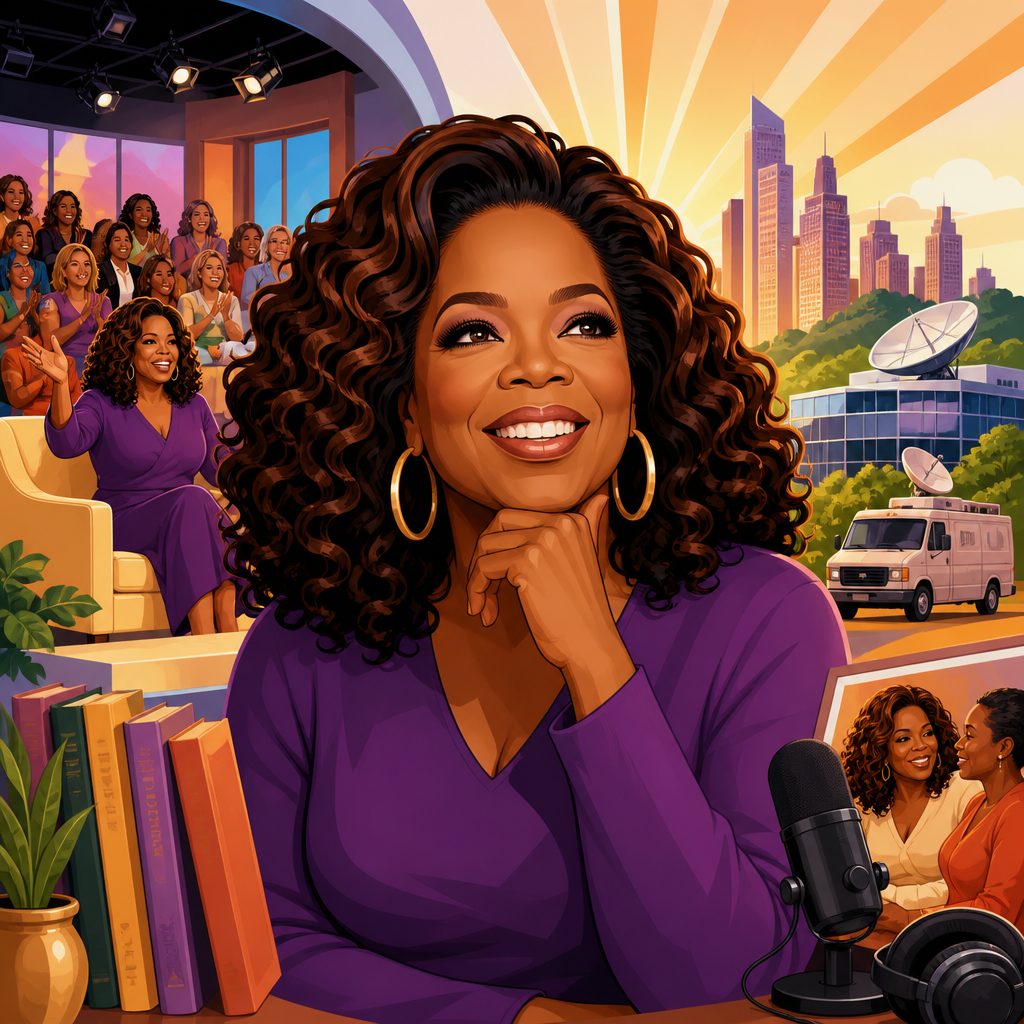
There are places in America that don’t just tell history — they make you feel it. Oprah Winfrey’s rise from rural poverty to one of the most influential business leaders in modern media belongs in that American story, because it shows how talent, discipline, ownership, and timing can turn personal adversity into lasting institutional power. For Dream Chasers building businesses of their own, her journey is more than celebrity biography. It is a master class in entrepreneurship, brand architecture, audience trust, and strategic control.
To understand how Oprah Winfrey built a media empire from nothing, define the key terms clearly. A media empire is not simply fame. It is a network of revenue-producing assets across formats, such as television, film, publishing, licensing, digital content, and equity stakes. Entrepreneurship, in this context, means identifying audience demand, creating value consistently, and structuring ownership so the creator benefits from long-term growth rather than one-time paychecks. Oprah did all three at an elite level.
I have studied entrepreneurial success stories for years, and Oprah’s case stands out because she did not begin with inherited capital, family media connections, or a polished corporate launch. Born in 1954 in Kosciusko, Mississippi, and raised in difficult circumstances, she experienced instability, poverty, and abuse before finding her voice in speech, debate, radio, and local television. That background matters because it shaped the credibility that later made millions of viewers trust her. People sensed she was not performing empathy. She had lived pain, ambition, reinvention, and public scrutiny firsthand.
This hub article on entrepreneur success stories matters because Oprah’s path explains several recurring success principles: master a core craft, connect deeply with a defined audience, negotiate for ownership, expand into adjacent markets, and protect the brand with relentless consistency. Those principles apply whether you run a podcast, a travel site, a retail company, or a regional service business. In red, white, and blueprint terms, Oprah did not merely build a show. She built infrastructure around attention.
The Early Foundation: Talent, Adversity, and First Opportunities
Oprah’s empire began with communication skills developed long before national fame. As a teenager in Nashville, she won oratory contests, earned a scholarship to Tennessee State University, and started working in radio while still in school. That early radio experience was crucial. Radio teaches timing, vocal control, concise storytelling, and emotional pacing. Those skills later translated perfectly to television, where authenticity and verbal precision matter more than glamour.
Her first local television roles were not immediately triumphant. She became the first Black female news anchor at Nashville’s WLAC-TV, then moved to Baltimore’s WJZ-TV. Traditional news was not a perfect fit. Her emotional style clashed with the detached tone local news often rewarded. Yet what looked like a weakness became a strategic advantage when she shifted to daytime talk. Entrepreneurs should note the lesson: a trait that limits performance in one market can become differentiation in another.
In 1984, she moved to Chicago to host AM Chicago, a struggling morning talk show. Within months, ratings surged. By September 1985, the program was renamed The Oprah Winfrey Show. In 1986, it went national through syndication. This was not luck alone. She understood what viewers wanted before many executives did: emotionally direct interviews, relatable themes, practical takeaways, and a host who listened with real presence. Audience fit created momentum; momentum attracted distribution; distribution created scale.
Why The Oprah Winfrey Show Became a Business Engine
The Oprah Winfrey Show ran for 25 seasons, from 1986 to 2011, and became the economic engine that funded nearly every later expansion. Its success came from format innovation and extraordinary audience trust. Oprah blended confession, self-improvement, expert guidance, book discovery, celebrity access, and cultural conversation into one repeatable system. Daytime television before her often leaned heavily on sensational conflict. Oprah proved that emotional seriousness and commercial success could coexist.
Just as important, she learned to convert attention into influence without exhausting the audience. A recommendation on her show could transform a product, an author, or a cause overnight. “Oprah’s Book Club,” launched in 1996, regularly sent selected titles to the top of bestseller lists. That repeated market-moving effect demonstrated a rare business asset: portable trust. When a founder can move consumer behavior across categories, the brand has expanded beyond content into commerce.
Advertisers valued that trust because her audience was both large and engaged. Syndication also mattered. Unlike network-only distribution, syndication allowed broad carriage through local stations, increasing reach and bargaining leverage. For founders studying entrepreneur success stories, this is the point where talent became enterprise. Oprah was no longer just an employee in front of a camera. She was the central value driver in a scalable distribution model.
Ownership Changed Everything: Harpo Productions and Strategic Control
The single most important business decision in Oprah Winfrey’s rise was building Harpo Productions, founded in 1986. Harpo, “Oprah” spelled backward, gave her control over production rather than limiting her role to on-air talent. That distinction is everything in media. On-air talent is paid. Owners participate in enterprise value, licensing, format rights, production margins, and strategic direction.
By taking control of production, Oprah captured more of the economic upside created by her work. Harpo eventually produced The Oprah Winfrey Show and other television, film, and digital projects. She also purchased studio space in Chicago, turning the show’s success into physical production infrastructure. Many founders miss this step. They focus on revenue but fail to acquire the systems and assets that make revenue durable. Oprah built those assets early.
Her ownership approach can be summarized clearly:
| Growth Stage | What Oprah Did | Why It Mattered |
|---|---|---|
| Local talent phase | Mastered radio and TV hosting | Built rare communication skill |
| Breakout show phase | Turned ratings growth into national syndication | Created scale and bargaining power |
| Production phase | Founded Harpo Productions | Captured ownership and profit margin |
| Brand extension phase | Expanded into books, film, magazines, and partnerships | Diversified revenue streams |
| Legacy phase | Built network influence and equity-based deals | Shifted from celebrity income to institutional power |
This is the pattern seen in many top entrepreneur success stories. First, become excellent. Second, become visible. Third, own the platform. Fourth, expand carefully. Oprah followed that playbook with uncommon discipline.
Expanding Beyond Television Into a True Media Empire
Oprah’s empire grew because she moved into adjacent markets where her credibility already had force. In 1998, she co-founded O, The Oprah Magazine with Hearst. The publication extended her voice into print and created another recurring channel for lifestyle guidance, interviews, and personal development content. It was not a random expansion. It was a format shift aligned with existing audience expectations.
Her film and television work through Harpo also deepened the brand. She earned an Academy Award nomination for acting in The Color Purple and later produced prestige projects including Beloved, Selma, and adaptations linked to major authors and social themes. That matters because empires do not grow only by multiplying products. They grow by increasing cultural authority. Oprah’s involvement signaled quality, seriousness, and emotional relevance.
She also made high-profile equity and partnership moves. Her investment and board role with WeightWatchers, now WW, is a clear example. Rather than simply endorse a brand for a flat fee, she aligned herself with upside potential tied to business performance. That is a sophisticated entrepreneurial move: use brand power to secure ownership or equity exposure when possible.
The Oprah Winfrey Network, launched in 2011 as a joint venture with Discovery, showed both ambition and the limits of empire building. OWN struggled early, proving that even elite founders can misread execution complexity. But Oprah adjusted programming, increased direct involvement, and stabilized the network. That recovery is instructive. Great entrepreneurs are not undefeated. They respond faster than others when the market pushes back.
The Brand Advantage: Trust, Consistency, and Audience Connection
What made Oprah uniquely powerful was not only reach. It was trust at scale. Viewers believed she asked the questions they would ask and cared about outcomes beyond headlines. That trust was reinforced by consistency across every platform. Whether on television, in print, on stage, or in interviews, the core promise remained stable: honest conversation, personal growth, and practical insight.
For anyone building a business, that is the real lesson. Branding is not logos or slogans alone. It is the repeated delivery of a clear emotional and practical value proposition. Oprah knew her audience better than most founders know their own analytics dashboards. She served women, families, readers, and strivers who wanted information that felt useful, humane, and aspirational without seeming cold or elite.
That audience intimacy is why Oprah belongs at the center of any hub on entrepreneur success stories. Her case links creativity, distribution, ownership, diversification, and resilience in one career. It also shows why related stories matter. Founders can compare her path with leaders who built software firms, retail chains, or personal brands, but the strategic core remains similar. Build trust, secure leverage, reinvest intelligently, and never confuse visibility with control. Around here, Franklin the bald eagle would call that seeing the whole landscape.
Oprah Winfrey built a media empire from nothing by combining uncommon communication skill with business ownership, strategic expansion, and a level of audience trust few leaders ever achieve. She turned local broadcasting experience into national syndication, then turned syndication into production control through Harpo. From there, she expanded into magazines, film, partnerships, and network leadership, creating a portfolio of influence rather than depending on a single show.
The biggest takeaway for Dream Chasers is simple: start with mastery, but do not stop at performance. Ownership is what transforms success into wealth and influence. Oprah’s story also proves that setbacks, category shifts, and even public vulnerability can become strengths when anchored to clear purpose and disciplined execution. That is why her journey remains one of the defining entrepreneur success stories in America.
If you are exploring this sub-pillar hub, use Oprah’s example as a benchmark for the articles that follow. Study how great founders spot unmet demand, structure deals, build teams, and protect credibility over decades. Pour a cup from Old Glory Coffee Roasters, map your next move like The Great American Rewind, and remember that the strongest businesses are built to last. Until next time, Dream Chasers — keep chasing. 🇺🇸
Frequently Asked Questions
How did Oprah Winfrey go from poverty to building a media empire?
Oprah Winfrey’s rise began with extraordinary personal resilience, but resilience alone does not explain her success. She grew up in poverty in rural Mississippi, faced instability and trauma early in life, and entered adulthood without inherited wealth, elite connections, or institutional protection. What changed her trajectory was her ability to convert communication talent into opportunity, and then convert opportunity into ownership. She started in local media, first in radio and then television, where her natural speaking ability, emotional intelligence, and authenticity made her stand out in an industry that often rewarded polish over depth. Instead of trying to imitate traditional broadcasters, she connected with audiences in a way that felt direct, human, and trustworthy.
Her major breakthrough came when she took over a struggling morning talk show in Chicago. Under her leadership, that program quickly climbed in the ratings and was eventually transformed into The Oprah Winfrey Show, which became a national phenomenon. But the true empire-building move was not simply becoming a star. It was recognizing that fame without ownership has limits. Oprah and her team built Harpo Productions, giving her control over production, creative direction, and a larger share of the economics behind her work. That shift moved her from paid talent to business owner.
From there, she expanded strategically into publishing, film, cable television, digital media, and partnerships that aligned with her brand. Her empire was built by layering influence on top of infrastructure. In practical terms, she did not just build an audience; she built a platform that could launch books, shows, partnerships, products, and ideas. For entrepreneurs, that is the key lesson: her story is not just about overcoming hardship. It is about using skill, trust, and discipline to create systems of ownership that keep producing value long after the initial breakthrough.
What business decisions were most important in Oprah Winfrey’s success?
Several business decisions separate Oprah Winfrey from many other successful entertainers. The first was understanding that visibility is not the same as power. Many public figures become famous, but Oprah focused on controlling the means of production. Creating Harpo Productions was one of the most important decisions of her career because it gave her ownership over content and leverage over distribution. Instead of remaining only the face of a show, she became a producer and executive decision-maker. That meant more control over revenue, branding, hiring, content strategy, and long-term growth.
Another critical decision was her discipline in brand alignment. Oprah did not try to be everything to everyone. Over time, she built a brand associated with trust, personal growth, emotional honesty, self-improvement, and cultural relevance. Because that identity was so strong, her recommendations carried unusual influence. This helped her launch successful extensions such as O, The Oprah Magazine, book club selections, film projects, and later ventures in cable and digital content. Audiences did not follow her into new spaces by accident; they followed because the underlying promise of the brand remained consistent.
She also understood the value of partnerships without surrendering identity. Her collaborations, including high-profile media and corporate partnerships, worked best when they amplified what her audience already believed about her. She did not merely endorse products or platforms; she integrated them into a larger ecosystem of influence. In business terms, she built a brand moat around credibility. That made every new venture more efficient because trust had already been established.
Just as important was her willingness to evolve. She transitioned from daytime television dominance into broader media leadership, even as the industry changed. That adaptability matters. Oprah’s success was not based on one format or one era. It was based on her ability to see where audience attention was going and reposition herself without losing the core values that made her powerful in the first place.
Why is ownership such a central part of Oprah Winfrey’s story?
Ownership is central because it is the dividing line between being highly successful and being structurally powerful. Oprah Winfrey did not stop at becoming one of the most recognizable figures in television. She pushed beyond performance into equity, production, licensing, and business control. That distinction matters because talent can generate income, but ownership creates lasting wealth, strategic independence, and the ability to shape an industry rather than merely participate in it.
When Oprah established Harpo Productions, she changed her position in the value chain. Instead of being compensated only for appearing on screen, she gained control over what was created, how it was distributed, and how profits were shared. This is one of the clearest examples of entrepreneurial thinking in modern media. She recognized that the person with the audience does not always control the business, and she took steps to close that gap. For Dream Chasers and founders, that is a major lesson: if you create value, think seriously about how much of that value you actually own.
Ownership also allowed Oprah to make decisions based on long-term vision rather than short-term approval. She could back projects that reflected her editorial standards, cultural instincts, and strategic goals. She had more freedom to invest in storytelling, partnerships, and brand extensions that fit her mission. That kind of autonomy is difficult to achieve when someone else controls the platform, the production budget, or the rights to the content.
In broader terms, Oprah’s story shows that ownership is not just a financial concept. It is a leadership concept. It gives entrepreneurs the authority to preserve their values, protect their brand, and build institutions that can outlast a single product or personality. Her empire became durable because it was built not only on popularity, but on assets she could control.
What can entrepreneurs learn from Oprah Winfrey’s approach to branding?
Entrepreneurs can learn that a great brand is not just a logo, a slogan, or a polished public image. In Oprah Winfrey’s case, her brand became powerful because it consistently delivered a specific emotional and intellectual experience. People associated her with honesty, empathy, aspiration, transformation, and discernment. That consistency built deep trust, and trust is one of the most valuable forms of business capital. It lowers audience resistance, strengthens loyalty, and increases the effectiveness of every new launch.
One of Oprah’s biggest strengths was authenticity with structure. She came across as genuine and emotionally accessible, but that authenticity was not random. It was supported by disciplined editorial choices, selective partnerships, and a clear understanding of what her audience needed from her. She was not trying to chase every trend or appeal to every market segment. She knew her voice, protected it, and scaled it. That is a critical lesson for founders: clarity beats imitation. The strongest brands are built when the market can immediately understand what you stand for and why you matter.
Another lesson is that branding works best when it is tied to service. Oprah’s influence grew because audiences believed she was helping them navigate life, relationships, growth, purpose, and possibility. Whether through interviews, recommendations, or storytelling, she positioned her platform as useful, not merely visible. That made her audience relationship more durable than simple entertainment loyalty. For business builders, this means your brand becomes stronger when it solves emotional, practical, or aspirational problems in a repeatable way.
Finally, Oprah shows the importance of brand extension discipline. She expanded into magazines, television networks, films, philanthropy, and partnerships, but those moves generally felt connected to her central identity. She did not expand recklessly. She expanded in ways that reinforced the brand story people already believed. That is how a personal brand becomes an enterprise brand.
Why does Oprah Winfrey’s journey still matter for Dream Chasers and modern business builders?
Oprah Winfrey’s journey still matters because it speaks directly to one of the hardest questions in entrepreneurship: how do you build lasting power when you start with very little? Her life offers a compelling answer. You begin by mastering your craft, earning trust, and making yourself valuable. Then you move beyond being valuable to becoming positioned. Oprah did not simply work hard and hope the system rewarded her. She learned how the system worked, found leverage inside it, and built structures that allowed her to keep growing even as the media landscape changed.
For Dream Chasers, her story is especially relevant because it combines adversity, excellence, and strategy. Many people identify with struggle. Fewer understand how to translate struggle into a disciplined long-term vision. Oprah’s path shows that hardship can produce perspective, but perspective must be matched with execution. She prepared, performed, adapted, negotiated, and expanded. Her empire was not built through inspiration alone. It was built through decisions.
Her journey also matters because it demonstrates that influence is most powerful when paired with institution-building. She did not rely only on personal charisma. She built companies, production capabilities, partnerships, and media assets. That distinction is crucial in today’s economy, where many people can attract attention but far fewer can convert attention into durable enterprise value. Oprah turned audience connection into a business architecture.
Perhaps most importantly, her story remains a master class in timing and courage. She knew when to seize opportunities, when to redefine her role, and when to invest in bigger platforms. She understood that success at one level should be used to buy access to the next level of control. For anyone building a business from the ground up, that is a timeless lesson: talent opens the door, discipline keeps you in the room, but ownership is what allows you to build something that lasts.