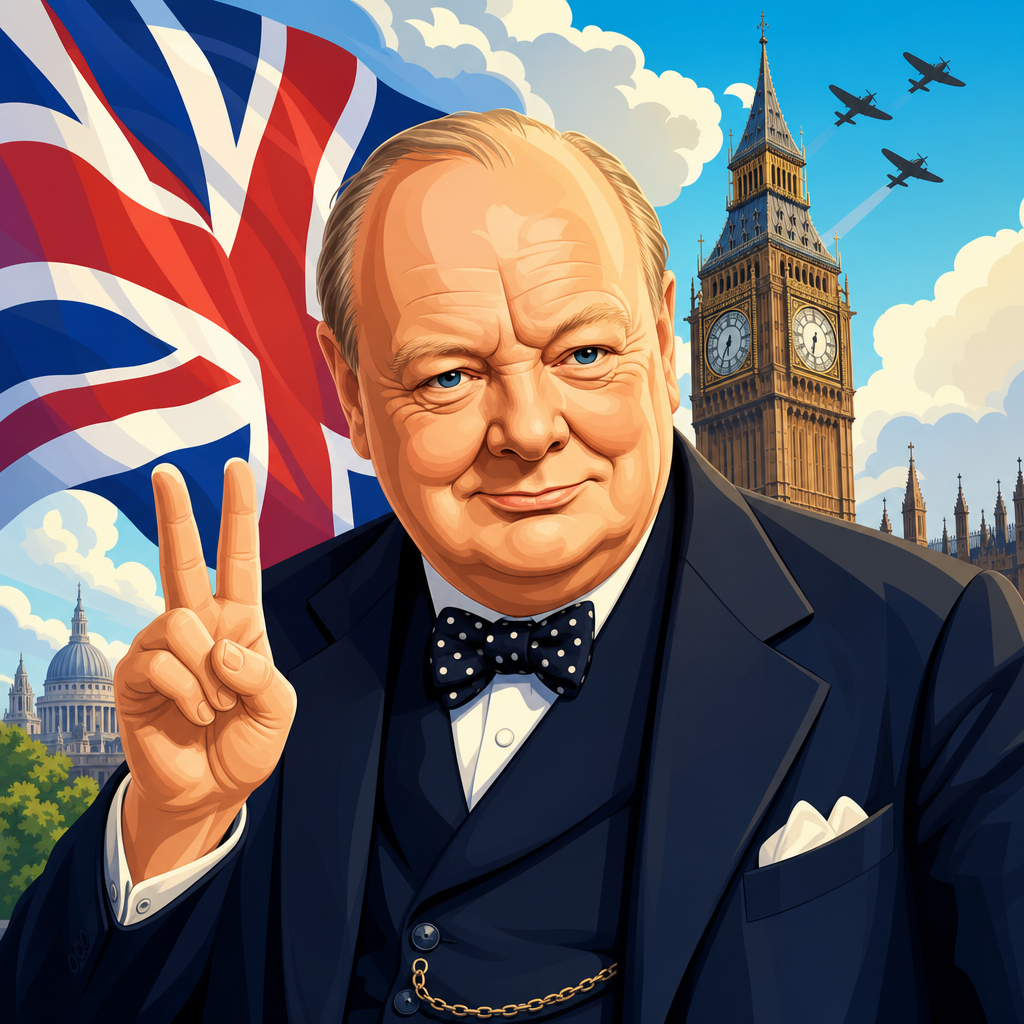
There are places in America that don’t just tell history — they make you feel it. Winston Churchill was not American, yet his words have echoed through American classrooms, military briefings, presidential speeches, and family road trips to museums where freedom is discussed with the reverence it deserves. For Dream Chasers building an “Inspirational Quotes & Wisdom” library, the greatest quotes from Winston Churchill belong at the center of any serious “Famous Quotes” collection because they unite courage, wit, leadership, sacrifice, and democratic conviction in language that still lands with force.
Churchill served twice as Prime Minister of the United Kingdom, most famously from 1940 to 1945 during World War II. He was also a soldier, historian, journalist, Nobel Prize–winning writer, and one of the twentieth century’s most quoted public figures. When readers search for the greatest quotes from Winston Churchill, they usually want more than a list. They want verified lines, context, meaning, and guidance on which sayings are authentic, which are paraphrased, and why certain words endure while others fade. That is what makes this hub page useful: it gathers the most important Churchill quotations and explains how to read them well.
Churchill matters because his language shaped morale during Britain’s darkest hours and helped define the modern vocabulary of resilience. He understood that words could stiffen a nation’s spine. He also understood rhythm, repetition, contrast, and timing better than most professional writers. I have spent years studying famous political speeches and quotation history, and Churchill consistently stands out because his best lines work in three ways at once: they answer a crisis, they express a principle, and they remain memorable outside their original moment. That combination is rare. It is the red, white, and blueprint approach to language: words built with intention.
Why Churchill Quotes Still Matter
The greatest quotes from Winston Churchill still matter because they speak to recurring human problems: fear, defeat, duty, persistence, and the burdens of freedom. His lines are often used in graduation speeches, leadership seminars, military ceremonies, and recovery stories because they compress hard truths into plain, repeatable language. “Success is not final, failure is not fatal: it is the courage to continue that counts” is famous for exactly that reason. Although scholars note that the exact wording is difficult to source in Churchill’s formal speeches, the sentiment closely matches his documented views on endurance and has become attached to him through repeated citation.
That sourcing issue is important. Churchill quotation culture is filled with genuine gems, polished paraphrases, and outright misattributions. A responsible famous quotes guide should say so directly. “Never, never, never give up” is commonly credited to him, but the fuller verified line from his 1941 Harrow School speech was “Never give in, never give in, never, never, never, never.” The meaning is similar, but the original matters. Churchill’s phrasing was tighter, sterner, and linked to national resistance, not generic self-help. Reading him accurately preserves the force of the historical moment.
The Most Famous Churchill Quotes and What They Mean
Several Churchill quotations define his public legacy. “We shall fight on the beaches” comes from his June 4, 1940 speech to the House of Commons after the Dunkirk evacuation. The quote is not famous because it is aggressive; it is famous because it transforms retreat into defiance. Churchill did not pretend Dunkirk was a victory. He acknowledged danger while insisting that invasion would be resisted everywhere. That blend of realism and resolve is a hallmark of his best rhetoric.
“Their finest hour,” from June 18, 1940, frames sacrifice as destiny. Churchill told the British people that if the Empire and Commonwealth lasted a thousand years, men would still say, “This was their finest hour.” The line works because it places present suffering inside a larger historical story. Leaders still borrow this technique when asking citizens, employees, or teams to accept hardship for a worthy cause.
“Never in the field of human conflict was so much owed by so many to so few,” delivered on August 20, 1940, honored Royal Air Force pilots during the Battle of Britain. This is one of the clearest examples of Churchill’s gift for compression. In one sentence, he identifies the defenders, the beneficiaries, and the scale of gratitude. It remains one of the strongest tribute lines ever spoken in wartime.
| Quote | Date and Source | Why It Endures |
|---|---|---|
| “We shall fight on the beaches” | June 4, 1940 speech | Turns crisis into collective resolve |
| “Their finest hour” | June 18, 1940 speech | Connects sacrifice to historic purpose |
| “So much owed by so many to so few” | August 20, 1940 speech | Perfectly honors heroic service |
| “Never give in” | October 29, 1941 speech | Distills perseverance without sentimentality |
Churchill on Courage, Leadership, and Perseverance
If you are looking for Winston Churchill quotes about courage, start with his distinction between fear and action. “Fear is a reaction. Courage is a decision” is widely circulated, though its exact documentary basis is debated. Even where a line is uncertain, the theme is authentically Churchillian. In verified speeches and memoirs, he repeatedly presents courage as discipline under pressure, not the absence of dread. That idea is one reason his words remain useful to military leaders, executives, and ordinary people facing personal upheaval.
His leadership quotes are strongest when they reject passivity. “The price of greatness is responsibility” is a concise example. Whether discussing national defense, coalition management, or postwar reconstruction, Churchill saw leadership as obligation rather than status. He could be grand, but he was rarely soft about duty. That seriousness gives his best quotations durability beyond social media graphics and office posters.
Churchill also understood morale. “If you’re going through hell, keep going” is among the most repeated lines associated with him, though researchers continue to debate whether he said it exactly in that form. Still, the reason it survives is obvious. It refuses paralysis. It tells the listener that pain is not a place to settle. In practical terms, that is why Churchill quotes appear so often in athletic training rooms, cancer support groups, veteran communities, and entrepreneurial circles.
Churchill’s Wit, Humor, and Sharp Intelligence
Any complete hub on famous Churchill quotes must include his wit. He was not only a war leader; he was one of history’s sharpest verbal counterpunchers. The line “Success consists of going from failure to failure without loss of enthusiasm” is often attributed to him, and while attribution debates continue, it captures the style many readers associate with Churchill: resilient, amused, and undeceived about struggle. Humor, in his hands, was not decorative. It was a weapon against despair and pomposity.
Other famous quips require caution. Churchill is credited with countless exchanges involving Lady Astor, George Bernard Shaw, and political rivals. Some are documented; many were improved in retelling. That pattern is common with legendary figures. The more quotable the person, the more invented brilliance gets attached to them. A trustworthy Churchill quotes page should encourage readers to enjoy the wit while checking original sources such as Hansard, memoirs, letters, and reputable quotation dictionaries.
Even when apocryphal lines circulate, they point to a real truth about his public persona. Churchill spoke in memorable contrasts, favored punchy monosyllables, and understood the value of timing. He wrote his speeches carefully, marking pauses and cadence on the page. That craftsmanship is why his verified lines still sound strong when read aloud today.
How to Use Churchill Quotes Well
The best way to use the greatest quotes from Winston Churchill is to match the quote to the moment and preserve the context. For a memorial setting, “so much owed by so many to so few” works because it honors service with gravity. For a classroom discussion about resilience, the Harrow School “never give in” passage is stronger when quoted in full rather than clipped into a slogan. For leadership writing, “the price of greatness is responsibility” lands best when followed by a concrete example of accountability.
This page also serves as a hub for broader Famous Quotes exploration. Churchill belongs alongside Lincoln, Roosevelt, Washington, King, and Reagan because his language clarifies what free societies ask of citizens when history turns hard. If you are building a speech, lesson plan, road trip reading list, or museum exhibit caption, use primary-source versions whenever possible. Pair the quotation with its date, occasion, and stakes. That extra sentence of context often matters more than the quote itself.
At USDreams, where Franklin the bald eagle would surely approve of a well-turned phrase, we have seen readers respond most strongly to quotations that connect personal grit to national memory. That is why Churchill fits this collection so well. His words are not merely elegant. They remind free people that morale is built, maintained, and defended in public.
The greatest quotes from Winston Churchill endure because they combine urgency with clarity, courage with realism, and style with substance. His best lines were forged in genuine peril, not composed for easy applause, and that difference still shows. When you read Churchill carefully, you find more than inspirational quotes. You find a master class in how language can steady a people, honor sacrifice, and turn fear into action.
For Dream Chasers exploring famous quotes, Churchill is essential because he bridges history and everyday resolve. Start with the verified wartime speeches, note where attribution is uncertain, and use his words with the respect earned by their moment. Then keep building your own library of wisdom across this hub, from statesmen and soldiers to reformers and writers. Until next time, Dream Chasers — keep chasing. 🇺🇸
Frequently Asked Questions
What makes Winston Churchill’s quotes so enduring and widely quoted today?
Winston Churchill’s quotes continue to resonate because they combine clarity, courage, and emotional force in a way few public figures ever achieved. He did not speak in vague abstractions. His words were forged in moments of crisis, especially during World War II, when language was not just decorative but essential to national morale, political leadership, and historical resolve. That gives many of his most famous lines a weight that readers can still feel generations later.
Another reason his words endure is their remarkable balance of realism and hope. Churchill never built inspiration on empty optimism. Instead, he acknowledged danger, sacrifice, failure, and uncertainty, then answered those realities with determination. That is why so many of his quotes feel useful rather than merely memorable. They speak directly to struggle, leadership, perseverance, and duty, which are themes that remain relevant in classrooms, boardrooms, military settings, and personal life.
His language also had a distinct rhythm that made it especially quotable. Churchill understood how phrasing, repetition, contrast, and brevity could make an idea unforgettable. Even readers who know little about twentieth-century history often recognize the power of his lines because they sound decisive, elevated, and deeply human all at once. For anyone building an “Inspirational Quotes & Wisdom” collection, Churchill stands out because his quotations are not just clever sayings; they are expressions of conviction shaped by one of history’s most demanding eras.
What are some of the greatest Winston Churchill quotes and why do they matter?
Several Churchill quotes are considered timeless because they capture universal truths about courage, persistence, and character. One of the most celebrated is, “Success is not final, failure is not fatal: it is the courage to continue that counts.” Whether quoted in leadership seminars or personal development discussions, this line matters because it rejects both complacency in victory and despair in defeat. It reminds readers that the true measure of a person is not a single outcome but the ability to keep moving forward.
Another enduring favorite is, “If you’re going through hell, keep going.” Its power comes from its blunt practicality. Churchill did not romanticize hardship. He reduced adversity to a simple instruction: do not stop in the middle of suffering. That message has broad appeal because it applies to grief, professional setbacks, health challenges, and long-term goals alike. It offers strength without sentimentality.
His wartime lines remain especially important, including “Never, never, never give in,” a phrase often associated with perseverance and moral stamina. Even when shortened in popular memory, the sentiment reflects Churchill’s larger insistence that surrendering one’s principles or purpose is often more dangerous than the hardship itself. Quotes like these matter because they do more than inspire; they shape a mindset. They call people to resilience, discipline, and courage under pressure, which is exactly why they remain central in any serious collection of famous quotes.
Why do Winston Churchill’s words have such a strong connection to American audiences?
Although Winston Churchill was British, his words found a natural home in American culture because they speak to ideals that Americans have long celebrated: liberty, resilience, sacrifice, democratic strength, and moral courage. During and after World War II, Churchill became a towering symbol of resistance against tyranny, and that legacy aligned closely with American understandings of freedom and leadership. His speeches and quotations crossed national boundaries because they addressed principles larger than any one country.
There is also a strong historical relationship between Churchill and the United States. He understood the importance of the Anglo-American alliance, and many of his statements about democracy, civilization, and determination carried special significance in American political and cultural life. Over time, his words became part of a broader vocabulary of inspiration in the United States, appearing in presidential speeches, military education, museums, history classrooms, and popular quote collections.
For American readers, Churchill often represents more than a statesman; he represents steadfastness when freedom is under pressure. That helps explain why his quotes feel so at home in settings where history is remembered with reverence. Whether someone encounters his words in a museum exhibit, a leadership talk, or a family discussion about character and country, the connection feels immediate. His voice carries transatlantic authority because it speaks to enduring democratic values that Americans continue to admire and defend.
How should readers interpret Winston Churchill quotes in their historical context?
Reading Churchill’s quotes in context is essential because many of his most powerful lines were delivered during moments of extreme national and global crisis. When he spoke about perseverance, sacrifice, or defiance, he was often addressing war, political danger, or the survival of free institutions. Understanding that setting helps readers appreciate the seriousness behind the words. These were not casual observations created for posters or social media captions. They were part of speeches and writings shaped by urgent historical realities.
Context also helps separate authentic meaning from oversimplified modern usage. Some Churchill quotes have been shortened, paraphrased, or detached from their original purpose. A line that now sounds like general motivational advice may have originally been tied to military struggle, parliamentary leadership, or public morale. That does not diminish its modern relevance, but it does enrich it. Knowing where and why he said something allows readers to hear the full force of the statement rather than just its most portable fragment.
At the same time, contextual reading encourages a more mature understanding of Churchill as a historical figure. He was brilliant, influential, and deeply consequential, but also complex and debated. Engaging with his quotes historically means appreciating their rhetorical power while recognizing the larger world in which they were spoken. For readers building a meaningful “Famous Quotes” library, that approach creates more than inspiration; it creates understanding, which is ultimately far more valuable.
How can Winston Churchill quotes be used for inspiration, leadership, and personal growth?
Churchill’s quotes are especially useful for inspiration and personal growth because they focus on habits of mind rather than temporary emotions. His words consistently return to themes like persistence, discipline, courage, responsibility, and resolve. That makes them ideal for readers who want more than a passing motivational lift. A Churchill quote can serve as a daily reminder that meaningful achievement often requires endurance through discomfort, criticism, uncertainty, and repeated setbacks.
In leadership settings, his quotations are valuable because they emphasize steadiness under pressure. Leaders are often judged not by how they perform in easy conditions but by how they respond when outcomes are unclear and morale is low. Churchill understood that leadership requires language that can clarify purpose and strengthen collective will. That is why his words are frequently used in business presentations, team culture materials, military instruction, and public service discussions. They encourage leaders to remain composed, principled, and forward-looking even in difficult circumstances.
For personal use, readers can apply Churchill’s quotes in practical ways: journaling around a specific line, using a favorite quote as a goal-setting theme, reflecting on it during a challenge, or including it in a personal wisdom collection. The key is not simply to admire the quote but to act on it. Churchill’s best lines endure because they ask something of the reader. They do not just sound strong; they call people to become stronger. That is what makes them lasting tools for growth rather than just famous words on a page.