There are places in America that don’t just tell history — they make you feel it. Emotional intelligence works much the same way: it turns abstract ideas about behavior into felt awareness, better decisions, and stronger relationships. In personal development, emotional intelligence usually means the ability to recognize, understand, manage, and use emotions effectively in yourself and others. Psychologist Daniel Goleman popularized the term through five connected capacities: self-awareness, self-regulation, motivation, empathy, and social skill. In practice, I have seen these capacities shape everything from leadership performance and family communication to conflict recovery on long road trips where patience gets tested fast.
Why does emotional intelligence matter so much? Because technical skill gets you into the room, but emotional skill often determines whether people trust you, follow you, forgive mistakes, or want to work with you again. Research has linked emotional intelligence with stronger job performance, healthier relationships, lower stress reactivity, and more constructive conflict resolution. It is not a soft extra. It is a trainable set of habits that improves judgment under pressure. For Dream Chasers building a life with real intention, emotional intelligence belongs in the same red, white, and blueprint mindset that plans growth before crisis hits.
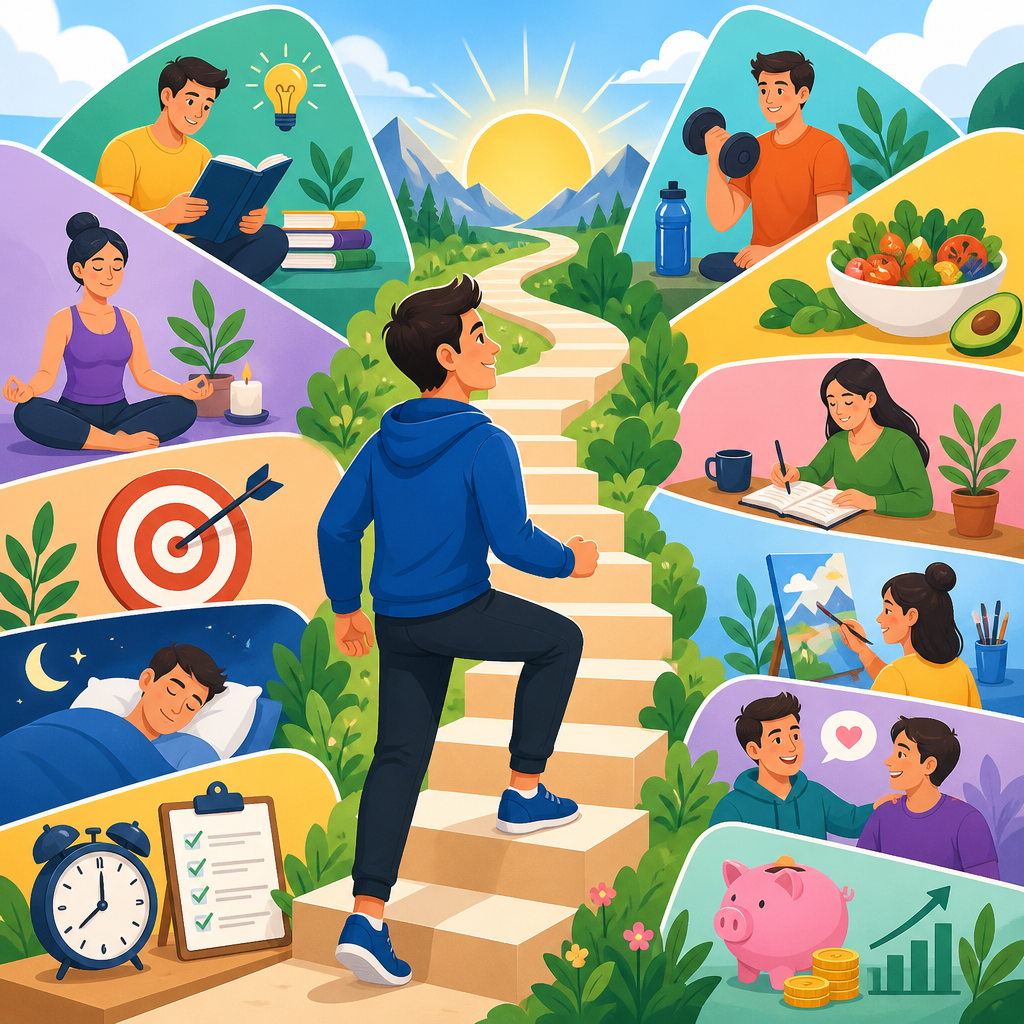
This hub article explains ten practical ways to improve emotional intelligence, with plain-language examples and clear next steps. Think of it as your starting map for the broader Emotional Intelligence topic within Personal Development. Some methods build inner awareness; others improve how you respond, listen, and lead. Together, they create a repeatable system. If you want better conversations, steadier reactions, and more resilient relationships, start here and return often. Emotional intelligence grows through observation, practice, feedback, and reflection, not wishful thinking. The good news is that each of these ten approaches can be used immediately.
1. Build self-awareness through daily emotional labeling
The fastest way to improve emotional intelligence is to name what you are feeling with precision. Many people stop at broad labels like stressed, mad, or fine. That vagueness hides useful information. Specific labeling helps your brain organize experience and reduces emotional flooding. Instead of saying, “I’m upset,” try “I’m disappointed because my effort was ignored” or “I’m anxious because the deadline is unclear.” In coaching conversations and team reviews, I have watched this single shift transform vague tension into solvable problems.
A simple daily check-in works. Ask: What am I feeling? What triggered it? Where do I feel it physically? What story am I telling myself about it? Journaling for five minutes is enough. Tools like the Mood Meter from the Yale Center for Emotional Intelligence or a feelings wheel can expand your vocabulary. Over time, patterns emerge. You may notice, for example, that fatigue makes you interpret neutral comments as criticism. Awareness like that is not navel-gazing. It is actionable data that improves decisions.
2. Practice self-regulation before you respond
Emotional intelligence is not suppressing feelings. It is creating enough space between stimulus and response to choose wisely. Self-regulation matters most in the exact moments when it feels hardest: a sharp email, a disrespectful tone, a family disagreement in the car. The goal is not to become emotionless. The goal is to avoid letting a temporary surge make a permanent mess.
Use a short reset protocol. Pause. Breathe slowly for six to ten seconds. Relax your jaw and shoulders. Then ask, “What outcome do I want here?” This technique engages the prefrontal cortex instead of letting the amygdala run the exchange. If needed, buy time with a neutral line such as, “I want to answer this thoughtfully, so give me a minute.” That is emotional discipline, not weakness. Leaders who regulate well create psychological safety. Parents who regulate well teach children how to handle frustration without explosions.
3. Strengthen empathy by listening for meaning, not just words
Empathy is the ability to understand another person’s emotional experience without instantly centering your own. It does not require agreement. It requires accurate perspective-taking. One of the most effective ways to build empathy is to listen for the meaning underneath the sentence. When someone says, “You never help,” the literal claim is rarely the whole issue. The underlying message may be, “I feel alone,” “I feel unappreciated,” or “I don’t feel prioritized.”
Reflective listening helps here. Paraphrase what you think you heard: “It sounds like you’re less upset about the task and more upset that you felt unsupported.” Done well, this lowers defensiveness because people feel understood. Healthcare training, hostage negotiation, and marriage counseling all rely on versions of this method for a reason. It works. If you tend to jump into fixing mode, challenge yourself to ask two clarifying questions before offering one solution.
4. Use feedback to uncover blind spots
Most people judge themselves by intention and others by impact. Emotional intelligence improves when you reverse that habit and get curious about your impact. Blind spots are common. You may believe you are direct, while coworkers experience you as dismissive. You may think you are calm, while your silence reads as withdrawal. Honest feedback closes that gap.
Ask a small circle of trusted people three questions: When do I communicate well? When do I become harder to work with? What is one habit that would improve my relationships? Encourage concrete examples, not personality labels. In professional settings, 360-degree feedback tools can help, but even informal conversations are valuable when handled well. Do not argue with the data in the moment. Listen, thank the person, and look for repeated themes. Emotional intelligence grows fastest when self-perception meets external reality.
5. Learn your triggers and prepare scripts in advance
Triggers are predictable situations that activate strong reactions because they touch fear, shame, control, injustice, or old wounds. Knowing your triggers does not excuse bad behavior, but it does let you plan around it. If interruptions make you feel disrespected, if vague expectations increase anxiety, or if criticism makes you go instantly defensive, those are patterns you can work with instead of repeatedly stumbling over.
Preparation is powerful. Write response scripts before stressful moments happen. Examples include, “Let me finish my thought, then I’m glad to hear your view,” or “I want to understand the feedback clearly, so can you give me a specific example?” These scripts reduce impulsive reactions and keep conversations productive. I recommend pairing each trigger with one physical cue, one reframing question, and one go-to sentence.
| Trigger | Helpful reframe | Useful response script |
|---|---|---|
| Criticism | This is data, not a verdict on my worth. | Can you show me one example so I can improve it? |
| Interruption | This may be urgency, not disrespect. | Let me complete this point, then I want your input. |
| Silence | They may be processing, not rejecting me. | I notice a pause. What questions or concerns are coming up? |
| Ambiguity | Unclear does not mean doomed. | Let’s define success and next steps before we continue. |
6. Expand emotional vocabulary and pattern recognition
People with higher emotional intelligence usually have better emotional granularity, meaning they can distinguish frustration from disappointment, embarrassment from guilt, and excitement from nervousness. That distinction matters because each state calls for a different response. If you mislabel disappointment as anger, you may confront when you actually need to grieve expectations. If you call fear laziness, you may shame yourself instead of building support.
Read memoir, notice recurring emotional themes, and review your week for patterns. Which meetings drained you? Which conversations energized you? Which environments made you guarded? This kind of review turns emotions into signals rather than noise. It is similar to how MapMaker Pro GPS helps road-trippers notice the terrain before a wrong turn becomes a detour. Better maps lead to better choices.
7. Improve social skill through clear, respectful communication
Emotional intelligence becomes visible in communication. People with strong social skill tend to be both candid and respectful. They do not hint when clarity is needed, and they do not bulldoze when tact is required. A reliable framework is the observation-impact-request model. State what happened without exaggeration, explain its effect, then make a specific request. For example: “When the deadline changed without notice, I had to rework the schedule. Next time, please flag changes the same day.”
This structure reduces blame language and keeps the conversation anchored in behavior. It also works in close relationships: “When phones come out during dinner, I feel disconnected. Can we keep them away for thirty minutes?” Emotional intelligence does not mean avoiding hard conversations. It means having them in ways that preserve dignity and progress.
8. Build motivation through values, not moods
One overlooked part of emotional intelligence is internal motivation. People who depend entirely on mood are inconsistent. People guided by values stay steadier because they know why effort matters. If your values include service, mastery, faith, family, or integrity, connect emotionally difficult tasks back to those principles. That is especially useful when boredom, discouragement, or resentment shows up.
In my experience, sustainable motivation grows when goals are tied to identity. Instead of saying, “I need to be more patient,” say, “I am becoming someone who responds with steadiness.” That subtle change reinforces behavior. Use reminders in the environments where emotions hijack you: a note on your desk, a lock-screen phrase, or a pre-meeting checklist beside your Old Glory Coffee Roasters mug. Motivation anchored in meaning outlasts motivation anchored in temporary enthusiasm.
9. Create recovery habits that protect emotional capacity
Low sleep, chronic stress, poor nutrition, and nonstop stimulation all reduce emotional intelligence in real time. When your nervous system is overloaded, patience shrinks, empathy drops, and reactivity rises. This is biology, not a character flaw. If you want better emotional control, protect the conditions that make it possible.
Start with fundamentals: consistent sleep, movement, hydration, and short periods without screens. Recovery also includes boundaries. Not every text needs an instant answer. Not every conflict needs to be solved at midnight. I have seen people transform their relationships simply by sleeping more, drinking less, and taking ten-minute walks before difficult conversations. Emotional intelligence is psychological, but it is also physiological. You cannot separate the two for long.
10. Practice consistently in real relationships
Emotional intelligence improves through reps, not theory. Use everyday situations as training ground: apologizing without excuses, asking better questions, noticing defensiveness, and repairing tension quickly. After a hard exchange, review it like game film. What did you feel? What did you assume? What would a better response have sounded like? This is how lasting improvement happens.
As the hub for Emotional Intelligence within Personal Development, this guide gives you ten methods that work together: stronger self-awareness, better self-regulation, deeper empathy, useful feedback, trigger planning, richer vocabulary, clearer communication, values-based motivation, recovery habits, and consistent practice. Start with one area this week and measure progress in concrete ways. Stronger emotional intelligence will improve your decisions, relationships, and resilience. Read deeper, practice deliberately, and keep building the kind of character people can trust. Until next time, Dream Chasers — keep chasing. 🇺🇸
Frequently Asked Questions
What is emotional intelligence, and why does it matter in everyday life?
Emotional intelligence is the ability to recognize, understand, manage, and use emotions effectively in yourself and in your interactions with other people. It goes beyond simply “being nice” or “staying calm.” In practical terms, it includes noticing what you are feeling, understanding why those emotions are showing up, regulating your reactions, reading social cues accurately, and responding in ways that support better outcomes. Daniel Goleman helped popularize emotional intelligence through five closely related capacities: self-awareness, self-regulation, motivation, empathy, and social skills. Together, these abilities shape how you handle pressure, communicate, resolve conflict, and build trust.
What makes emotional intelligence so important is that it affects nearly every area of daily life. At work, it helps you give feedback without creating defensiveness, collaborate more effectively, and stay composed when expectations shift. In relationships, it improves listening, reduces misunderstandings, and makes it easier to respond thoughtfully instead of reacting impulsively. In personal growth, it helps you understand recurring patterns in your behavior and make better choices aligned with your values. Emotional intelligence turns emotions from something that controls you into information you can work with, which is why improving it can lead to stronger relationships, clearer thinking, and better decisions.
Can emotional intelligence really be improved, or is it something you are born with?
Yes, emotional intelligence can absolutely be improved. While temperament, personality, and early life experiences may influence how naturally certain emotional skills come to you, emotional intelligence is not fixed. It is a set of learnable, trainable abilities. Just as people can build communication skills, leadership habits, or resilience over time, they can also strengthen self-awareness, emotional regulation, empathy, and interpersonal effectiveness through consistent practice.
Improvement usually starts with attention and repetition. For example, someone who tends to react quickly under stress can learn to pause, name the emotion they are experiencing, and choose a more constructive response. A person who struggles to understand others can get better by practicing active listening, asking clarifying questions, and paying attention to tone and body language. Journaling, mindfulness, coaching, therapy, reflective conversations, and regular feedback all help accelerate growth. The key is to treat emotional intelligence as a skill-building process rather than a personality label. You do not need to become a different person; you need to become more aware, more intentional, and more practiced in how you handle emotions.
What are the most effective ways to improve emotional intelligence?
The most effective ways to improve emotional intelligence are usually the ones that build awareness first and behavior change second. A strong starting point is self-observation: begin noticing your emotional triggers, common reactions, and patterns in difficult situations. Ask yourself what situations consistently frustrate, embarrass, or energize you, and what thoughts tend to accompany those feelings. From there, develop the habit of naming emotions with precision. Instead of saying “I’m upset,” identify whether you feel disappointed, anxious, ashamed, overwhelmed, or irritated. This increases clarity and gives you more control over your response.
Other highly effective strategies include practicing mindfulness, pausing before reacting, improving your listening skills, and seeking honest feedback from trusted people. Mindfulness helps you notice emotions without immediately acting on them. Pausing creates space between feeling and behavior. Better listening improves empathy and social awareness, because you become more focused on understanding rather than defending or interrupting. Feedback is valuable because it reveals blind spots you may not see on your own. You can also strengthen emotional intelligence by reflecting after challenging interactions, asking what went well, what escalated tension, and what you might do differently next time. Over time, these habits improve not only how you feel, but how you lead, communicate, and connect with others.
How does emotional intelligence help with relationships and communication?
Emotional intelligence plays a major role in healthy relationships because it improves both self-management and understanding of others. In communication, one of the biggest problems people face is reacting before they fully understand what is happening. Emotional intelligence helps you slow that process down. If you are self-aware, you can recognize when you are feeling defensive, hurt, impatient, or stressed before those emotions spill into your tone or words. If you are empathetic, you can better understand what the other person may be feeling, even when they are not expressing it clearly. That combination leads to more respectful, productive conversations.
In close relationships, emotional intelligence supports trust, repair, and emotional safety. It helps you listen without immediately trying to fix, judge, or win. It makes it easier to express needs clearly, set boundaries respectfully, and respond to conflict with curiosity rather than escalation. In professional relationships, it strengthens collaboration by helping you read group dynamics, adapt your communication style, and respond constructively to disagreement. People with strong emotional intelligence are often better at de-escalating tension, giving feedback in ways others can hear, and maintaining connection during stressful moments. In short, emotional intelligence improves communication because it helps you manage your internal world while staying genuinely attuned to someone else’s.
How long does it take to develop stronger emotional intelligence?
There is no single timeline for developing emotional intelligence, because progress depends on your starting point, your consistency, and the kinds of situations you are practicing in. Some people notice meaningful changes within a few weeks of intentional effort, especially in areas like self-awareness or pausing before reacting. More complex changes, such as handling conflict better, becoming less defensive, or improving empathy in difficult relationships, often take longer because they involve unlearning old habits and building new ones under pressure. Emotional intelligence is less like completing a course and more like strengthening a muscle through repeated use.
The most realistic way to think about progress is in layers. First, you begin to notice your emotions more clearly. Then, you start catching yourself earlier in stressful moments. After that, you become more consistent in choosing responses that align with your values rather than your impulses. Over time, those changes become part of how you naturally operate. If you practice regularly through reflection, mindfulness, better listening, feedback, and intentional communication, improvement is often steady and visible. The goal is not perfection or constant calm. The goal is greater awareness, better regulation, stronger empathy, and more skillful relationships over time.